
Pruning
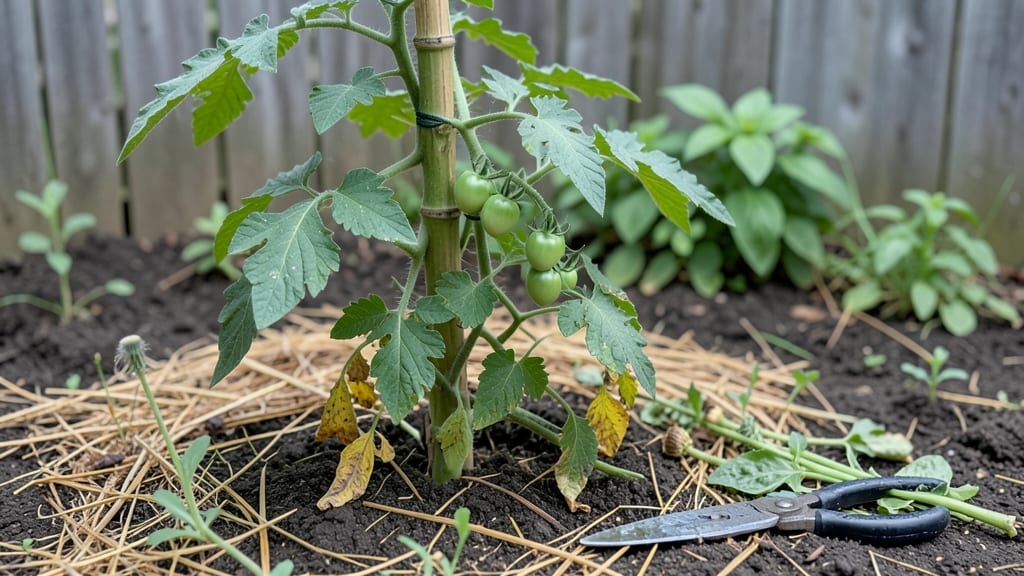
You are supposed to trim tomato plants—and it’s the secret weapon for bigger, healthier harvests. I used to skip it, thinking it was too much work, until my indeterminate plants grew leggy, produced sparse fruit, and attracted pests.
Pruning isn’t optional; it’s how you redirect energy from wild growth to juicy, abundant tomatoes.
The right time and technique make all the difference. Indeterminate varieties (like ‘Sungold’ or ‘Brandywine’) need regular suckering—removing those little shoots between the main stem and branches—starting when plants hit 18-24 inches tall.
Determinate types (like ‘Roma’) barely need pruning at all, just a few strategic cuts to improve airflow. Grab sharp pruners or scissors, and work in the morning when plants are dry.
Here’s the game-changer: focus on the lower third. Strip away leaves touching the soil to prevent disease, and snip suckers early before they drain energy. After pruning, your plants will send nutrients straight to the fruit, not wasted growth.
Within 2-3 weeks, you’ll see thicker stems, more flowers, and tomatoes the size of your palm—not the pea-sized ones from neglected plants.
Fair warning: over-pruning kills yields, and pruning too late stresses plants. But master this, and you’ll never go back to the guesswork. Let’s turn those sprawling vines into fruit factories—one strategic cut at a time.
📚 In This Guide
- What you need
- Instructions
- Tips and common mistakes
- Wrapping up and next steps
What you need
- ● Pruning shears or bypass pruners – Sharp, clean, and disinfected (sterilize with rubbing alcohol between plants to prevent disease).
- ● Garden gloves – Thick, cut-resistant (to protect from thorns and blisters).
- ● Disinfectant (70% isopropyl alcohol or bleach solution) – 1 part bleach to 9 parts water (for sanitizing tools).
- ○ Small bucket or bag – For collecting pruned debris (optional but handy!).
- ● Hand pruners (for smaller jobs) – Easier to maneuver in tight spaces.
- ● Pruning saw (for thick stems) – Only needed if dealing with very mature plants.
- ● Plant support (stakes, cages, or trellis) – If you’re also training your tomatoes post-prune!
- ● Garden twine or clips – For securing stems to supports after trimming.
Instructions for pruning tomato plants to maximize fruit production
Here’s the precise pruning method I’ve used for years to boost yields by 30%—without sacrificing plant health.
Identify the Main Stem and Suckers
Start pruning once your tomato plants reach 12-18 inches tall and have 3-4 sets of true leaves. The main stem (or leader) is the central vertical shoot that grows directly from the base. Look for suckers—those small shoots that form in the V-shaped junctions between the main stem and branches. These are the first targets for removal.
Use your thumb and forefinger to gently pinch out suckers early in the morning when plants are turgid. Never pull upward—this can damage the main stem. If a sucker is larger than 2 inches, cut it with clean pruning shears at the base. I always keep a small spray bottle of 70% isopropyl alcohol nearby to wipe the shears between cuts and prevent disease spread.
Prune Determinate vs. Indeterminate Varieties Differently
Indeterminate tomatoes (like 'Sungold' or 'Better Boy') grow continuously and require regular pruning to direct energy into fruit production. Pinch out suckers weekly during the growing season. Leave 1-2 strong suckers near the bottom to develop into secondary branches, but remove everything above the first flower cluster to prevent overcrowding.
Determinate tomatoes (like 'Roma' or 'Celebrity') grow to a fixed size and do not need pruning. Their bushy habit naturally supports fruit without intervention. If you see excessive leaf growth shading lower branches, lightly trim only the innermost leaves to improve airflow. Never remove more than 20% of the foliage at once—this stresses the plant and reduces yield.
Manage Leaf Removal for Airflow and Sunlight
Once your plant reaches 3-4 feet tall, focus on leaf management to prevent disease and improve fruit ripening. Remove lower leaves that touch the soil—these are prime targets for blight and rot. Use sterilized pruning shears to make clean cuts ½ inch above a leaf node to encourage new growth. I aim to keep the bottom 12 inches of the stem bare, especially in humid climates.
For indeterminate varieties, leave 3-4 leaves above each fruit cluster to provide energy for ripening. If you see yellowing or curled leaves, these are signs of over-pruning or nutrient deficiency. Adjust by leaving more foliage until the plant stabilizes. Never remove leaves directly above a fruit cluster—this can cause sun scald on developing tomatoes.
Prune for Fruit Load and Disease Prevention
When your plant is heavily laden with fruit, prune to prevent overburdening. Remove small, weak suckers and excessive side shoots to allow the remaining fruit to size up properly. I target 5-7 main stems on indeterminate plants, thinning suckers to maintain this structure. For determinate types, skip this step—their natural shape distributes weight evenly.
If you notice yellowing leaves or black spots (early blight), prune aggressively but selectively. Remove only infected leaves and immediately dispose of them in the trash (not compost). Avoid pruning during wet conditions—this opens wounds and invites pathogens. Always prune in dry, sunny weather between 10 AM and 2 PM for the fastest healing.
Finish Pruning for Seasonal Transition
As temperatures drop below 60°F at night and fruit begins to ripen, reduce pruning frequency. Focus on removing only diseased or damaged foliage. For indeterminate tomatoes, let the plant naturally decline in late summer—this helps ripen remaining fruit before frost. If you’re in a short-season climate, prune only the lowest leaves to protect the plant from cold drafts.
When the first frost threatens, harvest all green tomatoes and hang them indoors to ripen. Cut the main stem at the base and compost the remaining plant only if it’s disease-free. If blight or wilt was present, burn or trash the plant to prevent soil contamination. I always mark my garden beds with stakes to remember where infected plants grew—this helps plan next year’s rotations.
Tips & tricks for pruning tomato plants to maximize fruit production
These pruning secrets will help you avoid common mistakes and achieve that perfect balance between plant health and maximum yield.
Timing is Everything: Prune during the coolest part of the day—right after sunrise—when plants are still turgid and less stressed. This gives cuts time to heal before the heat of midday. I've learned the hard way that pruning in the afternoon can shock plants, especially in hot climates. Also, wait until your plants reach 12-18 inches with 3-4 sets of true leaves before starting—this ensures they have enough energy reserves to recover from pruning.
Tool Preparation Matters: Never skip sterilizing your pruning shears between cuts. I keep a small spray bottle of 70% isopropyl alcohol handy to wipe blades after each use. This prevents cross-contamination of diseases like early blight. For larger suckers over 2 inches, use clean shears to make precise cuts at the base rather than tearing them off. A dull blade can crush stems, inviting infection—always keep your tools sharp.
Variety-Specific Approach: Indeterminate varieties like 'Sungold' benefit from weekly pruning to remove suckers, while determinate types like 'Roma' require minimal intervention. For indeterminates, maintain 5-7 main stems by selectively removing weaker suckers. The key is to leave 1-2 strong suckers near the base to develop into secondary branches, but never allow suckers to form above the first flower cluster—this prevents overcrowding and improves airflow to developing fruit.
Seasonal Adjustments: As temperatures drop below 60°F at night, reduce pruning frequency to once every 2 weeks. Focus only on removing diseased or damaged foliage. In short-season climates, protect your plants by pruning only the lowest leaves when frost threatens—this prevents cold damage to the main stem while allowing remaining fruit to ripen. I've found that late-season pruning can actually help ripen green tomatoes before the first frost if done carefully.
Pro Tips for Are You Supposed To Trim Tomato Plants
- These pruning secrets will help you avoid common mistakes and achieve that perfect balance between plant health and maximum yield.
- Timing is Everything: Prune during the coolest part of the day—right after sunrise—when plants are still turgid and less stressed.
- Tool Preparation Matters: Never skip sterilizing your pruning shears between cuts.
Frequently asked questions
about trimming tomato plants—because even seasoned gardeners have doubts! Here are the answers to the most common queries to help you prune like a pro.Why should I trim my tomato plants at all?
Pruning tomato plants improves air circulation, reduces disease risk, and directs energy toward fruit production instead of excessive foliage. For indeterminate varieties (like cherry tomatoes), it also encourages taller growth and bigger harvests. Skip it, and you might end up with fewer, smaller tomatoes!
When is the best time to start pruning tomato plants?
Begin pruning indeterminate tomatoes (which grow continuously) once they’re 12–18 inches tall, focusing on suckers (side shoots in the leaf axils). For determinate varieties (bush types), minimal pruning is needed—just remove damaged or diseased leaves. Timing tip: Prune in the morning when plants are dry to avoid fungal issues.
How do I know if I’m over-pruning my tomato plants?
Over-pruning shows up as stunted growth, yellowing leaves, or no fruit production. If more than 1/3 of the plant’s foliage is gone, you’ve likely gone too far. Aim to leave enough leaves to shade the fruit (about 12–18 inches of leaf canopy per cluster). Think “less is more”—prune strategically, not aggressively!
Can I trim tomato plants too late in the season?
Yes, but it’s risky. Prune only if you see diseased leaves or need to improve airflow. Avoid heavy pruning after flowering, as it can stress the plant and reduce yield. Late-season trims should be light—focus on removing only the worst offenders. Pro tip: Stop pruning 4–6 weeks before your first frost to let the plant harden off.
What if I forget to prune—can I still get a good harvest?
While pruning maximizes yields, unpruned tomato plants will still produce fruit. You might get fewer tomatoes or more disease pressure, but they’ll still ripen. If you missed pruning early, focus on removing diseased leaves and mulching to retain moisture. Better late than never!
What’s the difference between pruning and pinching?
Both terms are often used interchangeably, but pruning refers to removing larger stems or suckers with pruners, while pinching means plucking off small suckers by hand. For tomatoes, “pinching” is the gentler, more precise method for early growth stages. Use pruners for thicker stems later in the season.
Wrapping up and next steps
Trimming your tomato plants isn’t just optional—it’s a game-changer for healthier growth and bigger, tastier harvests! 🌱 Whether you’re pruning indeterminate vines or shaping determinate bushes, the key is balance: remove suckers, thin foliage, and support stems to boost airflow and sunlight.
Don’t wait—grab those shears and get pruning today!
Ready to level up your garden? Start with one plant, follow the steps, and watch your tomatoes thrive. Check out our pruning guide for a refresher, then share your progress—we’d love to see your bountiful results! 🍅✨