
Pests
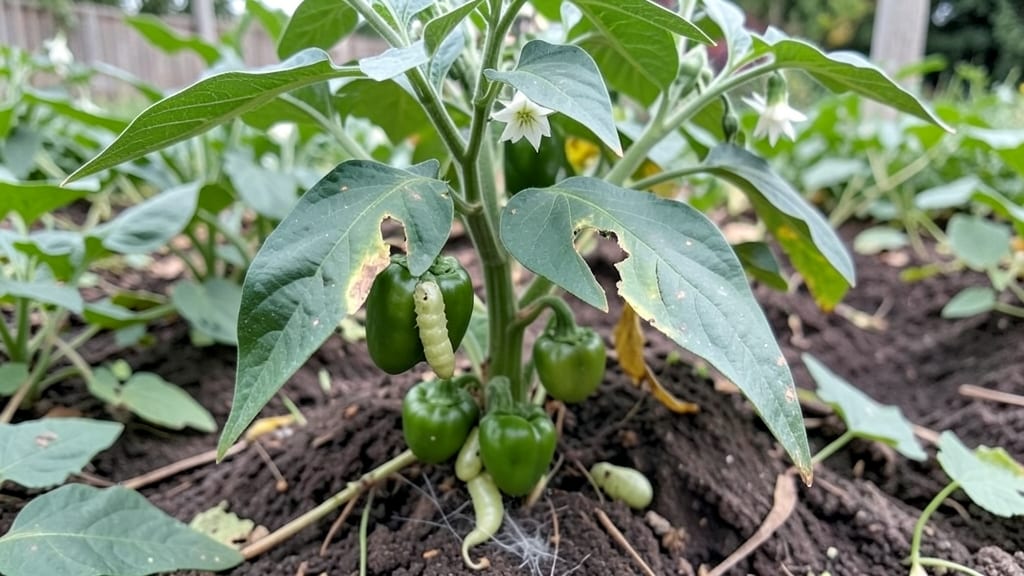
Bell pepper plant pests can turn your thriving garden into a battleground overnight. 🌿 I’ve watched aphids drain leaves, hornworms skeletonize plants in days, and spider mites turn foliage yellow—all before realizing how to stop them.
The key isn’t just reacting when you see damage, but recognizing the early signs and acting fast.
Most of these pests thrive because they go unnoticed until they’ve already weakened your plants. Aphids cluster on new growth, hornworms leave chewed leaves with just the veins intact, and spider mites create fine webbing on the undersides.
Learning to spot these telltale signs early means you can save your peppers before they’re lost.
With the right organic treatments—neem oil, insecticidal soap, or companion plants like basil—you can protect your crop without harsh chemicals. I’ve used these methods to keep my peppers lush and productive all season long, even in pest-heavy years.
The secret is consistency: check your plants regularly and act at the first sign of trouble.
This approach works for both backyard gardens and container growing, no matter your experience level. Let’s get your peppers back on track—before the pests take over completely.
Hidden Triggers Behind Pest Attacks
Bell pepper plants may seem like a low-maintenance crop, but pests thrive when specific conditions align—often silently. Understanding these triggers helps you prevent rather than just react to infestations. Below, we break down the key reasons pests target your peppers, backed by science and real-world gardening insights.
Pests like aphids, spider mites, and thrips love dense foliage because it provides shelter, humidity, and easy access to sap.
When bell pepper plants grow too close together: - Reduced airflow creates a damp microclimate, ideal for fungal pests (e.g., whiteflies) and mites. - Shaded leaves (from overcrowding) become weaker, emitting volatile organic compounds (VOCs) that attract predators like hornworms and cutworms. - Physical barriers (like crowded stems) make it harder for beneficial insects (e.g., ladybugs) to patrol for pests.
💡 Pro Tip: Space bell peppers 18–24 inches apart and prune lower leaves to improve airflow. If repurposing old garden beds, rotate crops—pests like flea beetles overwinter in soil and target the same family (Solanaceae) year after year.
Plants under stress—whether from too much nitrogen or deficiencies in phosphorus/potassium—become pest magnets. Here’s how: - Excess nitrogen = Soft, lush growth (a buffet for aphids and cabbage loopers).
These pests prefer tender, fast-growing tissue rich in sugars. - Phosphorus deficiency = Stunted roots and slow growth, making plants more vulnerable to root-knot nematodes (microscopic worms that feed on roots). - Potassium deficiency = Weak cell walls, making leaves easier targets for chewing pests (e.g., colorado potato beetles).
📊 Scientific Note: Studies show that balanced NPK (e.g., 10-10-10) + micronutrients (like calcium and magnesium) strengthens a plant’s cuticle (its natural protective layer), deterring pests like pepper maggots.
Your watering habits directly impact pest populations. Common errors include: - Overwatering = Soggy soil attracts slugs, snails, and fungal gnats.
It also weakens roots, making plants more susceptible to bacterial wilt (spread by stink bugs). - Underwatering = Stressed plants produce more nectar (a sweet reward for aphids and whiteflies), and dry soil can crack, inviting cutworms to burrow in. - Watering from above = Damp leaves 24/7 create the perfect environment for powdery mildew (which attracts spider mites).
🌡️ Best Practice: Water deeply at the base (1–2 inches per week) and early in the day to allow foliage to dry. Use drip irrigation or soaker hoses to avoid wetting leaves.
Pests don’t just appear—they outcompete or out-eat their natural predators when their ecosystem is disrupted.
Key disruptors: - Pesticide overuse (even "organic" sprays) can kill ladybugs, lacewings, and parasitic wasps that hunt aphids and caterpillars. - Monoculture gardening = Fewer plant varieties = less biodiversity = fewer predator species to keep pests in check. - Lack of pollen/nectar sources = Beneficial insects (like hoverflies) starve and abandon your garden.
✨ Solution: Plant companion flowers (e.g., marigolds, dill, or basil) near peppers to attract predators. Avoid broad-spectrum pesticides—opt for neem oil or insecticidal soap as last resorts.
Pests are opportunistic, and their activity peaks when:
- Temperature rises (e.g., thrips thrive in 80°F+ weather).
- Humidity spikes (e.g., whiteflies multiply in 70%+ humidity).
- Day length changes (e.g., hornworms lay more eggs as summer progresses).
🔍 Example: In Southern states, sweet potato whiteflies explode in July–August due to heat and drought. In Northern gardens, aphids surge in spring when peppers are young and tender.
🎯 Action Step: Monitor local pest calendars (from your Cooperative Extension Service) and set up yellow sticky traps to catch flying pests early.
Quick Fixes for Pepper Plant Problems
When pests invade your bell pepper plants, swift action is key! Below are practical, step-by-step solutions tailored to the most common culprits—from chewing insects to sap-sucking nuisances. Each fix includes prevention tips to keep your plants thriving long-term.
Signs: Ragged leaves, missing chunks of foliage, or tiny holes.
🔥 Handpick & Destroy (Best for Small Infestations)
- 👨🍳 Inspect plants early in the morning when pests are sluggish.
- 🔪 Drop them into soapy water (1 tbsp dish soap per gallon) to kill them instantly.
- 🌡️ Repeat daily until no more pests are found.
🥘 Organic Sprays (For Larger Problems)
- Neem oil spray: Mix 1 tbsp neem oil + 1 tsp mild soap + 1 quart water.
Spray every 5–7 days until pests vanish. - Bacillus thuringiensis (Bt): A natural bacteria that targets caterpillars. 💡 Pro Tip: Apply in the evening to avoid harming bees.
🛡️ Prevention Tips
✅ Row covers (fine mesh) over young plants to block egg-laying. ✅ Interplant with basil or marigolds—their strong scents repel pests. ✅ Remove fallen leaves where pests hide.
Signs: Sticky residue ("honeydew"), yellowing leaves, or tiny webs.
🍳 Blast Them Off (Immediate Relief)
- 💦 Spray plants with a strong jet of water (aphids hate this!).
- 🧼 Use insecticidal soap: Mix 2 tbsp castile soap + 1 quart water.
Spray directly on pests (avoid flowers to protect pollinators). 3. 🌿 Repeat every 3–4 days until gone.
🕷️ Introduce Beneficial Predators (Long-Term Fix)
- Ladybugs (eat aphids) or lacewings (devour mites). Order online or find them in garden centers.
- 💡 Pro Tip: Release them at dusk when pests are active but predators are less stressed.
🎯 Yellow Sticky Traps (For Whiteflies & Mites)
- Hang yellow cards coated in petroleum jelly near plants. ✨ Bonus: They also catch fungus gnats!
🛡️ Prevention Tips
✅ Keep plants healthy—stressed peppers attract pests. Water deeply but less often to avoid fungal issues. ✅ Prune crowded foliage to improve airflow (mites love humidity). ✅ Dust leaves with diatomaceous earth (food-grade)—it dehydrates soft-bodied pests.
Signs: Wilting plants, chewed stems at the base, or stunted growth.
🔪 Physical Barriers (For Cutworms & Grubs)
- 🛡️ Wrap stems with cardboard collars (bury 2 inches deep) to block cutworms.
- 🌱 Use coffee grounds around the base—caffeine repels grubs naturally.
🍄 Fungal & Nematode Control
- 🍅 Plant marigolds nearby—they release chemicals that deter nematodes.
- 💡 Pro Tip: Solarize soil in late summer by covering with clear plastic for 4–6 weeks to kill nematodes.
🛡️ Prevention Tips
✅ Rotate crops—don’t plant peppers in the same spot yearly. ✅ Test soil for nematodes before planting (local extension offices help). ✅ Avoid overwatering—grubs thrive in soggy soil.
| Method | How to Use | Best For |
|---|---|---|
| Garlic spray | Blend 2 garlic cloves + 1 quart water. Strain & spray. | Aphids, mites, whiteflies |
| Copper tape | Wrap around stems to deter slugs/snails. | Soft-bodied pests |
| Diatomaceous earth | Sprinkle lightly on soil & leaves. | Crawling insects |
💡 Pro Tip: Rotate methods to prevent pests from building resistance!
By acting fast and combining immediate fixes with preventive habits, your bell peppers will stay pest-free and productive. 🌱 Happy gardening!
Frequently asked questions about bell pepper plant pests
What are the most destructive pests for bell peppers?
The top culprits include hornworms (they devour leaves overnight), aphids (leave sticky honeydew), spider mites (create fine webs), and pepper maggots (attack roots). Early identification is key—check undersides of leaves daily during growing season.
How do I know if my peppers are infested with spider mites?
Look for tiny yellow dots on leaves (early sign), fine webbing between leaves, or leaves that appear bronzed. Tap leaves over white paper—moving specks confirm mites. They thrive in dry, hot conditions, so increase humidity if you spot them.
Can I use neem oil on flowering bell pepper plants?
Yes, but apply it early in the morning and avoid spraying directly on flowers to protect pollinators. Neem oil works best on young pests—reapply every 5-7 days until infestation clears. For heavy blooms, switch to insecticidal soap instead.
What's the fastest way to remove hornworms from my plants?
Handpick them in the early morning when they're sluggish, then drop them into soapy water. For large infestations, spray Bacillus thuringiensis (Bt) at dusk—it targets caterpillars without harming bees. Check plants daily until no more are found.
Will companion planting really keep pests away?
Plant basil (repels thrips), marigolds (deter nematodes), or nasturtiums (attract aphids away from peppers). The key is diversity—pests struggle to find their preferred hosts when surrounded by unfamiliar scents and plants.