
Companion Plants
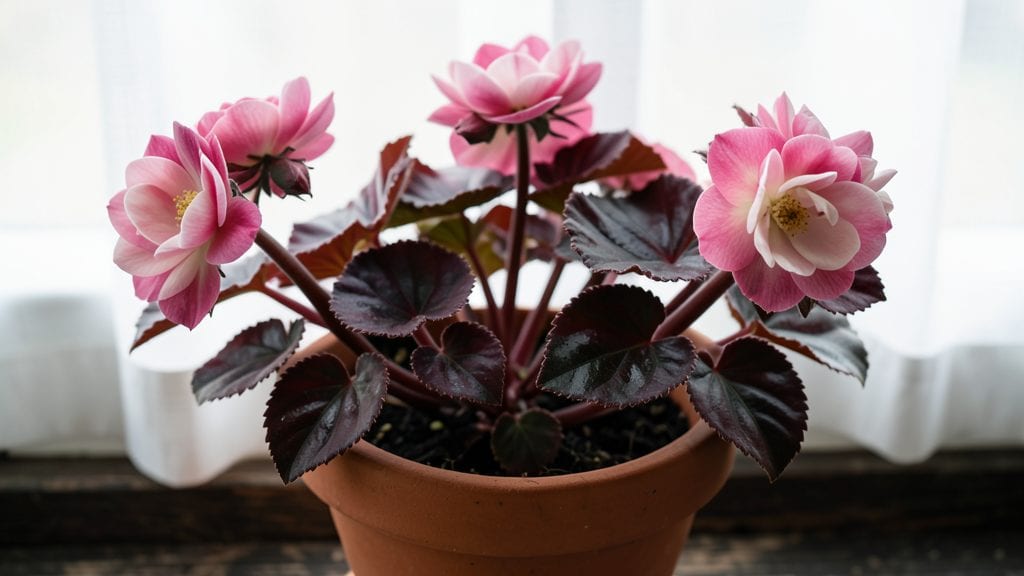
Black begonia plants bring drama to shady spots with their deep purple-black leaves and delicate blooms—plus, they naturally deter pests like aphids and whiteflies. 🌿 I’ve grown them in my woodland garden for years, and they’ve become my go-to for adding rich color where sunlight fades.
The key is mimicking their tropical habitat: bright but indirect light, consistently moist soil, and high humidity. Skip the full sun, and you’ll reward yourself with plants that thrive where others struggle.
These beauties grow best in well-draining potting mix or garden soil amended with compost, and they love a little extra humidity—think morning misting or a pebble tray.
Propagating from stem cuttings is easier than seeds, and you’ll see roots forming in just 2-3 weeks if you keep them warm and damp. A light fertilizer every 4-6 weeks keeps them blooming, but don’t overdo it—they’re sensitive to salt buildup.
The dark foliage makes them stand out, but they’re also surprisingly low-maintenance once established.
You’ll end up with lush, pest-resistant plants that add texture and depth to shady borders, containers, or even hanging baskets. The contrast of their deep leaves against lighter foliage creates a striking visual, and their natural pest-repelling qualities mean fewer chemicals in your garden.
Just watch for spider mites in dry conditions—their favorite snack. With the right care, these plants will reward you with months of vibrant growth and minimal fuss.
Works equally well in containers, garden beds, or as a houseplant with the right light. Here’s how to keep them thriving all season long—no green thumb required.
📚 In This Guide
- What you need
- Instructions
- Tips and common mistakes
- Wrapping up and next steps
What you need
- ● Black Begonia Plants: 3–5 healthy nursery-grown plants (check roots for pests before purchasing).
- ● Well-draining potting mix: 10–15 lbs of a blend designed for tender perennials or add perlite/vermiculite (20% by volume) for aeration.
- ● Containers or garden bed: Containers: 6–8-inch pots with drainage holes (1 per plant).
- ● Garden beds: A partially shaded area with loose, moist (but not soggy) soil.
- ● Slow-release fertilizer: 1 lb of 10-10-10 or organic options like worm castings.
- ● Mulch: 2–3 inches of shredded bark or coconut coir to retain moisture.
- ● Gloves: A pair to protect hands from soil and thorns.
- ● Trowel or small shovel: For transplanting or amending soil.
- ● Spray bottle: For misting leaves (especially in dry climates).
- ● Pest control: Neem oil or insecticidal soap (preventative measure).
- ○ Support stakes (optional): 6–12-inch bamboo stakes if stems need extra support.
- ● Grow lights (indoor growers): LED lights with a red/blue spectrum for 12–14 hours/day.
How to grow and care for black begonia plants
These dramatic, shade-loving beauties thrive with minimal fuss—just follow these steps.
🌱 Step 1: Select the Right Spot for Your Begonias
Black begonias love bright, indirect light—think dappled shade under trees or a north-facing window. Direct sun will scorch their velvety leaves, while deep shade slows blooming. I place mine near a sheer curtain where they get morning sun but afternoon shade. If growing outdoors, avoid hot afternoon rays.
Check the soil temperature before planting—begonias prefer 60-75°F. If your ground feels cooler than that, wait a week or two. These plants hate cold feet, and chilly soil will stunt their growth. Amend heavy clay soil with 2-3 inches of compost to improve drainage, since soggy roots cause root rot.
🪴 Step 2: Plant in Well-Draining, Moisture-Retentive Soil
Use loamy, acidic soil (pH 5.5-6.5) mixed with 30% perlite to prevent compaction. Black begonias have delicate roots that rot easily in waterlogged conditions. Fill containers with a blend of 50% peat moss, 30% potting mix, and 20% coarse sand for perfect drainage.
Dig a hole twice as wide as the root ball but only as deep as the top of the roots. Gently remove the plant from its pot, loosen any circling roots, and place it in the hole. Fill around the base with soil, pressing lightly to eliminate air pockets. Water immediately to settle the soil and remove any air gaps.
💧 Step 3: Water Consistently Without Overdoing It
Keep the soil evenly moist but never soggy—this is key for black begonias. Water when the top inch of soil feels dry, which is usually every 2-3 days in warm weather. I use a self-watering pot to maintain steady moisture without drowning the roots. Overwatering causes yellow leaves, while underwatering makes them wilt.
Water at the base of the plant in the morning to reduce evaporation and fungal risks. Avoid wetting the leaves, as black begonias are prone to powdery mildew in humid conditions. If you notice water beading on the leaves, it’s time to improve airflow by spacing plants 12-18 inches apart.
☀️ Step 4: Fertilize Lightly for Lush Growth and Blooms
Feed every 4-6 weeks during the growing season with a balanced, water-soluble fertilizer (10-10-10) diluted to half strength. Over-fertilizing burns delicate roots, so I always mix it with water first. Stop fertilizing in late summer to encourage blooming rather than leafy growth.
Black begonias also appreciate a monthly dose of liquid seaweed extract for natural pest resistance. The algae-based nutrients boost their resilience against aphids and spider mites—those pests usually avoid these plants entirely. If you spot any pests, spray with neem oil (mixed 1:10 with water) for a gentle, organic solution.
✂️ Step 5: Prune and Deadhead for Continuous Blooms
Pinch back leggy stems in early spring to encourage bushier growth. Use clean, sharp scissors to cut just above a leaf node—never tear the stems. Deadhead spent blooms regularly to redirect the plant’s energy into new flowers. I remove faded blooms every 7-10 days to keep my plants looking fresh.
If your begonia outgrows its container, repot in spring using a 2-inch larger pot with fresh potting mix. Black begonias prefer being slightly root-bound, so don’t rush to upgrade too often. In fall, reduce watering and stop fertilizing as growth slows—this helps the plant prepare for dormancy.
Tips & tricks for perfect black begonia care
Black begonias are finicky in the best way—they reward attention with stunning blooms and natural pest resistance. Here's how to keep them thriving.
Lighting Secret: If your begonias start looking pale or leggy, they're getting too much light. The ideal spot gets morning sun followed by afternoon shade—think of it like a sunbathing session with sunscreen. For indoor plants, rotate them quarter-turn weekly so all sides get even light exposure. This prevents lopsided growth and keeps those dramatic dark leaves looking their best.
Soil Mix Upgrade: The 50-30-20 blend of peat moss, potting mix, and coarse sand is non-negotiable, but here's my pro move: add 1 cup of worm castings to every gallon of mix. These castings provide gentle, slow-release nutrients that won't burn delicate roots like synthetic fertilizers can. Plus, they improve soil structure for better drainage.
Watering Wisdom: The top inch test is your best friend, but here's the thing—morning watering is crucial. Watering in the evening can leave moisture on leaves overnight, creating perfect conditions for powdery mildew. I've learned this the hard way after losing two plants to fungal spots! Also, use room-temperature water—cold water shocks the roots and can cause yellowing leaves.
Pruning Pro Tip: When deadheading those 7-10 day blooms, don't just snip off the flower—cut back to the first set of leaves below it. This encourages branching and bushier growth. And here's a little secret: save those spent blooms! Dry them and use them in winter arrangements—they make stunning dried flowers that hold their dark color beautifully.
Pro Tips for Black Begonia Plants
- Black begonias are finicky in the best way—they reward attention with stunning blooms and natural pest resistance.
- Lighting Secret: If your begonias start looking pale or leggy, they're getting too much light.
- Soil Mix Upgrade: The 50-30-20 blend of peat moss, potting mix, and coarse sand is non-negotiable, but here's my pro move: add 1 cup of worm castings to every gallon of mix.
Frequently asked questions
How do I propagate black begonia plants?
Propagate black begonias via stem cuttings in spring or summer. Snip a 3-4 inch section just below a leaf node, remove lower leaves, and dip the cut end in rooting hormone. Place in moist potting mix or water—roots should form in 2-4 weeks! Avoid direct sunlight until established.
How long does it take for black begonias to bloom?
With ideal care (bright, indirect light and consistent moisture), black begonias typically bloom 6-8 weeks after planting. Patience pays off—once established, they reward you with dark, velvety blooms for months! Prune spent flowers to encourage more blooms.
Are black begonias really pest-resistant?
Yes! Their strong scent deters pests like aphids, spider mites, and even deer. However, overwatering or poor drainage can attract fungus gnats. Keep soil slightly moist but well-draining, and use a fan to improve air circulation for extra protection.
Can I grow black begonias in containers?
They thrive in containers 6+ inches deep with drainage holes. Use a light, airy potting mix (like 50% peat moss, 30% perlite, 20% compost). Repot every 2-3 years to refresh nutrients. Bonus: Container-grown begonias are easier to move indoors if frost threatens!
Why are my black begonia leaves turning yellow?
Yellow leaves usually signal overwatering or nutrient deficiency. Check soil moisture—it should be evenly damp, not soggy. If roots smell rotten, trim affected areas and repot in fresh mix. For yellowing edges, low humidity or fluoride buildup (from tap water) may be to blame. Use distilled water or rainwater to prevent this.
Do black begonias tolerate cold weather?
Nope! These tropical plants thrive in 65–75°F and cannot survive frost. In cold climates, grow them as annuals or bring pots indoors before temps drop below 50°F. If you must overwinter, reduce watering and provide bright, indirect light to keep them dormant until spring.
Wrapping up and next steps
Black begonia plants are a game-changer for gardeners seeking low-maintenance, pest-repelling, and stunning shade-loving blooms! 🌿 Their velvety foliage and natural pest-deterring properties make them a must-have for any garden—whether you're a beginner or a seasoned green thumb.
With just a few simple steps, you can enjoy their beauty while keeping unwanted critters at bay.
Ready to transform your space? Start by planting one today—your garden (and your plants!) will thank you. Happy gardening! 🌸