
Lawn
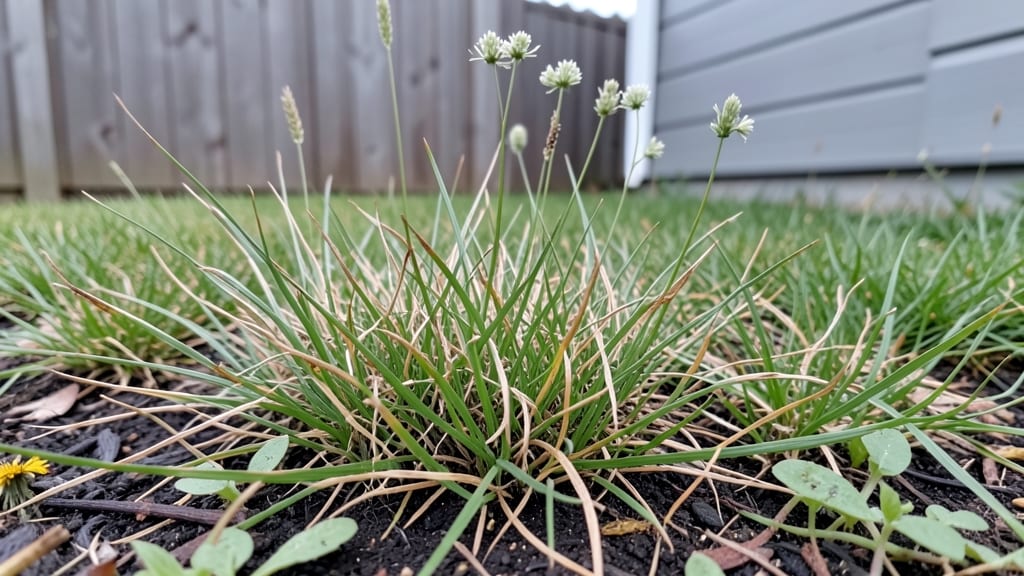
That sad sight of a brown grass plant sprawling across your lawn is like watching your green sanctuary wither before your eyes—yet fixing it is simpler than you think. nutrient starvation. The good news? Each has a targeted fix that doesn’t require chemicals or heavy equipment.
Start by checking the texture of the soil—dry and crumbly means drought, while spongy or matted grass signals overwatering. Look for tiny holes or chewed blades (pests) or a fuzzy white film (fungus).
Most brown grass problems disappear within 2-4 weeks once you address the real issue, not just the symptoms. My own lawn went from 80% brown to lush green in just 3 weeks after adjusting watering and adding compost.
The first fix is often the simplest: water deeply but less frequently—about 1-1.5 inches per week, including rainfall. For pests, a mix of neem oil and water sprayed in the evening works like magic.
Nutrient deficiencies? A light layer of organic fertilizer or topsoil revives roots faster than synthetic blends. The results? Grass that bounces back with a deep green hue and stays resilient through heatwaves.
This works for both traditional lawns and ornamental grass varieties—just adjust the watering schedule based on your climate. The key is patience; recovery takes time, but the payoff is a lawn that stays vibrant year-round. Let’s get those roots drinking again.
Root Causes Of Dull Green
When your once-vibrant lawn starts turning brown, it’s often a cry for help from the roots—or even the soil itself. Understanding the why behind brown grass is the first step to bringing it back to life.
Let’s dig into the most common culprits and what they mean for your lawn’s health.
Water is the lifeblood of grass, and when it’s out of balance, your lawn suffers. Drought stress is the most obvious cause of brown grass, especially in hot, dry climates.
Without enough moisture, grass blades lose their turgor (that plump, juicy structure), causing them to wilt and turn brown. But here’s the twist: overwatering can also kill grass.
- Underwatering: Grass roots shrink and struggle to absorb nutrients, leading to dry, crispy patches. Signs: Footprints remain visible for hours, soil feels dry 1-2 inches below the surface.
- Overwatering: Excess water starves roots of oxygen, promoting fungal diseases like Brown Patch or Dollar Spot. Signs: Mushy, spongy grass that pulls up easily; yellow-brown rings or spots.
- Irregular watering: Uneven moisture creates "thirsty" and "drowned" zones, leading to patchy browning.
💡 Pro Tip: Water deeply 2-3 times per week (early morning, 6–10 AM) for ½–1 inch per session. Use a rain gauge or tuna can to measure—your sprinkler might be over- or under-delivering!
Just like your skin, grass can suffer from too much sun exposure, especially during heatwaves. Sun scorch occurs when grass blades absorb more sunlight than they can handle, leading to dry, straw-like patches. This is common on southern exposures or during summer droughts.
- Short-term heat stress: Grass turns grayish-brown but recovers once temperatures drop or rain returns.
- Long-term damage: Repeated heatwaves weaken roots, making grass more susceptible to disease or permanent die-off.
- Grass types matter: Cool-season grasses (like Kentucky Bluegrass or Fescue) struggle in summer heat, while warm-season grasses (like Bermuda or Zoysia) thrive.
🌡️ Actionable Fix: If your lawn is heat-stressed, water in the early morning to reduce evaporation and mow higher (3–4 inches) to shade the roots. Consider shade cloth for newly seeded areas in extreme heat.
Brown grass isn’t always about water—it could be a nutrient deficiency or compacted soil choking the life out of your lawn. Healthy soil is like a buffet for grass roots, and when it’s lacking, your lawn shows it.
| Symptom | Likely Cause | Quick Test |
|---|---|---|
| Uniform yellow-brown color | Nitrogen deficiency (most common) | Dig a 2-inch soil sample—if it’s pale gray or lacks organic matter, it’s starving. |
| Purple or red tinges | Phosphorus deficiency (roots struggle to grow) | Soil pH test—ideal range is 6.0–7.0 for most grasses. |
| Spongy, uneven surface | Compacted soil (roots can’t breathe) | Drop a few marbles on the lawn—if they roll slowly, compaction is likely. |
✨ Organic Fix: Test your soil (kits cost $10–$20) and amend with compost (for organic matter) or gypsum (for compaction). Avoid synthetic fertilizers—they mask symptoms without fixing the root problem!
Not all brown grass is due to neglect—sometimes, it’s an invisible army of pests or pathogens wreaking havoc. Common culprits include:
- Grubs: White, C-shaped larvae munch on roots, causing patches to pull up easily. Signs: Birds pecking at the lawn; brown grass that lifts like a rug.
- Chinch Bugs: Tiny black bugs that suck sap from grass, leaving behind straw-like patches, often near sidewalks or driveways.
- Fungal Diseases: Brown Patch (circular brown rings), Dollar Spot (silver-dollar-sized patches), or Rust (orange pustules). Thrives in wet, humid conditions.
- Mole or Vole Damage: Burrows create uneven, brown tunnels where grass fails to grow.
🔍 How to Diagnose:
- Dig up a small patch—healthy roots are white; diseased roots are black/mushy.
- Check for pests in the thatch layer (the spongy layer between soil and grass).
- Look for patterns: Random spots = disease; circular patches = grubs or chinch bugs.
🎯 Treatment: For pests, use beneficial nematodes or neem oil. For fungi, reduce watering and apply baking soda (1 tbsp/gallon of water) as a natural fungicide.
Grass has an ideal height range, and mowing outside it stresses the plant, leading to browning. Scalping (cutting too short) exposes roots to heat and compacts soil, while overly tall grass blocks sunlight and encourages disease.
- Too short: Weakens roots, invites weeds, and burns grass in hot weather.
- Too tall: Shades the soil, retains moisture (promoting fungus), and looks unkempt.
- Uneven cuts: Creates stress points where grass turns brown faster.
🔥 Mowing Rules:
- Never remove more than ⅓ of the blade height at once.
- Keep your mower blade sharp—dull blades tear grass, making it more susceptible to disease.
- Adjust height based on season: Higher in summer (3–4 inches), lower in fall (2–3 inches) for cool-season grasses.
Revive Your Lawn Naturally
Turn that dull, brown grass back into a lush green carpet with these practical, organic fixes—no harsh chemicals required! Whether your lawn is struggling from drought, pests, or poor soil, these solutions will help it bounce back stronger than ever.
Below, we’ve matched common causes to easy, step-by-step fixes, plus tips to keep your grass thriving long-term.
Signs: Dry, crispy patches, footprints that don’t spring back, or grass that pulls up easily.
How to Fix It: ✅ 🔥 Deep Watering (Not Just a Sprinkle)
Water deeply 1–2 times per week (early morning is best) instead of light daily sprinkles.
Aim for 1–1.5 inches of water per session. - Use a soaker hose or drip irrigation to deliver water directly to roots, reducing evaporation.
✅ 🌱 Improve Soil Moisture Retention
- Spread 2–3 inches of organic mulch (like straw or wood chips) around the base of plants to lock in moisture.
- Mix compost or coconut coir into the top 2 inches of soil to boost water-holding capacity.
✅ 🌡️ Adjust Watering for Heatwaves
- If temps hit 90°F+, water twice daily—once in the morning, once in the late evening.
- Pro Tip: 💡 Test soil moisture by sticking your finger 2 inches deep. If it’s dry, water again.
Signs: Brown spots, chewed blades, fungal rings, or slimy patches.
How to Fix It:
✅ 🔪 Manual Pest Control (First Line of Defense)
- Grubs? Handpick them from the soil (wear gloves!) or use beneficial nematodes (microscopic worms that eat grubs).
- Chinch bugs? Blast them off with a strong spray of water in the early morning when they’re sluggish.
✅ 🍳 Organic Fungicides & Treatments
- For fungal issues (like brown patch): Mix 1 tbsp baking soda + 1 quart water + a few drops of dish soap, then spray affected areas.
- For grubs/beetles: Apply neem oil spray (follow label rates) or diatomaceous earth (food-grade only) around the lawn.
✅ 🌿 Prevent Future Outbreaks
- Aerate your lawn in spring/fall to improve airflow and reduce fungal growth.
- Mow high (3–4 inches) to shade roots and deter pests like chinch bugs.
- Pro Tip: ✨ Plant pest-repelling companions like clover or marigolds near your lawn edges—they naturally deter grubs and aphids!
Signs: Uniform yellowing, slow growth, or grass that feels spongy when walked on.
How to Fix It:
✅ 📊 Test Your Soil (Know What’s Missing)
- Grab a DIY soil test kit (from a garden center) or send a sample to your local extension office for a full analysis.
- Common deficiencies:
- Nitrogen (N): Leads to pale, weak grass → Fix with compost tea or fish emulsion.
- Potassium (K): Causes brown tips → Use wood ash or banana peels (steep in water for a week).
- Phosphorus (P): Stunted roots → Apply bone meal or rock phosphate.
✅ 👨🍳 Organic Fertilizer Boost
- For quick greening: Sprinkle alfalfa meal (high in nitrogen) or kelp meal (packed with micronutrients).
- For long-term health: Top-dress with 1–2 inches of compost in early spring or fall.
✅ ⏰ Timing Matters
- Spring: Focus on nitrogen (for leaf growth).
- Fall: Shift to potassium/phosphorus (for root strength).
- Pro Tip: 🎯 Avoid fertilizing in extreme heat—it burns roots! Water first, then feed.
To keep your lawn green and resilient, adopt these habits:
- 🌡️ Mow smart: Never cut more than 1/3 of the blade at once—always leave grass tall (3–4 inches) in summer.
- 💡 Sharpen mower blades regularly for clean cuts (prevents disease).
- 🌧️ Collect rainwater in barrels to reduce reliance on tap water.
- 🔄 Overseed bare spots in early fall with drought-resistant grass (like tall fescue or buffalo grass).
Remember: Patience is key—reviving brown grass takes 2–4 weeks of consistent care. Stick with it, and you’ll have a vibrant, healthy lawn in no time! 🌿💚
Frequently asked questions
Why does my grass turn brown in patches even when I water it regularly?
Patchy browning often signals hidden issues like grubs (larvae eating roots) or fungal diseases (e.g., brown patch). Dig up a small patch—if roots are white, check for pests; if black/mushy, reduce watering and apply baking soda spray. Uneven watering or compacted soil can also create "thirsty" zones.
Can I save grass that’s been brown for months?
It depends! If the roots are still alive (test by tugging—healthy roots resist), overseed with drought-resistant grass like tall fescue. For dead patches, remove the grass, aerate, and top-dress with 1–2 inches of compost. Avoid synthetic fertilizers—they won’t revive dead roots. Patience is key: recovery takes 4–6 weeks of consistent care.
How do I tell if my brown grass is from drought or pests?
Check the roots: Pull up a small section. If roots are white but dry, it’s drought. If they’re black/mushy, it’s fungal disease. For pests like grubs, look for birds pecking at the lawn or grass that pulls up like a rug. Tiny black bugs near sidewalks? Likely chinch bugs.
Is it better to water brown grass daily or deeply 2–3 times a week?
Deep, infrequent watering (1–1.5 inches per session) encourages roots to grow deeper, making grass more drought-resistant. Light daily sprinkles keep grass shallow and stressed. Water in the early morning (6–10 AM) to reduce evaporation and fungal growth. Use a soaker hose for efficiency.
Will mowing too short fix brown grass?
No—cutting grass too short (below 2 inches) stresses roots and invites weeds. For brown grass, mow high (3–4 inches) to shade roots and reduce water loss. Sharpen your mower blade first to avoid tearing grass, which spreads disease. Focus on fixing the root cause (water, pests, or nutrients) while keeping blades tall.