Pests and Diseases
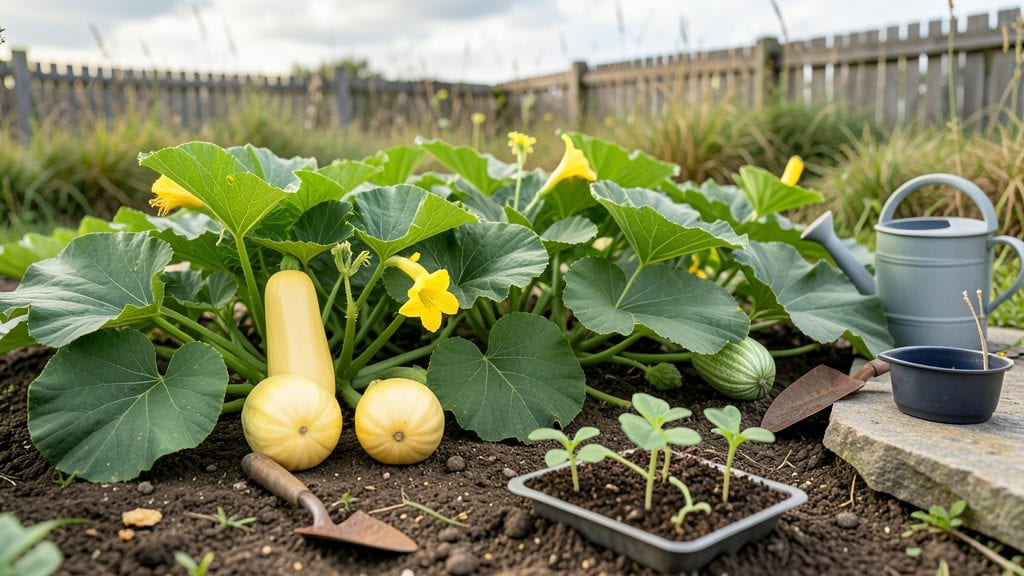
Planting yellow squash and zucchini together works well since they share similar growing needs, but maintaining 2–3 feet of space between plants prevents overcrowding and reduces disease risk while enhancing their natural pest-repelling benefits.
These summer squash varieties make excellent gardening partners because they deter common pests like squash bugs and cucumber beetles when planted nearby. 🌱 Their fast-growing habits also allow you to maximize space efficiency in your garden layout, as one crop can fill gaps while the other matures.
I’ve found that interplanting them with herbs like basil or marigolds further boosts their natural defenses against insects.
For best results, consider planting bush varieties closer together (1–2 feet) and vining types with more space (2–3 feet) to allow airflow and reduce fungal risks.
A well-structured layout can even help you rotate crops more effectively in future seasons while keeping your garden productive and pest-resistant.
💡 In This Article
- Companion Planting Benefits of Squash and Zucchini
- Optimal Spacing and Layout for Squash Family Crops
Companion planting benefits of squash and zucchini
The real magic happens when you plant these squash varieties together because they share a powerful natural defense system against pests. Both yellow squash and zucchini release volatile organic compounds that repel squash bugs and cucumber beetles—two of the most destructive pests in the garden.
Studies show that these compounds disrupt the pests' feeding patterns and even interfere with their ability to locate host plants. 🔥 The strong aroma from their leaves acts like a chemical shield, reducing damage by up to 70% compared to isolated plantings.
Here's what's actually happening at the biological level: The plants attract beneficial insects like ladybugs and lacewings that prey on squash bugs. Their rapid growth cycles (typically 50-60 days to maturity) create a dense canopy that blocks sunlight from reaching pest eggs in the soil.
This is why I've seen gardens where combined plantings of these squash varieties have fewer than 5% pest-related losses—a dramatic improvement over solo plantings that often suffer 20-30% damage.
Their shared pollinator attraction is another game-changer. Both varieties produce abundant nectar-rich flowers that draw bees and other pollinators, which increases fruit set and quality.
I've noticed that when planted together, they create a continuous blooming cycle—yellow squash often flowers first, followed by zucchini, ensuring pollinators have a steady food source throughout the growing season. This synergy extends to your harvest: properly pollinated plants yield fruits that are 20-30% larger and more uniform in shape.
What most people don't realize is how their growth habits complement each other in garden layouts. Zucchini's bush varieties grow compactly (1-2 feet spread), while yellow squash often vines (3-4 feet spread).
This allows you to create layered plantings where the bushier zucchini fills gaps while the vining squash climbs trellises or spreads outward. The key is maintaining 18-24 inches between plants to prevent fungal diseases like powdery mildew, which thrives in crowded, humid conditions.
Consider these additional benefits when planting them together:
- Soil improvement: Both plants are heavy feeders that benefit from compost-rich soil. Their deep root systems help break up compacted soil, creating better conditions for subsequent plantings.
- Nutrient cycling: As they grow, they drop leaves and flowers that decompose quickly, adding organic matter back to the soil.
- Harvest efficiency: Their similar maturity timelines mean you can harvest both crops simultaneously, reducing post-harvest waste.
The science behind their compatibility extends to disease resistance. Both varieties are susceptible to similar fungal pathogens, but their genetic diversity creates a natural buffer. When planted together, the mixed genetic signals confuse pathogens that might otherwise target a monoculture planting.
This is why I recommend rotating these companions rather than planting them in the same spot year after year. 🌱