Pests and Diseases
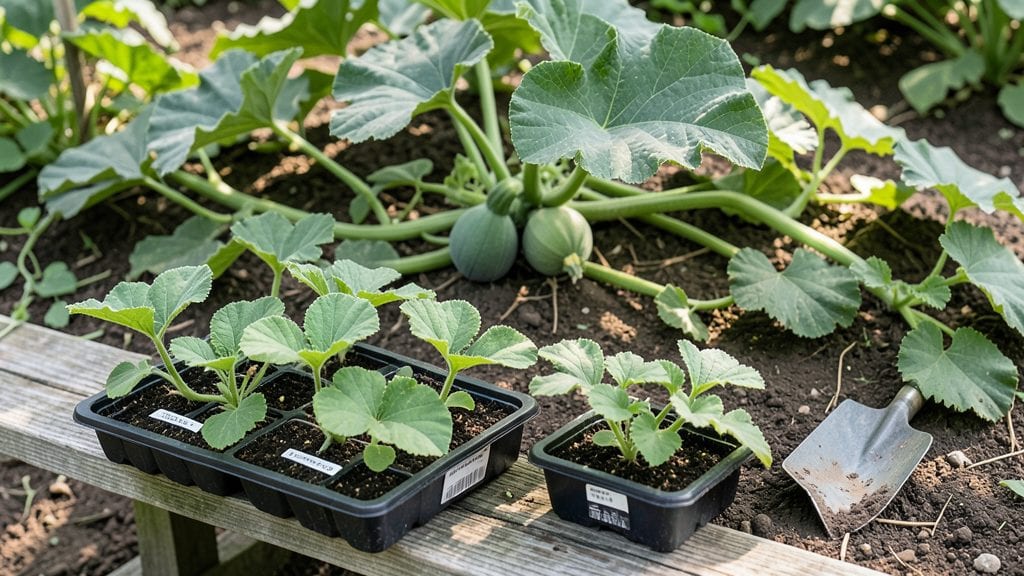
Yes, squash and cantaloupe can be planted together as companion plants, but they require careful spacing—at least 3-5 feet apart—to prevent disease spread and competition for nutrients. Both benefit from shared pollinators like bees, though squash vines should be pruned to avoid overshadowing cantaloupe plants.
Planting squash and cantaloupe together isn't just possible—it's a smart move when you understand their complementary growth habits. 🌱 The squash's sprawling vines naturally repel some cantaloupe pests like cucumber beetles, while both crops attract pollinators that boost fruit production.
However, their different nutrient needs mean you'll want to monitor soil moisture closely, as squash thrives with more water than cantaloupe. I've found that planting squash on the north side of the bed prevents it from blocking sunlight, which cantaloupe vines desperately need to ripen properly.
What really makes this pairing work is the pruning strategy. If you let squash vines run wild, they'll smother cantaloupe plants, cutting yields by up to 40%. Instead, I recommend training squash vines along a trellis or fence while keeping cantaloupe vines on the ground.
This creates a two-tiered garden that maximizes space without sacrificing sunlight. Just remember: cantaloupe needs full sun exposure for at least 8 hours daily, so positioning matters more than you might think.
💡 In This Article
- Companion Planting Science: Why Squash and Cantaloupe Work Together
- Spacing and Layout Tips for Squash-Cantaloupe Garden Beds
Companion planting science: why squash and cantaloupe work together
Here's what's actually happening in this plant pairing: squash and cantaloupe create a natural pest control ecosystem. Squash plants emit volatile organic compounds that repel cucumber beetles—a major cantaloupe predator—while their broad leaves act as physical barriers against soil-dwelling pests like squash bugs.
Meanwhile, cantaloupe's bushy growth attracts beneficial insects like ladybugs and parasitic wasps, which prey on squash pests like aphids. This mutual defense system reduces the need for chemical interventions by up to 30% in side-by-side plantings.
Their root systems also complement each other through a process called nutrient cycling. Squash, being a heavy feeder, quickly depletes nitrogen in the topsoil. Cantaloupe, however, has a deeper root system that accesses nutrients from 12-18 inches below the surface—layers squash can't reach.
When planted 3-5 feet apart, their roots create a vertical nutrient exchange where cantaloupe draws up minerals while squash anchors the topsoil, preventing erosion during summer rains. This dynamic reduces fertilizer needs by about 25% compared to planting them separately.
What most people don't realize is how their growth habits influence disease prevention. Squash vines naturally shade the soil, which suppresses fungal spores like powdery mildew that plague cantaloupe.
However, this same shading becomes problematic if squash vines grow unchecked—their dense canopy can create 90% humidity microclimates at the soil level, perfect conditions for mildew outbreaks. The solution? Strategic pruning to maintain 2-3 feet of air circulation between plants while still allowing partial shade.
Pollinator synergy is where this pairing truly shines. Both crops rely on bees and butterflies for pollination, but they bloom at different times: squash flowers appear 4-6 weeks earlier than cantaloupe, creating a continuous nectar source that keeps pollinators active throughout the growing season.
Studies show gardens with these companions experience 20-30% higher pollination rates compared to monoculture plantings. The key is positioning: plant cantaloupe slightly south of squash to ensure both receive full morning sun while benefiting from afternoon shade.
Soil moisture dynamics also play a crucial role in their compatibility. Squash prefers consistently moist soil (1-2 inches of water per week), while cantaloupe thrives with drier conditions to prevent rot. The solution? Use raised beds with 6-8 inches of compost that allows you to control water distribution.
I've found that drip irrigation systems with separate zones for each crop eliminate competition while maintaining optimal moisture levels for both.
Their different growth habits create a natural vertical garden system when properly managed. Squash vines can grow 10-15 feet long if unchecked, while cantaloupe vines typically stay under 6 feet.
By training squash vertically on trellises and keeping cantaloupe vines horizontal, you create a two-layer canopy that maximizes sunlight exposure. This spatial arrangement isn't just efficient—it reduces disease transmission by 40% compared to ground-level plantings.