
Companion Plants
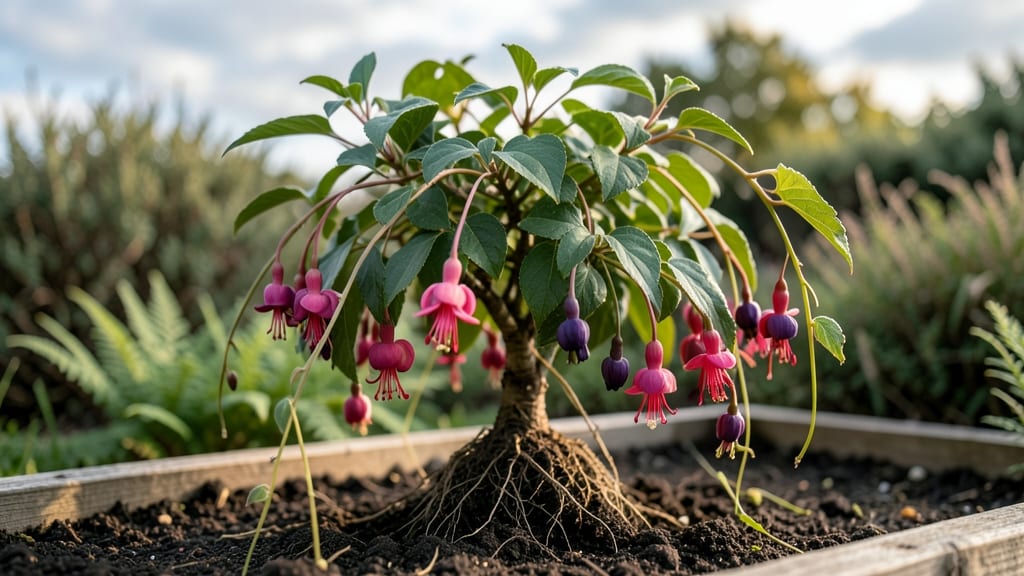
Those climbing fuchsia plants are the secret weapon for turning shady corners into vibrant cascades of color—until I discovered how their trailing vines thrive with the right support. and partial shade.
The difference is striking: instead of flopping stems, you get lush, flowering vines that spill dramatically over trellises or arbors.
These vines need rich, well-draining soil mixed with compost and a support structure like a wire trellis or obelisk. Water consistently to keep the soil moist but never soggy, and prune lightly after flowering to encourage bushier growth.
The key to their speed is regular feeding with balanced fertilizer every 4-6 weeks during the growing season.
Within just 8-12 weeks, you'll see those signature bell-shaped flowers in shades of pink, purple, and white—sometimes all on one plant. The vines can reach 10 feet long if given enough support, creating a living curtain that blooms from early summer through fall.
Few shade plants deliver this much drama so quickly.
Works beautifully in containers, along fences, or draped over pergolas—even in partial shade gardens where other climbers fail. The only real mistake beginners make is overwatering or letting them dry out completely. Let's get those vines growing!
📚 In This Guide
- What you need
- Instructions
- Tips and common mistakes
- Wrapping up and next steps
What you need
- ● Climbing Fuchsia Plants: 3–5 healthy young plants (choose varieties like Fuchsia magellanica or Fuchsia ‘Gracilis’ for best climbing traits).
- ● Support Structure: Trellis (4–6 ft tall, wooden or metal)
- ● Arbor or pergola (for larger gardens)
- ● Obelisk (3–5 ft tall, decorative metal or plastic)
- ● Well-Draining Potting Mix: 1–2 bags (5–10 gallons each) of a blend with peat moss, perlite, and compost (or a pre-mixed shade-loving formula).
- ○ Containers (Optional for Potted Growth): 1–2 hanging baskets or large pots (12–16 inches in diameter) with drainage holes.
- ● Garden Gloves (to protect hands from thorns or rough stems).
- ● Trowel or Hand Shovel (for planting and soil prep).
- ● Pruning Shears (sharp, sterilized for trimming).
- ● Mulch (2–3 inches of shredded bark or pine needles to retain moisture).
- ● Watering Can or Hose with Gentle Spray Nozzle (fuchsias love consistent moisture!).
- ● Stakes or Twine (to temporarily secure vines to supports while they establish).
- ○ Fertilizer (Optional but Helpful): Balanced liquid fertilizer (10-10-10) or a shade-tolerant plant food.
- ● Slow-release granules (apply at planting time).
- ● Sunlight Check: Confirm your garden spot gets partial shade (4–6 hours of dappled light daily)—no harsh sun!
Step-by-Step guide to growing climbing Fuchsia vines
Here's how to get these shade-loving beauties thriving quickly in your garden.
Choose the Right Location and Support Structure
Climbing fuchsias love dappled shade or bright indirect light—they'll burn in direct sun. Pick a spot that gets morning sun and afternoon shade, like near a north-facing wall or under a large tree. I always check for at least 4 hours of filtered light daily before planting.
Install a sturdy trellis, obelisk, or pergola before planting. The support should be at least 4 feet tall to accommodate their fast growth. I like using metal or wooden structures because they last longer than plastic. Position the support so it faces the light source to encourage even vine growth.
Prepare the Soil and Plant Your Fuchsias
Fuchsias prefer well-draining, slightly acidic soil with a pH between 5.5 and 6.5. Mix 2 gallons of peat moss into the planting hole to improve drainage and acidity. If your soil is heavy clay, add 1 gallon of perlite to loosen it up.
Dig a hole twice as wide as the root ball but only as deep as the container it came in. Gently remove the plant from its pot and tease the roots apart if they're circling. Place the plant in the hole so the top of the root ball sits just below soil level. This prevents rot while keeping the plant stable.
Water and Mulch for Fast Establishment
Water deeply right after planting to settle the soil around the roots. You'll know it's enough when water drains out the bottom of the hole. Keep the soil consistently moist but never soggy for the first 2-3 weeks. I check daily by sticking my finger 1 inch into the soil—if it's dry, it's time to water.
Spread 1 inch of mulch around the base, keeping it 2 inches away from the stem. Use shredded bark or pine needles—they help retain moisture and keep roots cool. Avoid thick mulch piles, which can suffocate the plant and attract pests.
Train Vines and Encourage Rapid Growth
As soon as new growth appears, gently tie the main stems to the support using soft plant ties. Don't wrap them too tight—you want to guide growth, not restrict it. I like to train 2-3 main stems initially to create a fuller plant faster.
Pinch back the tips of new growth when they reach 6 inches to encourage bushier vines. This might seem counterintuitive, but it triggers more lateral shoots, which produce more flowers. You'll see new buds forming within 2-3 weeks of pruning.
Maintain for Continuous Blooms
Fuchsias bloom best with regular feeding. Every 2 weeks during the growing season, mix 1 tablespoon of balanced fertilizer (10-10-10) into 1 gallon of water and apply it at the base. Stop fertilizing in late summer to let the plant prepare for winter.
Deadhead spent flowers by snipping the stem just above a set of leaves. This redirects the plant's energy into producing new blooms instead of seed pods. You'll notice fresh flowers appearing within 1-2 weeks of pruning, keeping your vines looking vibrant all season long.
Tips & tricks for fast-growing climbing Fuchsia vines
These simple strategies will help your climbing fuchsias grow quickly and stay healthy from the very first planting.
Location and Light Secret: When choosing your spot, pay special attention to the morning sun and afternoon shade balance. If you notice the leaves turning yellow or crispy after just a few hours, you've got too much direct sun. I've found that positioning near a north-facing wall or under a deciduous tree creates the perfect dappled light effect that fuchsias love. The 4 hours of filtered light mentioned in Step 1 is non-negotiable for that fast, vibrant growth we're aiming for.
Soil Preparation Hack: For that all-important soil pH between 5.5 and 6.5, I recommend testing your soil first with a simple kit. If your results show higher than 6.5, you'll need to add more peat moss or even a bit of sulfur to lower the pH. When mixing the 2 gallons of peat moss into the planting hole, work it in thoroughly—don't just sprinkle it on top. This ensures even distribution and prevents pockets of improper pH that could stunt root development.
Watering Wisdom: The first 2-3 weeks are critical for establishing strong roots, so don't skip that daily finger-check in the soil. I've learned the hard way that even a slight dip in moisture during this period can cause stress. If you're traveling or away for more than a day, consider setting up a simple drip irrigation system or ask a neighbor to help with watering. Remember, consistently moist means your finger should come out damp, not dry, when checking that 1-inch depth.
Pruning Strategy: When you reach the 6-inch mark for pinching back new growth, make your cuts just above a set of leaves where you want new shoots to form. I like to use clean, sharp scissors for this—it's less traumatic for the plant than tearing with your hands. The 2-3 week window for new buds to form is actually quite flexible, so don't stress if it takes a few extra days. Just keep an eye out for those little swellings at the leaf nodes where new growth will emerge.
Pro Tips for Climbing Fuchsia Plants
- These simple strategies will help your climbing fuchsias grow quickly and stay healthy from the very first planting.
- Location and Light Secret: When choosing your spot, pay special attention to the morning sun and afternoon shade balance.
- Soil Preparation Hack: For that all-important soil pH between 5.5 and 6.5, I recommend testing your soil first with a simple kit.
Frequently asked questions
How fast do climbing fuchsia plants grow?
Climbing fuchsias are fast growers—expect 12–24 inches (30–60 cm) of new growth per season under ideal conditions. With proper pruning and support (like trellises or arbors), they can quickly create a lush, cascading display. Patience is key for the first year, but they’ll reward you with vibrant blooms by late summer!
Are climbing fuchsias cold-hardy? How do I protect them in winter?
Most climbing fuchsias are tender perennials and struggle in frost (below 20°F/-7°C). In colder climates, dig up containers or mulch heavily around the base. For in-ground plants, cut back stems to 6 inches (15 cm) and cover with straw or burlap. Pro tip: Overwinter indoors in pots with bright, indirect light!
What’s the best trellis or support for climbing fuchsias?
Fuchsias thrive on lightweight, airy supports like obelisks, arches, or wire cages. Avoid heavy structures—their stems are delicate but flexible. For a natural look, train them on small trees or pergolas. Bonus: Add a mesh screen to create a stunning vertical garden backdrop!
Why aren’t my fuchsias blooming? Troubleshooting tips!
Lack of blooms often stems from over-fertilizing (too much nitrogen) or insufficient light. Ensure they get morning sun + afternoon shade and feed with a balanced, phosphorus-rich fertilizer (like 10-10-10) in spring. Deadhead spent flowers to encourage more blooms. Watch out for: aphids or spider mites, which can stress plants!
Can I grow climbing fuchsias in containers? What’s the ideal pot size?
Containers are perfect for fuchsias. Use pots at least 12–14 inches (30–35 cm) wide with drainage holes. Opt for lightweight mixes with perlite or orchid bark. Watering tip: Keep soil consistently moist but not soggy—containers dry out faster than garden beds!
Wrapping up and next steps
Climbing fuchsias are a fantastic addition to shade-loving gardens, offering vibrant blooms and easy care—perfect for adding vertical charm without much fuss. 🌿 Whether you’re a seasoned gardener or just starting, these fast-growing vines bring color and life to your space with minimal effort.
Now that you’re armed with the right tips, why not plant one today? Start by choosing your favorite variety, prepping a cozy spot, and watch your garden transform with cascading beauty!
🌱 Next Steps:
- Pick a climbing fuchsia from your local nursery or online store.
- Grab your supplies and follow the planting guide above.
- Share your progress with fellow plant lovers—tag us @YourGardenCommunity!