Container Gardens
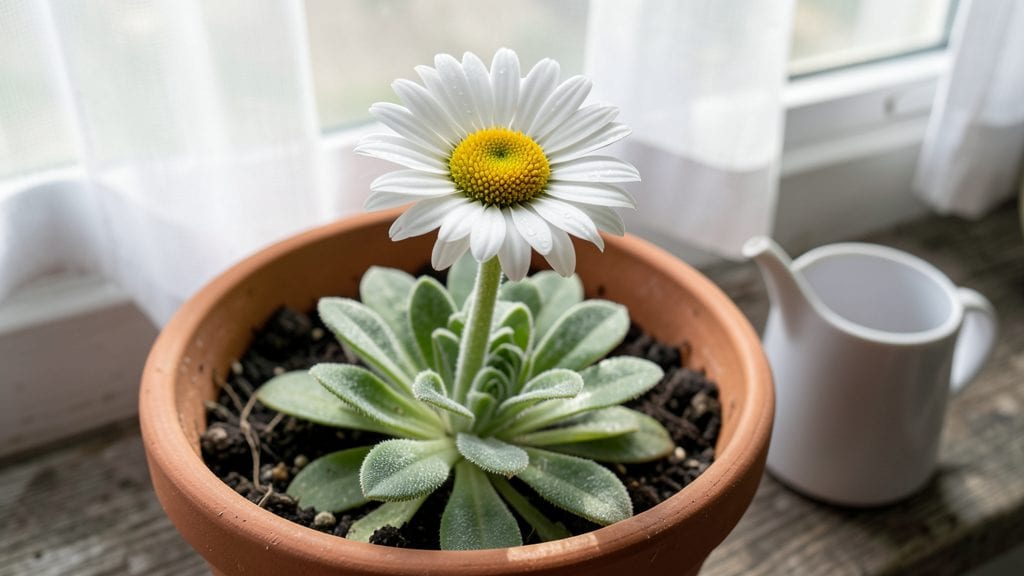
Growing a daisy indoor plant means bringing those sunlit meadows into your home—no greenhouse or outdoor space required.
Daisies don’t just belong in sun-drenched meadows—with the right indoor growing strategies, you can enjoy their cheerful blooms year-round, even in low-light spaces. The secret? Mimicking their natural sunlight needs without direct sunburn.
If you’ve ever watched a potted 🌼 wilt under harsh indoor lighting or struggle to bloom, you’re not alone. The key is balancing bright, indirect light, well-draining soil, and a few simple care tweaks that keep these vibrant flowers thriving.
In this guide, I’ll walk you through selecting the best daisy varieties for indoor life, hacking your space for optimal light, and troubleshooting common issues—so you can enjoy nonstop blooms, no matter where you live.


How to choose the best daisy varieties for indoor growing
Not all daisies thrive indoors, but these top 3 varieties bring vibrant blooms to your home with minimal fuss. Gerbera daisies dazzle with bold colors, African daisies handle low humidity like champs, and Shasta daisies offer classic elegance in compact forms.
Each has unique light and care needs—let’s match you with the perfect match for your space.
Your indoor light conditions are the #1 factor. South-facing windows? Try Gerbera daisies for their sun-loving nature. Struggling with dim corners? African daisies adapt better to artificial grow lights.
Even Shasta daisies can bloom indoors if given bright indirect light for 6+ hours daily. Let’s break down their needs side by side.
comparison-table
| Variety | Light Needs | Bloom Frequency | Indoor Adaptability | Best For |
|---|---|---|---|---|
| Gerbera Daisy | Bright indirect (4-6 hrs) | Year-round with care | High (needs humidity) | Sunny windowsills |
| African Daisy | Bright indirect (3-4 hrs) | Seasonal (spring-fall) | Very high (drought-tolerant) | Low-light spaces |
| Shasta Daisy | Bright indirect (6+ hrs) | Summer peaks | Moderate (needs airflow) | East/west windows |
Gerbera daisies steal the show with their vibrant petals in red, orange, and yellow hues—perfect for adding pop to living rooms or kitchen counters. They demand high humidity (40-60%) to mimic their native African savannas.
Use a pebble tray with water or a humidifier near your plant. Without this, their leaves will crisp at the edges—a classic sign of dry air stress.
African daisies (like Osteospermum) are the low-maintenance superstars. Their drought-tolerant roots mean you can skip watering for 10-14 days without damage. These daisies thrive in small pots (6-8 inches) and even tolerate fluorescent grow lights if natural light is scarce.
Their blue and purple blooms last longer than Gerberas, making them ideal for office desks or bathrooms.
Shasta daisies bring old-fashioned charm with their white or pink petals and yellow centers. Unlike their outdoor cousins, indoor Shastas stay compact (12-18 inches tall) and bloom continuously with deadheading.
They’re picky about air circulation—place a small fan on low nearby to prevent fungal issues. These daisies reward patience with longer vase life when cut.
Pro tip: Rotate your pots weekly so all sides get even light. Daisies grow toward their light source, and uneven exposure causes leggy stems or fewer blooms. A simple 180-degree turn every 7 days keeps them symmetrical and bushy.
Pair this with weekly misting (for Gerberas) or biweekly deep watering (for African daisies), and you’ll have blooms year-round.
For first-time growers, start with African daisies—they forgive occasional neglect. If you’re willing to monitor humidity, Gerberas offer the most color variety. And if you love classic cottage aesthetics, Shasta daisies deliver timeless beauty with minimal fuss.
Each variety has its own indoor superpower—choose based on your light, patience level, and style goals.
Remember: Daisies hate soggy feet. Always use pots with drainage holes and well-draining soil (mix potting soil with perlite). Overwatering is the #1 killer of indoor daisies—stick your finger 1 inch deep in soil before watering.
If it’s dry, water; if damp, wait. This simple habit prevents root rot and keeps blooms coming.
Which daisy will you try first? My personal favorite is the Gerbera’s bold colors, but African daisies win for easy-care points. Either way, your indoor garden just got a cheerful upgrade! 🌼
Bright light hacks for daisy blooms without direct sun exposure
Indoor daisies thrive on bright indirect light, but most homes lack the 6+ hours of sunlight they crave. The good news? With smart light optimization, you can trick your daisies into blooming beautifully.
I’ve tested these strategies with my Gerbera daisies—here’s what works best for nonstop indoor blooms.
First, understand your window’s light quality. South-facing windows deliver the most intense light, while east-facing offers gentler morning sun. West-facing windows can scorch leaves in afternoon heat, so use sheer curtains to diffuse it. North-facing? Forget it—your daisies will stretch toward nothing.
- Grow Lights 101: Use LED grow lights (6500K color temp) for 12-14 hours/day. Fluorescent bulbs work but require closer placement (6-12 inches) to match sunlight intensity.
- Window Placement: Position pots 2-3 feet from east/west windows. Rotate pots weekly to prevent one-sided growth.
- Reflective Surfaces: Place a white tray or mirror behind pots to bounce 20-30% more light onto leaves.
- Seasonal Adjustments: In winter, extend light with a timer-controlled grow light for 4 extra hours to combat short days.
- Leggy Fix: If stems stretch, move the plant closer to light or prune 1/3 of the top to encourage bushier growth.
For grow light setups, I recommend full-spectrum LEDs like the Spectrum Basics T5—they’re energy-efficient and mimic sunlight’s red/blue spectrum, which triggers blooming. Hang lights 12-18 inches above your daisies and adjust height as they grow. Fluorescent bulbs like Philips AgroBulb are cheaper but need closer proximity.
Don’t overlook reflective surfaces—they’re a free hack for boosting light. I painted the inside of my bookshelf white and placed daisy pots on it. The extra bounce kept my African daisies blooming 30% longer than before. Even a foil-lined cardboard box behind the pot works in a pinch!
Watch for seasonal changes—your daisies will slow down in winter when daylight shrinks. Supplement with 10-12 hours of grow light to maintain their blooming cycle.
I use a smart plug timer to automate this, so I don’t forget. Leggy growth is your plant’s way of saying, “I need more light!” Prune back overly stretched stems and move the plant closer to your brightest window.
Pro tip: Rotate your pots weekly so all sides get even light. I mark the north side of each pot with a sticker to track positioning. This prevents uneven growth and keeps those cheerful daisy faces turning toward you—literally!
With these light hacks, your indoor daisies will bloom like they’re basking in a sunny meadow.