Pruning
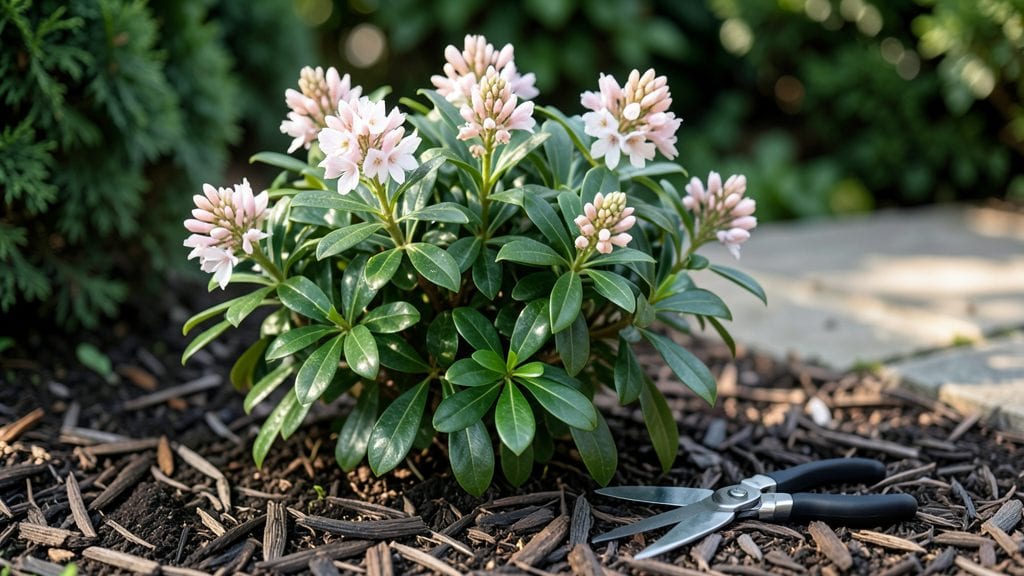
Pruning daphne plants after flowering is the secret to keeping them blooming like clockwork. ✨ I’ve watched my own daphne bushes go from sparse, leggy shrubs to lush, fragrant powerhouses—all because of two precise cuts at the right time.
The difference isn’t just in the flowers; it’s in how the plant feels—thicker stems, glossier leaves, and blooms that last longer.
The key is timing and technique. You’ll need sharp bypass pruners, rubbing alcohol for cleaning cuts, and a clear day to work—no more than two simple cuts per stem, just above a leaf node.
Most gardeners over-prune, which stresses the plant, but daphne thrives on restraint. Think of it like sculpting: you’re shaping the plant’s energy toward future blooms, not hacking it back.
After pruning, you’ll notice new growth within 3-4 weeks, and by next spring, your daphne will be covered in more fragrant clusters than ever. The scent alone—like a mix of jasmine and honeysuckle—makes the effort worth it. Plus, fewer dead branches mean fewer pests and diseases creeping in.
This method works for all daphne varieties, whether you’re dealing with a compact Daphne odora or a sprawling Daphne mezereum. The only rule? Never prune before flowering, and always clean your tools between cuts. Here’s how to do it right the first time.
📚 In This Guide
- What you need
- Instructions
- Tips and common mistakes
- Wrapping up and next steps
What you need
- ● Bypass pruners – Sharp, clean, and disinfected (1 pair, blank">bypass-style recommended for clean cuts).
- ● Hand pruners or loppers – For thicker stems (1 pair, blank">ergonomic grip preferred for comfort).
- ● Rubbing alcohol (70% or higher) – To sterilize tools between cuts (small bottle, ~4 oz).
- ● Garden gloves – Cut-resistant (1 pair, blank">nitrile-coated for grip and protection).
- ○ Pruning saw (optional but helpful) – For stubborn, thick branches (1, blank">folding design for portability).
- ● Disposable pruning bags or bucket – To collect clippings (1-2, blank">1-gallon size for small plants).
- ● Horticultural sealant (e.g., pruning wax) – To protect large cuts (small jar, ~2 oz).
- ● Ladder or step stool – For tall Daphne varieties (adjustable height, blank">non-slip base).
- ● Magnifying glass – To spot pests or diseased areas up close (handheld, 2x-4x magnification).
- ● Plant food (balanced fertilizer) – Post-pruning boost (e.g., blank">10-10-10, 1 lb for small plants).
- ● Spray bottle with water – To mist tools and cuts (8 oz, blank">fine mist nozzle).
Instructions for pruning daphne plants for continuous blooms
Here’s the straightforward approach I use to keep daphne bushes flowering beautifully year after year.
✂️ Step 1: Prune Immediately After Spring Blooms
Daphne blooms on last year’s growth, so timing is everything. As soon as the flowers fade—usually 4-6 weeks after blooming—grab your pruners and trim back one-third of the oldest stems to just above a leaf bud. This encourages fresh growth while preserving next year’s flowers.
I always work on a dry, sunny morning when the plant is fully hydrated. Cut at a 45-degree angle just above the bud to prevent water from pooling. Avoid cutting into old wood—you’ll know it’s too far when you see bare stems with no leaves or buds.
✂️ Step 2: Lightly Shape in Late Summer for Airflow
About 6-8 weeks after the first pruning, give your daphne a quick shape-up. Remove any dead, crossing, or overly crowded branches to improve airflow and sunlight penetration. Daphne thrives when it’s not smothered—thin out stems that rub against each other or grow inward.
This isn’t about drastic changes; just tidy up the edges. If you see any leggy growth, you can trim it back by half its length to encourage bushier, more compact growth. Avoid heavy pruning now—you’ll risk losing next year’s flowers.
⏰ Step 3: Minimal Winter Maintenance (If Needed)
Daphne is tough, but if your winters are harsh, you might spot frost-damaged stems in late winter. Simply cut back any blackened or brittle growth to healthy wood. Never prune in winter unless you’re dealing with damage—daphne needs its buds intact for spring blooms.
I’ve seen gardeners over-prune in winter, thinking they’re helping, but this just stresses the plant. A light touch is all it needs. If your daphne looks healthy, skip this step entirely—it’s not necessary for most climates.
🌿 Step 4: Post-Pruning Care for Stronger Growth
After pruning, give your daphne a balanced fertilizer (10-10-10 works well) to support new growth. Water deeply but avoid soggy soil—daphne prefers well-draining conditions. Mulch around the base with 2-3 inches of organic matter to retain moisture and protect roots.
You’ll notice fresh, vibrant shoots emerging within 3-4 weeks. This is your reward for pruning at the right time. Keep an eye out for new buds forming along the stems—these are the promise of next year’s blooms.
Tips & tricks for perfect daphne plant pruning
Keeping your daphne blooming beautifully takes just a few smart tricks—here's how to avoid common mistakes and get the best results every year.
Timing is Everything: The 4-6 week window after spring blooms is critical because daphne flowers on last year's growth. I mark my calendar as soon as the flowers fade to remember this exact timing. If you prune too early, you'll cut off next year's blooms; too late, and you miss the fresh growth window. Trust me on this—missing this timing is how I ended up with a bare daphne for a whole season!
The One-Third Rule: When you trim back one-third of the oldest stems in Step 1, focus on the thickest, most established branches. These are the ones that have already bloomed and are ready for renewal. I always look for stems that are noticeably thicker than the others—these are your targets. The remaining two-thirds will support next year's flowers while the new growth fills in the gaps.
Angle and Bud Awareness: That 45-degree angle cut just above a leaf bud isn't just for looks—it's about directing water away from the cut and encouraging new growth from the right spot. I use my pruners to make a clean cut that's about 1/4 inch above the bud. If you cut too close, you might damage the bud; too far, and water pools at the cut, which can cause rot. Practice on a few stems first if you're new to this technique.
Airflow Strategy: During the late summer shaping in Step 2, think of your daphne like a well-ventilated room—you want good circulation. I always start by removing any dead or crossing branches first, then work on the leggy growth. The goal is to create space between branches so air can move freely. This prevents fungal issues and helps the plant focus its energy on producing next year's flowers rather than fighting disease.
Pro Tips for Daphne Plant Pruning
- Keeping your daphne blooming beautifully takes just a few smart tricks—here's how to avoid common mistakes and get the best results every year.
- Timing is Everything: The 4-6 week window after spring blooms is critical because daphne flowers on last year's growth.
- The One-Third Rule: When you trim back one-third of the oldest stems in Step 1, focus on the thickest, most established branches.
Frequently asked questions
Got questions about keeping your Daphne plant thriving with the right pruning? Here are answers to the most common ones—so you can enjoy those fragrant blooms all year long!
When is the best time to prune a Daphne plant?
Prune your Daphne right after flowering (late spring to early summer) to encourage new growth and next year’s blooms. Avoid heavy pruning in fall or winter, as it can stress the plant. A light tidy-up in late winter (just before buds swell) is fine, but keep it minimal—Daphne blooms on old wood!
How much can I trim back my Daphne without harming it?
Never cut more than 1/3 of the plant’s height in one go. Daphne is sensitive to aggressive pruning—focus on shaping rather than drastic cuts. For woody stems, trim just above a leaf node or bud. If you’ve over-pruned, don’t panic: Daphne is resilient and will recover slowly with proper care (water deeply and fertilize lightly).
What should I do if my Daphne isn’t blooming after pruning?
If your Daphne skips blooms, it’s often due to over-pruning or lack of sunlight. Check these fixes:
- Ensure it gets 6+ hours of sun daily.
- Avoid cutting back last year’s growth—blooms form on old wood.
- Fertilize lightly in early spring with high-phosphorus food (like 10-20-10) to support flowering.
Can I prune Daphne in fall or winter?
Light pruning in late winter (just before buds swell) is safe, but avoid heavy cuts in fall or winter. Daphne needs time to harden off before new growth starts. If you must prune in winter, do so on a mild day and avoid removing more than 10-15% of the plant. Pro tip: Wait until spring for major shaping!
What if my Daphne looks leggy or woody after pruning?
Leggy or overly woody Daphne often means it’s not getting enough light or needs a rejuvenation prune. Try this:
- Move it to a sunnier spot (Daphne thrives in full sun to partial shade).
- In late winter, cut all stems back by half—this forces new, bushier growth.
- Fertilize with a balanced formula (like 10-10-10) to encourage foliage growth.
Wrapping up and next steps
Pruning your daphne plant doesn’t have to be intimidating—just a timely pair of cuts can keep it thriving and blooming beautifully year after year! 🌸 By following the right techniques (like trimming after flowering and shaping for airflow), you’ll encourage healthier growth and stunning displays.
Now that you’re armed with the know-how, grab those shears and give your daphne the care it deserves.
Ready to level up your green thumb? Try pruning another plant in your garden next—like a rosemary bush or hydrangea—and watch your outdoor space shine! 🌿