
Pruning
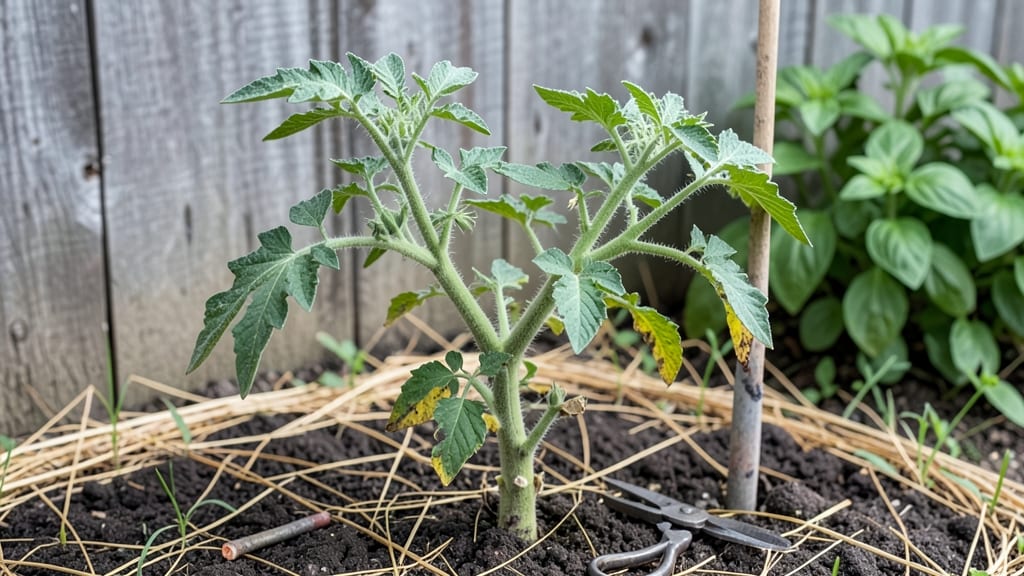
Mastering an early stage tomato plant pruning diagram ensures your first cuts boost fruit yield by shaping a plant that thrives—not just survives. ✂️ Those initial snips in weeks two and three decide whether your tomatoes sprawl wildly or stand tall with room to thrive.
I learned this the hard way after my first season of ignoring those little side shoots, only to end up with leggy plants that barely held up their own weight.
You'll need just three things: sharp pruning shears, a sunny day, and about 15 minutes of focused work. The key is pinching off those tiny side stems (called suckers) that grow in the leaf axils—those are the growth zones where energy gets wasted if left unchecked.
Most beginners make two mistakes: either they prune too late or they go too aggressive too soon. Start when plants hit 12-18 inches tall, and you'll see the difference in just a few weeks.
What you're really doing is redirecting the plant's energy toward the main stem and future fruit clusters. Instead of putting out extra foliage, those pinched plants will focus on developing a strong central trunk and more robust branches.
By the time you're harvesting, you'll notice the fruit is larger, the plants are more upright, and you're not fighting to keep them from toppling over in a breeze. The first harvests will be your reward for those early pruning sessions.
This method works for both determinate (bush) and indeterminate (vining) varieties, though indeterminate tomatoes benefit the most from early pruning. Once you've mastered the basics, you can experiment with different pruning styles—like the "Florida Weave" for bushier plants or the "open vase" method for better air circulation.
The diagram in the guide will show you exactly where to make those cuts for maximum impact.
📚 In This Guide
- What you need
- Instructions
- Tips and common mistakes
- Wrapping up and next steps
What you need
- ● Pruning shears or scissors: Use bypass pruners (sharp, clean, and sanitized) to avoid damaging tender stems. A 5-inch pair works best for small plants.
- ● Gloves: Wear gardening gloves (nitrile or leather) to protect your hands from thorns and dirt.
- ● Disinfectant (rubbing alcohol or bleach solution): Wipe tools between cuts to prevent disease spread (1 part bleach to 9 parts water).
- ● Permanent marker or labels: Mark pruning points on stems if diagram reference is needed later.
- ● Tomato plant diagram or printed guide: Keep your "early stage tomato plant pruning diagram" handy for visual reference.
- ● Hand lens or magnifying glass: For inspecting growth zones up close (especially for tiny suckers).
- ○ Pruning sealant (optional): A small amount of tree wound dressing can help larger cuts heal faster (skip for small pinches).
- ● Notebook or app: Track pruning dates and plant responses for future reference.
- ● Stakes or cages (if needed): If your plant is top-heavy post-pruning, reinforce support early.
Step-by-Step guide to pruning early stage tomato plants
Here's how to shape your tomato plants early for stronger growth and bigger yields.
🌱 Step 1: Identify Key Growth Zones and Pinch Points
Start by examining your tomato plant for the first set of true leaves—these are the small leaves that appear after the initial seed leaves. The main stem between the soil and these first leaves is your first pinch point. This is where you'll make your first cut to encourage branching.
Look for the area just above the first true leaves where a small side shoot might be forming. This is called a "suckers" and it's your first target. You'll also want to identify the main stem and any emerging side branches. The goal here is to keep the plant balanced and focused on producing fruit rather than growing too many leaves.
✂️ Step 2: Pinch Off Suckers at the Right Time
Use your fingers or clean pruning shears to pinch off the sucker when it's about 1-2 inches long. This is the small shoot growing between the main stem and a branch. Pinching too early can stress the plant, while waiting too long can divert energy away from fruit production. You'll know you're doing it right when you see a clean break and no jagged edges.
Focus on the lower half of the plant first. These suckers won't contribute much to fruit production, so removing them early helps the plant direct its energy upward. I like to do this in the morning when the plant is hydrated and ready to recover quickly. Avoid pruning in the heat of the day, as it can stress the plant.
🌿 Step 3: Shape the Plant for Optimal Airflow
After removing the first set of suckers, step back and assess the plant's shape. You want to create an open, airy structure that allows sunlight to reach the inner leaves and fruit. This reduces the risk of disease and improves overall plant health. Aim to leave 2-3 main stems if your variety is indeterminate, or just the main stem if it's determinate.
Use your pruners to trim any crowded or crossing branches. Cut just above a leaf node—this is where new growth will emerge. Avoid leaving stubs, as they can attract pests and disease. If you're unsure whether a shoot is a sucker or a new branch, wait a day or two to observe its growth pattern before deciding.
⏰ Step 4: Establish a Regular Pruning Schedule
Once your tomato plant is about 12-18 inches tall, start pruning every 7-10 days to keep it in check. This is when the plant begins to put more energy into flowering and fruiting. Focus on removing any new suckers that appear between the main stem and branches, as well as any yellowing or diseased leaves.
Pay attention to the plant's growth rate and adjust your schedule as needed. If you notice the plant is growing rapidly, you may need to prune more frequently. Conversely, if growth slows down, you can space out your pruning sessions. Always prune just above a leaf node to encourage new growth in the right direction.
☀️ Step 5: Monitor and Adjust for Seasonal Changes
As the plant matures, shift your focus to supporting the fruit load rather than just pruning for shape. Once flowers appear, reduce aggressive pruning to avoid removing potential fruit-bearing branches. Instead, focus on removing only the largest suckers and any leaves that are shading the fruit.
Keep an eye out for signs of stress, such as yellowing leaves or stunted growth. These can indicate over-pruning or other issues like nutrient deficiencies. Adjust your approach accordingly—sometimes less is more, especially as the plant enters its fruiting phase. The goal is to balance growth and fruit production for a healthy, productive tomato plant.
Tips & tricks for perfect early stage tomato plant pruning
Mastering these pruning techniques will help you shape your tomato plants for maximum fruit production and plant health.
Visualize the Growth Pattern: Before you prune, take a moment to visualize your plant's structure. In Step 1, when identifying the first set of true leaves, think of them as the foundation. The main stem between soil and these leaves is your central support—this is where you'll build your plant's framework. I always sketch a quick diagram on paper to map out where I'll make cuts. This helps me stay organized and ensures I don't accidentally remove anything important.
Timing is Everything: The 7-10 day pruning schedule in Step 4 is critical, but don't treat it like a rigid rule. In Step 2, when you're pinching off suckers that are 1-2 inches long, watch for the plant's growth rate. If you notice rapid growth between scheduled pruning days, consider doing a quick check. The key is to remove suckers before they become energy drainers—when they're still small, the plant barely notices the loss, but when they're large, you're essentially stealing energy from fruit production.
Tool Selection Matters: While fingers work for small suckers, invest in a good pair of clean pruning shears for larger branches. In Step 3, when you're shaping the plant, make clean cuts just above a leaf node. I keep a small bottle of rubbing alcohol handy to wipe down my shears between cuts—this prevents spreading disease. For stubborn branches, a small pair of bypass pruners gives you more control than anvil pruners, which can crush stems.
Seasonal Transition Strategy: As you move through Step 5, pay attention to how your plant responds to pruning. In the early stages, you might see vigorous new growth after pruning—this is normal! But as flowers appear, shift your focus to preservation. I've learned the hard way that over-pruning during flowering can reduce your harvest. When in doubt, leave it—better to have slightly more foliage than risk removing potential fruit-bearing branches.
Pro Tips for Early Stage Tomato Plant Pruning Diagram
- Mastering these pruning techniques will help you shape your tomato plants for maximum fruit production and plant health.
- Visualize the Growth Pattern: Before you prune, take a moment to visualize your plant's structure.
- Timing is Everything: The 7-10 day pruning schedule in Step 4 is critical, but don't treat it like a rigid rule.
Frequently asked questions
When should I start pruning early tomato plants?
Begin pruning indeterminate tomato plants when they reach 12–18 inches tall (usually 4–6 weeks after transplanting). For determinate varieties, minimal pruning is needed—focus on removing suckers only if crowded. Wait until plants have at least 3–4 true leaves to avoid stunting growth.
What’s the difference between suckers and leaves I should remove?
Suckers are small shoots growing in the V-shaped junction between a stem and a branch (called the "crotch"). Remove them to redirect energy to fruit production. Never prune:
- Lower leaves touching soil (disease risk).
- Leaves shading fruit clusters.
- Healthy foliage on determinate varieties (they’re self-limiting).
How often should I prune tomato plants?
Prune weekly or biweekly during active growth (spring/summer). Focus on:
- Removing suckers early (smaller = easier to handle).
- Trimming 1/3 of lower leaves to improve airflow (but leave upper leaves for photosynthesis).
Can I prune tomato plants in hot or cold weather?
Avoid pruning when temps are above 90°F (32°C) or below 50°F (10°C). Stress from pruning + extreme heat/cold can shock plants, leading to:
- Delayed recovery.
- Increased susceptibility to pests/diseases.
What if I skip pruning—will my tomatoes still grow?
Yes! Determinate tomatoes (like Roma or Celebrity) thrive with little to no pruning. Indeterminate varieties (like Cherry or Beefsteak) may produce fewer, smaller fruits if unpruned, but they’ll still grow. Pruning boosts yield and air circulation, but over-pruning can stress plants—balance is key!
Wrapping up and next steps
Mastering early-stage tomato plant pruning might feel tricky at first, but with the right diagram and techniques, you’re already setting your plants up for a bountiful harvest! 🌱 The key takeaway?
Focus on removing suckers and shaping growth zones to boost airflow and fruit production—your future tomatoes will thank you.
Now that you’re armed with knowledge, grab those pruners and give it a try! Start with just one plant to build confidence, then expand as you gain experience. Happy pruning—your garden (and taste buds) will be happier for it!