
Fertilization
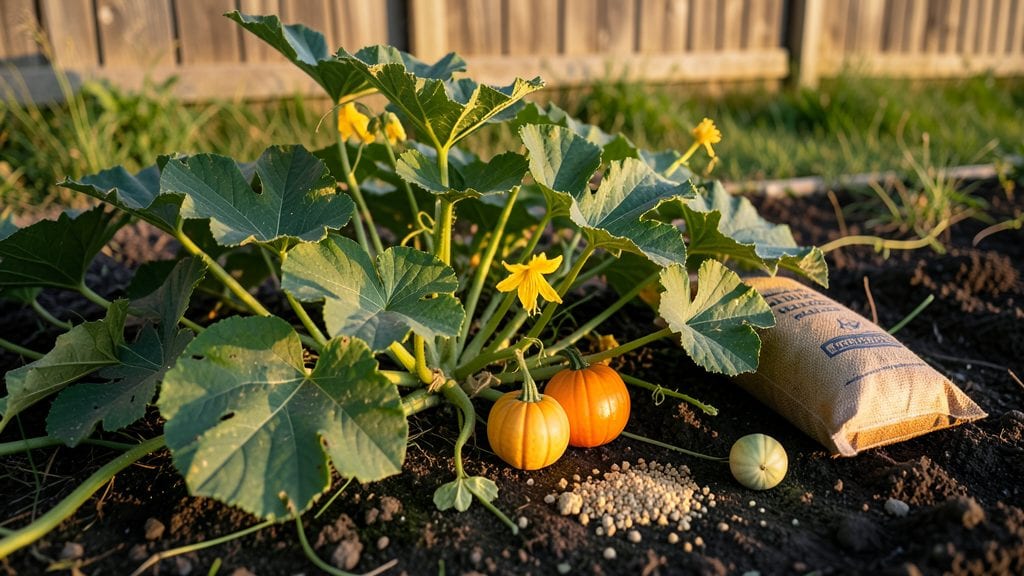
Fertilizing pumpkin plants 🎃 is the difference between a handful of small gourds and a vine heavy enough to need staking.
Picture this: you’ve spent weeks nurturing those first tender leaves, only to watch your vines sprawl with no fruit in sight. That’s not bad luck—it’s a nutrient gap, and the fix starts before the first seed even sprouts.
The right mix of nitrogen, phosphorus, and potassium at the right time turns a hopeful vine into a monster harvest.
Here’s the game-changer: pumpkins aren’t just hungry plants—they’re pickier eaters than you’d think. Too much nitrogen and you’ll get all leaves, no pumpkins. Skip the phosphorus at flowering and your blossoms won’t set fruit.
I’ve made those mistakes, and I’ll show you how to avoid them while keeping your soil happy and your vines thriving.
From pre-planting boosts to late-season feeding tricks, this guide covers when, what, and how to fertilize for maximum growth—whether you’re growing tiny pie pumpkins or 50-pound jack-o’-lanterns. Let’s get those vines fed right.
Pumpkin plant fertilizer schedule: when to feed for maximum growth
Pumpkins are hungry plants—literally. To grow those 100-pound monsters or even healthy 10-pound gourds, you need to feed them at the right times with the right nutrients. Unlike many vegetables, pumpkins demand consistent nutrition from seedling stage through fruit development.
Skipping a feeding window can mean smaller fruits, fewer blooms, or even blossom end rot in your pumpkins.
Think of fertilization as a three-act play: Act 1 is pre-planting soil prep, Act 2 covers vine growth and flowering, and Act 3 supports fruit maturation.
Each act requires different nutrients—too much nitrogen early will give you leafy vines but no pumpkins, while too little phosphorus at flowering will stall fruit set. Let’s break down the critical fertilization windows so you can grow pumpkins that rival county fair champions.
⚠️ Pro Tip: Always water your pumpkin plants before fertilizing to prevent root burn. A deep soak 24 hours prior ensures nutrients are absorbed efficiently.
Your pre-planting prep sets the stage for success. Before sowing seeds or transplanting seedlings, amend the soil with compost or aged manure to boost organic matter. For sandy soils, mix in peanut hulls or coconut coir to retain moisture, while clay soils benefit from gypsum or
Best fertilizers for pumpkin plants: organic vs. synthetic options compared
Pumpkins are heavy feeders, demanding a steady supply of nutrients to produce those massive fruits. The right fertilizer choice depends on your gardening goals—whether you prioritize organic matter for soil health or quick nutrient uptake for rapid growth.
Both organic and synthetic options have their place, but understanding their N-P-K ratios and application methods is key to avoiding common pitfalls like nitrogen burn or phosphorus deficiency.
For organic fertilizers, think compost, aged manure, or worm castings—these improve soil structure over time while feeding roots gradually. Synthetic fertilizers, like 10-10-10 blends or calcium nitrate, deliver precise nutrients but require careful monitoring to prevent overfeeding.
The best approach? Often, a hybrid strategy combines both for balanced, long-term success.
Organic Fertilizers for Pumpkins
- Improves soil health long-term
- Slow-release nutrients reduce burn risk
- Supports beneficial microbes in soil
- Eco-friendly and sustainable
- Slower nutrient release may delay growth
- Requires larger quantities for equivalent results
- Can attract pests if fresh manure is used
Synthetic Fertilizers for Pumpkins
- Precise N-P-K ratios for targeted feeding
- Fast-acting for rapid vine growth
- Compact and easy to store
- Cost-effective for large-scale gardens
- Risk of over-fertilization and burn
- No soil improvement benefits
- Can disrupt soil microbes over time
- Environmental concerns with runoff
Best for: Organic = Soil health | Synthetic = Quick growth
When choosing organic amendments, composted cow manure is a top pick—it’s rich in nitrogen and phosphorus while being gentle on roots. For a balanced boost, mix in worm castings (20% nitrogen) or bone meal (3-4% phosphorus) to support flowering.
My go-to organic combo? A 5-gallon bucket of compost per plant at planting time, followed by 1 cup of 5-5-5 organic fertilizer every 4-6 weeks.
Synthetic options like 10-10-10 all-purpose fertilizer or 20-20-20 for fruiting stages are great for fast nutrient delivery, but they demand precision. For example, calcium nitrate (15-0-0) can rescue blossom-end rot by boosting calcium, while potassium sulfate (0-0-50) strengthens vines during fruiting.
Always water thoroughly after applying synthetics to prevent root damage.
For large pumpkin varieties like Atlantic Giant, I recommend a two-phase approach: Start with organic matter to build soil, then switch to synthetic blends during flowering. This hybrid method ensures steady growth without the risks of overfeeding.
Pro tip: Side-dress with compost or a slow-release pellet fertilizer when vines hit 3 feet long—this triggers a growth spurt just as flowers appear.
One critical mistake to avoid? Skipping soil tests. Pumpkins thrive in slightly acidic to neutral soil (pH 6.0-7.0). If your soil is too alkaline, micronutrients like iron become unavailable, leading to yellowing leaves.
Adjust with sulfur (organic) or iron chelate (synthetic) as needed. Remember: Less is more—pumpkins are resilient, but they’ll reward you most when fed consistently, not excessively.