
Diseases
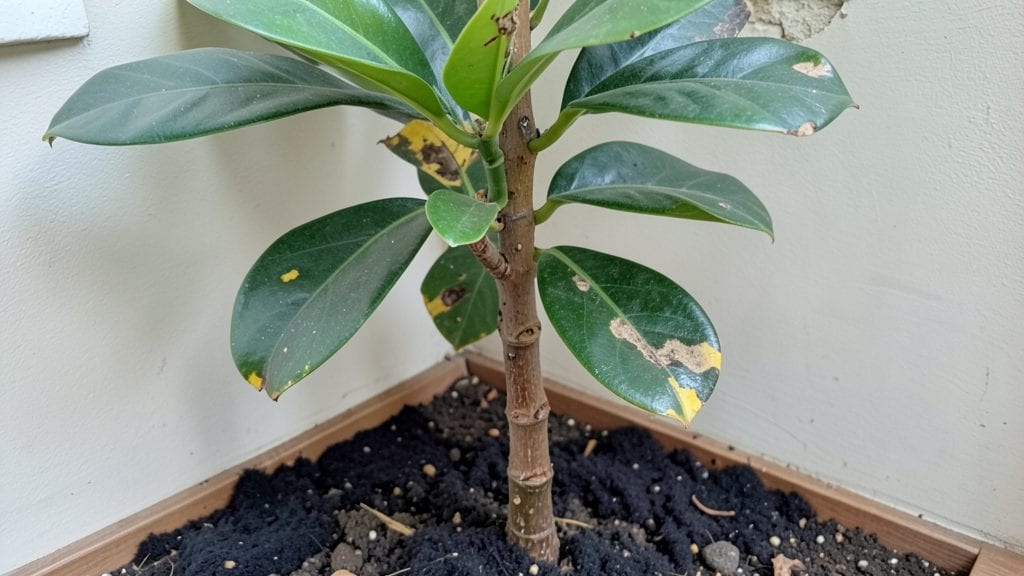
Ficus plant diseases can turn your lush foliage into a yellowing mess if you don’t catch them early. 🌿 I’ve seen healthy rubber plants go from vibrant green to sad and spotted in just weeks—usually because the problem was ignored until it spread.
The good news? Most ficus issues have clear warning signs, and fixing them early is simpler than you’d think.
Yellowing leaves are the most common red flag, but they’re not always the same problem. Root rot hides underground until the roots turn mushy, while fungal spots start as tiny brown dots that multiply fast.
The key is checking your plant’s leaves, soil, and drainage regularly—especially after overwatering or moving it to a new spot. A quick inspection every two weeks can save your ficus before the damage gets serious.
Once you spot the issue, the fix depends on the disease. For fungal spots, a mix of baking soda and water sprayed on the leaves stops the spread. Root rot? You’ll need to trim the bad roots and repot in fresh, well-draining soil.
The goal is to get your ficus back to its glossy, thriving self—no more brown edges or limp branches.
Prevention is easier than recovery, so I’ll show you how to adjust watering, improve airflow, and keep your ficus happy year-round. Trust me, your plant will thank you with fresh, green leaves for seasons to come.
Root Causes of Ficus Leaf Trouble
Ficus plants, like their tropical cousins, thrive in specific conditions—but when those conditions shift, their leaves send distress signals, often in the form of yellowing. Understanding why these issues arise is the first step to saving your plant.
Below, we break down the science behind the most common culprits, from microscopic invaders to environmental missteps.
Yellowing leaves on a ficus often start with a simple but deadly mistake: too much love (in the form of water). Ficus plants are drought-tolerant and prefer their roots to dry out slightly between waterings.
When soil stays soggy for too long, root rot sets in—a fungal infection that chokes the plant’s ability to absorb nutrients.
- Why it happens: Fungal pathogens like Phytophthora and Pythium thrive in waterlogged soil, breaking down root cell walls. This disrupts the plant’s vascular system, causing leaves to turn yellow (chlorosis) as nutrients can’t reach them.
- Actionable clue: Check the soil 1–2 inches down—if it’s damp, wait. If it’s bone-dry, you’ve likely underwatered (another stressor). Ficus roots need air as much as water!
- Pro tip: 💡 Use a pot with drainage holes and a mix of perlite or orchid bark (20–30%) in your potting soil to improve aeration.
Ficus plants crave bright, indirect light—think of them as sunbathers who burn easily. Direct sunlight (especially southern or western exposure) triggers a condition called photosynthetic damage, where excess UV light destroys chlorophyll. The result? Crispy, yellow-edged leaves or bleached patches.
- Why it happens: Chlorophyll absorbs blue and red light for energy, but UV rays (especially in intense sunlight) create reactive oxygen species (ROS) that damage cell membranes. The plant sacrifices outer leaves first to protect its core.
- Actionable clue: If yellowing starts on leaves exposed to windows, move your ficus 3–6 feet back or use a sheer curtain. East-facing windows are ideal.
- Pro tip: ✨ Rotate your plant weekly so all sides get even light—prevents lopsided growth and stress.
Tiny invaders like spider mites, scale insects, and mealybugs don’t just nibble—they inject toxins into your ficus. Their saliva disrupts nutrient transport, causing yellowing, stunted growth, and even leaf drop. Worse? They spread fungal diseases like sooty mold, which coats leaves in a black, tar-like film.
- Why it happens:
- Spider mites pierce cells to suck sap, triggering a defense response that turns leaves yellow.
- Scale insects secrete honeydew, a sugary waste that feeds sooty mold (a fungal hitchhiker).
- Mealybugs block stomata (pores), suffocating leaves and halting photosynthesis.
- Actionable clue: Inspect undersides of leaves for webbing (mites), cottony clusters (mealybugs), or brown bumps (scale). Wipe leaves with a damp cloth to spot honeydew.
- Pro tip: 🔥 Blast pests off with a strong stream of water, then treat with neem oil (1 tsp per quart of water) or insecticidal soap. Repeat weekly for 2–3 weeks.
Ficus plants are tropical drama queens—they hate sudden temperature swings, cold drafts, or heaters blowing directly on them. When stressed, they drop leaves or develop yellow patches as a survival tactic to conserve energy.
- Why it happens:
- Cold stress (below 50°F/10°C): Disrupts cell membranes, causing chlorosis.
- Hot drafts (from vents or AC): Dries out leaves faster than roots can replace moisture.
- Frost: Kills cells outright, leading to brown, mushy patches.
- Actionable clue: Keep ficus in rooms with stable temps (65–75°F/18–24°C). Avoid placing near doors, windows in winter, or heating vents.
- Pro tip: 🌡️ Use a small space heater (not fan-forced) if your home runs cold, but keep it 3+ feet away.
Yellowing between leaf veins (interveinal chlorosis) is often a cry for help—your ficus might be starving or poisoned. Over-fertilizing (especially with synthetic salts) or lacking key nutrients throws off the plant’s chemistry, leading to yellow leaves.
- Why it happens:
- Iron deficiency: Chlorosis in young leaves (can’t produce enough chlorophyll). Common in alkaline soils.
- Nitrogen deficiency: Older leaves yellow first (plant prioritizes new growth).
- Salt buildup: Over-fertilizing or tap water minerals accumulate, burning roots and blocking nutrient uptake.
- Actionable clue:
- Test soil pH (ideal: 6.1–6.5). Add sulfur or peat moss to lower pH if needed.
- Flush soil with water to leach excess salts (let it drain completely).
- Use a balanced liquid fertilizer (10-10-10) every 6–8 weeks in spring/summer.
- Pro tip: 💪 For iron deficiencies, use chelated iron supplements or spray leaves with a diluted iron solution (1 tsp iron sulfate per gallon of water).
Quick Fixes for Ficus Leaf Troubles
A struggling ficus can be heartbreaking, but the good news? Most leaf issues—like yellowing, browning, or wilting—have straightforward fixes. Below, we’ve mapped the most common ficus plant diseases and stress signs to practical solutions, so you can revive your plant fast. Remember: early action prevents permanent damage!
Signs: Yellow, mushy leaves; black or foul-smelling stems; soil that stays soggy.
How to Fix It
- 🚰 Drain the Damage
- Remove the plant from its pot and gently rinse the roots with water to wash away excess soil.
- Trim away black, mushy roots with sterilized scissors (dip in rubbing alcohol first).
- 🌱 Repot in Fresh Soil
- Use a well-draining mix (cactus/succulent soil + perlite works).
- Choose a terracotta pot (porous = better airflow) and add a layer of gravel at the bottom for drainage.
- 💧 Adjust Your Watering
- Wait until the top 1–2 inches of soil are dry before watering again.
- Water deeply but less often—ficus plants hate "wet feet."
💡 Prevention Tips
- Water only when needed (stick your finger in the soil—if it’s damp, wait!).
- Ensure pots have drainage holes (no exceptions!).
- Avoid saucers that trap water—empty excess after watering.
Signs: Yellow/brown spots with fuzzy edges; white powdery coating; leaves dropping prematurely.
How to Treat It
- 🧼 Clean Up Immediately
- Remove infected leaves (snip at the base with clean scissors).
- Wipe healthy leaves with a mild soap solution (1 tsp dish soap + 1 quart water).
- 🍄 Fungicide or Natural Sprays
- Store-bought fix: Use a copper-based fungicide (follow label instructions).
- DIY option: Spray with a 1:10 hydrogen peroxide-water mix (3% strength) weekly for 2 weeks.
- 🌬️ Improve Airflow
- Space plants apart (fungi love humidity + crowded conditions).
- Use a fan on low setting near the plant (mimics natural airflow).
💡 Prevention Tips
- Water in the morning (leaves dry faster, reducing moisture for fungi).
- Avoid overhead watering—water at the soil level instead.
- Quarantine new plants for 2–3 weeks before introducing them to your collection.
Signs: Pale yellow leaves (especially older ones); slow growth; weak stems.
How to Fix It
- 🌱 Fertilize Right
- Use a balanced liquid fertilizer (10-10-10 or 20-20-20) diluted to half strength.
- Feed every 4–6 weeks in spring/summer (skip winter—ficus rests!).
- 🔄 Check Your Soil
- If soil is depleted, repot with fresh, nutrient-rich potting mix.
- Add compost (10%) for slow-release nutrients.
- 💧 Flush the Soil
- Water thoroughly to leach out excess salts (common in tap water).
- Let water drain completely—no standing water!
💡 Prevention Tips
- Test your water—if it’s hard (high in minerals), use rainwater or distilled water.
- Rotate your plant every few weeks for even light exposure.
- Avoid over-fertilizing—more isn’t better! Follow package instructions.
Signs: White/yellow patches; dry, crispy leaf tips; sudden leaf drop.
How to Fix It
- 🏠 Move to Indirect Light
- East-facing windows are ideal (gentle morning sun).
- Avoid south/west windows unless you use sheer curtains.
- 🌿 Adjust Gradually
- If your ficus was in low light, acclimate it slowly (move it outside for 1 hour/day, increasing time weekly).
- 💦 Increase Humidity
- Mist leaves daily or use a pebble tray (fill a tray with water + pebbles, place pot on top).
- Group plants together to create a microclimate.
💡 Prevention Tips
- Watch for "hot spots" near windows—rotate the pot monthly.
- Use reflective surfaces (mirrors) to bounce light around.
- Avoid cold drafts (like AC vents)—ficus hate temperature swings.
Signs: Sticky residue (honeydew); white cottony webbing; tiny crawling insects.
How to Treat It
- 🐜 Isolate & Inspect
- Move the plant away from others to prevent spreading.
- Check undersides of leaves for spider mites, mealybugs, or scale.
- 🧼 Blast or Wipe Them Off
- Spider mites: Spray with water + dish soap (1 tsp per quart) or neem oil solution (1 tbsp neem oil + 1 quart water).
- Mealybugs/scale: Wipe with a cotton ball dipped in rubbing alcohol (70% isopropyl).
- 🌿 Repeat & Monitor
- Reapply treatment every 5–7 days for 2–3 weeks.
- Use beneficial insects (like ladybugs) for long-term control.
💡 Prevention Tips
- Inspect new plants before bringing them home.
- Keep your space clean—pests hide in dirt and debris.
- Avoid over-fertilizing—weak plants attract pests!
🌟 Pro Tip: If your ficus is severely stressed, don’t panic—prune back 1/3 of the plant to encourage new growth. Healthy leaves = faster recovery!
Frequently asked questions about ficus plant diseases
Why do my ficus leaves turn yellow first near the edges?
Edge yellowing usually signals underwatering or low humidity. Ficus plants drop moisture through their leaves faster than roots can replace it in dry air. Check soil moisture 1-2 inches down—if dry, water thoroughly. Increase humidity with a pebble tray or group plants together to create a microclimate.
How do I tell if my ficus has root rot or just needs more water?
Root rot causes mushy, black roots with a foul smell, while thirsty plants have dry, shriveled roots. Gently remove your ficus from its pot—if roots are firm and white, it's just dry. If they're mushy and stinky, trim the bad roots, repot in fresh soil, and reduce watering. A terracotta pot helps prevent future rot.
Can I save a ficus with brown, crispy leaf tips?
Yes! Crispy tips usually mean low humidity or fluoride buildup from tap water. Trim the damaged tips, then mist leaves daily or place the pot on a tray of pebbles with water. Switch to filtered or distilled water to prevent fluoride buildup. Rotate the plant weekly for even growth.
What's the fastest way to treat fungal spots on ficus leaves?
Remove infected leaves immediately, then spray with a 1:10 hydrogen peroxide-water mix (3% strength) or copper fungicide. Improve airflow with a small fan on low setting. Water at soil level (not overhead) and avoid crowded plant arrangements. Repeat treatments every 5-7 days until new growth appears.
How often should I fertilize a sick ficus?
Skip fertilizing until your ficus shows new growth—overfeeding stressed plants worsens problems. Once recovered, use a balanced liquid fertilizer (10-10-10) diluted to half strength every 8-12 weeks in spring/summer. Flush soil with water monthly to prevent salt buildup.