
Neem Oil
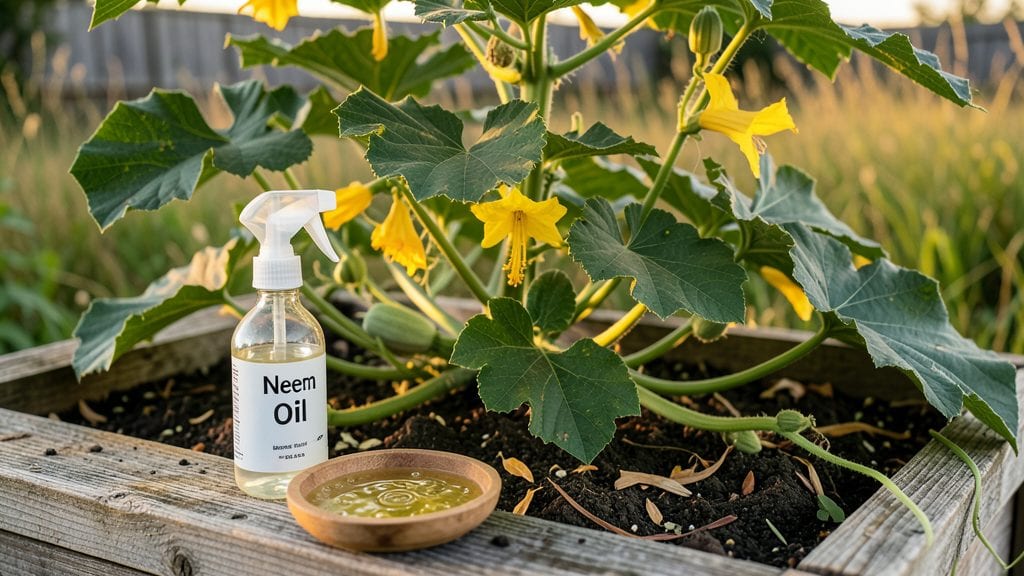
Neem oil on squash plants turns back the clock on pests and diseases before they take hold. 🌱 I remember the first time I saw powdery mildew turn my squash leaves gray—it looked like someone had dusted them with flour.
That’s when I discovered neem oil could stop it in its tracks, and now it’s my go-to shield for squash bugs, aphids, and fungal spots too.
The secret lies in proper timing and concentration—too strong, and you risk burning tender vines; too weak, and pests shrug it off. A 1-teaspoon-per-quart mix sprayed at dusk works wonders, especially when applied every 7-10 days or after rain.
The key is consistency, not intensity. I’ve saved entire plants from squash vine borers just by keeping this routine up.
What you’ll end up with is vibrant green leaves, fewer chewed vines, and squash that stays healthy enough to produce until frost. The plants grow stronger because neem oil works with nature, not against it—boosting their natural defenses while smothering pests.
You’ll notice the difference within a week if you catch problems early.
Works for both backyard gardens and container-grown squash, though you’ll need to reapply after heavy rain. The best part? It’s safe for beneficial insects if used correctly, so your garden’s ecosystem stays balanced. Let’s get those vines thriving again!
Root Causes of Squash Plant Stress
When you apply neem oil to squash plants, it’s usually to protect them from pests or diseases—but sometimes, the treatment itself can cause issues. Understanding the underlying reasons helps you avoid unintended damage and use this natural remedy effectively. Here’s why problems may arise:
Neem oil is a potent organic pesticide, and like many strong compounds, more isn’t always better. Squash plants can suffer from phytotoxicity—chemical burns on leaves or stems—when neem oil is applied at concentrations or frequencies that exceed safe limits.
- Active Ingredients Overload: Neem oil contains azadirachtin and other limonoids, which disrupt insect life cycles but can also irritate plant tissues in high doses. A concentration stronger than 1-2% (1-2 tbsp per gallon of water) may cause leaf yellowing, browning, or even defoliation.
- Frequent Reapplication: Applying neem oil more often than every 7-14 days (or after heavy rain) can lead to cumulative stress. Plants may develop necrotic spots (dead tissue) or stunted growth as their natural defenses become overwhelmed.
- Direct Sun Exposure: Applying neem oil to wet foliage under direct sunlight acts like a magnifying glass, intensifying UV damage. This causes sunburn-like symptoms (bleached or crispy leaf edges).
Pro Tip: Always dilute neem oil properly and apply it in the early morning or late afternoon to avoid sunlight exposure. 🌞🚫
Neem oil is oil-based, which means it doesn’t mix well with water unless emulsified correctly. Poor preparation or contamination can lead to clogged sprayers, uneven coverage, or even fungal growth on treated plants.
- Lack of Emulsifiers: Pure neem oil separates in water, creating large droplets that don’t adhere to leaves and may drip onto soil or roots. Without a surfactant (like dish soap or a commercial emulsifier), the oil pools in one area, increasing toxicity risk.
- Bacterial or Fungal Contamination: Storing neem oil in unclean containers or mixing it with metal tools (which can cause oxidation) introduces harmful microbes. If the mixture smells sour or moldy, it’s time to discard it—applying contaminated neem oil can promote disease instead of preventing it.
- Wrong Water Quality: Hard water (high in minerals like calcium and magnesium) can neutralize the oil’s effectiveness and cause residue buildup. Always use filtered or distilled water for mixing.
Pro Tip: Use a 1:1 ratio of neem oil to emulsifier (e.g., 1 tbsp neem oil + 1 tsp mild soap per gallon of water). Shake well before each use! 🌀
Not all squash varieties react the same way to neem oil. Some plants are more sensitive due to genetics, age, or overall health, leading to stress symptoms even with proper application.
- Young or Weak Plants: Seedlings and stressed squash plants (e.g., those recovering from disease or transplant shock) have thinner cuticles, making them more vulnerable to neem oil’s irritants. Avoid treating them until they’ve developed 3-4 true leaves and a sturdy stem.
- Hybrid vs. Heirloom Differences: Some hybrid squash varieties (like ‘Early Prolific Straightneck’) are bred for pest resistance and may tolerate neem oil better than heirlooms (e.g., ‘Table Queen’), which can be more delicate.
- Environmental Stressors: Plants already struggling with nutrient deficiencies, drought, or extreme temperatures are more likely to show neem oil sensitivity. Address these issues first!
Pro Tip: Conduct a patch test on 1-2 leaves before full application. If no reactions appear after 24 hours, proceed carefully. 🧪✅
Neem oil’s effectiveness—and potential harm—depends heavily on when and how you apply it. Weather conditions can turn a beneficial treatment into a liability.
- High Humidity or Rain: Neem oil works best in dry, calm conditions. If applied before rain, the oil washes off before it can take effect, wasting your effort. Worse, it can dilute and concentrate on leaves, increasing toxicity.
- Temperature Extremes: Applying neem oil when temperatures are below 50°F or above 90°F can cause cold stress or heat amplification, respectively. Stick to 60-80°F for optimal results.
- Wind Exposure: Strong winds can blow neem oil onto unintended plants or even your skin, causing irritation. Always apply on windless days or use a shielded sprayer.
Pro Tip: Check the weather forecast before spraying. Aim for 3-5 days of dry weather post-application. 🌦️📅
Revitalize your squash plants naturally
Neem oil is a garden superhero when it comes to protecting squash plants from pests and diseases—but even the best defenses need occasional fine-tuning. Whether your vines are battling aphids, powdery mildew, or wilting from stress, these targeted solutions will help you restore health and prevent future issues.
Let’s tackle the problems step by step, with easy-to-follow fixes and smart prevention tips.
If pests like squash bugs, cucumber beetles, or aphids are sucking the life out of your plants, neem oil is your first line of defense—but timing and technique matter.
🔥 Step 1: Apply Neem Oil Correctly
- When to spray: Early morning or late evening (when bees and beneficial insects are less active).
- How to mix: Combine 1 tablespoon of neem oil + 1 teaspoon of mild soap (like Castile) per quart of water. Shake well before spraying.
- Coverage matters: Focus on the undersides of leaves (where pests hide) and stems. Use a hose-end sprayer for even distribution.
- Reapply every 7–10 days or after rain, as neem oil washes off.
👨🍳 Step 2: Boost Plant Resilience
- Companion plants: Interplant with marigolds, basil, or nasturtiums to repel pests naturally.
- Row covers: Use floating row covers (lightweight fabric) to block beetles and bugs while allowing pollination.
- Handpick pests: For squash bugs, drop them into soapy water—they’re easy to spot with their shield-like backs.
💡 Pro Tip:
If aphids are clustering, blast them off with a strong stream of water first—this reduces the amount of neem oil needed.
Powdery mildew, downy mildew, or bacterial wilt can turn your squash leaves yellow and crispy. Neem oil helps, but you’ll need to adjust your growing habits too.
🍳 Step 1: Treat Fungal Spots
- Neem oil fungicide mix: Use 1 tablespoon neem oil + 1 teaspoon baking soda + a few drops of dish soap per gallon of water. Spray both sides of leaves thoroughly.
- Prevent spread: Remove infected leaves immediately (don’t compost them—bag and discard).
- Improve airflow: Space plants 18–24 inches apart and prune vines to reduce humidity buildup.
✨ Step 2: Adjust Watering Practices
- Water at the base (avoid wetting leaves) to prevent fungal spores from thriving.
- Water early in the day so foliage dries quickly.
- Mulch heavily with straw or grass clippings to keep soil moist (but not soggy).
🎯 Pro Tip:
For bacterial wilt, rotate crops—don’t plant squash in the same spot next year. The bacteria survives in soil!
If your squash plants look sad (yellow leaves, weak stems), they might be nutrient-deficient or overwatered.
🔪 Step 1: Diagnose the Problem
Check for:
- Overwatering: Soil should be damp but not waterlogged. Stick your finger in—if it’s soggy, hold off on watering.
- Underwatering: Wilting in heat? Water deeply 1–2 times per week (more in extreme heat).
- Nutrient deficiency: Yellowing leaves? Try a balanced organic fertilizer (like 5-5-5) or compost tea.
⏰ Step 2: Revive the Plant
- For overwatered plants: Let the soil dry out, then reduce watering and improve drainage with perlite or sand.
- For underwatered plants: Water slowly at the base (avoid splashing leaves).
- For nutrient issues: Side-dress with well-rotted manure or fish emulsion every 3–4 weeks.
💡 Pro Tip:
Yellowing leaves on older growth? That’s normal aging. But if new leaves are yellow, it’s a nitrogen deficiency—add some blood meal or alfalfa meal.
The best defense is a proactive garden. Here’s how to keep your squash plants thriving:
- 🌿 Rotate crops: Don’t plant squash in the same spot year after year (wait 3 years to prevent disease buildup).
- 🍃 Keep it clean: Remove debris and fallen leaves regularly to reduce pest/harbor spots.
- 🌞 Give them sun: Squash needs 6–8 hours of sunlight daily—shady spots invite mildew.
- 💦 Monitor moisture: Use a moisture meter or your finger to check soil health.
- 🐝 Support pollinators: Plant bee-friendly flowers nearby to ensure strong fruit set.
With these fixes, your squash plants will bounce back stronger—and neem oil will be your secret weapon for keeping them pest-free and productive. Happy gardening! 🌱🍉
Frequently asked questions
How often should I apply neem oil to squash plants?
Apply neem oil every 7-10 days or immediately after rain to maintain protection. Consistency matters more than frequency—just avoid overdoing it, as too much can stress plants. Early morning or late afternoon applications work best to protect beneficial insects.
Can I use neem oil on squash flowers or fruits?
Yes, but with caution! Neem oil is safe for flowers and fruits once fully developed, but avoid spraying directly on blooms if bees are active (they may avoid treated flowers). For fruits, apply only when they’re at least 1 inch long to prevent any potential residue concerns.
Will neem oil harm beneficial insects like ladybugs?
When used correctly, neem oil is low-risk to beneficial insects if applied at dusk or dawn. Always use the lowest effective concentration (1 tbsp per quart of water) and avoid spraying flowers directly. Beneficial insects recover quickly, while pests like squash bugs rarely do.
Why did my squash leaves turn brown after using neem oil?
Brown or crispy leaf edges usually mean phytotoxicity from overconcentration or sunlight exposure. Always dilute properly (1 tbsp per quart) and apply in early morning or late afternoon to avoid UV damage. If it happens, flush the soil with water and reduce future applications.
How long does neem oil take to work on squash bugs?
Neem oil works within 24-48 hours for soft-bodied pests like aphids, but may take 3-5 days for squash bugs due to their thicker exoskeletons. Reapply every 7 days until pests are gone. For immediate results, handpick bugs first and use neem oil as a preventive measure.