Shrubs
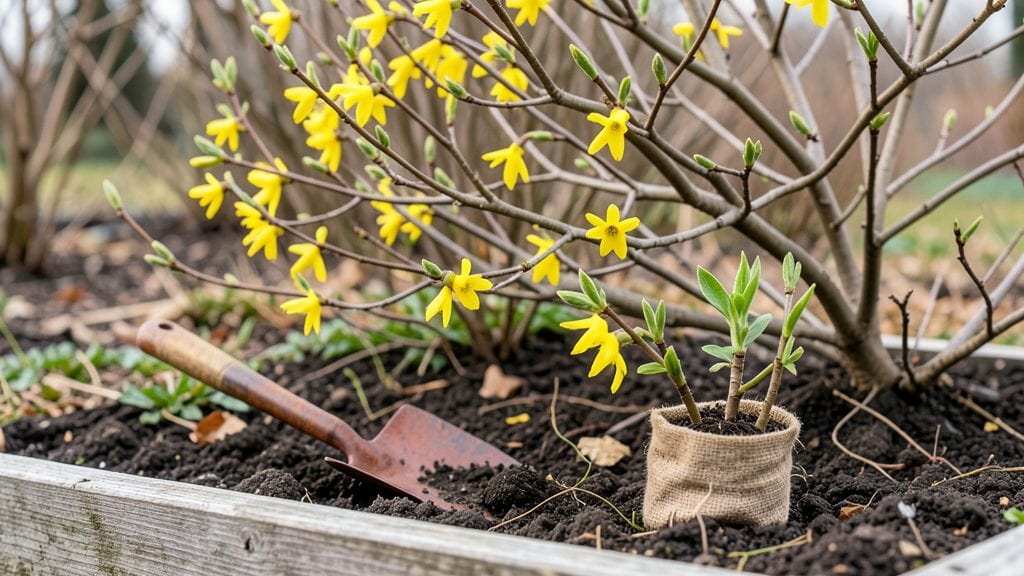
The forsythia planting distance between bushes determines whether your hedge glows like a springtime firework or fizzles into a tangled mess—and trust me, I’ve made that mistake. 🌿 The key is giving each bush 6 to 10 feet of space, depending on the variety, so their branches fill out without fighting for sunlight or air circulation.
Most gardeners overlook how quickly forsythia grows, especially in rich soil and full sun. A single plant can spread 8 to 12 feet wide at maturity, so planting too close means years of pruning battles to keep them from looking like tangled vines.
The payoff? When spaced right, they burst into vibrant yellow blooms that light up the landscape for weeks.
Here’s the secret: dig a hole twice as wide as the root ball but no deeper, then water deeply to settle the soil. Mulch around the base to retain moisture, and avoid heavy pruning the first year—let the plant establish its structure.
Over time, you’ll see those arching branches fill in naturally, creating a lush, flowering wall that’s impossible to ignore.
For tight spaces or hedges, you can reduce spacing to 4 to 6 feet, but be ready for more pruning to control growth. The goal is balance: enough room to thrive, but close enough to create that dramatic spring display.
Once you nail the spacing, your forsythia will reward you with years of effortless beauty.
📚 In This Guide
- What you need
- Instructions
- Tips and common mistakes
- Wrapping up and next steps
What you need
- ● Forsythia shrubs: Choose healthy, disease-free plants (3–6 feet tall, depending on variety). Pro tip: Buy from reputable nurseries for the best quality! 🌿
- ● Shovel or trowel: A garden shovel (for digging holes) and a hand trowel (for delicate root adjustments).
- ● Measuring tape or ruler: Essential for maintaining forsythia planting distance (3–6 feet apart for single-row plantings, 4–8 feet for hedges).
- ● Compost or well-aged manure: 2–3 gallons per plant to enrich soil.
- ○ Mulch (optional but recommended): 2–3 inches of organic mulch (e.g., shredded bark or pine straw) to retain moisture and suppress weeds.
- ● Watering can or hose with a gentle spray nozzle: Forsythias need consistent moisture during establishment.
- ● Garden gloves: Protect your hands from thorns and rough soil.
- ● Pruning shears: For trimming any damaged branches post-planting.
- ○ Stakes and twine (optional): If planting in windy areas, use bamboo stakes (4–6 feet tall) to support young shrubs.
- ○ Soil test kit (optional): Check pH (forsythias prefer 6.0–7.0) and amend soil if needed.
- ● Choose a sunny location with 6+ hours of sunlight daily.
- ● Ensure well-draining soil (forsythias hate soggy roots!). Amend clay soil with sand or compost.
- ● Plan your layout: Sketch a rough design to visualize forsythia planting distance and spacing.
How to space forsythia for maximum blooms and healthy growth
Proper spacing is the secret to vibrant forsythia shrubs that burst with color every spring.
🌱 Step 1: Understand Forsythia’s Mature Size and Growth Habit
Forsythias grow into 6-10 feet wide and 6-12 feet tall depending on the variety. Dwarf types like 'Little Gold' stay compact at 3-5 feet wide, while standard varieties spread wider. I always check the tag for mature size before planting—skipping this leads to overcrowded shrubs that fight for sunlight and nutrients.
These shrubs have a naturally open, airy growth habit, so they don’t need tight spacing like dense hedges. Their branches grow outward in all directions, creating a rounded shape. Planting too close forces them to compete, resulting in fewer flowers and weaker stems. Think of it like giving each plant room to breathe and spread naturally.
🪴 Step 2: Determine Spacing Based on Variety and Design Goals
For standard forsythia varieties, space plants 8-10 feet apart in a mixed shrub border. This spacing ensures they develop into full, bushy shrubs without crowding nearby plants. If you’re creating a privacy screen, reduce spacing to 6-8 feet apart—just enough to fill in over time while allowing airflow to prevent disease.
Dwarf forsythias like 'Northern Gold' or 'Spring Glory' need only 4-6 feet of space. I often plant these in groups of three for a rounded, cottage-garden look. Always consider the mature height too—taller varieties should go toward the back of a mixed border, while shorter ones belong in the front or as accent plants.
☀️ Step 3: Prepare the Planting Site with Proper Airflow in Mind
Before digging, mark your planting locations with stakes or spray paint, using the spacing guidelines above. Forsythias thrive in full sun to partial shade, but they need airflow to prevent fungal issues. Avoid planting near structures like fences or walls where moisture can linger—this creates the perfect conditions for powdery mildew.
Dig holes twice as wide as the root ball but no deeper. The top of the root ball should sit 1-2 inches above ground level—this prevents water from pooling around the stems. Amend the native soil with compost or well-rotted manure to improve drainage, especially in heavy clay soils. I always mix a handful of bone meal into the planting hole for extra phosphorus, which encourages strong root development.
🌿 Step 4: Plant and Stake for Stability Without Restricting Growth
Place the forsythia in the hole, ensuring the roots spread evenly. Backfill with the amended soil, pressing gently to remove air pockets. Water deeply to settle the soil, then add a 2-3 inch layer of mulch around the base, keeping it 6 inches away from the stem to prevent rot. Use a lightweight mulch like pine straw or shredded bark—it breaks down slowly and improves soil structure over time.
Stake only if necessary—forsythias have strong roots once established. If your climate has strong winds, use two stakes per plant, tying the main stems loosely with soft fabric strips. Avoid tight ties that can girdle the stems as they grow. After planting, water again to ensure the soil stays moist but not soggy for the first 2-3 weeks.
⏰ Step 5: Monitor Growth and Adjust Spacing Over Time
In the first year, forsythias focus on root growth rather than flowering. You’ll see new shoots emerging from the base—this is a good sign! Prune back any dead or crossing branches in late winter or early spring, but avoid heavy pruning until the plant is 3-4 years old. Heavy early pruning reduces flowering potential.
Watch for signs of overcrowding as the shrubs mature. If branches from neighboring forsythias start touching, it’s time to thin out one of the plants. I usually remove the smaller or weaker shrub to maintain airflow. Forsythias are tough once established, so they handle pruning well—just time it right after the blooms fade to avoid cutting off next year’s flower buds.
Tips & tricks for perfect forsythia planting
Here's what nobody tells you about spacing forsythias—these tricks will help you avoid common mistakes and get those vibrant blooms every spring.
Variety-Specific Spacing: The 8-10 feet spacing for standard forsythias in Step 2 might seem generous, but trust me on this—it's what prevents those sad, sparse blooms. I've seen too many gardeners cram them in too close, thinking they'll fill in faster. Remember, those branches spread outward like a sunburst, so give them room to shine. For dwarf varieties, the 4-6 feet spacing is perfect for creating those charming cottage-garden clusters, but don't be tempted to squeeze them closer just because they're smaller.
Visual Planning Tip: Before you dig, lay out your forsythias using stakes or even just chalk lines to visualize the mature size. Step back and look at your design—can you still see the trunks through the branches? If not, you're planting too close. I always sketch a rough layout first, especially when mixing standard and dwarf varieties. This simple step saves you from having to thin out plants later when they've already established themselves and become more difficult to remove.
Airflow is Everything: The 6-inch mulch clearance from Step 4 isn't just about preventing rot—it's about creating that crucial airflow. I learned this the hard way after losing several forsythias to powdery mildew in a shady corner. If you're planting near fences or walls, consider adding a few extra inches of space or installing a small lattice to improve circulation. The goal is to mimic their natural woodland edge habitat where they get sunlight but also benefit from gentle breezes.
First-Year Growth Secret: Those first-year shoots emerging from the base in Step 5 are actually a good thing—don't prune them! These are your plant's way of establishing itself. I've seen gardeners get anxious and trim these early shoots, only to end up with stunted plants. Let nature take its course for that first year. The only pruning you should do early on is removing any dead or crossing branches that might block sunlight from reaching the center of the plant.
Pro Tips for Forsythia Planting Distance
- Here's what nobody tells you about spacing forsythias—these tricks will help you avoid common mistakes and get those vibrant blooms every spring.
- Variety-Specific Spacing: The 8-10 feet spacing for standard forsythias in Step 2 might seem generous, but trust me on this—it's what prevents those sad, sparse blooms.
- Visual Planning Tip: Before you dig, lay out your forsythias using stakes or even just chalk lines to visualize the mature size.
Frequently asked questions
Got questions about spacing your forsythia for the best blooms? Here are some of the most common ones—and their answers!
What’s the ideal forsythia planting distance for a hedge?
For a dense, uniform hedge, plant forsythia 3 to 4 feet apart. This spacing allows branches to intertwine naturally while leaving room for airflow and sunlight to reach the center. If you want a more open look, stretch it to 4 to 5 feet.
How long does it take for forsythia to fill out its spacing?
Forsythia grows moderately fast—expect noticeable filling in 2 to 3 years with proper care. Prune lightly in late winter or early spring to encourage bushier growth. Patience pays off with vibrant yellow blooms by year three!
Can I plant forsythia too close together?
Yes! Crowding forsythia (planting closer than 2 feet) can lead to poor airflow, increasing disease risk (like powdery mildew) and stunted growth. Thin out overcrowded plants or prune aggressively to restore airflow and sunlight.
Should I space forsythia differently if planting near a fence or wall?
If using forsythia as a privacy screen, reduce spacing to 2 to 3 feet for faster coverage. However, leave at least 3 feet of clearance from walls to prevent moisture buildup (which can rot roots). Avoid planting directly against fences—allow airflow!
What if my forsythia isn’t filling out after years of growth?
Check these fixes: Prune old wood (forsythia blooms on new growth), ensure 6+ hours of sunlight daily, and amend soil with compost for nutrients. If growth is still sparse, consider fertilizing lightly in early spring with a balanced 10-10-10 formula.
Wrapping up and next steps
Planting forsythia with the right spacing ensures vibrant blooms and healthy growth for years to come! 🌸 Remember, 3–6 feet apart is ideal for most varieties, but adjust based on your climate and desired landscape effect.
With proper care—like pruning and sunlight—your forsythia will thrive and bring early spring color to your garden.
Ready to plant? Mark your spots, grab your tools, and get growing! Whether you’re lining a fence or adding a pop of yellow, your efforts will pay off in stunning, bushy shrubs. Happy planting! 🌱