
Companion Plants
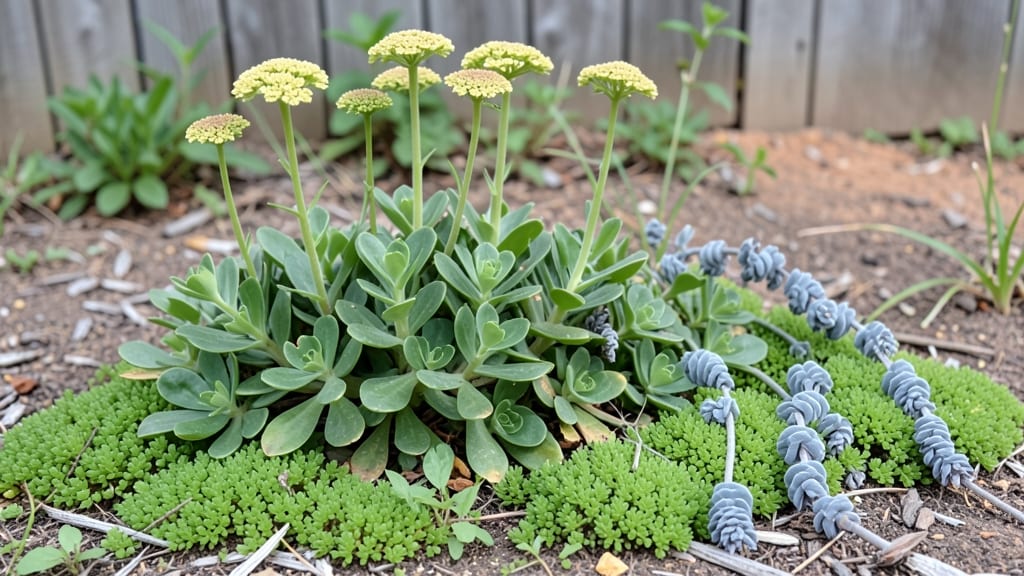
Growing garden sedum plants transformed my dry, sunbaked yard into a vibrant, low-maintenance oasis. 🌿 These hardy succulents thrive where others fail—drought, heat, and poor soil become their favorite conditions.
The secret lies in their ability to store water in thick leaves, turning even the harshest summer into a lush display of color.
You’ll need full sun to partial shade, well-draining soil (even rocky spots work), and minimal watering once established. Most varieties spread quickly, creating dense mats that crowd out weeds. Start with cuttings or nursery plants—seeds take longer but offer more variety.
My go-to picks are Sedum spectabile for bold fall blooms and Sedum acre for tiny, star-shaped flowers that attract pollinators.
By late summer, you’ll see clusters of pink, red, or yellow blooms that last into frost, followed by winter interest from textured foliage. The plants stay compact, making them perfect for borders, rock gardens, or even containers.
Once planted, they’re nearly maintenance-free—just trim back dead growth in early spring and watch them bounce back.
Works equally well in desert landscapes, rain gardens (with proper drainage), or as a living mulch between stepping stones. The best part? No dead patches, no wilting—just reliable color season after season. Ready to add some resilience to your garden?
📚 In This Guide
- What you need
- Instructions
- Tips and common mistakes
- Wrapping up and next steps
What you need
- ● Sedum plants: 10–20 plants per 100 sq. ft. (adjust based on variety—Sedum spurium spreads wider, while Sedum acre stays compact).
- ● Choose healthy, pest-free nursery-grown plants or seeds (if starting from scratch).
- ● Soil amendments: 1–2 bags well-draining potting mix or garden soil (avoid heavy clay).
- ○ Optional: Perlite or coarse sand (1 part per 3 parts soil) for extra drainage.
- ● Mulch: 2–3 inches of gravel, pebbles, or organic mulch (e.g., cedar chips) to retain moisture and suppress weeds.
- ● Garden trowel or hand shovel (for digging small holes).
- ● Garden fork (to loosen compacted soil).
- ● Pruners (for trimming dead foliage or shaping plants).
- ● Watering can or hose with a gentle spray nozzle (sedum hates soggy roots!).
- ● Gloves (to protect your hands from prickly stems or thorns on some varieties).
- ● Measuring tape or ruler (to space plants 12–18 inches apart).
- ● Sunlight: A spot with full sun (6+ hours/day)—sedum thrives in heat and light! 🌞
- ● Drainage: Avoid low-lying areas where water pools. Sedum hates wet feet!
- ● Patience: While sedum spreads quickly, it may take 1–2 seasons to fully fill a bed.
- ○ Optional but helpful: A drip irrigation system (for automatic watering during dry spells).
- ● Companion plants like lavender or Russian sage (to create a pollinator-friendly garden).
Step-by-Step guide to planting and maintaining garden sedum
Here’s how to create a low-maintenance, drought-resistant sedum ground cover that thrives with minimal effort.
🌱 Step 1: Choose the Right Location and Prepare the Soil
Sedum thrives in full sun to partial shade, so pick a spot that gets at least 6 hours of sunlight daily. This hardy plant tolerates poor soil but grows best in well-draining, rocky, or sandy conditions—avoid heavy clay that stays soggy. If your soil is dense, mix in 2-3 inches of coarse sand or gravel to improve drainage.
Clear the area of weeds and debris, then loosen the top 6 inches of soil with a garden fork. Sedum spreads easily, so space plants 12-18 inches apart for full coverage. If planting in a slope, consider using erosion-control fabric underneath to stabilize the ground.
🪴 Step 2: Plant Sedum Correctly for Fast Establishment
Dig holes slightly deeper than the root ball but no wider—this encourages roots to grow downward for stability. Gently remove plants from their containers and tease apart any tangled roots. Place each sedum 12-18 inches apart in rows or a staggered pattern for natural spread.
Backfill with native soil, pressing lightly to remove air pockets. Water deeply to settle the soil but avoid overwatering—sedum roots rot easily in soggy conditions. Mulch with 1-2 inches of gravel or small stones to suppress weeds and retain moisture without smothering the plants.
☀️ Step 3: Water Sparingly and Let It Thrive on Neglect
Water newly planted sedum once a week for the first month, then reduce to every 2-3 weeks once established. Once mature, sedum is completely drought-tolerant—water only if the ground feels bone-dry for weeks. Overwatering is the fastest way to kill it.
Watch for yellowing leaves—this usually means too much moisture. Sedum stores water in its leaves, so crispy edges in hot weather are normal. Fertilizer isn’t needed unless your soil is extremely poor; a light application of compost in early spring is enough to encourage growth.
✂️ Step 4: Prune and Maintain for Year-Round Beauty
Cut back brown or dead foliage in early spring before new growth appears. This keeps the plant tidy and encourages fresh, vibrant shoots. Sedum spreads aggressively, so trim back overgrowth in fall to prevent it from smothering nearby plants.
Divide clumps every 3-4 years in early spring to rejuvenate growth. Simply dig up the plant, separate the sections with a knife, and replant. Sedum’s drought resistance makes it perfect for rock gardens, slopes, and low-water landscapes—once established, it’s nearly indestructible.
Tips & tricks for perfect garden sedum planting
Between us, sedum is one of those plants that seems too good to be true—until you realize it actually thrives on neglect. Here's what nobody tells you about making your sedum ground cover truly shine.
Sunlight Secret: That 6 hours of sunlight in Step 1? Think of it as non-negotiable. Sedum grown in partial shade will stretch and lose its compact form, becoming leggy and sparse. If your yard only gets 4-5 hours of sun, consider placing it near a south-facing wall where it can catch reflected light. I planted mine against a brick wall last year, and the difference in color intensity was dramatic.
Soil Prep Game-Changer: Don't skip that 2-3 inches of gravel or sand if your soil is heavy clay. I learned this the hard way after my first attempt ended with sad, mushy sedum. The key is improving drainage—sedum roots will literally suffocate in soggy conditions. For slopes, that erosion-control fabric isn't just optional; it's your secret weapon against washout.
Watering Wisdom: The once-a-week rule for the first month is critical, but here's what I do differently: I water deeply in the morning so the leaves have all day to dry out. Wet foliage at night invites fungal issues. After that initial month, I actually stop watering entirely unless we have weeks without rain. The crispy edges you might see in summer? That's just sedum doing its thing—it's storing water for when it really needs it.
Pruning Pro Tip: That early spring cleanup in Step 4 isn't just about looks—it's about giving your sedum a fresh start. I time my pruning right when the first new shoots appear, usually in late February where I live. And here's a trick: save those cuttings! You can root them in water for new plants, or just toss them in the compost pile. Every sedum stem is a potential new plant.
Pro Tips for Garden Sedum Plants
- Between us, sedum is one of those plants that seems too good to be true—until you realize it actually thrives on neglect.
- Sunlight Secret: That 6 hours of sunlight in Step 1?
- Soil Prep Game-Changer: Don't skip that 2-3 inches of gravel or sand if your soil is heavy clay.
Frequently asked questions
Got questions about growing garden sedum?
You’re not alone! Here are answers to the most common queries—whether you're a beginner or a seasoned gardener looking to refine your approach.
Can sedum survive in full sun all day?
Sedum plants are thrilled with full sun (6+ hours daily) and thrive in hot, dry conditions. In fact, they’ll often wilt slightly in deep shade—just a sign they’re craving more light. If your climate is scorching, a bit of afternoon shade can prevent leaf scorch, but most varieties handle it like champions.
How often should I water sedum once established?
Once mature, sedum is drought-tolerant and rarely needs watering—once every 2–3 weeks in extreme heat or drought is plenty. Newly planted sedum may need weekly watering until roots establish (about 4–6 weeks). Overwatering is the real enemy—it causes root rot. Stick your finger in the soil; if it’s dry 1–2 inches down, it’s time to hydrate.
Are sedum plants prone to pests or diseases?
Sedum is low-maintenance and rarely bothered by pests, but watch for aphids (tiny green/black bugs) or snails/slugs in moist conditions. Treat aphids with a strong spray of water or insecticidal soap. For slugs, handpick them at night or use organic barriers like crushed eggshells. Fungal issues (like powdery mildew) can occur in shady, humid spots—improve airflow and avoid overhead watering.
What’s the best sedum variety for a low-maintenance rock garden?
For rock gardens, Sedum ‘Dragon’s Blood’ (deep red foliage) or Sedum ‘Angelina’ (golden-yellow) are top picks—they spill beautifully over stones and need almost no care. Sedum spurium (‘Carpet of Snow’) is another stunner, with white flowers and trailing growth. All three handle poor soil and thrive in crevices. Pro tip: Mix textures by pairing with thyme or hen-and-chicks for a polished look!
Will sedum die back in winter, and how do I protect it?
Most sedum is perennial and dies back to the ground in winter, then rebounds in spring. In cold climates (Zone 5 and below), mulch with straw or leaves to insulate roots. Tender varieties (like Sedum morganianum) may need winter protection—wrap containers in burlap or move potted plants to a sheltered spot. Come spring, new growth will pop up like clockwork!
Can I propagate sedum from cuttings?
Yes! Sedum is super easy to propagate. Snip a healthy stem (4–6 inches), let it callous for a day, then plant it in well-draining soil. Keep it lightly moist until roots form (about 2–3 weeks). You can also divide mature clumps in early spring—just dig up sections with roots and replant. Perfect for filling gaps or sharing with fellow gardeners!
Wrapping up and next steps
Garden sedum plants are the ultimate low-maintenance, drought-resistant superstars for any landscape—whether you're a busy gardener or a beginner! 🌿 With their vibrant colors, year-round appeal, and ability to thrive in tough conditions, they’re a game-changer for ground cover, pollinator support, and even rock gardens.
Whether you’re drawn to their succulent textures or their hardy nature, sedum delivers beauty with minimal effort.
Ready to transform your garden? Start small—try a few varieties in a sunny spot and watch them effortlessly spread joy (and color!) all season long. Happy planting! 🌸