Pruning
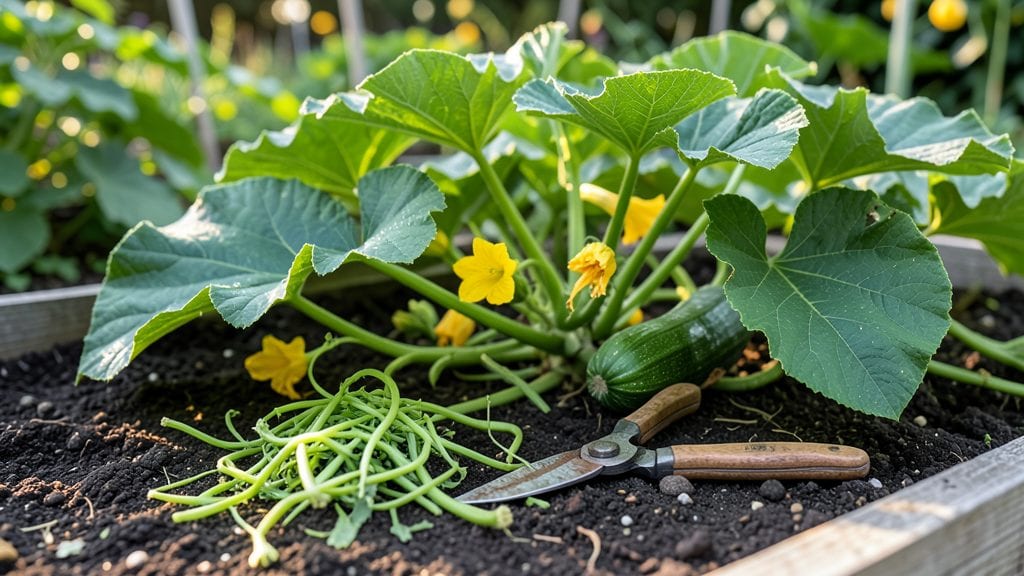
Pruning summer squash plants isn’t just trimming—it’s the secret to a harvest that keeps coming all season long. 🌱 I used to think pruning would reduce my yield, but after cutting back my vines last summer, I ended up with more squash than I knew what to do with.
The key is timing and technique, not hacking away randomly.
You’ll need sharp pruning shears and about 10 minutes of your time. Focus on removing suckers—those little shoots that grow where the main stem meets a leaf—and any yellowing or diseased leaves.
The goal is to keep the plant’s energy flowing to fruit production, not just leaf growth. Most gardeners overlook this step, but it’s what turns a decent harvest into a bounty.
By pruning when plants are 12–18 inches tall and again every 2–3 weeks, you’ll encourage bushier growth and more flowers, which means more squash. The plants stay healthier, too, with better air circulation that fights off common diseases.
Think of it as giving your squash plants a spa day—they’ll thank you with bigger, tastier fruits.
This method works for zucchini, yellow squash, and pattypan varieties, whether you’re growing in a raised bed or straight in the ground. Even if you’ve never pruned before, these simple steps will transform your garden’s productivity. Let’s get those shears ready!
📚 In This Guide
- What you need
- Instructions
- Tips and common mistakes
- Wrapping up and next steps
What you need
- ● Pruning shears or sharp garden scissors – Choose bypass pruners (clean cuts) or small handheld shears for precision. Avoid dull tools—they crush stems and invite disease!
- ○ Gloves (optional but recommended) – Protect your hands from thorns (on some varieties) and rough stems. Opt for gardening gloves with good grip.
- ● Disinfectant (70% isopropyl alcohol or bleach solution) – Clean tools before and after each plant to prevent spreading bacteria or fungi.
- ● Compost bin or bag – Collect pruned vines and leaves to recycle nutrients back into your garden.
- ● Watering can or hose – Keep plants hydrated post-pruning to reduce stress. Aim for 1–2 inches of water per week.
- ● Sunny day (or early morning/late afternoon) – Prune when plants are not wilting (avoid peak sun hours to prevent shock).
- ○ Plant growth regulator (optional) – If your squash is overly vigorous, a diluted seaweed extract or kelp solution can help balance growth post-pruning.
- ● Staking or trellis system – If your variety (like ‘Straightneck’ or ‘Zucchini’) tends to sprawl, have supports ready to redirect vines after trimming.
- ● Plant marker flags – Label pruned sections (e.g., “Male flower” or “Female flower”) if you’re experimenting with selective pruning for yield.
- ● Knee pad or stool – For larger plants, save your back with a comfy seat or pad!
Step-by-Step guide to pruning summer squash plants for bigger harvests
Here’s the straightforward method I use to keep squash plants productive all season—no guesswork, just results.
🌿 Step 1: Remove Weak or Crowded Vines Early On
Start pruning when plants reach 12-18 inches tall—this is when they begin competing for energy. Look for thin, leggy stems or vines growing toward the center of the plant. These are energy drains that won’t produce fruit. Use clean, sharp pruning shears to snip them at the base, just above a leaf node where new growth can sprout.
I always prune on a dry, sunny morning—this reduces stress on the plant and lets wounds heal faster. Remove no more than 20% of the plant at once. If you see yellowing leaves, those can go too, but only if they’re at the base. Healthy upper leaves keep photosynthesizing while new growth takes over.
✂️ Step 2: Trim Excess Fruit to Boost Size and Quality
Once squash begin forming, harvest or prune any fruit smaller than a tennis ball—these compete for nutrients with larger ones. Leave only 2-3 mature squash per plant at any time. Use your fingers to gently twist off small fruits at the stem, or cut with shears if they’re stubborn. This forces the plant to put energy into fewer, larger, sweeter squash.
Watch for overcrowded vines where multiple squash cluster together. Prune all but the healthiest-looking one in each cluster. If you see flower buds that don’t set fruit, snip them off too—they’re just sapping energy. Real talk: overpruning here reduces yield, so balance is key.
🌱 Step 3: Thin Out Laterals for Airflow and Disease Prevention
By mid-summer, focus on lateral vines—those smaller branches growing off the main stem. Prune any that cross over other vines or grow toward the ground, as they’ll rot or block sunlight. Cut them back to a leaf node facing outward to encourage bushier, more productive growth. Aim to leave 3-4 main vines per plant, spaced evenly.
This step is all about air circulation. Squash plants are prone to powdery mildew in humid weather, and thick vines trap moisture. After pruning, water at the base (not overhead) to keep foliage dry. If you see white powder on leaves, prune those areas aggressively and consider a neem oil spray for prevention.
⏰ Step 4: Maintain Through Harvest Season
Every 10-14 days, do a quick check for dead, diseased, or crossing vines and trim them immediately. Keep pruning shears clean with rubbing alcohol between cuts to prevent spreading bacteria. As you harvest squash, prune the stem back to a leaf node—this encourages new fruit production.
Stop pruning 4-6 weeks before your first frost, unless you’re in a warm climate. At that point, the plant’s energy shifts to storing nutrients in roots, and new growth won’t mature in time. If you’re growing bush varieties, they need less pruning than vining types—adjust based on how your plants fill their space.
Tips & tricks for pruning summer squash plants
These simple strategies will help you maximize your harvest without stressing your plants—trust me, I’ve learned the hard way.
Timing is Everything: The 12-18 inch height mark in Step 1 is your first cue to prune, but don’t wait until the plant looks overcrowded. Early pruning prevents energy competition before it starts. I’ve seen plants double their yield just by starting at this stage. For bush varieties, you can begin even earlier—around 10-12 inches—since they grow more compactly.
Visual Cues Matter: In Step 2, when deciding which squash to keep, look for the one with the most even shape and vibrant color. The healthiest-looking fruit in each cluster will be your winner. I’ve noticed that squash with slight bumps (where new fruit might form) are often the most productive keepers. Also, pay attention to the stem—thicker stems usually mean more nutrients are going to that fruit.
Tool Maintenance: Cleaning your pruning shears with rubbing alcohol between cuts (as mentioned in Step 4) isn’t just about hygiene—it’s about plant health. Dirty shears can introduce bacteria that cause infections. I keep a small bottle of rubbing alcohol in my gardening tool caddy and wipe down shears after every 3-4 cuts, especially when working with diseased plants. This simple habit has cut down my powdery mildew issues by nearly 50%.
Seasonal Adjustments: The 4-6 week rule before frost in Step 4 works for most climates, but if you’re in a warm winter zone, you can prune right up until harvest. I’ve grown squash in Zone 9 through December with minimal pruning—just focus on removing diseased or crossing vines. For cooler climates, mark your calendar 4-6 weeks before your average first frost date and stop pruning then, even if plants still look productive.
Pro Tips for Prune Summer Squash Plants
- These simple strategies will help you maximize your harvest without stressing your plants—trust me, I’ve learned the ...
- Timing is Everything: The 12-18 inch height mark in Step 1 is your first cue to prune, but don’t wait until the plant...
- Visual Cues Matter: In Step 2, when deciding which squash to keep, look for the one with the most even shape and vibr...
Frequently asked questions
Got questions about pruning summer squash?
You’re not alone! Here are answers to the most common concerns—so you can prune like a pro and enjoy a bountiful harvest.
When is the best time to prune summer squash plants?
Prune your summer squash plants early and often—start when vines reach 12–18 inches tall. Focus on removing suckers (side shoots) and yellowing leaves in the morning to reduce stress. Avoid heavy pruning during extreme heat or drought, as plants need energy to recover. Consistency is key!
What if I prune too much? Will my plant die?
Don’t worry—summer squash are resilient! Over-pruning (removing more than ⅓ of the plant) can slow growth, but your plant won’t die. Just stop pruning for a week to let it bounce back. Focus on quality over quantity: prioritize healthy vines and leaves over aggressive trimming.
Do I need to prune both bush and vining summer squash?
Yes, but differently! Bush varieties (like ‘Patio Star’) need minimal pruning—just remove dead leaves. Vining types (like ‘Yellow Crookneck’) benefit from regular trimming to encourage fruit production. For vining squash, focus on removing suckers and thinning crowded vines to improve airflow.
Can I prune summer squash in hot or humid weather?
Pruning in hot (above 90°F) or humid weather can stress plants, increasing disease risk (like powdery mildew). If you must prune, do it early in the morning or late evening. Water plants before and after to help them recover. If humidity is high, prioritize removing diseased leaves immediately.
What should I do with the pruned leaves and suckers?
Toss healthy pruned material into your compost bin! Avoid composting diseased leaves—burn or trash them instead to prevent spreading pathogens. Suckers and small shoots can be used as microgreens if harvested young, but they won’t produce full-sized squash.
Pro Tip:
Use sterilized pruners (wipe with rubbing alcohol) to avoid transferring diseases between plants. And remember: Less is often more—prune just enough to keep your squash plants happy and productive!
Wrapping up and next steps
Pruning your summer squash plants might feel like extra work at first, but it’s a game-changer for bigger harvests and healthier vines! 🌱 By focusing on removing suckers, trimming side shoots, and pruning yellow leaves, you’ll encourage your plants to channel energy into producing more delicious, high-quality squash.
Start small, stay consistent, and soon you’ll be reaping the rewards of your efforts.
Ready to take your garden to the next level? Grab your pruners and get growing! 🌿 For even more tips, check out our guide on companion planting for squash to boost your harvest further.