
Pruning
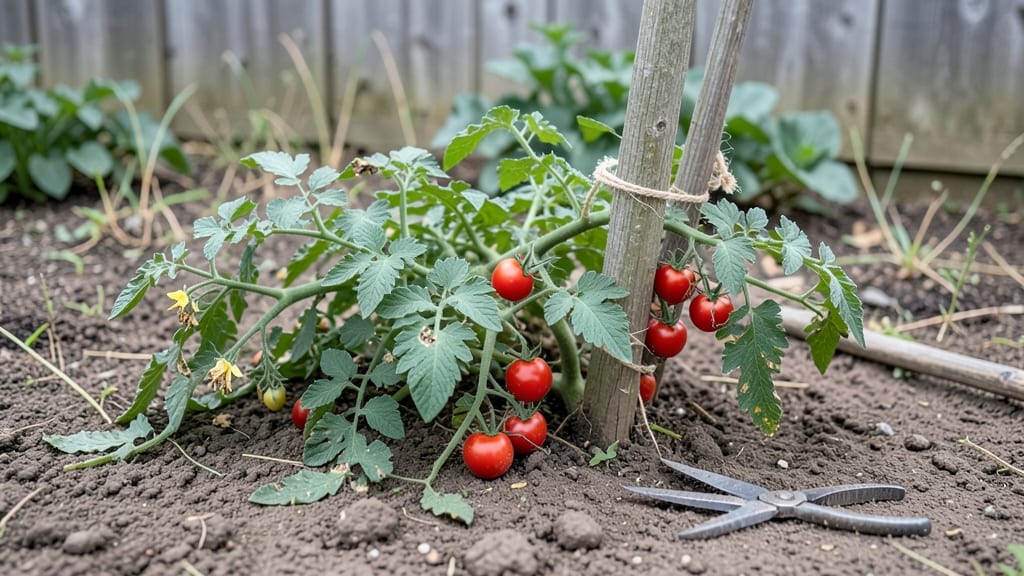
Trimming overgrown tomato plants turns a tangled mess into a high-yielding powerhouse. ✨ I've watched my sprawling vines go from chaotic to productive just by cutting back the right way—and the best part? You don't need fancy tools or years of experience.
The key is knowing where to snip (those little side shoots called suckers) and when to stop (before you prune too late in the season).
You'll need sharp pruning shears, a small notebook for tracking growth, and maybe a ladder if your plants are towering. Determinate tomatoes (the bush types) get minimal pruning, while indeterminate vines (the ones that keep growing) benefit from aggressive trimming.
Most gardeners over-prune early or stop too late—both mistakes rob you of harvest potential. I learned that the hard way after cutting back my 'Sungold' cherry tomatoes too aggressively in July.
What you end up with is a plant that focuses its energy on fruit instead of leaves, with better airflow that keeps diseases at bay. Those pruned vines will produce heavier, riper tomatoes than untrimmed plants, and the structure becomes manageable enough to stake or trellis properly.
The first harvest after pruning is always the sweetest—literally. You'll taste the difference in flavor too.
This method works for both backyard gardens and container-growing setups, though container plants need slightly more frequent pruning to stay compact. The same principles apply whether you're dealing with heirlooms or hybrid varieties—just adjust the timing based on your last frost date.
Let's get those vines under control and those tomatoes growing!
📚 In This Guide
- What you need
- Instructions
- Tips and common mistakes
- Wrapping up and next steps
What you need
- ● Pruning shears or bypass pruners – Choose sharp, sterilized shears (e.g., Felco or Fiskars) to avoid spreading disease. Size: 5–7 inches for precision.
- ● Gloves (gardening or pruning) – Protect your hands from thorns and dirt. Opt for nitrile-coated or leather gloves for durability.
- ● Disinfectant (rubbing alcohol or bleach solution) – Sanitize tools before/after use to prevent bacterial/fungal spread. Mix: 1 part bleach to 9 parts water.
- ● Garden twine or plant ties – Secure trimmed vines to stakes or cages (e.g., 1/8-inch polyester twine or soft plant ties).
- ● Sturdy stakes or tomato cages – Support remaining vines. Size: 6–8 feet tall for indeterminate varieties.
- ○ Sharp knife or loppers (optional but helpful) – For thicker stems (e.g., Fiskars 8-inch loppers with bypass blades).
- ● Bucket or trash bag – Collect pruned debris to compost or discard.
- ● Hand pruners with a hook – Easier for reaching high branches.
- ● Hose with spray nozzle – Rinse tools and plants post-pruning.
- ● Plant growth regulator (e.g., seaweed extract) – Apply after pruning to boost recovery (follow label instructions).
- ● Sunscreen and hat – Protect yourself from sun exposure during outdoor work.
Step-by-Step instructions for trimming overgrown tomato plants
Here’s how to revitalize your sprawling tomato vines—no pruning experience needed.
✂️ Step 1: Identify What to Prune and When
Wait until your tomato plants are at least 12-18 inches tall and have 3-4 main stems. This ensures they’ve established enough energy to recover. Look for suckers—those small shoots growing in the "V" between the main stem and a branch. These compete for nutrients and weaken fruit production.
Prune in the morning when the plants are dry. This gives them time to recover before evening moisture sets in. Avoid trimming after rain—wet plants are more susceptible to disease if you nick the stems.
✂️ Step 2: Use the Right Tools and Technique
Grab your sharp pruning shears (or clean scissors in a pinch) and make cuts at a 45-degree angle, about ¼ inch above a leaf node. This encourages new growth from that spot. Never leave stubs—it invites rot and pests.
Focus on removing suckers first, then thin out crowded branches. If a branch is diseased or yellowing, cut it back to healthy green tissue. I always sterilize my shears with rubbing alcohol between cuts to prevent spreading any hidden pathogens.
✂️ Step 3: Prune for Airflow and Fruit Production
Step back and assess the plant’s shape. You want a balanced, open structure with sunlight reaching the center. Trim any branches growing inward or crossing others—this reduces humidity and disease risk. Leave 3-5 main stems (or fewer for determinate varieties) to focus energy on fruit production.
For indeterminate tomatoes, pinch off the top growth after the first 5-6 fruit clusters appear. This redirects energy to ripening existing fruit instead of growing more leaves. You’ll see new side shoots forming at the nodes below—these will produce more flowers and tomatoes.
💧 Step 4: Post-Pruning Care for Recovery
Water the plant deeply right after pruning to help it recover. The roots will need to support the reduced foliage, so keep the soil consistently moist but not soggy. Add a balanced fertilizer (like 10-10-10) to replenish nutrients lost during pruning.
Watch for new suckers forming in the next 2-3 weeks. These will appear in the same "V" spots you just cleaned out. Regularly check your plants and remove them before they grow larger than 2 inches—small suckers are easier to remove and less stressful for the plant.
☀️ Step 5: Monitor and Adjust for Ongoing Growth
Keep an eye on your plant’s response. If leaves start yellowing or wilting, it might be overpruned—give it time to recover. If new growth is sparse, add a low-nitrogen fertilizer to encourage flowering. You’ll know you’ve done well when you see more flowers and fruit clusters within 2-3 weeks.
Repeat the pruning process every 2-3 weeks throughout the growing season. The goal is to maintain a balanced, productive plant that’s not overburdened with foliage. Your tomatoes will thank you with bigger, healthier fruit!
Tips & tricks for revitalizing overgrown tomato vines
Here’s what nobody tells you about pruning—these little tricks make all the difference between a stressed plant and a thriving tomato bush.
Timing is Everything: I learned this the hard way after ruining three batches of tomatoes—always prune in the morning when plants are dry. The 12-18 inch height requirement isn't arbitrary; it ensures roots have established enough to handle the shock. If you prune too early, your plant may struggle to recover, and those precious fruit clusters won't develop properly.
The Technique That Changed Everything: Those 45-degree angle cuts in Step 2 aren't just for show—they create a larger surface area for water absorption and new growth. When you cut just ¼ inch above a leaf node, you're essentially telling the plant "grow here!" The key is to make clean cuts without leaving stubs, which can trap moisture and invite disease. I use a small notepad to mark which nodes I've already pruned to avoid over-trimming.
Airflow Strategy: The balanced, open structure you create in Step 3 is your plant's best defense against fungal diseases like blight. I think this works because sunlight and air can circulate freely, keeping the center of the plant dry. For indeterminate varieties, that 5-6 fruit cluster rule is non-negotiable—it's the sweet spot between too many leaves and too few fruits. You'll notice a dramatic difference in fruit size and quality after just one proper pruning session.
Post-Pruning Recovery: Don't skip that deep watering after pruning—it's like giving your plant a refreshing drink after a workout. The 2-3 week window for new suckers is your chance to stay ahead of the game. I set a reminder on my phone to check my plants every 10 days during growing season. When you see those little suckers popping up, remove them before they reach 2 inches—they're like weeds stealing nutrients from your tomatoes.
Pro Tips for Trim Overgrown Tomato Plants
- Here’s what nobody tells you about pruning—these little tricks make all the difference between a stressed plant and a thriving tomato bush.
- Timing is Everything: I learned this the hard way after ruining three batches of tomatoes—always prune in the morning when plants are dry.
- The Technique That Changed Everything: Those 45-degree angle cuts in Step 2 aren't just for show—they create a larger surface area for water absorption and new growth.
Frequently asked questions
Got questions about trimming your tomato plants? You’re not alone! Here are some common concerns—and straightforward answers—to help you prune like a pro.
When is the best time to start pruning overgrown tomato plants?
Prune determinate (bush) tomatoes minimally—just remove suckers or damaged leaves. For indeterminate (vining) varieties, start pruning when plants are 12–18 inches tall. Focus on early summer to encourage airflow and fruit production. Avoid heavy pruning late in the season, as it can stress plants before harvest.
What if I cut too much off my tomato plant by mistake?
Don’t panic! Tomato plants are resilient. If you’ve over-pruned, stop immediately and let the plant recover. Focus on watering deeply (1–2 inches per week) and fertilizing lightly with a balanced formula. New growth should sprout within 2–3 weeks. Just avoid pruning again until the plant stabilizes.
Will pruning reduce my tomato yield?
Not if done correctly! Pruning indeterminate tomatoes actually boosts yield by directing energy to fewer, larger fruits and improving air circulation (which prevents disease). Determinate types need minimal pruning—just remove dead or crowded leaves. Think of it as giving your plant a spa day for better results!
Can I prune tomato plants in hot or humid weather?
Prune during cool, cloudy mornings to avoid shocking the plant. Hot or humid days stress tomatoes, making them more susceptible to disease. If you must prune in heat, do it early or late in the day, and water thoroughly before and after. Always sterilize your pruners with rubbing alcohol to prevent bacterial spread.
What should I do with the pruned branches and leaves?
Remove pruned material from the garden immediately to prevent pests or diseases from spreading. Compost healthy, disease-free clippings (like stems without blight). If leaves show signs of disease (spots, wilting), do not compost them—trash them instead to protect your garden.
Wrapping up and next steps
Trimming overgrown tomato plants isn’t just about tidying up—it’s your secret weapon for bigger, healthier harvests! 🌱 By removing suckers, pruning leaves, and encouraging airflow, you’re giving your plants the energy to focus on what matters most: delicious, plump tomatoes.
Remember, consistency is key, so grab those pruners and make it a habit.
Ready to see the results? Start today—your future tomato feasts will thank you! For even more gardening tips, check out our guide on optimizing tomato plant care.