
Fertilization
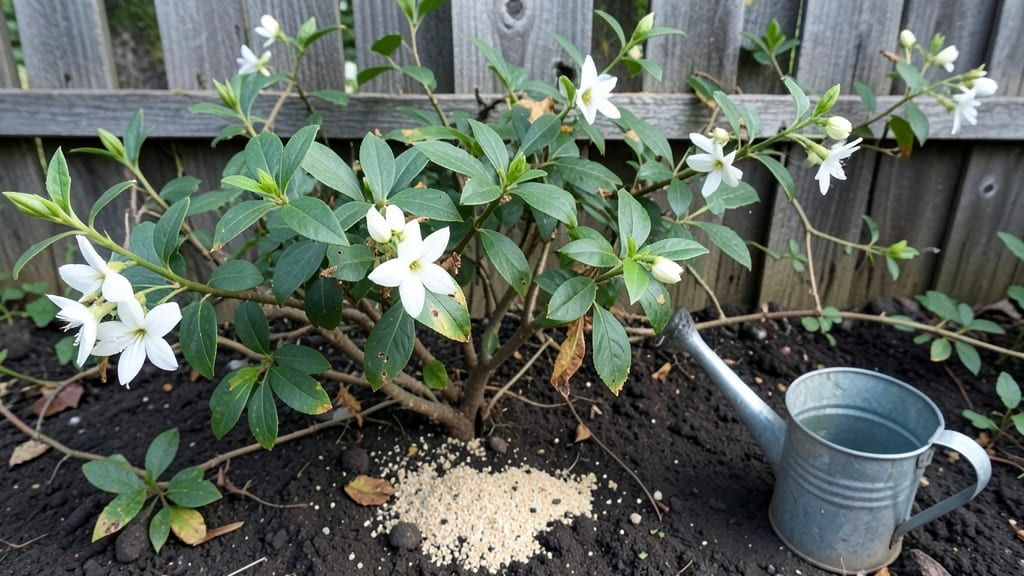
The right jasmine plant food can turn your vine into a fragrant cloud of blossoms by summer. 🌿 I’ve learned that jasmine thrives when fed the right balance of nitrogen for leaves and phosphorus for flowers—not too much, not too little.
The difference between a bushy green vine and one bursting with perfume often comes down to what you put in the soil.
Start with a balanced 10-10-10 fertilizer (equal parts nitrogen, phosphorus, potassium) in early spring to kickstart growth, then switch to a higher-phosphorus formula like 5-10-5 when buds form.
Organic options like fish emulsion or compost tea work well too, especially for indoor plants where scent is everything. Just avoid heavy nitrogen—it’ll give you leaves, not fragrance.
By midseason, you’ll notice clusters of buds forming, and the air will fill with that signature jasmine scent—sweeter and stronger than store-bought versions. The key is consistency: feed every 4-6 weeks during active growth, then taper off in fall.
Overfeeding leads to weak blooms, so always water after fertilizing to prevent root burn.
Outdoor jasmine? Work in a slow-release organic fertilizer at planting time for a year’s worth of nutrients. Indoor varieties need lighter feeding—half-strength applications every 6-8 weeks.
Either way, your vine will reward you with months of intoxicating blooms if you keep it happy. Here’s how to avoid the pitfalls along the way.
📚 In This Guide
- What you need
- Instructions
- Tips and common mistakes
- Wrapping up and next steps
What you need
- ● Balanced liquid fertilizer (10-10-10 NPK ratio) – 1 tbsp per gallon of water (for general growth)
- ● High-phosphorus fertilizer (5-10-5 NPK ratio) – 1 tsp per gallon of water (for blooming)
- ● Organic compost or worm castings – 1 cup per plant (for soil enrichment)
- ● Slow-release granules (e.g., Osmocote) – 2 tbsp per plant (for steady nutrition)
- ● pH test kit – To ensure soil is 6.0–7.0 (jasmine thrives in slightly acidic to neutral soil)
- ● Measuring spoons or scale (for precise fertilizer dosing)
- ● Watering can (with a fine rose nozzle for gentle application)
- ● Garden gloves (to protect hands from soil and fertilizers)
- ● Trowel or small shovel (for mixing compost into soil)
- ● Epsom salt (1 tbsp per gallon) – Boosts magnesium for lush foliage
- ● Fish emulsion or seaweed extract – Natural growth stimulant (mix 1 tbsp per gallon)
- ● Mulch (pine bark or straw) – Retains moisture and regulates soil temp
- ● Automatic drip irrigation system – Ensures consistent watering and fertilizer delivery
Step-by-Step guide for feeding jasmine plants
Jasmine thrives when fed the right way—here’s my foolproof method for lush, fragrant blooms.
🌿 Step 1: Choose the Right Fertilizer for Jasmine
Jasmine prefers a balanced, water-soluble fertilizer with equal parts nitrogen, phosphorus, and potassium (like 10-10-10 or 20-20-20). Avoid high-nitrogen fertilizers—they promote leafy growth at the expense of flowers. I use a half-strength solution (mix ½ teaspoon per gallon of water) to prevent root burn. Organic options like fish emulsion or compost tea work too, but dilute them even further.
Test your soil first—jasmine dislikes soggy roots. If your mix drains poorly, amend with perlite or sand before feeding. You’ll know your soil is ready when it holds moisture but doesn’t stay clumpy when squeezed.
💧 Step 2: Feed During Active Growth and Blooming
Feed jasmine every 4-6 weeks during spring and summer when new growth appears. Skip fertilizer in fall and winter—jasmine rests then. I start feeding in early May when I see fresh leaves unfurl and continue until late August, just before blooms fade.
Always water the plant thoroughly 24 hours before feeding—this prevents fertilizer burn. Apply the solution to damp (not soggy) soil at the base of the plant. Avoid wetting leaves, as concentrated fertilizer can scorch them. You’ll notice vibrant new growth within 2-3 weeks of consistent feeding.
☀️ Step 3: Supplement for Extra Fragrance and Blooms
For more intense fragrance and abundant flowers, add a phosphorus-rich fertilizer (like 5-10-5) once during peak bloom season. Phosphorus encourages root and flower development. Mix ¼ teaspoon per gallon of water and apply when buds form but haven’t yet opened.
Jasmine also benefits from foliar feeding—spray a diluted fertilizer solution (½ teaspoon per gallon) on the undersides of leaves in the morning. This boosts nutrient absorption and helps prevent powdery mildew. You’ll see brighter blooms and a stronger scent within 10-14 days of this treatment.
✂️ Step 4: Adjust Feeding for Potted vs. Garden Jasmine
Potted jasmine needs more frequent but lighter feeding—use half-strength fertilizer every 3-4 weeks during growing season. Roots in containers dry out faster, so flush the soil with water monthly to remove excess salts. You’ll know it’s time when you see yellowing leaf edges or crusty soil surface.
Garden jasmine tolerates heavier feeding but less often—stick to every 6 weeks with a full-strength solution. Mulch around the base with 2-3 inches of organic matter (like compost) to retain moisture and slowly release nutrients. Prune spent blooms immediately to encourage continuous flowering—this tells the plant to redirect energy into new flowers, not seed production.
⏰ Step 5: Watch for Overfeeding Signs
Jasmine shows clear signs of overfeeding: yellowing leaves, leaf drop, or white crust on soil. If you see these, flush the soil immediately by watering deeply for 10 minutes to leach out excess salts. Reduce fertilizer strength to ¼ teaspoon per gallon until new growth appears.
Real talk: I’ve overfed jasmine before, and the recovery takes 4-6 weeks of careful watering. To prevent this, always follow the "less is more" rule—jasmine prefers gentle, consistent feeding over heavy doses. You’ll know you’re doing it right when the plant produces glossy leaves and clusters of fragrant white blooms without leaf burn.
Tips & tricks for perfect jasmine plant food application
These practical insights will help you avoid common pitfalls and maximize your jasmine's fragrance and vitality.
The Dilution Factor: When mixing your half-strength fertilizer solution (½ teaspoon per gallon), use a clean measuring spoon and a dedicated container to avoid cross-contamination. I've learned the hard way that reusing containers with old fertilizer residue can lead to inconsistent results. For organic options like fish emulsion, dilute to just one-third strength—these are often more potent than synthetic fertilizers.
Seasonal Timing Secret: The 4-6 week feeding schedule in spring/summer aligns perfectly with jasmine's natural growth cycle. In Step 2, mark your calendar starting in early May when you first see new leaves unfurl—this visual cue confirms your plant is ready for nutrients. For potted jasmine, the more frequent 3-4 week schedule prevents nutrient buildup that can occur in confined root spaces.
Foliar Feeding Technique: When applying foliar feed (½ teaspoon per gallon), focus on the undersides of leaves where stomata are most concentrated. Use a fine mist sprayer and apply in the early morning to allow leaves to dry before evening dew forms. This method delivers nutrients directly to where they're needed most, and you'll notice brighter blooms within those critical 10-14 days mentioned in Step 3.
Overfeeding Rescue Strategy: If you spot that white crust on soil (a sure sign of overfeeding), don't panic—your 10-minute flush method works wonders. I've recovered overfed jasmine plants by combining this flush with a temporary reduction to ¼ teaspoon per gallon strength. The key is consistency: maintain this reduced strength until you see new growth appear after 4-6 weeks of careful watering.
Pro Tips for Jasmine Plant Food
- These practical insights will help you avoid common pitfalls and maximize your jasmine's fragrance and vitality.
- The Dilution Factor: When mixing your half-strength fertilizer solution (½ teaspoon per gallon), use a clean measuring spoon and a dedicated container to avoid cross-contamination.
- Seasonal Timing Secret: The 4-6 week feeding schedule in spring/summer aligns perfectly with jasmine's natural growth cycle.
Frequently asked questions
Got questions about keeping your jasmine plant thriving with the right food? Here are some of the most common ones—and their answers!
How often should I feed my jasmine plant?
Feed your jasmine every 4–6 weeks during the growing season (spring to fall). Cut back to once every 2–3 months in winter when growth slows. Overfeeding can burn roots, so always dilute liquid fertilizers to half-strength unless the label says otherwise.
When is the best time to fertilize jasmine plants?
The ideal time is early morning when soil is moist but not soggy. Avoid fertilizing in extreme heat (above 90°F) or when the plant is stressed (e.g., after repotting or pruning). For potted jasmine, water thoroughly 24 hours before applying food to prevent root burn.
Can I use regular houseplant food instead of jasmine-specific fertilizer?
Yes! A balanced liquid fertilizer (10-10-10 or 20-20-20) works well, but jasmine loves a slightly higher phosphorus boost (e.g., 10-20-10) to encourage blooms. Organic options like fish emulsion or compost tea are also great. Just follow the dilution instructions—jasmine is sensitive to salt buildup!
Why are my jasmine leaves turning yellow after fertilizing?
Yellowing leaves usually mean overfeeding or root burn. Flush the soil with water to leach excess salts, then reduce fertilizer strength. If roots look mushy or black, prune the damaged ones and repot in fresh, well-draining soil. Pro tip: Always water before fertilizing to help dilute nutrients!
What’s the difference between liquid and slow-release jasmine plant food?
| Liquid Fertilizer | Slow-Release Granules |
|---|---|
| Fast-acting; great for immediate blooms (feed every 4–6 weeks). | Long-lasting (3–6 months); ideal for low-maintenance care. |
| Risk of overfeeding if overused. | Less frequent application but may need soil testing for accuracy. |
For jasmine: Use liquid for active growth and granules for dormant months.
Wrapping up and next steps
Choosing the right jasmine plant food can transform your fragrant garden into a thriving sanctuary! 🌿 Whether you opt for organic compost, balanced synthetic fertilizers, or homemade teas, the key is consistency and attentiveness to your plant’s needs.
With the right nutrients and care, your jasmine will reward you with intoxicating blooms and lush greenery.
Now that you’re armed with knowledge, why not take the next step? Start small—test a few fertilizers or DIY recipes, observe your plant’s response, and fine-tune your approach. Happy gardening, and may your jasmine flourish! 🌸