
Planting
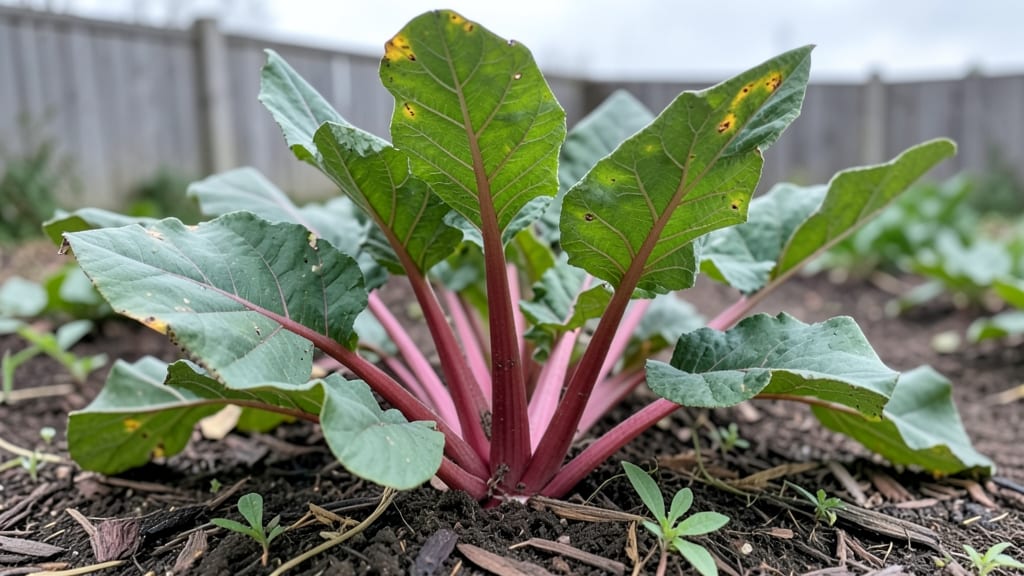
A large rhubarb plant starts with patience and three simple cuts that unlock a harvest stretching from spring through fall. 🌱 I’ve watched my rhubarb crowns go from stubborn clumps to towering, red-stemmed giants—each cut timed to trigger new growth while keeping the plant healthy.
The secret isn’t fancy; it’s knowing when to trim, how deep to dig, and when to let the plant rest.
You’ll need rich, well-draining soil, 6 feet of spacing between plants, and a spot that gets full sun for at least half the day. Water deeply once a week (more in summer), and feed with compost in early spring.
The plant rewards this care with thick, glossy leaves and those prized tart stems—if you prune correctly. Most gardeners over-cut in spring, which stunts growth, but I’ll show you the exact timing that keeps your plant thriving.
By mid-summer, you’ll be harvesting 12-inch stems without harming the plant, and with the right cuts, you’ll extend the season into early winter. The stems stay crisp, the leaves stay lush, and the plant keeps producing year after year.
No greenhouses or special equipment needed—just sharp shears and a little know-how. Let’s get those cuts right from the start.
This method works in zones 3-9, though colder climates need a little extra mulch in winter. Whether you’re growing for pies, jams, or just the joy of a homegrown harvest, these cuts are the difference between a decent plant and one that feeds your family for seasons.
Here’s how to make it happen.
📚 In This Guide
- What you need
- Instructions
- Tips and common mistakes
- Wrapping up and next steps
What you need
- ● Rhubarb crowns: 3–5 high-quality, disease-free crowns (choose varieties like ‘Victoria’ or ‘Strawberry’ for large growth).
- ● Well-draining soil: Mix 60% topsoil with 40% compost or aged manure (aim for a pH of 6.0–6.8).
- ● Organic mulch: 2–3 inches of straw, wood chips, or shredded leaves to retain moisture and suppress weeds.
- ● Balanced fertilizer: 10-10-10 or 5-10-10 (apply sparingly—rhubarb is low-maintenance!).
- ● Watering can or hose: With a gentle spray nozzle (rhubarb hates soggy roots!).
- ● Garden trowel or spade: For digging planting holes (12–18 inches deep).
- ● Pruners or sharp knife: For clean cuts during harvest (sterilize with rubbing alcohol!).
- ● Garden gloves: To protect hands from thorns and rough stems.
- ● Measuring tape or ruler: To track plant growth (aim for 3–4 feet tall for optimal harvests!).
- ○ Optional: Soil pH test kit (to monitor acidity levels).
- ● Drip irrigation system (for automated watering in dry climates).
- ● Plant supports (if your rhubarb grows tall—though most varieties don’t need them!).
- ● Sunlight: Full sun (6–8 hours daily) or light shade (partial shade in hot climates).
- ● Climate: Hardy in USDA zones 3–9 (plant in early spring or fall for best results).
- ● Patience: Rhubarb takes 2–3 years to mature—plan ahead for long-term rewards!
- ● Space: 3 feet between crowns (or 4 feet for giant varieties like ‘Champagne’).
How to maintain a large rhubarb plant for continuous harvests
Here's the straightforward approach I've used for years to keep my rhubarb plant thriving and producing stalks reliably.
🌱 Step 1: Understand the Plant's Natural Growth Cycle
Rhubarb grows from a thick root crown that sends up stalks in spring. The key is to let the plant establish its energy reserves before harvesting. In its first year, don't harvest at all—let the plant focus on building roots. By year two, you can begin light harvesting, but never take more than 1/3 of the stalks at once.
Here's the thing—if you harvest too aggressively, the plant will send up weak, thin stalks next year. I wait until the stalks reach 10-12 inches tall before making my first cut. This ensures the plant has enough energy to regrow strong stalks for your next harvest.
✂️ Step 2: Make Your First Strategic Cut in Early Spring
Timing is everything with rhubarb. Wait until you see 3-4 stalks at least 12 inches tall—usually in late April or early May, depending on your climate. Cut the stalks at the base with a sharp knife or clean pruners, leaving the leaf crown intact. Never pull stalks—they'll break and leave ugly scars.
After your first harvest, wait 3-4 weeks before cutting again. This gives the plant time to recover and produce new stalks. I mark my calendar so I don't forget—rhubarb is patient, but you can't rush it.
🌿 Step 3: Continue with Two More Strategic Harvests
Your second harvest comes about 4-6 weeks after the first cut, when new stalks reach 8-10 inches tall. This is your mid-season harvest, and it's usually the most productive. After this cut, the plant needs another 4-6 weeks to recover before your final harvest.
For your third harvest, wait until late summer when stalks reach 6-8 inches tall. This is your light harvest—just enough to enjoy fresh rhubarb before the plant goes dormant. After this final cut, stop harvesting completely. The plant needs to store energy for next year's growth.
🪴 Step 4: Prepare the Plant for Winter Dormancy
Once frost arrives, the rhubarb plant will go dormant naturally. At this point, you can cut back any remaining stalks to 2 inches above the ground, but don't disturb the roots. Mulch the area with 2-3 inches of straw or leaves to protect the crown from freezing temperatures.
Real talk: don't remove the mulch until late winter when new growth begins. This extra protection ensures your rhubarb plant survives harsh winters and comes back strong next spring. I've seen rhubarb plants live for decades with this simple care!
☀️ Step 5: Resume Harvesting in Early Spring
When you see new growth in early spring, remove the mulch and wait until stalks reach 10-12 inches tall before harvesting again. The plant will reward you with even more stalks than the year before if you've been patient with your cuts.
This cycle ensures your rhubarb plant stays healthy and productive for years. You'll have fresh stalks from late spring through early summer, with just a light harvest in late summer to keep the plant happy until dormancy.
Tips & tricks for perfect large rhubarb plant care
These simple yet game-changing tips will help you maximize your rhubarb harvest while keeping your plant thriving for years to come.
Stalk Height is Everything: In Step 1, when you're waiting for stalks to reach 10-12 inches tall before your first harvest, here's what I learned the hard way: use a ruler or measuring tape to check! I used to eyeball it, and some stalks were actually 8 inches when I thought they were 12. The plant needs that full height to store enough energy for regrowth.
Harvesting Technique That Saves Your Plant: When making those strategic cuts in Steps 2 and 3, always use a sharp knife or pruners to cut cleanly at the base. I've seen too many gardeners pull stalks, which tears the plant and leaves scars that attract disease. A clean cut heals better and keeps your rhubarb looking healthy. The leaf crown should always remain intact—those leaves are working hard to feed your plant!
Seasonal Timing Secret: For the 3-4 week recovery period after your first harvest (Step 2) and the 4-6 week recovery after your second harvest (Step 3), mark your calendar with a reminder. I use colorful sticky notes on my fridge—it's easy to forget how patient rhubarb needs to be! This recovery time is when your plant builds energy for next year's harvest, so don't skip it. Between us, I've had years where I got impatient and took a third harvest too early, and the next spring's stalks were disappointingly small.
Winter Protection Upgrade: When preparing for dormancy in Step 4, consider adding a thick layer of straw mulch—3-4 inches is even better than the minimum 2-3 inches. I've found that extra insulation makes all the difference in harsh winters. Plus, the straw breaks down and adds nutrients to your soil as it decomposes. Just make sure to remove it in late winter when you see new growth appearing.
Pro Tips for Large Rhubarb Plant
- These simple yet game-changing tips will help you maximize your rhubarb harvest while keeping your plant thriving for years to come.
- Stalk Height is Everything: In Step 1, when you're waiting for stalks to reach 10-12 inches tall before your first harvest, here's what I learned the hard way: use a ruler or measuring tape to check!
- Harvesting Technique That Saves Your Plant: When making those strategic cuts in Steps 2 and 3, always use a sharp knife or pruners to cut cleanly at the base.
Frequently asked questions
When is the best time to harvest rhubarb for maximum size?
The ideal time to harvest rhubarb is in early spring, about 2–3 weeks after the first frost, when the stalks are at least 1 inch thick. Avoid harvesting in the first year to let the plant establish strong roots. For year-round harvests, use the three-cut method described in the article—this encourages regrowth and keeps your plant thriving!
How do I revive a large rhubarb plant that’s stopped producing?
If your rhubarb plant is struggling, check for overcrowding (thin out old stalks) or poor soil (add compost in spring). Ensure it gets full sun (6+ hours/day) and water deeply during dry spells. If leaves yellow, it may need more phosphorus—try a balanced fertilizer. Pro tip: Cut back dead foliage in early spring to stimulate new growth!
Can I harvest rhubarb in winter, or does it die back?
Rhubarb is perennial and survives winter, but it goes dormant. Harvest only until the first hard frost, then let it rest. In mild climates, you might get a light harvest in late winter—just avoid cutting more than ⅓ of the stalks. Mulch heavily in fall to protect roots. Fun fact: The plant stores energy underground for spring regrowth!
What’s the best way to store harvested rhubarb for long-term use?
Store rhubarb in the fridge for up to 2 weeks in a perforated bag. For longer storage, freeze it: chop stalks, blanch for 2 minutes, then freeze in airtight containers. Alternatively, make rhubarb compote or jam—sugar preserves it beautifully! Avoid storing cut rhubarb for more than 24 hours to prevent slime buildup.
Are there alternatives to rhubarb for large-scale harvesting?
If rhubarb proves tricky, try sorrel (similar tangy flavor) or garden sorrel (hardier). For sweet harvests, gooseberries or currants are great perennials. Rhubarb’s unique texture makes it ideal for pies, but sorrel works well in soups. Bonus: All three thrive in similar cool climates!
Why are my rhubarb leaves turning yellow, and is it safe to eat?
Yellow leaves often signal overwatering, nutrient deficiency, or disease. Check soil drainage and test for chlorosis (iron deficiency). Never eat the leaves—they contain oxalic acid and can be toxic. Focus on healthy stalks (firm, greenish-red) and address the root cause (e.g., adjust watering or amend soil with iron).
Wrapping up and next steps
Growing a large rhubarb plant that thrives year-round is totally within reach—especially with the right techniques! By mastering the three strategic cuts (spring, summer, and fall), you’ll enjoy a bountiful harvest for pies, jams, and smoothies while keeping your plant healthy and happy. 🌱
Ready to take the next step? Start by marking your calendar for your first spring cut—just make sure the plant is at least two years old and the stalks are thick. Then, watch your rhubarb flourish with confidence! 💪