Fertilization
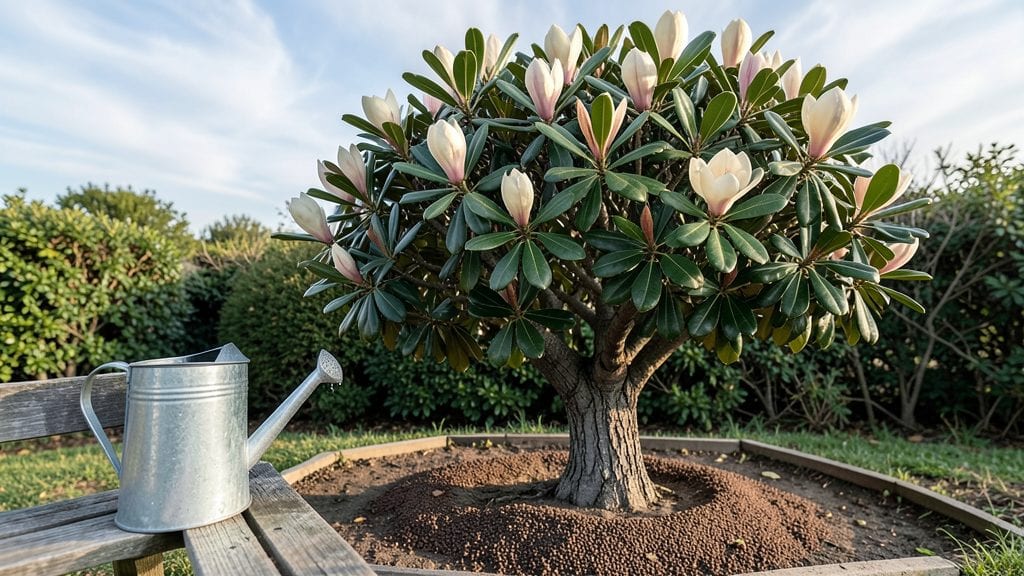
The right magnolia plant food can transform a sparse shrub into a breathtaking floral spectacle—just ask me, after my first magnolia bloomed half as much as it should have. 🌸 for flowering trees. The difference in bloom size and longevity is shocking.
Most gardeners oversimplify magnolia care, but these trees need precision feeding—not just any fertilizer. Organic options like fish emulsion or bone meal work well, but synthetic slow-release formulas (like 10-10-10) give you more control over timing.
Container-grown magnolias need extra attention since their roots have less space to access nutrients.
You’ll see stronger stems, deeper green leaves, and bigger, longer-lasting blooms by fertilizing in early spring before buds form. A light application every 6-8 weeks keeps them thriving without risking leaf burn. The key is consistency—skip a season, and you’ll notice the difference in next year’s flowers.
Fair warning: Overdoing it causes yellowing leaves or stunted growth. Always water thoroughly after applying, and watch for signs like dark green foliage (too much nitrogen) or sparse blooms (not enough phosphorus). Master this, and your magnolia will become the centerpiece of your yard.
📚 In This Guide
- What you need
- Instructions
- Tips and common mistakes
- Wrapping up and next steps
What you need
- ● Balanced fertilizer (10-10-10 or 20-20-20 NPK ratio): 1–2 pounds (per 100 sq ft of garden bed)
- ● Look for slow-release granules or liquid formula
- ● Organic compost or well-rotted manure: 5–10 gallons (per tree, mixed into soil)
- ● Recommended types: Leaf mold, worm castings, or aged cow/horse manure
- ● Magnesium sulfate (Epsom salt): 1–2 tablespoons (per gallon of water, for foliar spray or soil drench)
- ○ Acid-loving plant fertilizer (optional but ideal): 1–2 pounds (e.g., Miracle-Gro Azalea, Camellia, & Rhododendron fertilizer)
- ● Garden gloves and trowel: For safe handling and soil mixing
- ● Spray bottle or hose-end sprayer: For foliar feeding (diluted liquid fertilizers)
- ● pH testing kit: Magnolias thrive in acidic soil (pH 5.0–6.0)—adjust with sulfur if needed
- ● Mulch (pine bark or pine needles): 2–3 inches (helps retain moisture and acidity)
- ● Slow-release fertilizer spikes: For convenience (follow package instructions)
Step-by-step instructions for feeding magnolias for stunning blooms
Here’s how to nourish your magnolias for vibrant foliage and showstopping flowers every season.
🌿 Step 1: Understand Your Magnolia’s Nutritional Needs
Magnolias thrive on a balanced diet rich in nitrogen, phosphorus, and potassium, but they’re sensitive to overfeeding. I always start by testing the soil—most magnolias prefer a slightly acidic pH of 5.0-6.0. If your soil is too alkaline, blooms will suffer, and leaves may yellow. Use a soil test kit to check before applying any fertilizer.
Young magnolias need more nitrogen to build strong roots and foliage, while mature trees benefit from phosphorus and potassium to fuel blooms. I apply half-strength fertilizer in early spring and again after flowering, avoiding heavy applications in summer when the tree is dormant.
💧 Step 2: Choose the Right Fertilizer and Timing
For established magnolias, I use a balanced 10-10-10 fertilizer in early spring, just as new growth begins. This gives them a steady supply of nutrients without overwhelming their system. For phosphorus-heavy blooming, I switch to a 5-10-5 formula in late spring to support flower development.
Never fertilize in winter or during drought—roots can’t absorb nutrients efficiently in cold or dry soil. I always water deeply 24 hours before and after applying fertilizer to help nutrients penetrate the soil and prevent root burn.
⏰ Step 3: Apply Fertilizer Correctly for Maximum Uptake
Spread the fertilizer evenly in a 6-inch band around the tree’s drip line—never directly against the trunk. This mimics natural nutrient distribution and encourages strong root growth. For a 4-inch diameter tree, I use about ½ cup of fertilizer; for larger specimens, double that amount.
Lightly scratch the fertilizer into the top 1-2 inches of soil to prevent runoff and ensure direct root contact. Water immediately afterward to activate the nutrients. Avoid overhead watering after fertilization—it can wash nutrients away and leave residue on leaves.
🌱 Step 4: Supplement with Organic Matter for Long-Term Health
Magnolias love organic matter, so I top-dress the root zone with 2-3 inches of compost or well-aged bark mulch every spring. This improves soil structure, retains moisture, and slowly releases nutrients. Keep mulch 6 inches away from the trunk to prevent rot and pest issues.
For extra bloom support, I occasionally add bone meal (high in phosphorus) around the base in early spring. Just sprinkle ½ cup per tree and water it in—this gives a natural phosphorus boost without the risk of chemical burn.
☀️ Step 5: Monitor and Adjust for Seasonal Needs
Watch your magnolia’s leaves and growth patterns—they’ll tell you if adjustments are needed. Dark green, glossy leaves mean the tree is happy, while yellowing or sparse blooms signal nutrient deficiencies. If leaves turn yellow between veins, it’s often a sign of too much nitrogen; switch to a lower-nitrogen formula.
In late summer, reduce fertilization entirely. Magnolias enter a semi-dormant phase, and feeding at this time can encourage weak, late-season growth that won’t survive winter. Focus instead on watering deeply and mulching to protect roots from temperature swings.
Tips & tricks for perfect magnolia care
These precision strategies will transform your magnolia's growth and blooms—trust me, the details matter.
Soil Testing is Non-Negotiable: Don't skip the soil test before fertilizing! I've seen magnolias with yellowing leaves because their alkaline soil (pH 7.5+) was blocking nutrient uptake. Aim for that 5.0-6.0 pH range—you can adjust with elemental sulfur if needed. The 24-hour watering rule before/after fertilization becomes critical when soil pH is optimal, as roots absorb nutrients most efficiently in properly balanced conditions.
Fertilizer Application Technique: The 6-inch band around the drip line isn't just about placement—it's about creating a nutrient-rich zone where roots naturally expand. For larger trees, I double the ½ cup measurement but spread it over a wider band (up to 12 inches). Scratching fertilizer into the top 1-2 inches prevents runoff and ensures direct root contact—think of it like giving your tree a nutrient injection rather than surface feeding.
Organic Matter Integration: That 2-3 inches of compost isn't just decorative—it's a slow-release nutrient system. I mix in well-aged bark mulch for better moisture retention, but here's the secret: add a ½ cup of bone meal to the compost mix in early spring. The phosphorus boost from bone meal (combined with the compost's organic matter) creates the perfect bloom-boosting environment without chemical burn risks.
Seasonal Monitoring System: Develop a simple leaf-color chart: dark green = healthy, yellow between veins = too much nitrogen, yellow at edges = underwatering. I keep a small notebook by my magnolias to track leaf changes seasonally. If you notice sparse blooms despite proper feeding, it might indicate phosphorus deficiency—switch to that 5-10-5 formula for the next feeding cycle.
Pro Tips for Magnolia Plant Food
- These precision strategies will transform your magnolia's growth and blooms—trust me, the details matter.
- Soil Testing is Non-Negotiable: Don't skip the soil test before fertilizing!
- Fertilizer Application Technique: The 6-inch band around the drip line isn't just about placement—it's about creating a nutrient-rich zone where roots naturally expand.
Frequently asked questions
Got questions about keeping your magnolia thriving with the right plant food? You’re not alone! Here are some of the most common concerns—and straightforward answers—to help you nurture those stunning blooms like a pro.
When is the best time to fertilize my magnolia?
Feed your magnolia twice a year: once in early spring (just as new growth appears) and again in late summer (after blooming). Avoid fertilizing in fall or winter—magnolias rest during these months, and extra nutrients can stress the roots. For container-grown magnolias, feed every 4–6 weeks during the growing season with a diluted solution.
What if I over-fertilize my magnolia?
Over-fertilizing can burn roots or cause leaf yellowing (nutrient burn). If you suspect overfeeding, flush the soil with water and reduce future doses by half. Stick to the recommended rates on your magnolia plant food label, and always water thoroughly after applying fertilizer to help distribute nutrients evenly.
Can I use regular lawn fertilizer on my magnolia?
Not ideal! Lawn fertilizers are high in nitrogen, which promotes leafy growth at the expense of flowers. Magnolias need a balanced formula (like 10-10-10 or 8-3-9) with micronutrients (iron, magnesium) for vibrant blooms. Look for a magnolia-specific fertilizer or an azalea/camellia blend—both are safe and effective.
How do I fix yellow leaves even after fertilizing?
Yellow leaves can signal over- or under-fertilization, nutrient deficiencies, or poor drainage. First, check the soil pH (magnolias prefer acidic soil, 5.0–6.0). If the soil is too alkaline, amend with sulfur or peat moss. For iron deficiency (common in clay soils), use an iron chelate supplement. Always ensure the plant isn’t overwatered—root rot can mimic nutrient issues!
Pro Tip: What’s the easiest way to remember my magnolia’s feeding schedule?
Set a phone reminder for March and August—right when blooms fade and new growth starts. For container magnolias, mark your calendar for every 6 weeks during spring/summer. Pro growers also swear by a visual cue: fertilize when you see 1–2 inches of fresh growth after pruning. Consistency is key!
Wrapping up and next steps
Choosing the right magnolia plant food is the secret to vibrant blooms and thriving foliage year after year! 🌸 Whether you opt for organic compost, slow-release granules, or liquid fertilizers, consistency and balance are key.
Your magnolia will reward you with stunning flowers and lush growth when fed with care and precision.
Ready to give your magnolia the love it deserves? Start by assessing its needs today—whether it’s a soil test or a quick visual check—and pick the perfect fertilizer to keep those blooms coming back bigger and brighter! 🌿