
Pests and Diseases
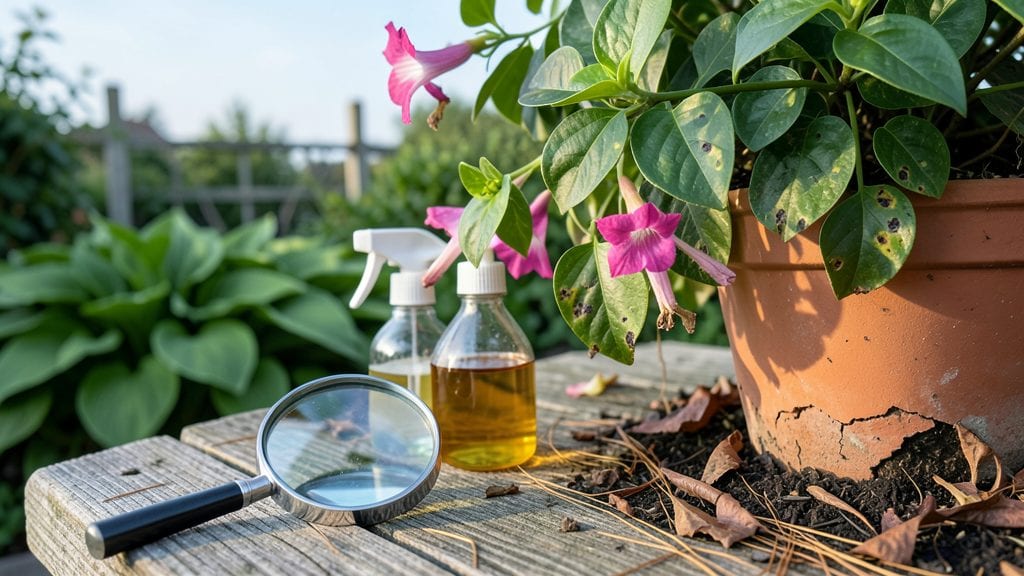
Mandevilla plant diseases can turn your vibrant tropical beauty into a sad, yellowing mess if you don’t catch them early. 🌿 I’ve seen healthy vines with glossy leaves go from stunning to struggling in a matter of weeks—usually because the first brown spots or wilting went unnoticed.
The good news? Most issues are preventable with the right know-how, and when they do appear, quick action saves your plant.
Fungal infections like powdery mildew or leaf spot show up as white dust or dark splotches, while bacterial blights cause oozing stems and blackened leaves. Viruses, though rarer, often start with strange leaf patterns or stunted growth.
The key is checking your plants weekly for these red flags, especially after rain or high humidity—when diseases spread fastest. I learned the hard way that ignoring early symptoms leads to lost plants, but catching them early means a simple spray or prune can turn things around.
You’ll learn how to identify each problem by its symptoms, then use targeted treatments—from neem oil sprays to copper fungicides—to stop the spread. The goal isn’t just to treat the issue but to adjust your care routine so your mandevilla stays healthy long-term.
Think better airflow, smarter watering, and even seasonal adjustments to keep those diseases at bay for good.
Whether you’re dealing with a single leaf spot or a full-blown outbreak, this guide gives you the tools to act fast and keep your mandevilla thriving.
No more guessing what’s wrong—just clear steps to diagnose, treat, and prevent the next problem before it starts. Let’s get your plant back to its best.
Root Causes Behind Mandevilla Struggles
When your Mandevilla plant starts showing signs of distress—yellowing leaves, blackened stems, or sudden wilting—it’s often a cry for help from an unseen enemy. Understanding why these issues arise is the first step to saving your plant.
Below, we break down the real culprits behind common Mandevilla diseases, from environmental stressors to microbial invaders, so you can tackle them head-on.
Mandevillas thrive in well-draining soil and hate soggy roots. When water pools around the roots—whether from overzealous watering, compacted soil, or a lack of drainage holes—it creates the perfect breeding ground for root rot and fungal infections like Phytophthora.
Why it happens:
- Oxygen deprivation: Roots need air to breathe. Excess moisture displaces oxygen, causing root cells to suffocate and die. Fungi like Pythium and Phytophthora then move in to feast on the weakened tissue.
- Soil pH shifts: Waterlogged soil becomes more acidic, weakening the plant’s defenses and making it easier for pathogens to invade.
- Nutrient leaching: Overwatering flushes away essential nutrients, starving the plant and leaving it vulnerable to stress-related diseases.
💡 Pro Tip: Stick your finger 2 inches into the soil before watering—if it’s damp, wait. If your pot lacks drainage holes, upgrade to one with them or use a cache pot (a decorative outer pot with a saucer to catch excess water).
Fungi like Alternaria, Botrytis, and Powdery Mildew are everywhere—in soil, on tools, and floating in the air. When conditions are just right (warm, humid, and stagnant), they latch onto Mandevilla leaves and stems like hitchhikers.
Why it happens:
- High humidity: Fungi thrive in 70%+ humidity. Poor air circulation (like crowded plants or dense foliage) traps moisture, creating a fungal paradise.
- Wet foliage: Water droplets on leaves—from overhead watering or morning dew—give spores a direct highway to infect the plant.
- Stressed plants: Weakened Mandevillas (from drought, poor light, or nutrient deficiencies) have lower resistance to fungal attacks.
🌡️ Science Note: Fungal spores germinate fastest between 68–86°F (20–30°C). If your plant is in a greenhouse, conservatory, or humid bathroom, it’s at higher risk.
Bacteria like Xanthomonas and Pseudomonas cause leaf spots, oozing lesions, and vascular wilts in Mandevilla. Unlike fungi, bacteria spread rapidly through wounds, tools, or even contaminated water.
Why it happens:
- Open wounds: Pruning cuts, insect bites, or physical damage create entry points for bacteria. If you sterilize tools after cutting an infected plant, you’re spreading the problem.
- Contaminated water: Using tap water with high chlorine or recycled water from infected pots can introduce bacteria to healthy plants.
- Close quarters: Bacteria spread via airborne droplets or splashing water. Overhead irrigation or rainy conditions accelerate transmission.
⚠️ Warning Sign: If you see yellow halos around leaf spots or bacterial ooze (a slimy, brownish substance), it’s a bacterial infection—and it spreads fast.
Mandevilla plants are tropical divas—they need bright, indirect light and consistent warmth. When you push them too far (or not far enough), their immune system crashes, leaving them open to diseases.
Why it happens:
| Factor | Problem | Disease Risk |
|---|---|---|
| Too much direct sun | Leaf burn weakens cells, creating entry points for pathogens. | Sun scorch → secondary fungal infections |
| Low light | Leggy growth = thin, weak stems that can’t fight off infections. | Powdery mildew (loves shaded, crowded plants) |
| Temperature swings | Cold drafts (<40°F/4°C) shock the plant, while heat stress (>95°F/35°C) weakens defenses. | Bacterial leaf spot (thrives in sudden temperature drops) |
🌡️ Ideal Conditions: Keep Mandevilla in 60–85°F (15–29°C) with morning sun only. If indoors, place near a south- or east-facing window with sheer curtains.
Mealybugs, aphids, and spider mites don’t just suck sap—they damage plant tissue, creating perfect entry points for diseases. Their honeydew secretions also attract sooty mold, a fungal black crust that smothers leaves.
Why it happens:
- Physical damage: Insects pierce cells while feeding, leaving wounds where bacteria/fungi can invade.
- Honeydew buildup: Sticky residue traps moisture, creating a fungal growth medium on leaves.
- Weakened plant: Pests drain nutrients, making the plant too weak to fight off secondary infections.
🔥 Quick Fix: Isolate infested plants and treat with neem oil or insecticidal soap before diseases take hold.
Quick Fixes for Mandevilla Ailments
When your vibrant Mandevilla starts showing signs of stress, acting fast can mean the difference between a quick recovery and losing the plant altogether. Below, we’ve mapped out practical, step-by-step solutions for the most common diseases, along with prevention tips to keep your Mandevilla thriving.
No green thumb? No problem—these fixes are designed for every gardener.
Fungi thrive in damp, poorly ventilated conditions, so drying out the plant and improving airflow is your first line of defense.
🔥 Powdery Mildew: The White Dust Problem
Fix it:
- Isolate the plant 🏚️ to prevent spores from spreading to healthy leaves.
- Spray with a fungicide (neem oil, sulfur, or copper-based spray) every 7–10 days until the white coating disappears.
- Wipe leaves with a damp cloth dipped in mild soapy water (1 tsp dish soap per quart of water) to remove spores physically.
- Boost airflow by pruning crowded branches or moving the plant to a sunnier, less humid spot.
💡 Prevention Tip:
- Water in the morning so leaves dry quickly.
- Avoid overhead watering—use drip irrigation or a watering can with a narrow spout.
- Space plants 2–3 feet apart to reduce humidity buildup.
🍅 Stem Rot: The Silent Killer
Fix it:
- Trim infected stems with sterilized pruners (wipe blades with rubbing alcohol between cuts) 🔪.
- Repot in fresh, well-draining soil (mix in perlite or sand to improve drainage).
- Let the soil dry out completely between waterings—never let it sit soggy.
- Move to a brighter location (but avoid harsh afternoon sun, which can stress the plant further).
💡 Prevention Tip:
- Use pots with drainage holes—no exceptions!
- Check soil moisture with your finger before watering. If the top 1–2 inches are dry, it’s time.
- Avoid saucers that trap water—empty excess water after watering.
Bacteria spread through wounds or contaminated tools, so sterilization and speed are key.
🌡️ Bacterial Leaf Spot: The Oozy Mess
Fix it:
- Remove infected leaves immediately (don’t compost them—dispose in the trash).
- Spray with a copper fungicide (like Bordeaux mixture) every 5–7 days for 2–3 weeks.
- Prune for better airflow—thin out dense foliage to let light and air circulate.
- Water at the base (never on leaves) to keep them dry.
💡 Prevention Tip:
- Sterilize pruners before and after use (bleach or alcohol works).
- Avoid wetting leaves when watering—use a soaker hose or drip system.
- Rotate plants occasionally to prevent water pooling in one spot.
😵💫 Bacterial Blight: Sudden Wilting & Blackening
Fix it:
- Severely infected plants? Remove them entirely to stop the spread.
- For mild cases, prune all blackened or mushy stems and dip cuts in hydrogen peroxide (3%) to disinfect.
- Apply a bacterial spray (like copper hydroxide) and repeat every 10 days.
- Quarantine new plants for 2 weeks before introducing them to your garden.
💡 Prevention Tip:
- Inspect plants at nurseries for dark spots or oozing before buying.
- Clean garden tools after each use—bacteria hitchhike on dirty blades.
- Avoid overhead irrigation in humid climates.
Once you’ve tackled the immediate issue, strengthen your Mandevilla’s defenses with these pro tips:
| Issue | Do This | Avoid This |
|---|---|---|
| Slow recovery | Fertilize with balanced liquid feed (20-20-20) every 4–6 weeks. | Over-fertilizing—burns roots. |
| Yellowing leaves | Check for overwatering or nutrient deficiency (add iron or magnesium). | Letting soil stay waterlogged. |
| Stunted growth | Move to a sunnier spot (Mandevillas need 6+ hours of light). | Placing in shady or drafty areas. |
✨ Bonus Tip:
- Mulch with bark or gravel to keep roots cool and soil dry.
- Rotate pots occasionally so all sides get even sunlight.
By following these targeted fixes, your Mandevilla should bounce back stronger—and stay disease-free with a little proactive care. 🌸💪
Frequently asked questions about Mandevilla plant health
How do I tell if my Mandevilla has a fungal infection vs. bacterial disease?
Fungal issues like powdery mildew appear as white dust or dark spots with fuzzy edges, while bacterial problems show up as water-soaked lesions with yellow halos or oozing sap. Check stems too—fungi cause soft rot, while bacteria often lead to blackened, crispy areas. If you see slimy residue, it’s definitely bacterial.
Can I save a Mandevilla with root rot?
Maybe! First, remove the plant from its pot and trim away all mushy, black roots with sterilized scissors. Repot in fresh, sterilized soil with perlite and place in bright, indirect light. Water only when the top 2 inches of soil are completely dry. If more than half the roots are rotten, the plant may not recover.
Why does my Mandevilla get powdery mildew even when I water at the base?
High humidity is the real culprit—even base watering can’t prevent mildew if air doesn’t circulate. Try spacing plants 2-3 feet apart, pruning crowded growth, and using a fan on low for 30 minutes daily. Morning watering helps leaves dry faster, too.
Is neem oil safe to use on flowering Mandevilla plants?
Yes, but apply it early in the morning when flowers are closed to avoid harming pollinators. Dilute neem oil to 1 tsp per quart of water and spray until leaves are damp (but not dripping). Avoid spraying during bloom time to protect beneficial insects.
How often should I inspect my Mandevilla for early disease signs?
Check your plants weekly, especially after rain or when humidity rises above 60%. Focus on the undersides of leaves (where pests and spores hide) and new growth areas. Early detection means quicker fixes—catching powdery mildew before it spreads saves hours of treatment later!