
Watering
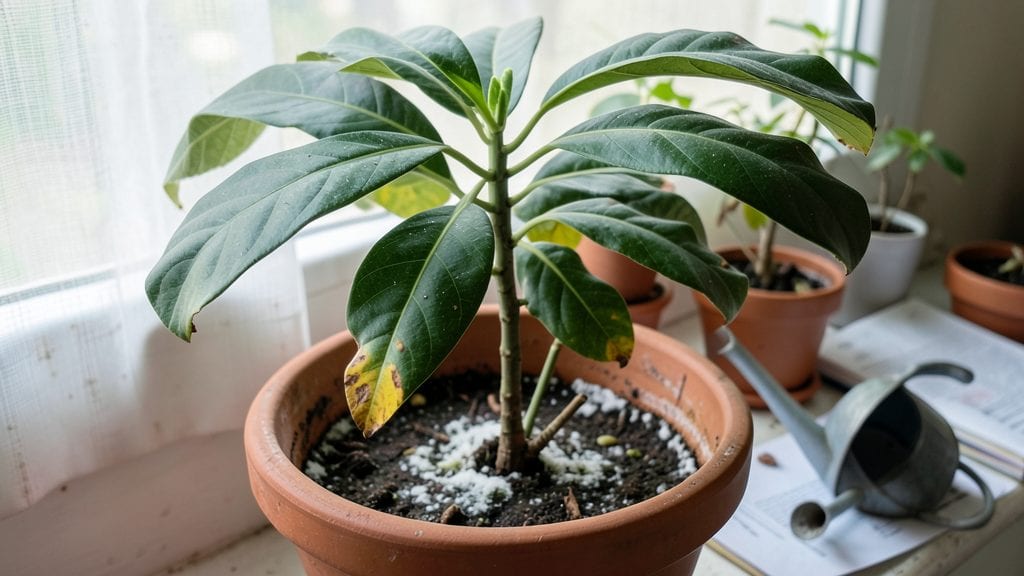
Overwatered avocado plant leaves drooping like a sad umbrella? I’ve nursed back more soggy avocados than I’d like to admit—this method saved mine in just two days. The first sign is always those limp leaves, but the real damage hides underground where roots suffocate in wet soil.
Here’s how to tell if it’s fixable (and how to bring it back to life fast).
Start by checking the soil—if it’s damp more than an inch down, that’s your problem. Drain the pot completely, then let it sit uncovered for 24 hours to dry out.
Avocados hate soggy feet, so after repotting in fresh, well-draining mix, wait until the top inch feels dry before watering again. Prune any mushy roots you find—they’re past saving, but the healthy ones will bounce back.
Within 48 hours, you’ll see leaves perk up as the plant drinks deeply. Keep humidity moderate (no misting!) and place it where it gets bright, indirect light.
The key is patience—avocados recover slower than they drown, but with the right care, you’ll have a thriving tree again. Let’s get those roots breathing.
Long-term, stick to watering only when the top 2 inches of soil are dry. Avocados stored water in their thick stems, so they’re drought-tolerant once established. I keep a finger in the soil after each watering—if it’s still damp after 24 hours, I wait.
That simple habit has kept my avocados happy for years.
Root Causes Of Water Overload
When your avocado plant starts looking too happy about water, it’s often a sign of overzealous care. Unlike drought-tolerant succulents, avocados thrive in consistently moist—but not soggy—soil. Understanding the why behind waterlogging helps you adjust before roots drown. Here’s what’s really going on underground (and above!).
Avocado plants hate sitting in wet feet—literally. If your pot lacks drainage holes or uses dense, compacted soil (like clay-heavy mixes), water pools at the bottom instead of draining away. Over time, this creates an anaerobic environment where:
- Oxygen depletion: Roots need oxygen to respire (yes, they "breathe"!). Without it, they suffocate, turning brown and mushy.
- Fungal feast: Phytophthora and Pythium (water-loving fungi) multiply in saturated soil, rotting roots faster than you can say "droopy leaves."
- Nutrient lockout: Excess water washes away essential nutrients like nitrogen and potassium, starving the plant even as it’s drowning.
💡 Pro Tip: Test your soil’s drainage by filling a pot with water, then timing how long it takes to drain completely. If it’s slower than 30 minutes, your mix is too dense. Add perlite or pumice (20–30%) to improve airflow.
Sticking to a rigid watering calendar—like every Tuesday and Friday—is a fast track to overwatering. Avocados are tropical plants, but their water needs shift with:
- Seasonal changes: Winter slows root activity, so watering half as much prevents soggy soil.
- Pot size: A 6-inch pot dries out faster than a 12-inch one. Bigger containers hold moisture longer.
- Humidity levels: High humidity (like in bathrooms) means less evaporation, so soil stays wetter longer.
Ignoring these factors leads to chronic oversaturation, where roots can’t keep up with the moisture supply. 🌡️ Watch for: Soil that stays damp 2+ inches down after watering or leaves that yellow even after watering.
Not all pots are created equal—especially when it comes to moisture retention. Here’s how material affects your avocado’s hydration:
| Material | Moisture Behavior | Risk Level |
|---|---|---|
| Terracotta | Breathable; dries out faster but cracks in freezing temps. | ⚠️ Low (if unglazed) |
| Plastic | Traps heat and moisture; roots stay damp longer. | ❌ High |
| Glazed ceramic | Non-porous; water pools at the bottom like a swamp. | ❌ High |
| Fabric (like grow bags) | Allows airflow; dries evenly but needs frequent checks. | ✅ Low |
✨ Fix It: If your avocado’s in a plastic or glazed pot, repot it into terracotta or a fabric grow bag. Add a layer of orchid bark (20%) to the soil mix to boost drainage.
Even with perfect watering habits, external conditions can trick your plant into thinking it’s thirsty when it’s actually waterlogged. Watch for:
- Low light: Shady spots slow evaporation, so soil stays wet longer. Move your avocado to bright, indirect light (e.g., near an east-facing window).
- High indoor humidity: Humidifiers or rainy weather reduce evaporation. Use a hygrometer to monitor levels—ideal humidity for avocados is 40–60%.
- Cold drafts: Chilly air near windows or AC vents slows root function, making the plant more susceptible to rot.
🔥 Quick Test: Stick your finger 2 inches into the soil. If it’s damp but not soggy, hold off on watering. If it’s bone-dry, you’ve been underwatering (the opposite problem!).
Reviving Your Avocado Tree Fast
When your avocado plant’s leaves start wilting or yellowing from too much water, don’t panic—there’s hope! The key is to act quickly and adjust your care routine. Below are targeted fixes based on the root cause (or causes) of your plant’s distress, along with prevention tips to keep it thriving.
If your avocado plant is sitting in soggy soil, the first step is to remove the excess moisture before roots rot.
How to do it: 🔥 Step 1: Check the Soil
- Stick your finger 2 inches deep into the soil. If it feels damp or sticky, your plant is overwatered.
- If water pools at the bottom of the pot, drain it immediately by tilting the pot and letting excess water escape.
🍳 Step 2: Lift and Drain (If Needed)
- If the pot is lightweight (like plastic), tip it sideways over a sink or tray to let water drain out.
- For heavy pots, use a spoon or small shovel to scoop out saturated soil and replace it with dry, well-draining mix.
👨🍳 Step 3: Elevate the Pot
- Place the plant in a well-ventilated spot (like a sunny windowsill or under a fan) to speed up evaporation.
- Avoid placing it back in a saucer with standing water—always empty saucers after watering.
⏰ Step 4: Wait Before Watering Again
- Hold off on watering for 3–5 days to let the roots recover.
- If the soil is still damp after 5 days, wait another 2–3 days before checking again.
Avocado trees hate soggy roots—they need fast-draining, airy soil to prevent rot.
How to do it: 🔥 Step 1: Repot (If Necessary)
- If the soil is heavily compacted or waterlogged, repot your avocado into a container with drainage holes (if it doesn’t have them).
- Use a well-draining mix like:
- 50% potting soil
- 30% perlite or pumice (for aeration)
- 20% coarse sand or orchid bark
🍳 Step 2: Add Amendments to Existing Soil
- If repotting isn’t an option, mix in perlite or coconut coir to improve drainage.
- Avoid peat moss—it retains too much moisture.
👨🍳 Step 3: Choose the Right Pot
- Terracotta pots (unglazed) help wick away moisture.
- Avoid plastic pots without drainage—they trap humidity and encourage root rot.
Overwatered plants often struggle because poor light slows evaporation, keeping soil damp longer.
How to do it: 🔥 Step 1: Move to Bright, Indirect Light
- Avocados need 6+ hours of bright light daily (but not harsh direct sun).
- A south- or west-facing window is ideal.
🍳 Step 2: Increase Airflow
- Use a small fan on low speed near the plant to speed up drying.
- Avoid cramming pots together—space them out for better airflow.
👨🍳 Step 3: Reduce Humidity (Temporarily)
- If your home is very humid, place the pot on a tray of dry gravel (not water) to absorb excess moisture.
- Mist lightly only if leaves are dry—over-misting adds to the problem.
If your plant is severely overwatered, some leaves and roots may be beyond saving.
How to do it: 🔥 Step 1: Prune Wilting Leaves
- Snip off yellow or brown leaves with clean scissors to redirect energy to healthy growth.
- Don’t cut more than 1/3 of the foliage at once—this stresses the plant.
🍳 Step 2: Check for Root Rot (Advanced Cases)
- Gently remove the plant from its pot and inspect the roots.
- Healthy roots are firm and white.
- Rotten roots are mushy, black, or smell foul—trim these with sterilized scissors.
👨🍳 Step 3: Repot with Fresh Soil
- After trimming bad roots, rinse the remaining roots with water to remove old soil.
- Repot in fresh, well-draining mix and hold off on watering for 5–7 days.
Once your avocado plant recovers, prevent future overwatering with these habits:
✨ Water Only When the Top 2 Inches Are Dry
- Stick your finger in the soil—if it’s dry, water; if damp, wait.
🌡️ Use the "Knuckle Test" for Watering
- Press your knuckle into the soil—if it springs back, it’s too wet.
🎯 Water Deeply but Infrequently
- Soak the soil thoroughly, then let it dry out before watering again.
- Bottom-watering (placing the pot in a tray of water for 10–15 mins) encourages roots to grow deeper.
💡 Upgrade Your Watering Routine
- Morning watering (before 10 AM) gives leaves time to dry.
- Avoid ice cube watering—it can shock roots and keep soil damp too long.
With proper care, most avocado plants show signs of improvement in 24–48 hours:
- Day 1–2: Leaves may droop less, new growth may appear.
- Week 1: Yellow leaves should fall off, and new healthy leaves emerge.
- Week 2+: If roots were damaged, growth slows—be patient!
Pro Tip: 🌿 If your plant isn’t improving after 5 days, check for pests (like spider mites) or nutrient deficiencies (yellowing between veins may mean lack of nitrogen).
By following these steps, your avocado plant should bounce back stronger—and you’ll learn the perfect watering balance for its needs! 🌱💚
Frequently asked questions about soggy avocado plants
How do I know if my avocado plant is overwatered vs. underwatered?
Check the soil first: if it's damp 2 inches down after watering, you're likely overdoing it. Overwatered plants show yellowing leaves, drooping foliage, and mushy stems. Underwatered plants have crispy brown edges and dry, pulling soil. The key difference? Overwatered soil smells sour or musty, while underwatered soil is bone-dry.
Can I save an avocado plant with completely black, foul-smelling roots?
Yes, but you'll need to act fast. Trim all black, mushy roots with sterilized scissors, then repot in fresh, well-draining mix (50% potting soil + 30% perlite + 20% orchid bark). Hold off on watering for 5-7 days to let roots recover. If most roots are healthy, your plant has a good chance of bouncing back!
Why does my avocado plant keep getting overwatered even when I'm careful?
Common culprits include plastic pots without drainage, compacted soil, or high humidity environments. Try these fixes: switch to terracotta pots, add perlite to your soil mix, and place a hygrometer near your plant to monitor humidity (ideal range: 40-60%). Also, water only when the top 2 inches feel dry.
How long should I wait before watering my avocado again after fixing overwatering?
Wait until the top 2 inches of soil feel completely dry to the touch. For severely waterlogged plants, hold off for 5-7 days to give roots time to recover. After that, check soil moisture daily—avocados prefer consistently moist but never soggy conditions. Use the "knuckle test": press your knuckle into the soil; if it springs back, it's too wet.
Will my avocado plant grow back if all the leaves turn yellow and fall off?
Don't worry—this is normal recovery! Yellow leaves falling is the plant's way of redirecting energy to new growth. As long as the stem remains firm and you've addressed root health, your avocado will sprout fresh leaves within 2-4 weeks. Focus on keeping soil lightly moist (not wet) and providing bright indirect light during recovery.