Watering
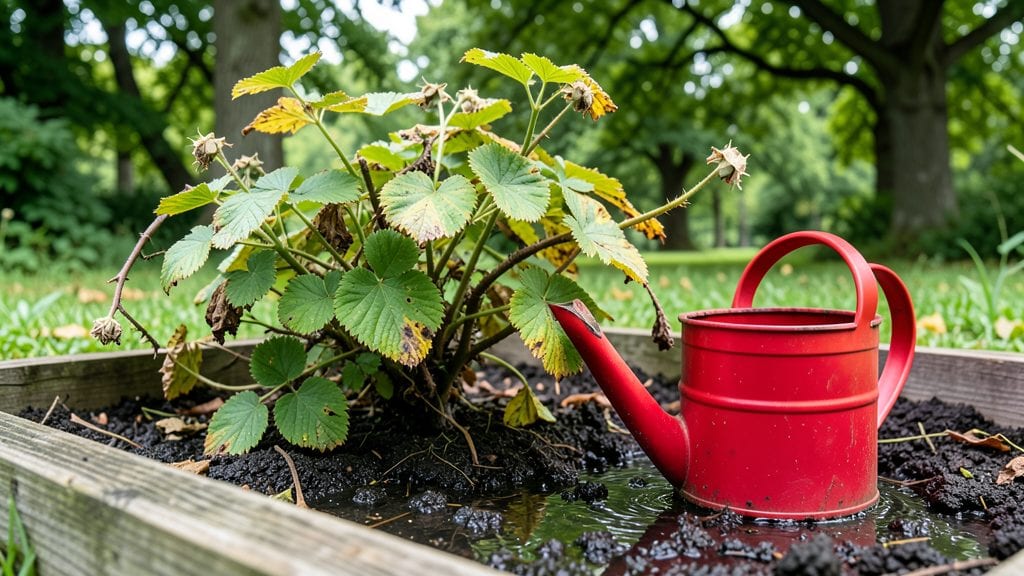
Overwatered raspberry plants can look like they're drowning—yellowing leaves, mushy stems, and roots that smell like rot. ✨ I’ve seen it happen more than once, and the good news is you can often bring them back with the right steps.
The key is acting fast before root rot takes over completely.
Raspberries need consistent moisture, but their roots can’t handle soggy soil for long. Too much water cuts off oxygen, and the plant starts to suffocate. You’ll see wilting even when the soil feels damp, or leaves turning yellow while the edges stay green.
The first thing to do is stop watering entirely and let the soil dry out—this gives the roots a chance to recover.
Once the soil is dry enough to crumble, you’ll start seeing new signs of life within a week or two. Trim back any blackened stems or leaves, and consider adding compost to help the roots recover faster.
With better drainage and a smarter watering schedule, your raspberries will bounce back stronger than ever.
Prevention is easier than recovery: always check soil moisture with your finger before watering, and make sure your plants have well-draining soil. If your garden stays soggy after rain, raised beds or containers can be a game-changer for raspberries.
They’ll thank you with lush canes and sweet berries all season long.
Common Causes of Too Much Water
Raspberry plants are resilient, but they can’t handle soggy roots for long. When water accumulates faster than the soil can drain, roots suffocate, leading to a host of problems.
Understanding the why behind overwatering helps you fix the issue—and keep your berries thriving. Here’s what’s likely causing your plant’s waterlogged woes.
🌧️ Poor Drainage in the Soil
Raspberries thrive in well-draining soil, but heavy clay, compacted dirt, or amended soil with too much organic matter (like peat moss) can trap moisture. When water can’t escape, roots sit in anaerobic conditions—starved of oxygen and prone to rot.
- Clay-heavy soil: Holds water like a sponge, slowing drainage. Test by squeezing a handful: if it forms a tight ball, it’s too dense.
- Over-amended soil: Too much compost or mulch can create a water-retentive layer, especially if mixed shallowly.
- No gravel/sand layer: Without a 2–4 inch base of coarse material in containers, water pools at the bottom.
Fix it: Amend clay soil with perlite, sand, or coconut coir (20–30% by volume). For containers, ensure drainage holes and a gravel base.
💧 Inconsistent Watering Habits
Raspberries need consistent moisture—not daily drenching. Overzealous watering (especially in pots) or neglecting to adjust for rain can drown roots. Even well-draining soil becomes saturated if watered and rained on repeatedly.
- Daily light watering: Leads to shallow root systems that can’t handle deeper moisture fluctuations.
- Ignoring weather: Watering on rainy days or after heavy dew doubles saturation.
- Potted plants: Containers dry out faster but also trap excess water if not emptied post-watering.
Fix it: Water deeply 1–2 times per week (adjust for climate), letting the top 1–2 inches of soil dry between sessions. Use a moisture meter to avoid guesswork.
🌱 Root Bound or Crowded Planting
Raspberry canes spread aggressively, and roots need space to breathe. When roots fill a pot or are planted too closely, they compete for oxygen and nutrients, making the plant more vulnerable to waterlogging.
- Small pots: Roots circle the container, restricting drainage and airflow.
- Overcrowded beds: Canes shading each other reduce evaporation, keeping soil damp longer.
- No pruning: Old canes and excess foliage block sunlight, slowing soil drying.
Fix it: Repot every 2–3 years into a larger container (minimum 18 inches deep). In gardens, space canes 2–3 feet apart and prune annually to improve airflow.
🌊 External Water Sources**
Sometimes, the problem isn’t your watering—it’s what’s happening around your plant. Poor site selection or landscaping choices can turn your raspberry patch into a swamp.
- Low-lying areas: Water pools naturally after rain, creating a permanent soggy zone.
- Irrigation overspray: Sprinklers or drip lines aimed at neighboring plants can drench raspberries unintentionally.
- Poor grading: Soil sloped toward the plant funnels water into the root zone.
Fix it: Plant raspberries on a slight mound or raised bed. Redirect sprinklers or use soaker hoses for targeted watering.
Once you identify the root cause (pun intended), you can adjust your care routine to give your raspberry plant the just-right moisture balance. Next up: how to revive a waterlogged plant and prevent future soggy soil!
Revive Your Plant Now
An overwatered raspberry plant can feel like a lost cause, but with the right steps, you can nurse it back to health—even if it’s already showing signs of distress. The key is acting fast, diagnosing the root cause (literally and figuratively), and applying targeted fixes.
Below, we’ll break down the most common symptoms of overwatering and the practical, step-by-step solutions to save your berry bushes. Plus, we’ll share pro tips to keep your plants thriving long-term.
If your raspberry plant’s leaves are yellowing, wilting, or turning mushy, root rot or poor drainage is likely the culprit. Overwatering suffocates roots by depriving them of oxygen, leading to fungal infections or anaerobic conditions.
🔥 Step 1: Stop Watering Immediately
- Do this now: Pause all watering for 3–5 days to let the soil dry out.
This breaks the cycle of constant moisture that fuels rot. - Pro tip: 💡 If the ground is soggy to the touch (like a damp sponge), hold off even longer.
🍳 Step 2: Loosen the Soil (Aerate the Roots)
- Gently dig around the base of the plant (about 6–8 inches deep) with a fork or trowel to break up compacted soil.
- Add organic matter: Mix in compost, perlite, or coarse sand to improve drainage.
Aim for a 30/70 ratio (30% amendment, 70% existing soil). - For severe cases: If roots look black, mushy, or smell foul, trim away the damaged parts with sterilized pruners.
👨🍳 Step 3: Adjust Your Watering Habits
- Water deeply but infrequently: Raspberry plants prefer 1–1.5 inches of water per week (including rain).
Use a moisture meter or the "finger test" (stick your finger 2 inches into the soil—if it’s dry, water; if damp, wait). - Upgrade your setup: If your garden retains too much water, consider raising beds or installing French drains to redirect excess moisture.
⏰ Prevention for Next Season
- Mulch wisely: Use straw or wood chips (2–3 inches thick) to retain moisture without smothering roots. Avoid thick layers that trap water.
- Choose the right spot: Raspberry plants thrive in well-draining soil with partial sun (6+ hours/day).
Avoid low-lying areas where water pools.
Overwatering can leach away essential nutrients, leaving your plant weak and less productive. If your raspberries are small, sparse, or the plant isn’t growing as expected, it’s time to feed it right.
🔥 Step 1: Flush the Soil
- Give the soil a detox: Water the plant with a weak solution of hydrogen peroxide (1 tbsp per gallon of water) to kill harmful fungi and bacteria. Repeat every 2 weeks until new growth appears.
🍳 Step 2: Fertilize Smartly
- Use a balanced, slow-release fertilizer (like 10-10-10) once in early spring and again after harvest.
- For a nutrient boost: Mix compost tea or a fish emulsion into the soil around the roots.
Avoid synthetic fertilizers if the soil is already waterlogged—they can burn roots. - Pro tip: 🌡️ Test your soil’s pH (ideal range: 5.5–6.5 for raspberries). Overwatering can make soil too acidic; amend with lime if needed.
👨🍳 Step 3: Prune for Airflow
- Remove dead or diseased canes to improve airflow and reduce humidity around the plant (which slows recovery).
- Thin out crowded canes to 3–5 per plant to prevent competition for nutrients.
✨ Prevention Tips
- Water at the base: Avoid wetting leaves to prevent fungal diseases like powdery mildew.
- Rotate crops: If you’re growing raspberries in the same spot yearly, rotate to a new location every 3–4 years to replenish soil nutrients.
If your raspberry plant has dark, sunken spots on stems or leaves, a fungal infection (like Phytophthora or Botrytis) may have taken hold due to excess moisture.
🔥 Step 1: Remove Infected Parts
- Snip off any blackened, mushy, or discolored canes with sterilized pruners (wipe with rubbing alcohol between cuts).
- Dispose of infected material in the trash (not compost)—fungi can survive in compost piles.
🍳 Step 2: Apply Fungicide
- Use a copper-based or neem oil fungicide (follow label instructions). Neem oil is organic and safe for edible plants.
- For severe cases: Try a baking soda spray (1 tsp baking soda + 1 quart water + a drop of dish soap) to prevent spores from spreading.
👨🍳 Step 3: Improve Drainage & Airflow
- Raise the plant by mounding soil around the base to encourage root health.
- Space plants 2–3 feet apart to reduce humidity and improve airflow.
🎯 Prevention for Future Seasons
- Water in the morning so foliage dries quickly.
- Avoid overhead watering—use drip irrigation or soaker hoses instead.
- Plant resistant varieties like ‘Boyne’ or ‘Nova’ if fungal issues persist in your climate.
| Task | When to Do It | How to Do It |
|---|---|---|
| Stop watering | Immediately | Pause for 3–5 days |
| Aerate soil | After drying out | Fork + compost/perlite mix |
| Prune dead growth | As needed | Sterilized tools, remove 1/3 of canes |
| Test soil pH | Early spring | Use a soil kit or local extension service |
| Fertilize | Spring & post-harvest | Balanced fertilizer or compost tea |
| Mulch lightly | After soil dries | Straw or wood chips (2–3 inches) |
Final Thought: 💪 With patience and the right adjustments, your raspberry plant can bounce back—often stronger than before! The key is balancing moisture, improving drainage, and giving it the nutrients it craves.
Once you’ve turned things around, keep an eye on your watering habits to prevent future soggy soil disasters.
Frequently asked questions
How do I tell if my raspberry plant is overwatered vs. underwatered?
Check the soil first—stick your finger 2 inches deep. If it's soggy and smells foul, you're overwatering. Look for yellow leaves with green edges (a classic overwatering sign) or wilting despite damp soil. Underwatered plants have crispy, dry leaves and soil that pulls away from the pot edges.
Can I save a raspberry plant with root rot?
Yes, but act fast! Stop watering immediately and trim away all black, mushy roots with sterilized pruners. Repot in fresh, well-draining soil with perlite or sand. For severe cases, consider root drenching with a hydrogen peroxide solution (1 tbsp per gallon of water) to kill fungi. Recovery takes 2-4 weeks of careful monitoring.
Why do my raspberry leaves turn yellow but stay green at the edges?
This "iron chlorosis" look is a classic overwatering symptom! Too much water blocks oxygen and leaches nutrients, causing the center leaves to yellow while the edges stay green (where chlorophyll remains). The fix: improve drainage by amending soil with perlite and reduce watering to 1-2 times per week only when topsoil is dry.
How often should I water raspberries in containers?
Containers dry out faster—water when the top 1 inch of soil feels dry, typically every 2-3 days in summer or every 5-7 days in cooler months. Always check for drainage holes and empty saucers after watering to prevent root suffocation. Pro tip: Use a moisture meter for accuracy!
What's the best mulch to prevent overwatering?
Avoid thick organic mulches like wood chips that trap moisture. Instead, use straw or pine needles (2-3 inches thick)—they allow airflow while retaining just enough moisture. For containers, skip mulch entirely and focus on well-draining soil mixes with perlite or coarse sand.