Watering
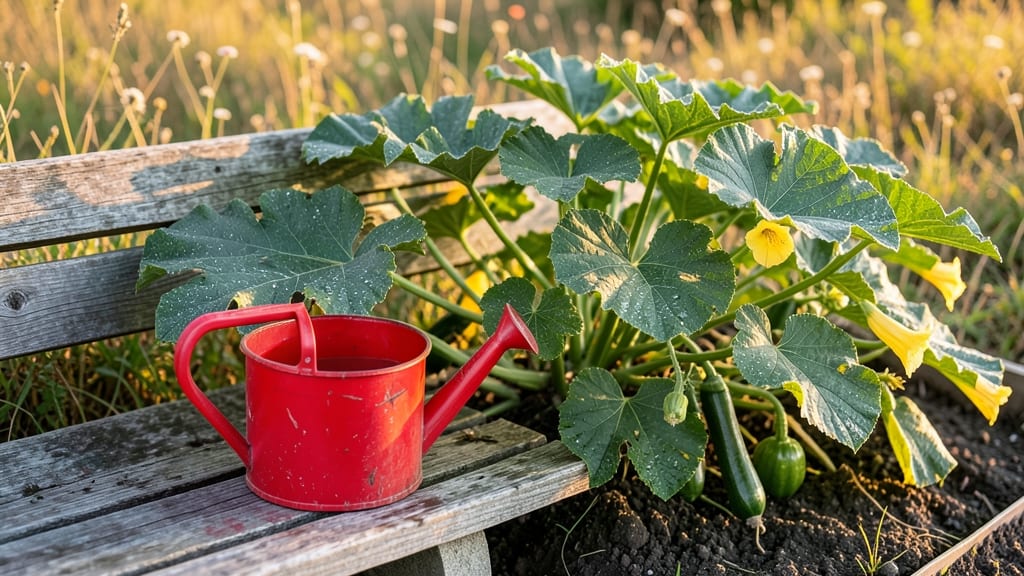
Overwatering squash plants turns your garden into a soggy mess—yellow leaves, mushy stems, and that dreaded rot smell. I’ve seen it ruin perfectly good vines in just a few days, but there’s a simple fix that works every time.
The key isn’t cutting back water immediately (that shocks the roots), but adjusting how you water and where it goes.
Yellowing leaves are your first warning sign, but don’t wait for the whole plant to look like swamp muck. Squash roots need air as much as water, so the real fix starts with well-draining soil—amend heavy clay with compost or sand if needed.
Then, water deeply but less often, aiming for about 1 inch per week, and always at the base, not the leaves. A moisture meter helps, but even sticking your finger an inch down tells you enough.
Within a week, you’ll see new green growth as the roots recover. The fix isn’t just about stopping the rot—it’s about giving your squash the right conditions to thrive.
No more guesswork, no more wasted water, and plants that actually produce instead of just surviving. Let’s get those vines back on track.
This works for zucchini, pumpkins, and summer squash alike, whether you’re growing in raised beds or straight in the ground. The same rules apply—just adjust for your soil type.
Once you’ve reset the moisture balance, your plants will reward you with bold, healthy leaves and a bumper crop. Here’s how to do it right the first time.
Root Causes Of Excess Moisture
When your squash plants start wilting, yellowing, or developing mushy stems despite your best efforts, the issue often boils down to overwatering. But why does this happen so easily? The answer lies in a mix of soil science, plant biology, and environmental factors.
Let’s break down the key reasons your squash might be getting too much water—and how to avoid them.
Squash plants thrive in well-draining soil, but heavy, clay-rich, or compacted soil acts like a sponge, holding onto water long after the roots have had their fill. When excess moisture lingers, it:
- Starves roots of oxygen: Healthy roots need air to respire. Waterlogged soil displaces oxygen, causing roots to suffocate and turn black or mushy.
- Encourages fungal diseases: Fungi like Phytophthora and Pythium flourish in soggy conditions, leading to root rot and leaf yellowing.
- Disrupts nutrient uptake: Waterlogged soil creates anaerobic pockets where beneficial microbes die off, reducing the availability of nitrogen, phosphorus, and potassium—critical for squash growth.
Actionable fix: Amend soil with compost, perlite, or coarse sand to improve drainage. Test your soil’s texture—if it forms a tight ball when squeezed, it’s too dense.
Squash plants have shallow roots (typically 6–12 inches deep), so they need consistent but controlled moisture—not daily drenching. Common mistakes include:
- Watering on a fixed schedule: Rain, humidity, and temperature change how fast soil dries. A "every other day" rule fails when it’s 90°F vs. 60°F.
- Ignoring soil moisture cues: Sticking your finger 1–2 inches into the soil is the gold standard. If it’s damp, wait.
- Using overhead sprinklers: This wets foliage, promoting mildew, and can lead to uneven water absorption.
Actionable fix: Water deeply only when the top 1–2 inches of soil are dry. Use a moisture meter or the "squeeze test" for accuracy. Early morning (6–9 AM) is ideal to reduce evaporation and disease risk.
Not all gardens are created equal—and neither are their water needs. These conditions can turn a "normal" watering routine into a disaster:
| Factor | Why It Matters | Solution |
|---|---|---|
| 🌡️ High humidity | Slow evaporation means soil stays wet longer, increasing rot risk. | Reduce watering frequency by 20–30%. Use mulch to regulate moisture. |
| 🌊 Poor site drainage | Low-lying areas or clay soil pool water, suffocating roots. | Raise beds or create swales to redirect water away from plants. |
| 🌿 Thick mulch layers | While mulch conserves moisture, >3 inches can smother soil and trap heat, accelerating rot. | Keep mulch 1–2 inches thick and use straw or shredded leaves (not plastic). |
Squash plants often look thirsty when they’re actually drowning. Common red flags mistaken for underwatering:
- Yellowing leaves: Often a sign of overwatering, not drought. Check the oldest leaves first—if they’re yellow and mushy, it’s waterlogged roots.
- Wilted foliage: Can occur when roots can’t absorb water due to compacted soil, not because the plant is dry.
- Slow growth: Roots starved of oxygen grow stunted, tricking growers into adding more water.
Actionable fix: Before watering, gently tug on a leaf. If it resists (firm), the plant has enough moisture. If it pulls away easily, the soil may be too wet.
Pro tip: 💡 Squash plants are drought-tolerant once established. Err on the side of underwatering—you can always add water later, but you can’t undo root rot!
Fixing Too Much Water Stress
Now that you know the signs and causes of overwatering in your squash plants, let’s roll up our sleeves and get them back on track! The good news is that squash are resilient—with a few simple adjustments, your plants can bounce back stronger than ever.
Below, we’ll break down practical fixes based on the most common causes, plus prevention tips to keep your garden thriving.
If your squash plants are drowning in compacted or poorly draining soil, the first step is to improve water flow and give roots room to breathe.
🔧 Step 1: Test Your Soil’s Drainage
Before making changes, check how water behaves in your garden:
- Dig a small hole (6 inches deep) near your squash plants.
- Fill it with water and let it drain.
- Time how long it takes to fully absorb:
- Under 1 hour? Your soil drains well.
- 1–4 hours? Moderate drainage—may need amendments.
- Longer than 4 hours? Poor drainage—act fast!
🌱 Step 2: Loosen Compacted Soil
Use a garden fork or trowel to gently aerate the top 6–8 inches of soil around your plants. This creates air pockets, helping roots access oxygen and water drain faster.
💡 Pro Tip:
Add coarse sand, perlite, or compost to heavy clay soil to improve drainage. Mix in a 2–3 inch layer of organic matter (like aged manure or coconut coir) to boost structure over time.
Overwatering often comes from inconsistent or excessive irrigation. Let’s reset your routine for healthier squash.
⏰ Step 1: Water Deeply but Less Often
Squash plants prefer deep, infrequent watering over shallow daily doses.
Follow this schedule: - Morning watering (before 10 AM) is best—it reduces evaporation and fungal risks. - Water at the base (not leaves) to prevent disease. - Check soil moisture by sticking your finger 1–2 inches deep: - Dry? Water until moisture reaches 6–8 inches down. - Still damp? Wait another day.
📊 Step 2: Use the “Finger Test” Daily Skip guesswork!
Train yourself to feel the soil before watering: - Sandy soil? May dry out faster—check every 2–3 days. - Clay soil? Holds moisture longer—check every 4–5 days. - Potted squash? Containers dry out quicker—water when the top inch feels dry.
💡 Pro Tip:
Install a soil moisture meter ($10–$15) for accuracy, especially if you’re new to gardening. It takes the guesswork out of watering!
If your squash already shows signs of overwatering (yellowing leaves, wilting, or fungal spots), take these steps to revive them:
🍄 Step 1: Treat Fungal Issues
Overwatering creates the perfect breeding ground for powdery mildew, downy mildew, or root rot.
Act fast: - Remove affected leaves (wear gloves!) and dispose of them in the trash—not compost. - Spray with a fungicide like: - Baking soda mix (1 tsp baking soda + 1 quart water + a drop of dish soap). - Neem oil (1 tbsp neem oil + 1 quart water + a few drops of soap). - Space plants wider (3–4 feet apart) for better airflow.
🌡️ Step 2: Adjust Humidity & Airflow
Squash hate stagnant, humid air. Improve conditions with:
- Prune nearby plants blocking airflow.
- Use a fan (on low) for 10–15 minutes daily to circulate air.
- Water in the morning so leaves dry by evening.
💡 Pro Tip:
If root rot is severe (black, mushy roots), trim the damaged parts with sterilized scissors and repot the plant in fresh, dry soil.
An ounce of prevention is worth a pound of cure! Here’s how to keep your squash plants happy and dry:
🌱 Choose the Right Variety
Some squash handle moisture better than others. Opt for:
- Drought-tolerant varieties like ‘Butternut,’ ‘Acorn,’ or ‘Zucchini ‘Eight Ball.’
- Vining types (like pumpkins) need more space and less frequent watering than bush types.
🌍 Mulch Like a Pro
Mulch retains moisture without drowning roots. Use:
- Straw or wood chips (2–3 inches thick) to slow evaporation.
- Avoid plastic mulch—it traps heat and moisture, worsening overwatering.
🌦️ Monitor Weather & Adjust
- After rain, skip watering for 2–3 days.
- In heatwaves, increase watering slightly (but still deeply).
- In humidity, reduce watering to prevent fungal growth.
💡 Pro Tip:
Install a drip irrigation system or soaker hoses to deliver water slowly and directly to the roots, reducing waste and runoff.
Before you call it a day, run through this quick checklist: ✅ Soil drains well? (Tested with the hole method.) ✅ Watering schedule adjusted? (Deep, infrequent, morning-only.) ✅ Fungal issues treated? (Pruned, sprayed, airflow improved.) ✅ Mulch in place? (2–3 inches of organic mulch.) ✅ Plants spaced properly? (3–4 feet apart for airflow.)
With these fixes, your squash plants should perk up within 3–7 days—just give them time to recover! 🌱💚 Stay consistent with your new watering routine, and you’ll be harvesting plump, healthy squash in no time. Happy gardening!
Frequently asked questions
Why do my squash leaves turn yellow when I water them regularly?
Yellowing leaves often signal overwatering, not thirst. Excess moisture suffocates roots by blocking oxygen, causing them to rot. Check the soil: if it’s soggy 1–2 inches down, you’re watering too much. Squash prefer dry topsoil—wait until the top inch feels dry before watering again.
How often should I water squash plants to avoid drowning them?
Water squash deeply 2–3 times per week (adjust for rain/climate). Aim for 1 inch of water per week, delivered at the base—not the leaves—to prevent fungal growth. Morning watering reduces evaporation and disease risk. Use your finger: if the top 1–2 inches of soil are dry, it’s time to water.
Can I save squash plants with black, mushy roots from overwatering?
Trim the damaged roots with sterilized scissors, then repot the plant in dry, well-draining soil mixed with perlite. Reduce watering immediately and avoid overhead watering. For severe cases, start fresh with healthy seedlings—root rot spreads quickly. Pro tip: Add a fungicide like neem oil to prevent further spread.
What’s the best mulch to use for squash without worsening overwatering?
Use straw or shredded leaves (2–3 inches thick) to retain moisture without smothering roots. Avoid plastic mulch—it traps heat and moisture, accelerating rot. Organic mulch also improves soil structure over time. Keep mulch 1–2 inches away from stems to prevent fungal growth.
How do I know if my squash plants need less water or more?
Gently tug a leaf—if it resists (firm), the plant has enough water. If it pulls away easily, the soil may be too wet. Wilted leaves in damp soil = overwatering. Crispy edges in dry soil = underwatering. Squash are drought-tolerant once established—underwatering is easier to fix than overwatering!