
Watering
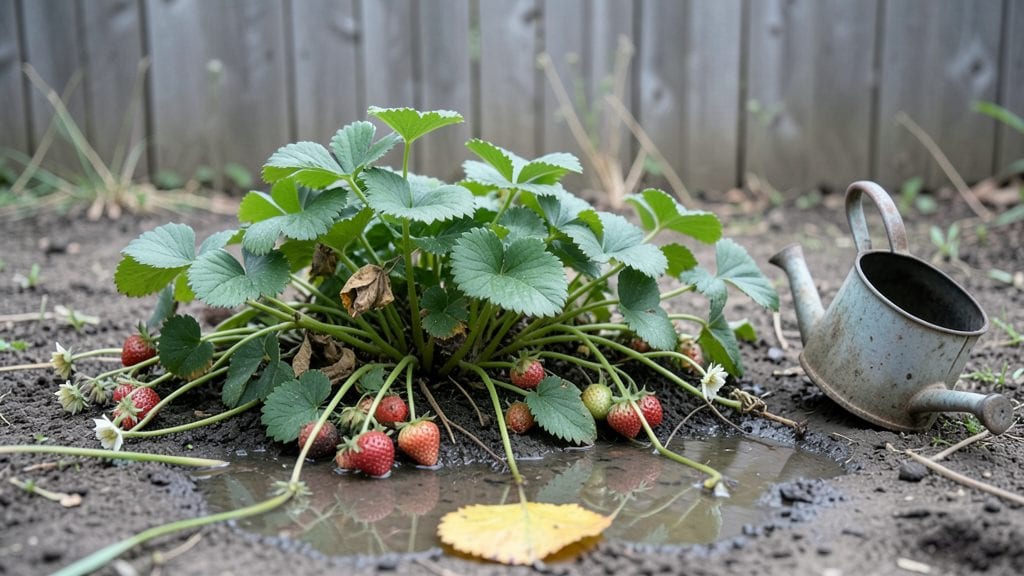
Overwatering strawberry plants turns their leaves yellow and their roots into mushy messes—something I learned the hard way after drowning my first batch last spring.
The problem isn’t just soggy soil; it’s the hidden fungal diseases and nutrient loss that follow, leaving plants struggling to produce those sweet, juicy berries we all crave. Honestly, I’ve killed more strawberries from overzealous watering than from drought, and the fix isn’t as complicated as it seems.
Here’s the thing—strawberries need consistent moisture, but their roots hate sitting in wet soil for days. Yellowing leaves and moldy crowns are your first red flags, but the real damage happens underground where roots rot and starve for oxygen. The good news?
You can turn this around in 3 simple steps: adjust your watering schedule, improve drainage, and give those roots some breathing room. No fancy tools or secret potions needed—just a little patience and the right approach.
Within 10-14 days of fixing the drainage and cutting back on water, you’ll see new green leaves pushing through, and those wilted plants will start perking up again.
The berries might not be ready for harvest right away, but the plant will rebound stronger than before—provided you keep an eye on soil moisture and avoid repeating the same mistakes. Trust me, your strawberries will thank you with a bumper crop by summer.
This works for both in-ground beds and container-grown strawberries, though containers dry out faster, so they need even more careful monitoring. The key is checking soil moisture before watering—stick your finger an inch down, and if it’s damp, wait another day.
Simple, but it makes all the difference between a sad, soggy patch and a thriving strawberry bed.
The Hidden Triggers Behind Soggy Soil
When your strawberry plants look like they’ve been crying into their soil, overwatering is usually the culprit—but it’s rarely as simple as "too much water." Several sneaky factors can push your plants into a waterlogged nightmare.
Understanding these triggers helps you adjust your watering habits before the roots start gasping for air.
Strawberries hate soggy feet, but if your garden beds or containers lack proper drainage, excess water pools around roots instead of draining away. Here’s why it happens:
- Clay-heavy soil: Clay particles pack tightly, creating tiny air pockets that fill with water like a sponge. Roots suffocate because oxygen can’t reach them.
- Compacted soil: Foot traffic, machinery, or even heavy rain can compress soil, reducing pore space for water to escape.
- Shallow root zones: Raised beds or containers without drainage holes trap water at the bottom, drowning roots while the top layer stays dry.
Actionable fix: Amend clay soil with compost or perlite, or elevate containers with gravel or terracotta pots to improve airflow.
Skipping watering one day is fine, but inconsistent schedules—like deep soaks followed by drought—confuse strawberry plants. Their roots adapt to steady moisture, and sudden changes trigger stress responses:
- Overcompensation: If you water heavily after a dry spell, plants absorb water rapidly, then struggle to regulate it when you stop.
- Root expansion mismanagement: Strawberries develop shallow roots in dry conditions. When you suddenly flood them, these roots can’t handle the influx, leading to root rot.
- Fungal feasts: Wet soil + warm temps = perfect conditions for Phytophthora and other pathogens that clog root pores.
Actionable fix: Stick to a consistent schedule—water lightly daily (1/2 inch) instead of drowning them weekly. Use a moisture meter to track soil conditions.
Mother Nature doesn’t always cooperate. Heavy rain, humidity, or temperature swings can turn your watering routine into a disaster:
- Rainfall overload: 1–2 inches of rain in a day can saturate soil faster than strawberries can process it, especially in low-lying areas.
- High humidity: Moist air slows evaporation, keeping soil damp longer. Combined with poor drainage, roots stay waterlogged for days.
- Cold soil temps: Below 50°F, strawberry roots slow down, reducing their ability to absorb and expel excess water.
Actionable fix: Monitor forecasts and adjust watering. If rain is expected, reduce irrigation by 50%. Mulch with straw or pine needles to regulate soil temperature.
Potted strawberries are convenient but prone to overwatering pitfalls:
- No drainage holes: Water accumulates at the bottom, creating a anaerobic (oxygen-free) zone where roots rot.
- Small pots: Roots fill the space quickly, leaving no room for excess water to escape.
- Overzealous fertilizers: High-salt fertilizers in saturated soil burn roots, making them more susceptible to waterlogging.
Actionable fix: Use containers with holes and terracotta pots (which wick moisture). Water only when the top inch of soil is dry, and flush containers monthly to remove salt buildup.
Sometimes, overwatering is a secondary symptom of other issues:
- Transplant shock: Recently planted strawberries focus energy on root establishment, making them more sensitive to water stress.
- Pests or diseases: Aphids or fungal infections damage roots, reducing their ability to process water efficiently.
- Overcrowding: Too many plants compete for nutrients and water, leading to root competition and poor drainage between crowns.
Actionable fix: Space plants 12–18 inches apart, inspect for pests weekly, and avoid watering after transplanting for 3–5 days to let roots acclimate.
Revive Your Strawberries Fast
Overwatering can turn your lush strawberry plants into sad, mushy messes—but don’t panic! With the right steps, you can nurse them back to health and prevent future soggy soil disasters. Below, we’ve mapped out practical fixes for common overwatering symptoms, along with prevention tips to keep your plants thriving.
Cause: Too much water suffocates roots, starving leaves of oxygen and nutrients. Solution:
- 🔥 Stop Watering Immediately
- Let the soil dry out completely before watering again. Stick your finger 1–2 inches deep—if it’s damp, wait.
- 🍳 Improve Drainage Fast
- For pots: Add perlite or coarse sand to the soil mix (20% amendment).
- For garden beds: Amend the soil with compost or organic matter to loosen compacted areas. A fork or tiller can help aerate.
- 👨🍳 Trim the Damage
- Snip off only the most yellowed leaves (never more than ⅓ of the plant). Healthy green leaves will recover faster.
💡 Pro Tip: If roots smell rotten or look mushy, prune them back to firm, white tissue before replanting in fresh, dry soil.
Cause: Excess moisture creates fungal havoc (like gray mold or botrytis), turning ripe berries to mush. Solution:
- ⏰ Harvest Immediately
- Pick any soft, discolored berries—don’t leave them on the plant to spread spores.
- 🔪 Prune for Airflow
- Thin out crowded foliage to let sunlight and air circulate. Aim for 6–8 inches between plants.
- 🌡️ Fungal Spray Remedy
- Mix 1 tsp baking soda + 1 quart water + a drop of dish soap. Spray under leaves (avoid berries). Repeat weekly until new growth appears.
✨ Prevention: Water early in the day so foliage dries quickly. Use drip irrigation instead of overhead sprinklers.
Cause: Waterlogged soil cuts off oxygen, causing roots to turn black and slimy. Solution:
- 🔪 Emergency Root Rescue
- Gently remove the plant. Trim all black/mushy roots with sterilized scissors. Keep only firm, white roots.
- 🥘 Repot or Replant ASAP
- Use fresh, well-draining potting mix (50% peat moss + 50% perlite). If in-ground, mound soil around the base to improve drainage.
- 💪 Support Recovery
- Place the plant in bright, indirect light (no direct sun for 1 week). Water only when the top inch of soil is dry.
🎯 Long-Term Fix: Elevate containers on feet or saucers to prevent water pooling. For garden beds, plant on a slight slope or add gravel at the bottom of holes.
📊 Quick Checklist for Overwatering Recovery:
| Symptom | Action | Prevention |
|---|---|---|
| Yellow leaves | Stop watering, improve drainage | Test soil moisture daily |
| Moldy berries | Harvest, prune, spray fungicide | Water at soil level |
| Black roots | Trim roots, repot in dry mix | Use raised beds or containers |
🌟 Bonus: Mulch with straw or pine needles (2–3 inches thick) to regulate soil moisture without smothering roots. Avoid plastic mulch—it traps heat and moisture.
With these steps, your strawberries will bounce back in 2–4 weeks. Stay consistent, and soon you’ll be harvesting plump, juicy berries instead of sad, soggy ones! 🍓💦
Frequently asked questions
How do I know if my strawberries are overwatered vs. underwatered?
Check the soil and leaves: Overwatered plants have yellowing leaves, mushy roots, and mold on berries. Underwatered plants show crispy edges and drooping foliage that snaps back when touched. Stick your finger 1-2 inches deep—if it's damp, you're overwatering; if dry, it's thirsty.
Can I save strawberry plants with black, mushy roots?
Yes, but act fast! Trim all black/mushy roots with clean scissors, leaving only firm, white roots. Repot in fresh, well-draining mix (50% peat moss + 50% perlite) and avoid watering for 3-5 days to let roots recover. Keep in bright, indirect light until new growth appears.
Why do my strawberry leaves turn yellow after heavy rain?
Heavy rain creates waterlogged soil, cutting off oxygen to roots. Yellowing leaves signal root stress or nutrient loss. Improve drainage by amending soil with compost or perlite, and avoid watering until the top 2 inches feel dry. Mulch with straw to regulate moisture.
Is it better to water strawberries in the morning or evening?
Morning is best! Watering early (6-9 AM) lets foliage dry quickly, preventing fungal diseases like gray mold. Avoid evening watering—wet leaves overnight create perfect conditions for botrytis. Use drip irrigation at soil level to target roots directly.
How often should I water potted strawberries?
Potted strawberries dry out faster than in-ground plants. Water when the top 1 inch of soil feels dry (usually every 2-3 days in summer). Check for soggy soil—if water pools in the saucer, your pot lacks drainage. Elevate containers and use terracotta pots to improve airflow.