
Pruning
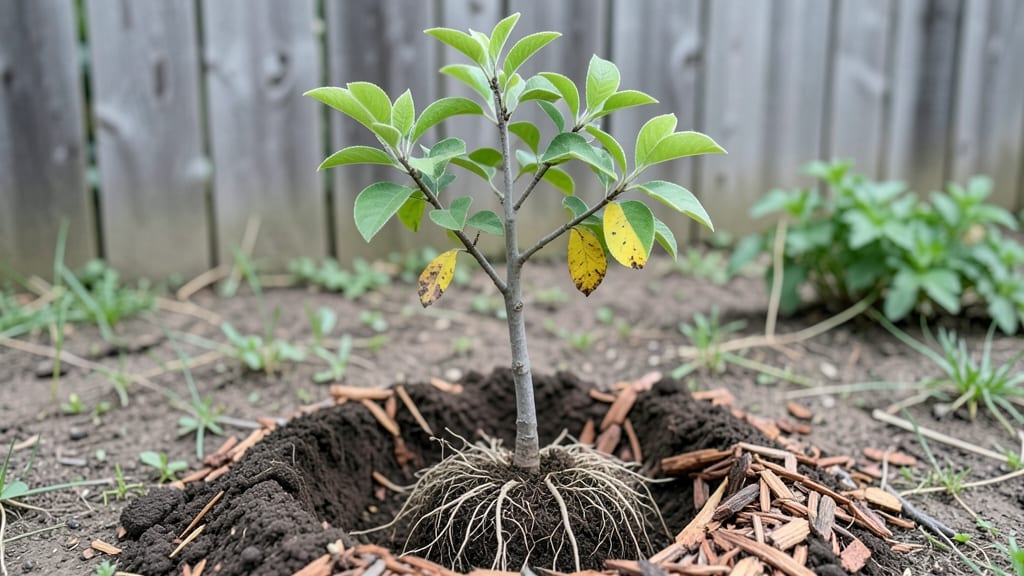
Here are some peach tree planting tips that ensure your tree thrives—roots take hold in just 4-6 weeks instead of struggling for years. I learned this the hard way when my first tree spent three seasons fighting poor drainage and shade.
The secret isn’t just picking sunny ground—it’s about matching soil, timing, and care to what peaches naturally crave.
Start with a hole twice as wide as the root ball but only as deep—peaches hate sitting too low. Mix in compost for that first critical year, and choose a spot where the tree gets at least 6-8 hours of sun daily.
Plant in late fall or early spring when the ground is workable but not frozen, giving roots time to settle before summer heat hits.
Water deeply right after planting, then keep the soil moist but never soggy for the first month. A 3-inch layer of mulch locks in moisture and blocks weeds, while regular pruning in winter shapes the tree for better airflow and fruit production.
You’ll see new shoots within weeks if you nail these early steps.
This method works for both dwarf and standard varieties, and the same principles apply whether you’re planting in a backyard or rural orchard. The key is consistency—once those roots establish, your peach tree will reward you with fruit for decades. Let’s get that tree in the ground right.
📚 In This Guide
- What you need
- Instructions
- Tips and common mistakes
- Wrapping up and next steps
What you need
- ● Peach tree sapling: Choose a dwarf, semi-dwarf, or standard variety (e.g., Elberta, Redhaven) from a reputable nursery. Size: 1–2 years old, 4–6 feet tall.
- ● Shovel: A round-point or digging shovel (16–18 inches wide) for digging the planting hole.
- ● Garden trowel: For fine-tuning soil and root placement.
- ● Pruning shears: Bypass pruners (sharp, clean, and sterilized with rubbing alcohol) for trimming dead branches.
- ● Mulch: 2–4 inches of organic mulch (e.g., wood chips, straw, or pine needles) to retain moisture and suppress weeds.
- ● Compost or well-aged manure: 5–10 gallons to enrich the soil with nutrients.
- ○ Soil amendment (optional but helpful): 1–2 pounds of balanced fertilizer (10-10-10) or citrus-specific fertilizer for acidic soil lovers.
- ● Watering can or hose: With a gentle spray nozzle to avoid disturbing roots.
- ● Staking materials (if needed): 2–3 wooden stakes (4–6 feet tall) + soft tree tie to support young trees in windy areas.
- ● Garden hose or moisture meter: To monitor soil hydration (aim for 1–1.5 inches of water per week).
- ● Sunlight: Full sun (6–8+ hours daily)—peach trees are sun worshippers!
- ● Soil: Well-draining, slightly acidic (pH 6.0–6.5). Test your soil with a pH kit if unsure.
- ● Space: Dwarf varieties: 8–12 feet from structures/buildings.
- ● Standard trees: 20–25 feet from fences/walls.
- ● Climate: Plant in late winter or early spring (after last frost) for optimal root establishment.
- ● Cross-pollination (if applicable): Some peach varieties need a pollinator tree within 50–100 feet for fruit production.
- ● 🌡️ Check root health: Soak the sapling’s roots in water + rooting hormone for 1–2 hours before planting to boost growth.
- ● ✨ Avoid over-fertilizing: Too much nitrogen early on can burn roots. Stick to compost for the first year!
- ● 🔥 Water deeply: After planting, soak the soil to 12–18 inches deep to eliminate air pockets around roots.
Step-by-step instructions for planting peach trees
Here’s how to get your peach tree off to a strong start with minimal fuss.
Choose the Right Location for Maximum Sun
Peach trees thrive in full sun—select a spot that gets at least 6-8 hours of direct sunlight daily. Avoid low-lying areas where cold air settles, as frost can damage young trees. I always check the site in late afternoon when the sun is low; this helps spot shadows cast by nearby structures or taller trees.
Your soil should drain well, so dig a 12-inch deep hole to test drainage. Fill it with water and wait 30 minutes—if water remains, amend the soil with 2-3 inches of compost or sand to improve drainage. The ideal soil pH for peaches is 6.0-7.0, so a quick soil test kit helps avoid surprises.
Prepare the Planting Hole and Tree Roots
Dig your planting hole twice as wide as the root ball but no deeper—peach trees root best when the graft union sits 1-2 inches above soil level. Loosen the sides of the hole with a shovel to encourage root spread into surrounding soil. I like to rough up the edges slightly so roots can penetrate easily.
Before placing the tree, soak the root ball for 15-20 minutes to hydrate the roots. Gently tease apart any circling roots or tightly bound roots at the bottom of the container—this prevents girdling as the tree matures. If your tree is bare-root, spread the roots outward in the hole to avoid bending them.
Plant and Stake for Stability
Position the tree in the center of the hole, ensuring the graft union (the bulge near the base) is 1-2 inches above soil level. This prevents the tree from growing a vigorous lower trunk that competes with the scion wood. Fill the hole with native soil, tamping down gently every 2 inches to eliminate air pockets.
Water deeply to settle the soil, then install a 4-5 foot stake on the side opposite the prevailing wind. Tie the tree loosely to the stake with soft tree ties—too tight, and you’ll restrict growth. I use a figure-eight pattern to allow for trunk expansion. Finish by mounding soil 2-3 inches high around the base to create a watering well.
Water and Mulch for Fast Root Establishment
After planting, water slowly but deeply until the soil is moist 12 inches down. Peach trees need consistent moisture during their first year, so I schedule watering 2-3 times per week unless rain provides 1 inch of moisture. Overwatering is just as harmful as underwatering—let the top 2 inches of soil dry between waterings.
Spread 2-3 inches of mulch (like wood chips or straw) over the soil surface, keeping it 6 inches away from the trunk to prevent rot. Mulch retains moisture, regulates soil temperature, and suppresses weeds. Replenish mulch annually to maintain coverage. Avoid fresh grass clippings or thick layers, which can smother the tree.
Prune and Protect for Healthy Growth
Prune only to remove any broken or crossing branches—peach trees establish roots faster with minimal stress. Use clean, sharp pruners to make cuts at a 45-degree angle just above a bud. I avoid heavy pruning in the first year; focus on shaping the tree lightly to encourage a strong framework.
Protect young trees from pests like deer or rabbits with a wire cage or tree guard during the first growing season. Apply a balanced fertilizer (like 10-10-10) 6-8 weeks after planting, following package rates. Monitor for signs of stress—yellowing leaves or wilting may indicate overwatering or nutrient deficiency. With these steps, your peach tree will root quickly and reward you with fruit in 3-5 years.
Tips & tricks for perfect peach tree planting
Planting a peach tree successfully starts with understanding a few key tricks that can make all the difference in root establishment and long-term health.
Location Scouting: When selecting that perfect sunny spot, don't just check morning sun—observe the entire day. Shadows from nearby trees or buildings can change dramatically as the sun moves. I've planted trees in spots that seemed ideal in the morning only to discover they were shaded in the afternoon. The 6-8 hours of sunlight must be consistent throughout the day, not just during peak hours.
Root Preparation: The 15-20 minute soak for root hydration is crucial, but don't skip the root inspection. Circling roots are a common problem that can strangle your tree as it grows. Use your fingers to gently separate any roots that are wrapped tightly around the root ball. This simple step prevents girdling, which can kill your tree over time. For bare-root trees, spreading the roots outward in the hole mimics natural root growth patterns.
Watering Wisdom: The 2-3 times per week watering schedule assumes average rainfall. During dry spells, you might need to water daily. The key is keeping that 12-inch depth moist—stick your finger in the soil to check. If it's dry at 2 inches down, it's time to water. Overwatering is just as damaging as underwatering, so let the top 2 inches dry between sessions. This balance is what creates strong, fast-growing roots.
Mulching Mastery: That 2-3 inches of mulch isn't just for looks—it's a protective layer that works like insulation. Wood chips or straw work best because they break down slowly, adding organic matter to your soil. The critical part is keeping it 6 inches away from the trunk to prevent rot. I've seen many gardeners make this mistake and end up with trunk rot that can kill their tree. Also, avoid fresh grass clippings—they can mat down and suffocate the roots.
Pro Tips for Peach Tree Planting Tips
- Planting a peach tree successfully starts with understanding a few key tricks that can make all the difference in root establishment and long-term health.
- Location Scouting: When selecting that perfect sunny spot, don't just check morning sun—observe the entire day.
- Root Preparation: The 15-20 minute soak for root hydration is crucial, but don't skip the root inspection.
Frequently asked questions
Got questions about peach tree planting?
You’re not alone! Here are answers to the most common concerns—from timing to troubleshooting—to help you grow a thriving tree with confidence.
When is the best time to plant a peach tree?
The ideal window is late winter or early spring (before buds swell) or fall (4-6 weeks before frost). Avoid planting in extreme heat or cold—root establishment struggles when soil temps are <10°F or >90°F. For container-grown trees, you can plant year-round, but spring/fall still win for long-term success.
How do I know if my soil is right for peach trees?
Peaches thrive in well-draining, slightly acidic soil (pH 6.0–6.5). Test your soil with a kit (available at garden centers) or send a sample to a local extension office. If your soil is heavy clay or sandy, amend it with compost or organic matter before planting. Raised beds work great for poor drainage!
What should I do if my peach tree leaves turn yellow?
Yellow leaves often signal overwatering, nutrient deficiency, or fungal issues. Check the soil—it should be moist but not soggy. If leaves are pale yellow, your tree may need iron or nitrogen (use a chelated iron supplement). For brown/yellow spots, it could be peach leaf curl—prune infected branches and apply copper fungicide in dormant season.
Can I grow a peach tree in a container?
Yes! Dwarf varieties (like ‘Bonanza’ or ‘Redhaven’) thrive in large pots (15+ gallons) with drainage holes. Use a light, fast-draining potting mix and repot every 2–3 years. Place containers in full sun and water deeply when the top inch of soil dries out. Just know container trees may produce smaller fruit and need winter protection in cold climates.
Do peach trees need cross-pollination?
Most peach trees are self-pollinating, but planting a second variety nearby (even 20–30 feet away) can boost fruit set and diversity. Bees love peaches! If your tree isn’t fruiting well, check for poor pollination, late frost damage, or over-thinning. Hand-pollinate with a small brush if needed (though bees usually handle it!).
Wrapping up and next steps
Planting a peach tree is a rewarding journey that starts with the right location, soil prep, and care—and you’ve got all the tools to succeed! 🌱 From choosing the sunniest spot to nurturing those early roots, every step sets the stage for a thriving tree.
Now that you’re armed with expert tips, it’s time to roll up your sleeves and watch your peach tree grow.
Ready to take the next step? Mark your calendar for planting season (early spring or fall) and gather your supplies. Then, dig in—your future harvest of juicy peaches is waiting! 🍑✨