Succulent
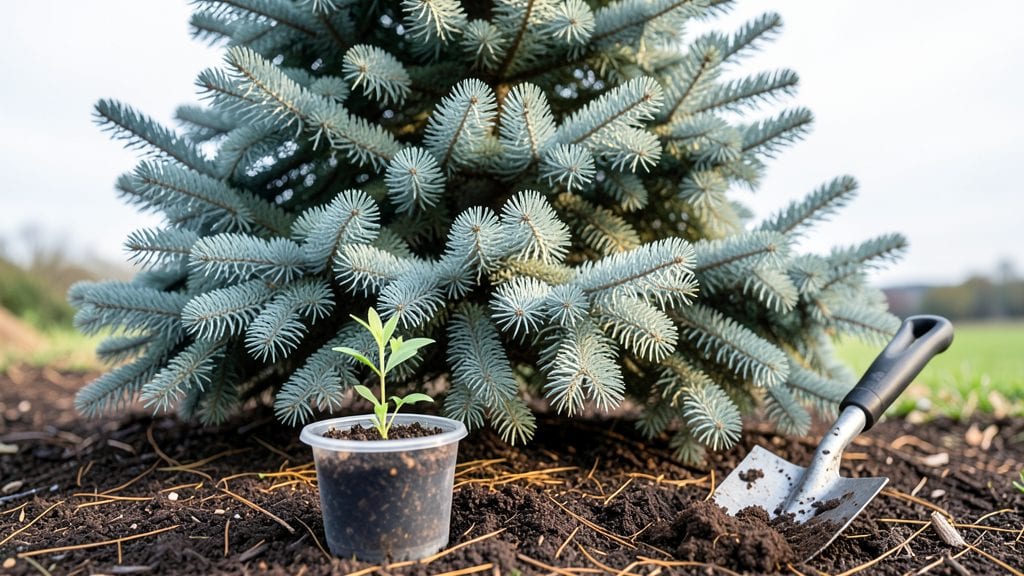
Planting blue spruce trees gives your yard that timeless elegance no other evergreen can match—silver-blue needles that shimmer year-round, even when everything else is brown. ✨ I’ve planted mine in full sun where they now reach 20 feet tall, their branches forming that perfect conical shape that makes neighbors stop and stare.
The key isn’t just digging a hole—it’s about soil prep, spacing, and the first few weeks of care that set them up for decades of growth.
You’ll need well-draining soil (amend heavy clay with compost), a hole twice as wide as the root ball, and a sunny spot with at least 6 hours of light daily. Blue spruce thrive in zones 2–7, but if you’re in a hotter climate, afternoon shade helps prevent needle burn.
Most beginners overwater at first—that’s the fastest way to kill them, so focus on deep watering only when the top inch of soil feels dry.
Within a year, you’ll see those signature blue-green needles filling out, and by year three, the tree will look like it’s been there forever. The best part? Once established, they’re low-maintenance—just mulch annually and prune only to shape.
My oldest spruce has been the centerpiece of my front yard for over a decade, and it’s still going strong.
For smaller spaces, dwarf varieties like ‘Glauca Globosa’ stay under 10 feet tall. And if your yard has wind, plant them where they’ll be sheltered—those branches won’t recover from constant whipping. Ready to add that classic evergreen look? Let’s get those roots in the ground the right way.
📚 In This Guide
- What you need
- Instructions
- Tips and common mistakes
- Wrapping up and next steps
What you need
- ● Blue spruce saplings: 1–3 (depending on desired spacing; 3–6 feet tall for mature growth)
- ● Shovel or trowel: For digging holes (choose a sturdy, ergonomic option for ease)
- ● Well-draining soil: Mix of garden soil, compost, and sand (or use pre-mixed acidic, loamy soil for conifers)
- ● Organic mulch: Pine straw, bark chips, or wood shavings (3–4 inches thick; avoid cedar mulch—it harms spruces!)
- ● Watering can or hose: With a gentle spray nozzle for hydration
- ○ Fertilizer (optional but helpful): Slow-release, acid-loving plant fertilizer (e.g., 10-10-10 or pine tree-specific formula)
- ● Soil pH tester: Ensure your soil is acidic (pH 4.5–6.0)—spruces thrive in this range!
- ● Root stimulator: Liquid or powder to boost early growth (e.g., mycorrhizal fungi)
- ● Stakes & ties: For young saplings in windy areas (use biodegradable options)
- ● Pruning shears: For shaping as they grow (sterilize blades with rubbing alcohol)
- ● Drip irrigation system: For consistent moisture (ideal for large plantings)
- ● Sunlight: Full sun to partial shade (6+ hours of sunlight daily)
- ● Space: Minimum 6–10 feet apart (mature width) or 10–15 feet for large specimens
- ● Climate: Hardy in USDA Zones 2–7 (cold-resistant but needs winter protection in Zone 8+)
- ● Drainage: Avoid low-lying or waterlogged areas—blue spruces hate soggy roots!
Step-by-step instructions for planting blue spruce trees
Here's how to plant these stunning evergreens for lasting beauty and minimal upkeep.
🪴 Step 1: Choose and Prepare the Planting Site
Blue spruce thrive in full sun to partial shade with at least 6 hours of sunlight daily. Pick a spot with well-draining soil—they hate soggy roots. If your yard has heavy clay, amend with 2-3 inches of compost mixed into the top 12 inches of soil to improve drainage.
Dig a hole twice as wide as the root ball but only as deep—planting too deep suffocates the roots. Loosen the sides of the hole with a shovel to encourage root spread. This is the moment that matters: proper spacing prevents future overcrowding and gives your trees room to grow into their majestic shapes.
🌱 Step 2: Remove the Tree from Its Container
Gently squeeze the sides of the container to loosen the root ball. If the tree is root-bound (roots circling tightly), use your fingers to tease them outward—this prevents girdling as it grows. Blue spruce roots are delicate, so handle them with care to avoid breakage.
Check for any circling roots or damaged areas. If you see roots growing in tight circles, make 2-3 vertical cuts to encourage outward growth. This might seem drastic, but it prevents future stress on the tree. Place the tree in the hole so the top of the root ball sits 1-2 inches above ground level—this prevents water pooling around the trunk.
💧 Step 3: Backfill and Water Thoroughly
Fill the hole with native soil, pressing gently to eliminate air pockets. Don’t compact it too firmly—you want the roots to settle naturally. Water deeply until the soil is evenly moist to 12 inches down. You’ll know it’s right when water runs out the bottom of the hole and the surface looks uniformly damp.
Mulch around the base with 2-3 inches of organic mulch, keeping it 6 inches away from the trunk to prevent rot. This helps retain moisture and regulates soil temperature. Avoid piling mulch against the trunk—it traps moisture and invites pests. Water again after mulching to help settle everything in place.
☀️ Step 4: Stake and Protect Young Trees
Blue spruce are wind-sensitive when young. If your area gets strong winds, install 2-3 stakes around the tree, securing it with flexible ties (not wire—it can cut into the bark). Position stakes 12 inches from the trunk and tie loosely enough to allow some movement, which helps the tree strengthen its stem.
Remove stakes after 1-2 years once the tree is established. In the first year, protect the tree from harsh sun with shade cloth (30-50%) during extreme heat. You’ll see new growth in spring—that’s your signal everything is working. Avoid fertilizing in the first year; let the tree focus on root establishment.
⏰ Step 5: Maintain Through the First Growing Season
Water deeply once a week during the first year, providing 1-2 inches of water per session. Let the top 2 inches of soil dry out between waterings—this prevents root rot. Blue spruce are drought-tolerant once established, but young trees need consistent moisture to thrive.
Prune only to remove dead or damaged branches in the first year. Avoid heavy pruning—it stresses the tree. You’ll notice new growth in spring, and by year two, your blue spruce will start taking on its iconic, silvery-blue hue. That’s when you know you’ve given it the perfect start.
Tips & tricks for planting blue spruce trees
A few key details will make all the difference between a struggling sapling and a thriving evergreen that lasts for decades.
Soil Preparation Secret: Before planting, test your soil's drainage by digging a small hole and filling it with water. If it doesn't drain within an hour, you definitely need that 2-3 inches of compost mixed into the top 12 inches of soil. I've seen blue spruce fail in heavy clay because roots can't breathe—this simple test prevents that heartbreak. The goal is soil that feels like a well-wrung sponge, not a muddy mess.
Root Ball Handling: When you remove your blue spruce from its container, don't be afraid to get your hands dirty. Gently squeeze the sides to loosen the root ball, then check for those tight circling roots. Making 2-3 vertical cuts might seem drastic, but it's better than waiting until you see the tree leaning dramatically years later. Think of it as giving your tree a fresh start—those cuts encourage roots to spread outward instead of strangling each other.
Watering Wisdom: That first deep watering to 12 inches down is crucial, but don't stop there. After mulching, water again to help everything settle. Here's the thing: blue spruce roots need consistent moisture in their first year, but they hate soggy feet. Aim for 1-2 inches of water per week, letting the top 2 inches dry between sessions. You'll know you're doing it right when water runs out the bottom of the hole during planting—this confirms proper saturation without overdoing it.
Staking Strategy: If you're in a windy area, those 2-3 stakes aren't just decoration—they're insurance. Position them 12 inches from the trunk and use flexible ties (never wire!). The trick is to tie them loosely enough that the tree can sway slightly—this actually helps strengthen its stem. I've seen trees with stakes too tight that develop permanent lean. Check the ties every few months and loosen them as the tree grows stronger. After 1-2 years, if the tree stands firm on its own, it's time to remove them completely.
Pro Tips for Planting Blue Spruce
- A few key details will make all the difference between a struggling sapling and a thriving evergreen that lasts for decades.
- Soil Preparation Secret: Before planting, test your soil's drainage by digging a small hole and filling it with water.
- Root Ball Handling: When you remove your blue spruce from its container, don't be afraid to get your hands dirty.
Frequently asked questions
about planting blue spruce—because every gardener deserves clarity! Here are answers to the most common questions to help you grow these stunning evergreens with confidence.What’s the best time of year to plant a blue spruce?
Plant your blue spruce in early spring or early fall when temperatures are mild (50–70°F). This gives roots time to establish before extreme heat or cold. Avoid planting in summer or winter—hot weather stresses young trees, while frozen soil prevents root growth.
How far apart should I space blue spruce trees?
Spacing depends on your goal: 3–5 feet apart for a dense hedge or windbreak, or 10–15 feet apart if you want them to grow into mature, solitary specimens. Check the variety’s mature width (e.g., 'Glauca' stays narrower than 'Conica') to plan accordingly.
How often should I water a newly planted blue spruce?
Water deeply 2–3 times per week for the first year, ensuring soil stays moist but not soggy. After that, water once a week (or during dry spells) unless you’re in a rainy climate. Mulch around the base to retain moisture and protect roots.
What pests or diseases should I watch for with blue spruce?
Common issues include spider mites (look for webbing), bagworms (sacs on needles), and root rot (from overwatering). Treat mites with horticultural oil, remove bagworm sacs manually, and ensure well-draining soil to prevent rot. Prune affected branches promptly!
Can I grow blue spruce in a container, or is it better in the ground?
Blue spruce thrive in the ground, but dwarf varieties (like 'Conica') can work in large containers (15+ gallons) with drainage holes. Use fast-draining potting mix and repot every 2–3 years. Containers limit root growth, so expect slower, smaller trees—ideal for patios but not long-term height.
Wrapping up and next steps
Planting a Blue Spruce is a rewarding way to add timeless beauty and structure to your landscape—whether you’re a seasoned gardener or just starting out. 🌲 With the right soil, spacing, and care, these stunning evergreens will thrive for decades, offering year-round color and charm.
Now that you’re equipped with the know-how, why not take the next step? Visit your local nursery, grab a sapling, and start transforming your outdoor space into a serene, evergreen haven!
Pro Tip: 💡 Mark your calendar for a follow-up watering schedule in the first few weeks to ensure your Blue Spruce establishes strong roots!