
Companion Plants
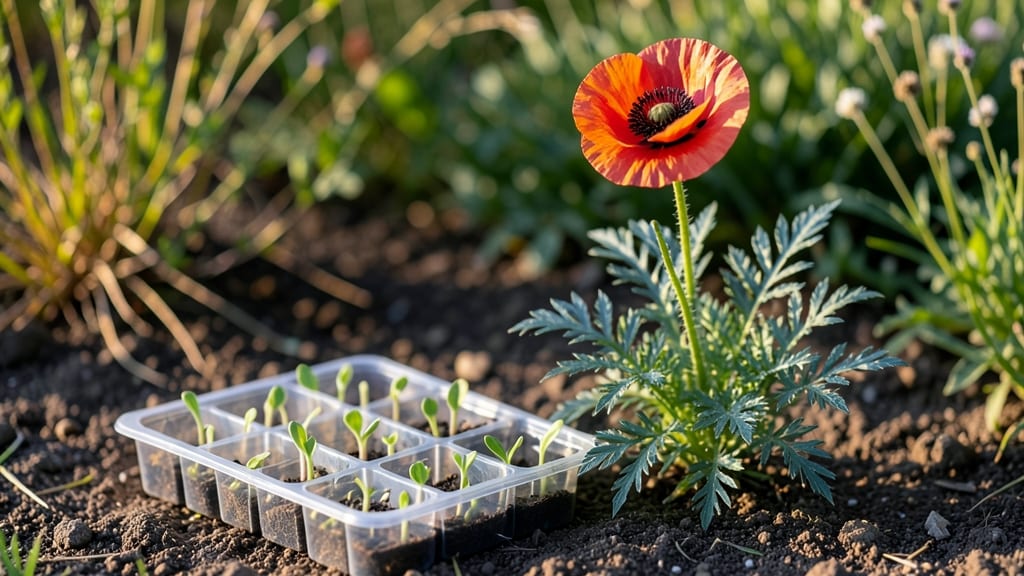
Poppy plants grow faster when you nail the sunny patch and seed depth—trust me, I’ve watched them burst through soil in just 5-7 days with the right setup. 🌻 The secret isn’t fancy soil or expensive tools; it’s matching their love of open space and full sun with a light touch.
Too much water or shade, and they’ll sulk or flop. But get it right, and you’ll have those signature cup-shaped blooms in weeks, not months.
Start with loose, well-draining soil—poppies hate soggy roots—and scatter seeds on the surface. Press them in just enough to cover, then water gently. They need sunlight 6+ hours daily, so choose a spot where nothing else crowds them out.
Annual poppies like California poppies are the easiest for beginners, while perennial varieties like oriental poppies reward patience with 3-4 years of blooms.
You’ll know it’s working when those first bright green shoots appear—thin them to 6-12 inches apart so they don’t fight for space. Water only when the top inch of soil feels dry, and avoid fertilizers (poppies thrive on neglect).
By late spring, you’ll have a field of color that hummingbirds can’t resist. The best part? They self-seed, so next year’s garden does some of the work for you.
Pair them with lavender or salvia for a drought-tolerant combo, or let them mingle with clover for a wildflower meadow vibe. Just skip the heavy-handed pruning—poppies bloom best when left to their own devices. Now grab those seeds and let’s get growing!
📚 In This Guide
- What you need
- Instructions
- Tips and common mistakes
- Wrapping up and next steps
What you need
- ● Ready to grow your own poppy patch? Here’s everything you’ll need to get started—from essentials to handy extras! 🌱✨
- ● Pro tip: 💡 Poppies thrive in poor soil—avoid over-fertilizing! A light hand is key.
Step-by-step instructions for planting poppy plants
Here’s how to get those delicate poppies blooming quickly—no fuss, just sun and patience.
🌱 Step 1: Choose the Perfect Sunny Spot
Poppies thrive in full sun—at least 6-8 hours daily—so pick the sunniest patch in your garden. I always test a spot for a week first: if it gets afternoon shade, it’s not ideal. The soil should drain like a sieve—poppies hate soggy roots. If your soil is heavy clay, mix in 2-3 inches of coarse sand or gravel to improve drainage.
Loosen the top 6 inches of soil with a garden fork or trowel. Poppies don’t like compacted earth, so break up clumps until the soil feels light and airy. If your soil is sandy, add a 1-inch layer of compost to hold moisture without suffocating roots.
🌱 Step 2: Sow Seeds at the Right Depth and Spacing
Poppy seeds are tiny, so I use a seed starter mix (not garden soil) to avoid clumping. Scatter seeds ¼ inch deep—they won’t germinate if buried too deeply. Space them 6 inches apart in rows 12 inches apart for full, airy blooms. I like to sprinkle them in a zigzag pattern to avoid overcrowding later.
Don’t cover the seeds with soil—just press them lightly into the mix. Water gently with a fine mist until the soil is damp but not soggy. Overwatering now will wash seeds away or cause them to rot. A light misting ensures they stay in place while staying moist enough to germinate.
☀️ Step 3: Wait for Germination and Thin Seedlings
Poppy seeds germinate fast—usually within 7-14 days—but they need warmth. If your nights are still chilly (below 50°F), cover the area with row fabric to keep them cozy. You’ll see tiny green sprouts first, followed by the first true leaves (they look like tiny maple leaves).
Once seedlings are 2 inches tall, thin them to 6 inches apart—this prevents overcrowding and gives each plant room to grow strong. Use scissors to snip weak seedlings at soil level (don’t pull—their roots can disturb nearby plants). Keep the soil moist but not waterlogged until they’re established.
💧 Step 4: Water Lightly and Let Them Grow Wild
Poppies are drought-tolerant once established, but young plants need consistent moisture. Water deeply once a week (or when the top 1 inch of soil feels dry). Avoid overhead watering—it can cause fungal issues. Instead, water at the base with a soaker hose or drip irrigation.
Stop fertilizing after planting—poppies don’t need extra nutrients. Too much fertilizer makes them grow leafy stems instead of blooms. Let them grow freely; they’ll develop fuzzy, silvery stems and bright green leaves before shooting up tall flower stalks.
⏰ Step 5: Enjoy Fast Blooms and Deadhead for More Flowers
Poppies bloom quickly—usually 6-8 weeks after sowing—but timing depends on your climate. Watch for buds forming at the top of stems, then bright, papery blooms in shades of red, pink, orange, or white. They open in the morning and close by afternoon—don’t miss their fleeting beauty!
Once flowers fade, deadhead (snip off spent blooms) to encourage more flowers. Poppies self-seed easily, so you’ll likely get volunteer plants next year. If you want to control where they grow, collect seeds from mature pods before they release into the wind.
Tips & tricks for perfect poppy plant germination
Fast, vibrant poppies start with these key tricks that make all the difference between waiting months for blooms and enjoying them in weeks.
Sunny Spot Strategy: Test your chosen spot for a full week before planting—poppies need that 6-8 hours of direct sun daily without compromise. I always check the afternoon sun pattern first; even a few hours of shade can delay blooming. If your garden gets afternoon shade, consider planting in a raised bed or container where you can control the sun exposure better.
Seed Starting Hack: Use a seed starter mix instead of garden soil to prevent clumping around those tiny poppy seeds. I like to sprinkle them in a zigzag pattern—this creates natural spacing and avoids overcrowding later. Press them just ¼ inch deep; any deeper and they won't germinate at all. A light misting with a spray bottle keeps them moist without disturbing the seeds.
Germination Speed Boost: Poppy seeds germinate fastest when soil temperatures stay above 50°F, so if your nights are chilly, cover the area with row fabric. I've seen germination times drop from 14 days to just 7 days with this simple warmth trick. Just remember to remove the cover during the day so the soil doesn't get too hot.
Thinning Technique: When seedlings reach 2 inches tall, thin them to 6 inches apart using scissors—never pull them by hand. The roots are delicate and pulling can disturb nearby plants. This spacing gives each plant room to grow strong stems and develop those signature papery blooms without competition.
Pro Tips for Planting Poppy Plants
- Fast, vibrant poppies start with these key tricks that make all the difference between waiting months for blooms and enjoying them in weeks.
- Sunny Spot Strategy: Test your chosen spot for a full week before planting—poppies need that 6-8 hours of direct sun daily without compromise.
- Seed Starting Hack: Use a seed starter mix instead of garden soil to prevent clumping around those tiny poppy seeds.
Frequently asked questions
Got questions about growing poppy plants? You’re not alone! Here are some of the most common queries—and their straightforward answers—to help you cultivate a stunning poppy patch with confidence.
When is the best time to plant poppy seeds?
Poppy seeds thrive in cool weather, so aim to plant them in early spring (as soon as the soil is workable, around 40–50°F) or late summer/fall for a winter bloom. Avoid planting in scorching heat—seeds need moisture to germinate, and summer dryness can stall growth. If you miss the window, some varieties (like Papaver rhoeas) self-sow, so they may pop up unexpectedly the next year!
How long does it take for poppy seeds to germinate?
Poppy seeds are fast germinators—typically sprouting in 7–14 days under ideal conditions (moist, well-drained soil and consistent temps). If germination takes longer, check for dry soil or overcrowding. Pro tip: Don’t bury seeds too deep (just press them lightly into soil)—they need light to sprout!
Can I grow poppies in containers or do they need a garden bed?
Poppies adapt well to containers if given enough space (at least 6–12 inches deep). Use a well-draining mix (like cactus/succulent soil) and a pot with drainage holes. Just ensure they get full sun (6+ hours/day)—containers dry out faster, so water consistently until established. Bonus: Dwarf varieties (like Papaver nudicaule) are perfect for pots!
Are poppies toxic to pets or children if ingested?
Most poppy plants are non-toxic to pets and kids, but opium poppies (Papaver somniferum) contain morphine alkaloids and should be avoided. Common ornamental poppies (like corn or Iceland poppies) are safe, but always supervise curious pets or toddlers. If you’re unsure about a variety, check with a local nursery or vet for confirmation.
Why aren’t my poppy seeds sprouting? Troubleshooting tips.
Poppy seeds are finicky—here’s what might be blocking germination:
- Too dry: Keep soil consistently moist (not soggy) until sprouts appear.
- Too deep: Seeds need light—press them just below the soil surface.
- Old seeds: Poppy seeds lose viability after 1–2 years; buy fresh seeds.
- Poor drainage: Waterlogged soil causes rot—amend with sand or perlite.
- Extreme heat/cold: Ideal temps are 50–70°F; avoid planting in frost or scorching sun.
If all else fails, try stratification (chilling seeds in a damp paper towel for 1–2 weeks) to mimic winter conditions and trick them into sprouting!
Wrapping up and next steps
Growing poppy plants is a rewarding journey that brings vibrant color and natural beauty to your garden—and it’s easier than you think! 🌸 With the right soil, sunlight, and patience, you’ll soon enjoy fast germination and stunning blooms.
Whether you’re planting for companionship or simply love their delicate charm, your sunny patch is about to become a showstopper.
Ready to take the next step? Start small—try a few seeds in a pot or a dedicated garden bed—and watch your poppy dreams bloom! For extra tips, explore companion plants like lavender or marigolds to create the perfect harmony in your garden.