
Fertilization
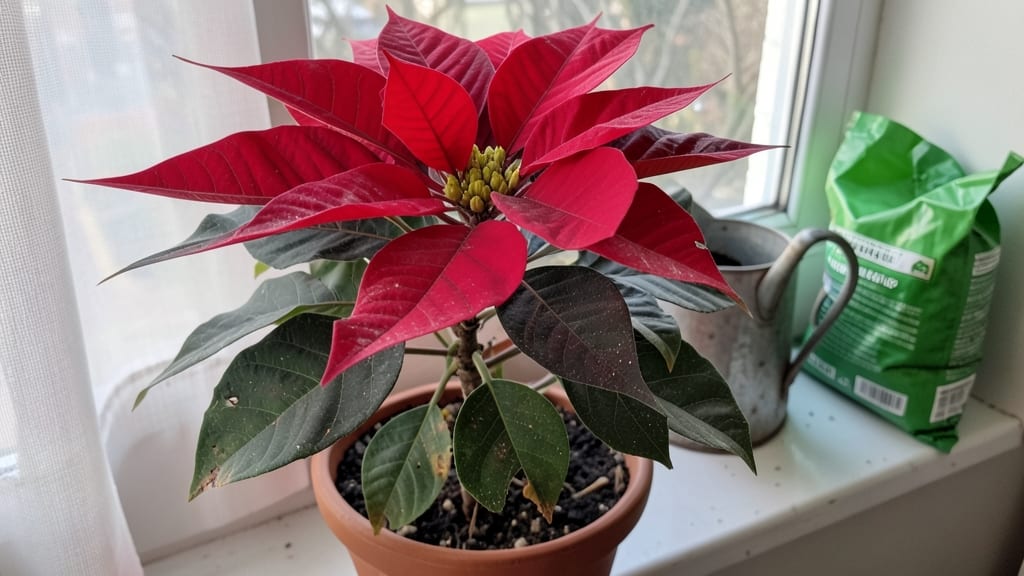
Your poinsettia plant food choices make all the difference between a vibrant holiday star and a sad, leggy houseplant. 🌿 I’ve learned that poinsettias need a balanced fertilizer—too much nitrogen, and you’ll get lush leaves but no blooms.
The right mix keeps those deep red bracts popping year after year, even indoors.
Start with a 10-10-10 or 20-20-20 balanced fertilizer (NPK ratio) diluted to half-strength—poinsettias are sensitive to overfeeding. Organic options like fish emulsion or worm castings work too, but they need more frequent applications. Feed every 4-6 weeks during active growth, then taper off as they prepare for blooming season.
Watch for signs of stress: yellow leaves mean too much nitrogen, brown edges mean underwatering or salt buildup from fertilizer. The key is consistency—poinsettias thrive when they get steady nutrition without surprises. With the right food, you’ll see those iconic bracts forming by late summer.
Adjust your routine for winter blooming: reduce feeding in fall, then reintroduce light fertilizer in early spring to kickstart new growth. Even beginners can master this with a little patience and attention to detail. Let’s get those plants glowing!
📚 In This Guide
- What you need
- Instructions
- Tips and common mistakes
- Wrapping up and next steps
What you need
- ● Balanced liquid fertilizer (e.g., 10-10-10 or 20-20-20 NPK ratio) – 1-2 tbsp per gallon of water
- ● Slow-release granular fertilizer (e.g., 14-14-14) – 1-2 tsp per 6-inch pot
- ● Water-soluble iron chelate (for yellowing leaves) – 1 tsp per gallon of water
- ● pH test kit (to check soil acidity, ideal range: 6.0-6.5)
- ● Distilled or rainwater (to avoid mineral buildup)
- ● Spray bottle (for foliar feeding)
- ● Gloves & dust mask (for handling fertilizers safely)
- ● Measuring spoons or scale (for precise fertilizer dosing)
- ● Watering can with a fine rose nozzle (to avoid overwatering)
- ● Well-draining pots (with drainage holes, 1-2 inches larger than the root ball)
- ● Light meter or grow lights (poinsettias need 6-8 hours of bright, indirect light daily)
- ○ Timer (optional) – For consistent light exposure
- ● Organic compost (for natural nutrient boost)
- ● Hydrogen peroxide (3%) (to sterilize water and prevent root rot)
- ● Plant growth regulators (e.g., B-9 for extended blooming)
- ● Humidity tray or pebble tray (to maintain 50%+ humidity)
- ● Plant food delivery kit (for automated feeding schedules)
Step-by-Step guide to feeding poinsettias for year-round vibrancy
Here's how to nourish your poinsettias so they thrive beyond the holidays.
🌿 Step 1: Select the Right Fertilizer Formula
Poinsettias need a balanced, water-soluble fertilizer with equal parts nitrogen (N), phosphorus (P), and potassium (K)—look for a 7-7-7 or 10-10-10 ratio on the label. The phosphorus boosts root development, while potassium strengthens stems and encourages vibrant red bracts. I avoid high-nitrogen formulas, which promote leafy growth at the expense of blooms.
For organic options, fish emulsion or seaweed-based fertilizers work well, but dilute them to half-strength—they're potent. Always check the label for application rates, as overfeeding can burn delicate roots. This is the moment that matters: choosing the right fertilizer sets the stage for everything that follows.
💧 Step 2: Feed During Active Growth Phases
Start fertilizing in early spring when new growth appears, and continue every 4-6 weeks through summer. Poinsettias go dormant in winter, so hold off until you see fresh leaves in late February or March. Dilute the fertilizer to half-strength for the first feeding—this acclimates the plant without shocking its system.
Water the soil thoroughly 24 hours before feeding to prevent fertilizer burn. You'll know moisture is right when the top inch of soil feels damp but not soggy. Apply fertilizer to the soil (not leaves) and water again immediately to help it distribute evenly. Real talk: Skipping this step often leads to weak stems and pale bracts later.
☀️ Step 3: Adjust Nutrition for Bloom Production
To encourage vibrant blooms, switch to a low-nitrogen, high-phosphorus fertilizer (like 5-10-10 or 3-9-6) starting in mid-summer. Phosphorus triggers flowering, while potassium ensures the bracts develop their signature deep red color. Feed every 4-6 weeks until late August, then reduce to monthly applications.
Here's the thing—poinsettias need 12-14 hours of darkness daily starting in October to bloom. Without this photoperiod, they'll focus on foliage instead of flowers. Pair your fertilizer routine with light control for the best results. You'll see buds form in 8-10 weeks if all conditions are met.
✂️ Step 4: Maintain Through Dormancy and Repot as Needed
After blooming, reduce feeding to every 8-10 weeks in winter, as growth slows. Prune leggy stems back by half their length in early spring to encourage bushier growth. Repot every 2-3 years using fresh potting mix—poinsettias hate compacted roots. I always choose a pot just 1-2 inches larger than the current one to avoid overpotting, which delays blooming.
Don't skip the repotting step—old soil loses nutrients and compacts, strangling roots. Water thoroughly after repotting, then wait 7-10 days before fertilizing again. This gives the plant time to recover from root disturbance. You'll notice new leaves emerging within 2-3 weeks if everything is on track.
🌱 Step 5: Monitor and Troubleshoot Nutrient Issues
Yellow leaves often signal overwatering or nutrient imbalance. If you see yellowing between veins, it’s likely iron deficiency—switch to a chelated iron supplement. Brown leaf edges usually mean underwatering or salt buildup from fertilizer. Flush the soil with 2-3 times the pot’s volume of water to leach out excess salts, then resume feeding at half-strength.
Leggy growth with sparse leaves? Your plant needs more light or less nitrogen. Move it to a brighter spot and switch to a low-nitrogen fertilizer for 2-3 feedings. Watch for pests like mealybugs or spider mites—these thrive on stressed plants. A gentle spray of neem oil resolves infestations without harming the poinsettia.
Tips & tricks for poinsettia plant food success
These essential tips will help you maximize your poinsettia's potential and avoid common pitfalls that derail vibrant blooms.
Fertilizer Ratio Matters: When selecting your 7-7-7 or 10-10-10 balanced fertilizer in Step 1, pay special attention to the phosphorus content—the middle number. This is what actually triggers root development and sets the foundation for those signature red bracts. I've seen poinsettias with lush leaves but no blooms because people used high-nitrogen fertilizers meant for leafy greens rather than flowering plants.
Timing is Everything: That 24-hour pre-fertilizing watering in Step 2 is non-negotiable. I learned this the hard way after seeing fertilizer burn on three different plants. The soil needs to be evenly moist—not soggy, not dry—so the fertilizer can distribute properly through the root zone. Think of it like prepping your plant for a spa treatment rather than a shock therapy session.
Seasonal Transition Strategy: The shift from balanced fertilizer to low-nitrogen, high-phosphorus in Step 3 is where the magic happens for blooms. I recommend making this switch in mid-summer and continuing the 4-6 week intervals until late August. This gives your poinsettia exactly 8-10 weeks of bloom-inducing nutrition before the critical 12-14 hours of darkness period begins in October. The key is consistency—don't skip feedings during this crucial window.
Repotting Wisdom: When you repot every 2-3 years in Step 4, choose a pot that's only 1-2 inches larger than the current one. This might seem counterintuitive, but poinsettias bloom better when slightly root-bound. The shock of a much larger pot triggers new growth at the expense of flower development. After repotting, that 7-10 day waiting period before fertilizing gives the roots time to establish without chemical stress.
Pro Tips for Poinsettia Plant Food
- These essential tips will help you maximize your poinsettia's potential and avoid common pitfalls that derail vibrant blooms.
- Fertilizer Ratio Matters: When selecting your 7-7-7 or 10-10-10 balanced fertilizer in Step 1, pay special attention to the phosphorus content—the middle number.
- Timing is Everything: That 24-hour pre-fertilizing watering in Step 2 is non-negotiable.
Frequently asked questions
Got questions about keeping your poinsettias lush and blooming? Here are some common concerns—and expert answers—to help you grow like a pro!
What’s the best time to fertilize poinsettias?
Fertilize poinsettias after they bloom (late winter/early spring) and then every 4–6 weeks until summer. Avoid fertilizing in fall—this can disrupt their natural dormancy and delay next year’s vibrant blooms. Use a balanced, water-soluble fertilizer (like 10-10-10) diluted to half-strength for best results.
Can I use regular houseplant fertilizer on poinsettias?
Yes, but with caution! Poinsettias thrive on balanced nutrition, so opt for a general-purpose fertilizer (e.g., 20-20-20) or a bloom booster with higher phosphorus (like 10-30-20) to encourage those iconic red leaves. Always dilute to half-strength to avoid root burn.
Why are my poinsettia leaves turning yellow or dropping?
Yellow leaves or leaf drop often signal over- or under-fertilization. If the soil smells sour or leaves crisp at the edges, you’ve overdone it—flush the soil with water. Drooping or pale leaves? It’s likely underfeeding. Adjust your fertilizer schedule and check soil moisture—poinsettias hate soggy roots!
Do poinsettias need special food for winter blooms?
To trigger next year’s blooms, reduce fertilizer in late summer (August–September) and switch to a low-nitrogen, high-phosphorus formula (e.g., 5-10-10). Short daylight hours (under 12 hours) and cooler temps (60–65°F) also kickstart their flowering cycle—think of it as their winter prep!
What’s a natural alternative to chemical fertilizers?
Try compost tea (1:10 ratio) or fish emulsion (diluted to 1 tbsp per gallon) for organic nutrition. For phosphorus-rich blooms, brew a banana peel tea (soak peels in water for 2–3 days) and use it monthly. Pair with worm castings for slow-release goodness—your poinsettia will thank you!
Wrapping up and next steps
Growing vibrant, blooming poinsettias year-round is totally within your reach—it just takes the right mix of patience, care, and nutrition! 🌿 With the right poinsettia plant food, proper fertilization schedule, and a little attention to light and water, your plant will thrive and reward you with stunning red (or even pink or white!) blooms.
Don’t let past struggles discourage you—every expert gardener started somewhere!
Ready to elevate your green thumb game? Start by picking up a high-quality balanced fertilizer today and give your poinsettia the love it deserves. Next, check out our step-by-step guide to fertilization for a foolproof routine. Happy planting! 🌸