
Diseases
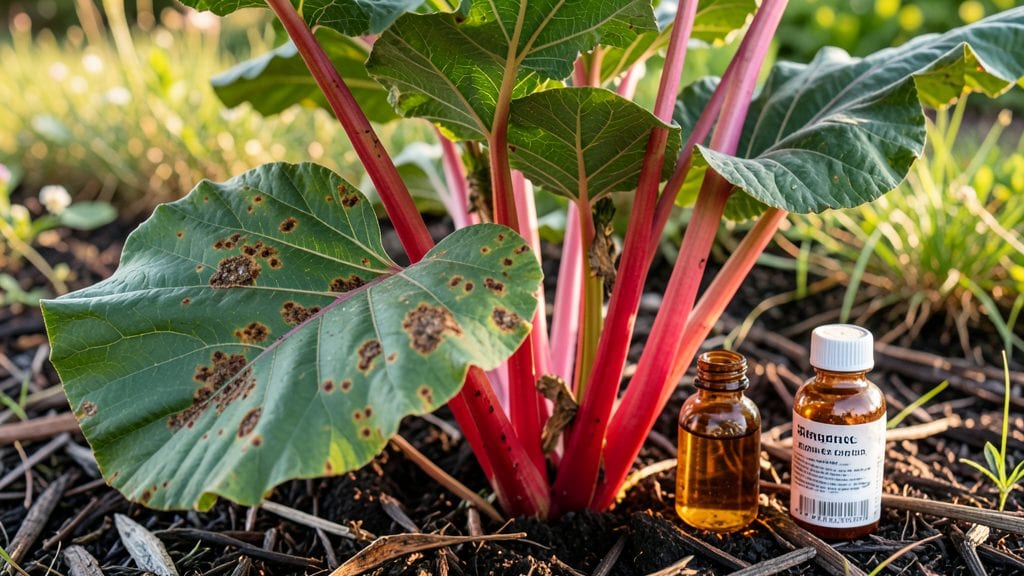
Rhubarb plant diseases can turn your lush stalks into sad, spotted messes in weeks—unless you catch them early. 🌱 I’ve seen crown rot turn a thriving patch into a mushy disaster, and rust leave leaves looking like they’ve been dusted with rusty confetti.
The key? Knowing what to watch for before it’s too late.
Most problems start with water or crowded plants—too much moisture or too little airflow creates the perfect fungal party. You’ll spot brown, sunken patches on stalks (crown rot), orange pustules on leaves (rust), or tiny black dots (bacterial leaf spot).
The fix? Space plants 2 feet apart, water at the base, and clean up debris—no excuses for sloppy gardens.
📚 In This Guide
- What you need
- Instructions
- Tips and common mistakes
- Wrapping up and next steps
What you need
- ● Gloves – Nitrile or rubber gloves (2 pairs) to protect your hands from soil, sap, and pathogens.
- ● Hand trowel – Stainless steel, 6-8 inches for digging around roots and inspecting soil.
- ● Pruners – Sharp, sterilized bypass pruners for trimming infected leaves or stems.
- ● Spray bottle – 16 oz, with a fine mist nozzle for applying fungicides or homemade sprays.
- ● Hose with nozzle – For rinsing tools and plants before/after treatment.
- ● Disinfectant – 70% isopropyl alcohol or bleach solution (1 part bleach to 9 parts water) for sterilizing tools.
- ● Plastic bags or buckets – 2-3 gallon-sized for collecting diseased plant debris.
- ● Fungicide – Copper-based (e.g., Bordeaux mixture) or sulfur-based (e.g., lime-sulfur) for severe infections.
- ● pH test kit – To check soil acidity (ideal range: 5.5–6.5 for rhubarb).
- ● Notebook & pen – For recording symptoms, treatments, and progress.
- ● Magnifying glass – For closely inspecting tiny fungal spores or lesions.
- ● Digital camera – To document symptoms before/after treatment.
- ● Compost bin – For safely disposing of infected plant material (avoid adding to garden compost).
- ● Organic fungicides – Neem oil, baking soda spray, or hydrogen peroxide (3%) for mild cases.
- ● Soil moisture meter – To monitor irrigation and prevent overwatering.
How to identify and treat rhubarb fungal diseases
Rhubarb's striking leaves can hide serious fungal threats—here's how to spot and stop them before they spread.
🌿 Step 1: Inspect Plants for Early Signs
Start by examining the undersides of leaves for powdery white or grayish spots—classic signs of powdery mildew or leaf spot diseases. Run your fingers gently over the foliage; you'll feel a fuzzy texture if mildew is present. Check the leaf veins too—they may show yellowing or browning when rust or crown rot takes hold.
Look at the crown area (where stems meet the soil) for blackened or mushy tissue—this signals crown rot, a deadly fungal infection. If you see orange pustules on leaves, that's rust fungus, which weakens plants over time. I always inspect after rain or heavy watering, when spores spread fastest.
💧 Step 2: Adjust Watering Practices Immediately
Overhead watering is the #1 way fungal spores splash onto leaves. Switch to drip irrigation or soaker hoses to keep foliage dry. Water early in the morning so leaves have all day to dry—never leave water sitting on leaves overnight. You'll notice fewer fungal spots within 2-3 weeks of this change alone.
If your soil drains poorly, add 1-2 inches of compost to improve aeration. Compacted soil traps moisture, creating the perfect breeding ground for crown rot. Test drainage by pouring 1 gallon of water into the bed—it should seep away within 30 minutes. If it pools, amend with sand or perlite.
✂️ Step 3: Prune and Remove Infected Plant Parts
Use sterilized pruners (wipe blades with rubbing alcohol between cuts) to remove any leaves with spots, pustules, or discoloration. Drop infected plant debris into a sealed plastic bag—never compost it, as spores can survive. Focus on outer leaves first, since they're most exposed to spores.
For crown rot, carefully dig around the base and trim away blackened or mushy tissue with clean pruners. If the rot extends more than 1 inch deep, the plant may not recover. After pruning, disinfect your tools again—fungal spores hitch rides on metal surfaces easily.
☀️ Step 4: Apply Fungicidal Sprays Preventively
Mix 1 tablespoon baking soda + 1 teaspoon horticultural oil + 1 gallon water in a spray bottle for a mild preventative. Apply every 7-10 days during wet seasons, focusing on the undersides of leaves where spores hide. For severe cases, switch to a copper fungicide (follow label rates) for better coverage.
Spray early in the morning when humidity is highest—this helps the solution stick better. Avoid spraying when temperatures exceed 85°F, as it can stress the plant. I've found that weekly applications during spring rains keep fungal pressure under control without harming the plant.
🪴 Step 5: Improve Airflow and Soil Health
Rhubarb thrives in well-spaced beds—crowded plants trap moisture and spread disease faster. Thin plants so they're 18-24 inches apart. If growing in containers, ensure pots have drainage holes and aren't overcrowded. I've seen fungal issues disappear completely after simply adding 2-3 inches of straw mulch around the base—it keeps soil cool and reduces splashback.
Boost soil health by adding composted manure or well-rotted leaf mold in early spring. Healthy plants resist disease better. Test your soil's pH—rhubarb prefers 6.0-6.8. If it's too alkaline, add sulfur to lower the pH gradually. You'll see stronger growth and fewer disease outbreaks within one growing season**.
Tips & tricks for managing rhubarb fungal diseases
Fungal diseases can turn your thriving rhubarb into a struggling plant overnight—here's how to catch them early and stop their spread.
The Early Detection Edge: I can't stress enough how important it is to inspect your rhubarb weekly, especially after rain. The undersides of leaves are where fungal spores love to hide—use a small handheld mirror to check areas you can't see directly. In Step 1, when you're looking for powdery white spots, also check for tiny black dots (fruit bodies) on the undersides, which indicate powdery mildew at its earliest stage.
Watering Wisdom: The 30-minute drainage test in Step 2 is your best friend—if water pools after 30 minutes, you've got a moisture problem. For container-grown rhubarb, I recommend using pots with at least 3 drainage holes and elevating them slightly to prevent waterlogging. In humid climates, water only in the morning and avoid overhead sprinklers completely.
Pruning Precision: When removing infected leaves in Step 3, don't just cut them off—pull them out completely from the stem. The connection point can still harbor spores. For crown rot, if you're unsure how deep the rot goes, slice into the crown with a clean knife—healthy tissue should be firm and white, while rotten tissue will be dark and mushy. Disinfect your knife between cuts with rubbing alcohol to prevent cross-contamination.
Spray Strategy: That baking soda mixture in Step 4 works wonders, but here's the pro tip: add 1 teaspoon of dish soap to help the mixture stick better. When applying copper fungicide, always follow label instructions precisely—overuse can harm your plants. Never spray when temperatures exceed 85°F, as this can actually encourage fungal growth rather than prevent it.
Pro Tips for Rhubarb Plant Diseases
- Fungal diseases can turn your thriving rhubarb into a struggling plant overnight—here's how to catch them early and stop their spread.
- The Early Detection Edge: I can't stress enough how important it is to inspect your rhubarb weekly, especially after rain.
- Watering Wisdom: The 30-minute drainage test in Step 2 is your best friend—if water pools after 30 minutes, you've got a moisture problem.
Frequently asked questions
Got questions about keeping your rhubarb plants healthy and thriving? You're not alone! Here are some of the most common concerns gardeners have when dealing with rhubarb plant diseases—plus quick answers to get you back to growing.
What are the first signs that my rhubarb plant has a fungal disease?
Watch for yellowing or brown leaves, black or crusty spots on stems, or white powdery coatings on foliage. If leaves wilt suddenly or stems ooze a dark liquid, it’s often a sign of crown rot or rust. Act fast—remove affected parts immediately to prevent spread!
When is the best time to treat rhubarb diseases?
Start early spring with preventive sprays (like copper fungicide) before symptoms appear. If you spot issues in summer or fall, treat right away—but avoid spraying when rain is forecasted. Fall cleanup (removing dead leaves) is key to stopping overwintering spores!
Are there natural remedies for rhubarb fungal diseases?
Yes! Try a baking soda spray (1 tsp baking soda + 1 quart water + a drop of soap) for powdery mildew, or neem oil (2 tbsp per gallon of water) for rust. For severe cases, compost tea can boost plant immunity. Always test on a small area first!
Can I still harvest rhubarb if it has a disease?
Only harvest healthy stalks from disease-free plants. Avoid stems with lesions, discoloration, or mold. If the crown or roots are infected, discard the whole plant to prevent contamination. Sterilize pruners with rubbing alcohol between cuts!
What should I do with my rhubarb plant if it’s beyond saving?
Dig up the entire plant, bag and dispose of it (don’t compost infected material), and sterilize the soil with a 10% bleach solution (1 part bleach to 9 parts water). Wait 2–3 weeks before replanting to break disease cycles. Rotate crops if possible!
Wrapping up and next steps
Identifying and treating rhubarb plant diseases early can save your harvest—and your sanity! 🌱 From Botrytis blight to powdery mildew, knowledge is your best defense. With the right tools, prevention strategies, and quick action, you can keep your rhubarb thriving for years.
Ready to take charge? Start by inspecting your plants weekly and apply the treatments you’ve learned—your future rhubarb pies will thank you! 🥧