
Planting
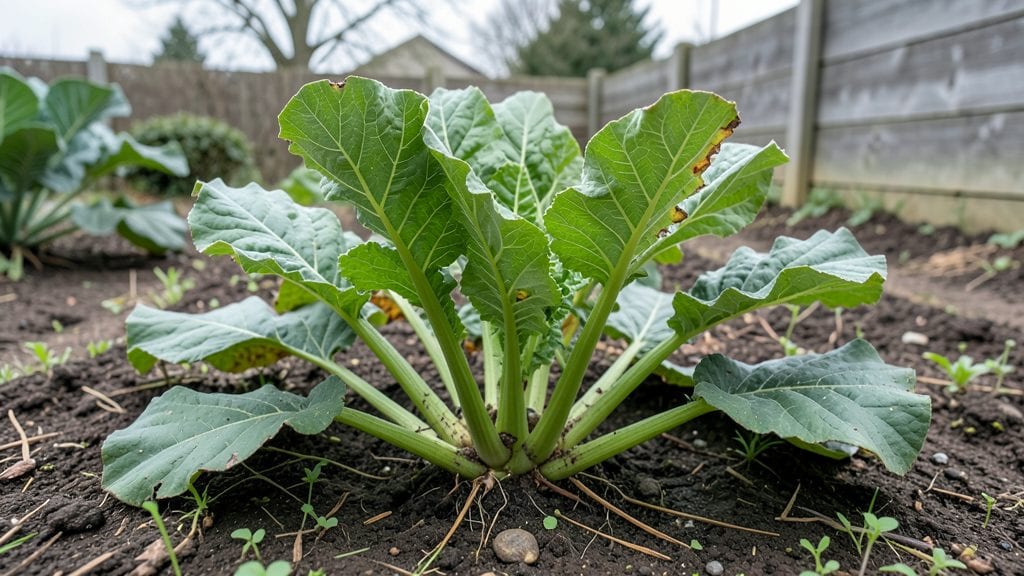
Your rhubarb plant size could be the secret behind that stubbornly small harvest—so let’s dig into why it’s not reaching its full potential. Rhubarb plants mature into 3-foot-tall giants with a 3-foot-wide spread, and crowding them turns your harvest into a frustrating guessing game.
I learned this the hard way when my first rhubarb crowns fought for space, producing skinny stalks instead of the plump, vibrant ones I wanted.
The secret to maximizing yield isn’t just planting rhubarb—it’s giving each plant 36 inches of space in all directions. That means no cramming three crowns where one belongs, no matter how tempting it is to squeeze them into tight corners.
Dwarf varieties exist, but they’re rare and often underperform compared to standard types like ‘Victoria’ or ‘Strawberry.’ Instead, focus on proper spacing and crown division every 3-4 years to keep plants vigorous.
When done right, you’ll harvest dozens of stalks per plant by year three, with stalks thick enough to snap cleanly and sweet enough to use fresh. The key is pruning old stalks at the base after harvest and avoiding over-fertilizing—rhubarb rewards patience, not force.
Even in small gardens, a single well-spaced plant can outproduce a cluster of neglected ones.
Here’s the game-changer: use rhubarb’s size to your advantage by pairing it with shallow-rooted companions like strawberries or lettuce. The broad leaves provide shade for heat-sensitive plants, while the stalks give you a spring harvest that lasts until summer’s heat sets in. Now, let’s talk spacing rules that actually work.
📚 In This Guide
- What you need
- Instructions
- Tips and common mistakes
- Wrapping up and next steps
What you need
- ● Rhubarb Crowns: 1–3 healthy, disease-free crowns (choose varieties like ‘Victoria’ or ‘Strawberry’ for best results).
- ● Well-draining soil: Loamy, slightly acidic soil (pH 6.0–6.8). Amend heavy clay with compost or sand if needed.
- ● Compost or organic matter: 3–5 gallons per planting hole to enrich soil fertility.
- ● Balanced fertilizer: 10-10-10 or 5-10-10 (apply sparingly—rhubarb is low-maintenance!).
- ● Mulch: Straw or wood chips (2–3 inches) to retain moisture and suppress weeds.
- ● Watering can or hose: With a gentle spray nozzle for even hydration.
- ● Garden gloves: To protect your hands while handling soil and plants.
- ● Measuring tape or ruler: For precise rhubarb plant size spacing (3–4 feet apart for mature plants).
- ● Plant markers: To label varieties and track growth.
- ● Row covers or frost cloth: For young plants during early spring or late fall.
- ● Pruning shears: For shaping and removing dead leaves.
- ● Soil pH test kit: To ensure your soil meets rhubarb’s ideal conditions.
- ● Drip irrigation system: For automated, consistent watering (great for larger gardens!).
How to determine and optimize rhubarb plant size for maximum yield
Rhubarb thrives when given the right space—too crowded, and yields suffer; too sparse, and you waste garden real estate.
Understand Mature Rhubarb Crown Size and Spacing Needs
Mature rhubarb crowns spread 3-4 feet wide and develop deep, sturdy roots that need room to expand. Planting them 3-4 feet apart in all directions ensures each plant has enough space for robust growth without competing for nutrients. I always mark the spacing with stakes before planting—this prevents overcrowding, which leads to small, weak stalks and increased disease risk.
The first year, crowns stay compact, but by year three, they’ll spread aggressively if unchecked. If you’re planting multiple crowns, arrange them in a grid pattern rather than rows. This creates a more efficient use of space while allowing airflow between plants, reducing the likelihood of fungal issues like crown rot.
Adjust Planting Depth and Soil Preparation for Optimal Growth
Rhubarb crowns should sit just below the soil surface—no deeper than 1 inch—with the buds facing upward. Burying them too deeply suffocates the crown, while planting too shallowly exposes them to temperature fluctuations. I use the 3-gallon potting mix (if pre-potting) to create a nutrient-rich base before setting the crown in place.
Amend the soil with 2-3 inches of compost mixed into the top 6 inches of soil. Rhubarb prefers well-draining, slightly acidic soil (pH 6.0-6.8). If your soil is heavy clay, incorporate sand or perlite to improve drainage. Test the soil before planting—amending after the fact is far more difficult once the crown is established.
Monitor Crown Expansion and Divide Overcrowded Plants
After 3-4 years, rhubarb crowns naturally divide, producing off-shoots that compete for space and nutrients. When you see multiple crown sections pushing through the soil, it’s time to dig and separate them. I wait until early spring, just before new growth begins, to minimize stress on the plant.
Use a sharp spade to carefully lift the entire crown, then gently tease apart the sections with your hands. Each division should have at least one healthy bud and a portion of the root system. Replant the divisions 3-4 feet apart, just as you did with the original crown. This rejuvenates the parent plant and gives you new, vigorous growth for your garden.
Prune Stalks Strategically to Encourage Larger, Healthier Growth
Never harvest more than one-third of the stalks in a single season—this ensures the plant stores enough energy for next year’s growth. I always leave the thickest, most vigorous stalks to mature fully, as these produce the largest crowns. Cut stalks at the base with a clean, sharp knife, leaving the leaf crown intact—the leaves photosynthesize and feed the roots.
If stalks become woody or fibrous, they’re past their prime and should be removed entirely. This prevents the plant from wasting energy on low-quality growth. After harvesting, apply a 1-inch layer of mulch around the base to retain moisture and suppress weeds. Avoid piling mulch directly against the crown, as this can cause rot.
Plan for Long-Term Garden Layout to Maximize Space Efficiency
Rhubarb is a perennial that thrives for 10-15 years with proper care, so plan its placement carefully. Group rhubarb plants near support structures like trellises or fences if you’re growing them in USDA Zones 3-7, where winter protection is needed. In warmer zones, they benefit from partial shade in the hottest afternoons.
If space is limited, consider container growing—a 5-gallon pot can accommodate a single crown for 2-3 years before it outgrows the space. Just ensure the container has drainage holes and is at least 12 inches deep. Over time, you’ll find the right balance between yield and garden layout, ensuring your rhubarb patch remains productive for decades.
Tips & tricks for perfect rhubarb plant spacing and growth
Getting your rhubarb plants sized and spaced just right is the secret to decades of bountiful harvests. These practical insights will help you avoid common pitfalls and optimize your garden layout for maximum productivity.
Spacing Strategy: The 3-4 foot spacing mentioned in Step 1 isn't arbitrary—it accounts for the crown's aggressive spread after just three years. I've found that using wooden stakes to mark these boundaries before planting prevents overcrowding, which is the number one reason rhubarb yields decline. Trust me, the extra 10 minutes of marking pays off when you're harvesting thick, vibrant stalks instead of spindly ones.
Soil Preparation Insight: When amending your soil with 2-3 inches of compost as directed in Step 2, focus on creating a loose, crumbly texture in the top 6 inches. I've had the best results using a mix of compost and coarse sand (about 50/50) for heavy clay soils. This improves drainage while maintaining moisture—rhubarb roots need both. Don't skimp on the compost; established plants can deplete nutrients surprisingly quickly.
Division Timing: The early spring timing for dividing crowded plants in Step 3 is critical because it gives new divisions time to establish roots before summer heat. I wait until I see at least three healthy buds on each division before replanting. This ensures vigorous growth rather than stunted plants. Pro tip: Water divisions thoroughly immediately after replanting to help them recover from the transplant shock.
Pruning Precision: When harvesting no more than one-third of stalks as recommended in Step 4, prioritize the thickest, most upright stalks first. These are the ones that will produce the largest crowns next season. I always leave at least six stalks per plant to ensure the crown continues growing. For woody stalks, cut them at the base and compost them—they're too tough for cooking but still provide nutrients back to your garden.
Pro Tips for Rhubarb Plant Size
- Getting your rhubarb plants sized and spaced just right is the secret to decades of bountiful harvests.
- Spacing Strategy: The 3-4 foot spacing mentioned in Step 1 isn't arbitrary—it accounts for the crown's aggressive spread after just three years.
- Soil Preparation Insight: When amending your soil with 2-3 inches of compost as directed in Step 2, focus on creating a loose, crumbly texture in the top 6 inches.
Frequently asked questions
Got questions about rhubarb plant size?
Here are the most common ones—plus quick, actionable answers to help you grow a thriving patch!
How big should a rhubarb plant get before harvesting?
A mature rhubarb plant typically reaches 2–3 feet tall and spreads 3–4 feet wide by its third year. Wait until the plant is at least 2 years old before harvesting—this ensures strong roots for future growth. Early harvesting can stunt the plant’s size and yield.
How long does it take for rhubarb to reach full size?
Rhubarb is patient! It takes 3–4 years to reach its full mature size and peak productivity. In the first year, focus on establishing roots. By year 3, you’ll see significant growth—expect 3–5 stalks per plant if spaced correctly (18–24 inches apart).
What’s the best spacing for rhubarb plants to maximize size and yield?
Space rhubarb plants 24–36 inches apart in rows 3–4 feet apart for optimal airflow and sunlight. Crowding stunts growth and increases disease risk. Pro tip: If space is tight, opt for 18-inch spacing but expect slightly smaller plants and lower yields.
Does cold weather affect rhubarb plant size?
Actually, cold climates help rhubarb thrive! It’s a hardy perennial that grows best in USDA zones 3–8. Cold winters promote dormancy, which strengthens the plant’s root system for bigger growth the following spring. Just ensure it gets full sun (6+ hours/day) to fuel its size.
Can I grow rhubarb in containers, and will it stay small?
Yes! Rhubarb adapts well to 18–24-inch-wide containers with deep roots (12+ inches). However, container-grown rhubarb will stay smaller than in-ground plants—expect 1–2 stalks per plant instead of 3–5. Use well-draining soil and fertilize lightly to support growth.
Wrapping up and next steps
Understanding rhubarb plant size and spacing is the secret to a thriving, high-yield garden! With the right techniques—like choosing the perfect location, spacing plants 3-4 feet apart, and providing consistent care—you’ll enjoy plump, vibrant stalks for years. Remember, patience pays off—rhubarb rewards long-term commitment with bountiful harvests!
Ready to grow? Start small—plant just one or two crowns this season, master the spacing, and expand next year. Happy gardening! 🌱✨