
Planting
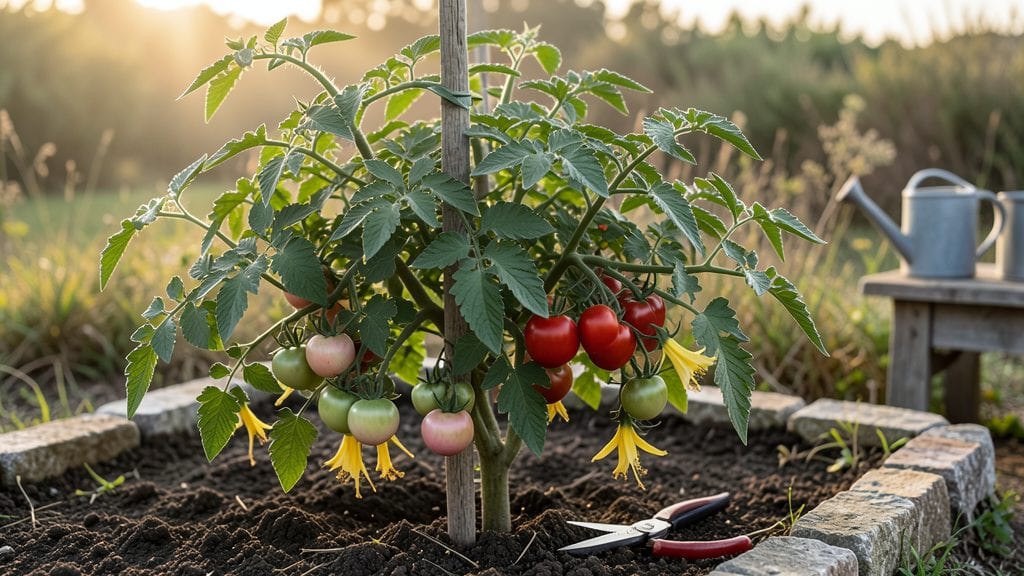
A tomato plant's lifespan from seed to harvest typically ranges between 60 to 120 days, with faster-maturing determinate varieties reaching maturity in 50–70 days and longer-lived indeterminate types taking 70–120 days. Even with optimal care, these timelines reflect the plant's natural growth cycle and seasonal constraints.
A tomato plant's growth cycle is a carefully timed process where each stage builds on the last. 🌱 The germination phase kicks off in just 5–14 days, setting the foundation for what follows, while the flowering stage (1–2 weeks) marks the shift from foliage to fruit production.
What many gardeners overlook is how temperature and sunlight directly impact these timelines—cool weather can stall growth, while consistent warmth accelerates it.
For example, indeterminate varieties like 'Sungold' may take nearly 120 days to bear fruit, but with proper trellising and pruning, they reward you with continuous harvests long after determinate types have finished.
💡 In This Article
- Tomato Plant Growth Stages and Their Duration
- Extending Tomato Plant Productivity Beyond Natural Lifespan
Tomato plant growth stages and their duration
Here's what's actually happening during each phase of a tomato plant's life cycle. The journey begins with germination, where seeds absorb moisture and swell within 24–48 hours before sprouting. This stage lasts 5–14 days, with optimal soil temperatures of 70–85°F accelerating the process.
Too cool (50°F or below) can delay germination by weeks, while excessive heat (> 90°F) risks damping off—a fungal disease that kills seedlings.
Once sprouted, the seedling stage (2–3 weeks) focuses on developing a sturdy root system and first true leaves. This is when light becomes critical—6–8 hours of direct sunlight daily prevents leggy, weak stems.
Determinate varieties like 'Roma' grow compactly, while indeterminate types like 'Better Boy' stretch aggressively, requiring trellising within 3–4 weeks to avoid sprawling. The key factor here is photosynthesis efficiency: seedlings need 1,000–1,500 foot-candles of light to thrive.
At 4–6 weeks, the plant enters flowering, a 1–2 week phase where energy shifts from foliage to reproductive growth. Yellow flower clusters appear first, followed by tiny green fruits. Temperature matters here too: ideal ranges are 70–85°F during the day and 60–70°F at night.
Below 55°F, flowers may drop—a condition called "blossom drop" that wastes energy. This is why gardeners in cooler climates use row covers or start plants indoors.
The fruiting stage (4–8 weeks) is where the magic happens, with fruits growing from 1 inch to full size in just 2–3 weeks for determinate types. Indeterminate varieties continue producing for months, but each fruit requires 20–30 days to mature.
Sunlight intensity during this phase directly impacts sugar content—full sun (>6 hours daily) yields tomatoes with 4–5% sugar, while partial shade can drop this to 2–3%. The plant's vascular system also works overtime, transporting water and nutrients at rates up to 10x faster than during vegetative growth.
Finally, senescence begins when the plant's energy reserves deplete. Determinate types often die back entirely after their main harvest, while indeterminate varieties may linger until frost kills them.
What most people don't realize is that even dying plants can produce a final flush of fruits—sometimes sweeter as the plant concentrates sugars. This is why experienced growers leave some indeterminate plants until first frost, even if they've stopped producing heavily.
Understanding these stages helps explain why some gardeners get frustrated with slow progress. For instance, a 10-day delay in germination due to cool soil can set back the entire 60-day cycle by nearly 20%.
The science behind this involves photoperiodism (light sensitivity) and thermoperiodism (temperature sensitivity), both of which tomato plants use to time their growth phases. 🌞