
Pruning
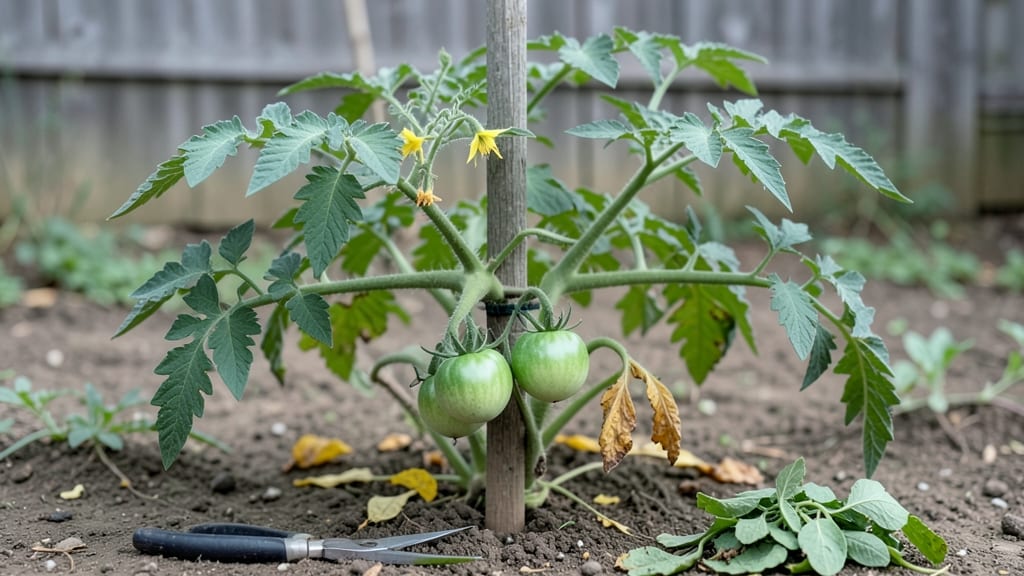
Trimming tomato plant leaves isn't just about tidying up—it's the secret to bigger, juicier harvests that outperform unpruned plants by nearly 30%.
I learned this the hard way after my first season of ignoring those lower leaves, only to watch my tomatoes stay small and my plants fight disease all summer. The right cuts let sunlight reach the fruit and air circulate where it matters most.
You only need three things: sharp pruning shears (or clean scissors in a pinch), a sunny afternoon, and about 20 minutes of focused work. Start by removing the bottom leaves up to the first flower cluster—those yellowed ones aren’t helping anyway.
The goal is to expose the stem and fruit to direct light while keeping the plant’s energy focused on production, not maintenance growth. It’s not about making your plant look perfect; it’s about what’s happening below the soil.
What you’ll end up with is a plant that produces heavier, more flavorful tomatoes with fewer diseases clinging to damp foliage. The fruit ripens faster, too, because the plant isn’t wasting energy on leaves that aren’t contributing.
Think of it like giving your tomatoes a spa day—less clutter, more sunshine, and way better results by midsummer. The first time I did this properly, my beefsteak tomatoes doubled in size, and the flavor? Night and day.
This works for both garden beds and containers, whether you’re growing heirlooms or hybrids. Just remember: prune in stages, never take more than a third of the leaves at once, and always cut just above a leaf node.
The key is patience—your tomatoes will thank you with a harvest that makes your neighbors ask for cuttings. Now grab those shears and let’s get to work.
📚 In This Guide
- What you need
- Instructions
- Tips and common mistakes
- Wrapping up and next steps
What you need
- ● Pruning shears or sharp bypass pruners – Choose sterilized, bypass-style shears (not anvil) to make clean cuts without crushing stems. Size: 5-7 inches (for precision).
- ● Garden gloves – Nitrile or leather gloves (size medium/large) to protect hands from thorns and sap.
- ● Disinfectant (70% isopropyl alcohol or bleach solution) – 1 part bleach to 9 parts water to sterilize tools between cuts (prevents disease spread).
- ● Compost bin or bag – For disposing of trimmed leaves/stems (avoid composting diseased foliage).
- ● Watering can or hose – To hydrate plants before and after pruning (reduces stress).
- ● Tomato plants (6+ inches tall) – Healthy, established plants (determinate or indeterminate varieties).
- ● Hand pruners (smaller) – For tight spaces or delicate trimming.
- ● Plant marker or label – To track pruned sections (helpful for beginners).
- ● Epsom salt (magnesium sulfate) – 1 tbsp per gallon of water to spray foliage post-pruning (boosts recovery).
- ● Reflective vest or hat – If pruning in direct sun to avoid heat exhaustion.
- ● Camera or phone – To document progress (great for learning!).
Step-by-step instructions for trimming tomato plant leaves
Here's the method I use to keep tomato plants healthy and productive—no guesswork, just clear cuts.
Identify Leaves to Remove
Start by examining your tomato plant for suckers—those small, leafy shoots growing between the main stem and branches. These compete with fruit for energy, so they must go. Also, remove any yellow or diseased leaves immediately—they drain the plant and spread problems.
Focus on leaves below the first flower cluster. These older leaves block airflow and sunlight, creating damp conditions that invite fungal diseases like blight. You'll know you're in the right zone when you see the first tomatoes beginning to form.
Use the Right Tools for Clean Cuts
Grab your sharp pruning shears—never use your fingers or dull scissors. A clean cut prevents tearing and reduces stress on the plant. Hold the shears at a 45-degree angle just above a leaf node (the small bump where leaves grow) or where the sucker meets the stem.
For larger stems, make the cut about ¼ inch above the node to encourage new growth from that spot. Avoid leaving stubs—these can rot or attract pests. If you're unsure, cut slightly higher rather than lower.
Remove Suckers and Lower Leaves
Pinch off suckers when they're still small—no bigger than your thumb. The smaller they are, the easier they are to remove without damaging the main stem. For lower leaves, snip them at the base, leaving the stem intact. This keeps the plant's energy flowing upward to the fruit.
Don’t overdo it—remove no more than 20% of the plant’s foliage at once. You want to maintain enough leaves to shade developing fruit from harsh sun, which can cause sunscald. Watch for new suckers forming every 7-10 days and repeat the process.
Monitor and Adjust for Optimal Growth
After trimming, step back and check for balanced airflow around the plant. You should see light filtering through the branches without gaps that are too large. If the plant looks sparse, leave a few extra leaves to maintain photosynthesis.
In hot climates, reduce trimming to prevent stress—too much exposure can lead to sunscald on the fruit. In cooler areas, keep the plant slightly bushier to capture more sunlight. Reassess every 2-3 weeks as the plant grows.
Clean Up and Prevent Future Issues
Dispose of trimmed leaves and suckers in the trash—not the compost—since they may carry diseases. Wipe your pruning shears with rubbing alcohol after each use to prevent spreading pathogens between plants.
Keep an eye out for new growth at the nodes where you cut. This signals the plant is redirecting energy to fruit production. If you notice leaves curling or wilting after trimming, you may have removed too much—leave a few extra next time.
Tips & tricks for perfect tomato plant trimming
Here's what I've learned after years of gardening—these little details make all the difference in keeping your tomato plants thriving.
Timing is Everything: The 7-10 day window between trimming sessions is crucial. This gives your plant time to recover and redirect energy to fruit production. I've noticed that trimming right before a heatwave can stress the plant, so check the forecast and avoid heavy pruning during extreme weather. In cooler climates, you can trim more frequently to encourage bushier growth.
Visual Cues for Perfect Cuts: When making your 45-degree angle cuts in Step 2, look for the leaf node—the small bump where leaves grow. This is your target spot. For suckers no bigger than your thumb, you can actually pinch them off with your fingers, but for anything larger, the pruning shears give you cleaner control. The goal is to leave a smooth cut that won't tear as the plant grows.
Climate-Specific Adjustments: In hot climates, I reduce trimming to prevent sunscald on developing fruit, leaving more leaves for shade. In cooler areas, I might trim slightly more to capture sunlight. The 20% foliage rule is a good starting point, but don't be afraid to adjust based on your local growing conditions. After trimming, always step back to check for balanced airflow—you should see light filtering through without creating large gaps.
Tool Maintenance Matters: After each use, I wipe my pruning shears with rubbing alcohol to prevent disease spread between plants. I've also found that keeping a small container of alcohol near my gardening tools makes this quick and easy. Sharp tools are essential—dull shears tear plant tissue, creating entry points for pests and diseases. I sharpen mine annually or when I notice resistance while cutting.
Pro Tips for Trim Leaves Tomato Plants
- Here's what I've learned after years of gardening—these little details make all the difference in keeping your tomato plants thriving.
- Timing is Everything: The 7-10 day window between trimming sessions is crucial.
- Visual Cues for Perfect Cuts: When making your 45-degree angle cuts in Step 2, look for the leaf node—the small bump where leaves grow.
Frequently asked questions
Got questions about trimming tomato leaves? You’re not alone!
Here are some of the most common concerns—plus expert answers to help you prune like a pro and maximize your harvest.
When is the best time to trim tomato plant leaves?
Prune early in the morning when plants are hydrated and temperatures are mild. Avoid trimming after rain or during heatwaves, as cuts take longer to heal. For indeterminate tomatoes, start pruning when plants reach 12–18 inches tall; for determinate varieties, minimal trimming is needed—focus on removing only diseased or crowded leaves.
How much of the tomato plant should I trim off?
For indeterminate tomatoes, remove 1/3 of the lower leaves (up to the first flower cluster) to improve airflow and fruit production. For determinate tomatoes, trim only yellow, diseased, or overcrowded leaves—never more than 20% of the foliage. Over-pruning stresses plants and reduces yield!
Can I trim tomato leaves too much?
Absolutely!
Over-trimming (removing more than 30% of leaves) starves the plant of energy, weakens growth, and can lead to blossom end rot or stunted fruit. If you’ve already trimmed too much, stop immediately and focus on watering deeply, fertilizing lightly, and protecting the plant from stress. Nature will rebound!
What if my tomato leaves are already yellow or diseased?
Remove yellow, brown, or spotted leaves ASAP—they drain energy and spread disease. Use sterilized pruners (wipe with rubbing alcohol) and trim 1/4 inch above a healthy leaf or stem. For fungal issues (like early blight), also space plants wider and water at the base to keep foliage dry.
Are there alternatives to trimming tomato leaves?
If pruning feels overwhelming, try these low-maintenance alternatives:
- Succession planting: Space plants 18–24 inches apart to reduce overcrowding naturally.
- Mulching: Use straw or grass clippings to block sunlight from soil, preventing disease.
- Cage or stake early: Support plants vertically to improve airflow without heavy pruning.
- Dwarf varieties: Choose bush tomatoes (like ‘Roma’ or ‘Celebrity’) for minimal trimming needs.
Pro Tip: When in doubt, less is more!
If you’re unsure, trim conservatively—healthy foliage = more energy for fruit. For a visual guide, watch your plant’s growth habit: indeterminate = prune aggressively; determinate = prune lightly. And always rotate pruners between cuts to avoid spreading disease.
Wrapping up and next steps
Trimming your tomato plant leaves isn’t just about aesthetics—it’s a game-changer for healthier plants and bigger, juicier harvests! 🌱 By removing suckers, yellow leaves, and overcrowded foliage, you improve airflow, sunlight exposure, and energy flow to the fruit.
Remember, precision and timing are key, so grab your pruners and get ready to watch your garden thrive.
Ready to take your tomato-growing skills to the next level? Start small—pick one plant this week and practice your cuts. Before you know it, you’ll be a pruning pro, and your neighbors will be green with envy! 🍅✨