Pruning
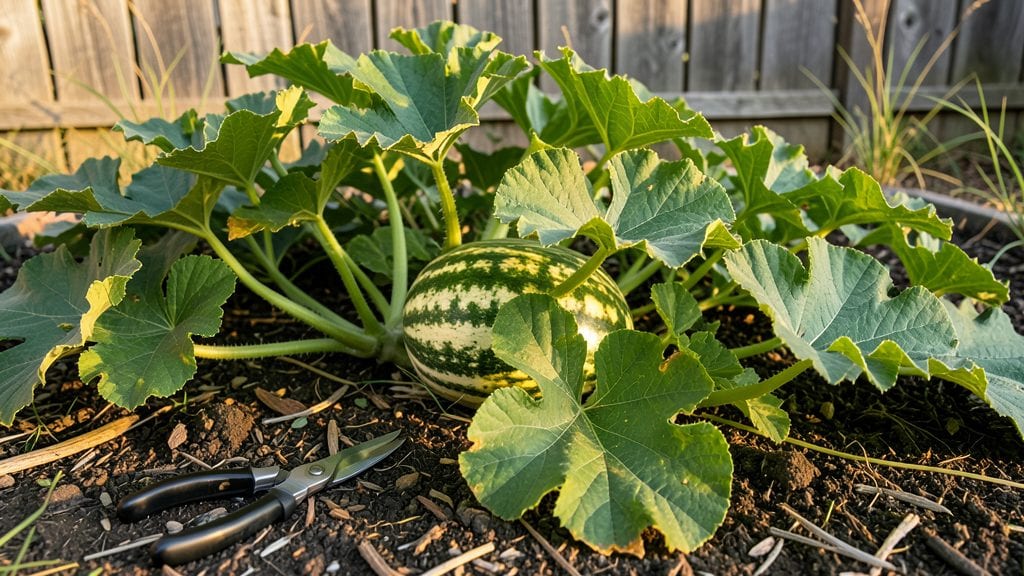
Trimming watermelon plants isn't just about keeping them tidy—it’s the secret to growing bigger, sweeter fruit while preventing disease and pests. ✨ I learned the hard way that letting vines sprawl wild means smaller melons and more rot.
The right cuts redirect energy to fruit production, and the difference in harvest size is shocking.
You’ll need a sharp pair of pruning shears, gloves, and a sunny morning to work. Focus on three key areas: removing weak suckers (those side shoots near the main vine), trimming excess runners (the long vines), and thinning crowded fruit.
Most gardeners skip the last step, but it’s what turns 6-inch melons into 20-pound monsters.
After trimming, your plants will send energy to fewer, larger fruits instead of spreading everywhere. Airflow improves, so diseases like powdery mildew stay away, and the vines stay strong enough to support heavy melons.
By late summer, you’ll be harvesting fruit that actually fits in your fridge—not just a few sad little ones.
This method works for both bush and vine types, though bush varieties need less aggressive trimming. Start early in the season, and you’ll see the payoff by harvest time. The first year I tried this, my watermelons averaged 12 pounds each—double what I’d grown before.
📚 In This Guide
- What you need
- Instructions
- Tips and common mistakes
- Wrapping up and next steps
What you need
- ● Pruning shears or sharp bypass pruners – Choose sterilized, sharp tools (avoid dull blades to prevent tearing plant tissue). A 5-inch pair works well for most gardeners.
- ○ Gloves (optional but recommended) – Nitrile or leather gloves protect your hands from thorns and dirt. A pair with reinforced palms is ideal.
- ● Disinfectant (rubbing alcohol or bleach solution) – Clean tools before and after use to prevent disease spread (mix 1 part bleach to 9 parts water for a quick wipe-down).
- ● Garden twine or plant ties – 10-15 feet of twine (or soft plant ties) to support vines post-pruning.
- ● Watering can or hose with a gentle spray nozzle – Keep plants hydrated before and after trimming to reduce stress.
- ● Sharp knife or hedge shears (backup) – For larger stems, a clean, sharp knife can be a handy backup to your pruners.
- ● Plant growth regulator (e.g., hydrogen peroxide spray) – Diluted 3% hydrogen peroxide (1 tsp per gallon of water) can help heal cuts faster.
- ● Garden journal or markers – Label pruned sections or track growth progress with waterproof markers.
- ● Mulch (straw or wood chips) – Spread 2-3 inches around the base to retain moisture and suppress weeds.
- ● Sunhat and sunscreen – Because no one wants a sunburn while tending to their melons! 😎
Step-by-step guide to trimming watermelon plants for bigger fruit
Here's how I shape my vines to keep energy focused on producing fewer, sweeter melons.
✂️ Step 1: Remove Suckers for Stronger Vines
Suckers are those little shoots that grow where the main vine meets a leaf or branch. These energy vampires steal nutrients from your fruit. I trim them off with clean, sharp pruning shears—never tear them by hand, or you'll damage the main stem. Start when your plants are about 4-6 inches tall and keep at it every 7-10 days until flowering begins.
Look for suckers that are less than 2 inches tall—these are easiest to remove. If you wait until they're bigger, you'll be pruning more aggressively later. Always cut at a 45-degree angle just above a leaf node to encourage healthy regrowth. I promise, your plants will thank you with bigger melons.
🌿 Step 2: Prune Excess Leaves Near Fruit
Once flowers appear, focus on the leaves closest to your developing fruit. Remove 1-2 older leaves per vine every 2 weeks to improve airflow and sunlight exposure. This isn't about stripping the plant—just clearing the immediate area around each melon. I target leaves that are yellowing or shading the fruit, as these are already using more energy than they're giving back.
Don't go overboard—you want to maintain some shade for the fruit itself. Aim to keep 3-4 healthy leaves per melon to support its growth. The goal is balance: enough foliage for photosynthesis, but not so much that it's competing with your fruit for energy. You'll see the melons grow faster and develop a deeper color when they're getting proper light.
☀️ Step 3: Thin Fruit for Maximum Size
Here's where it gets strategic: when your plants have 3-5 melons developing, remove the smallest ones. I always keep the largest, healthiest-looking fruit and trim the rest down to the vine. This might sound harsh, but it forces the plant to put all its energy into fewer, bigger melons. Do this when fruit are about golf-ball sized—before they've committed too much energy to growth.
Leave 2-3 melons per vine maximum—any more and they'll all stay small. After thinning, give your plants a light watering to help them recover. You'll notice the remaining melons swell rapidly in the weeks after thinning. Real talk: this step separates homegrown melons from store-bought ones in terms of size and sweetness.
Tips & tricks for perfect watermelon plant trimming
These game-changing tips will help you maximize your watermelon harvest with minimal effort—and avoid common pruning mistakes that waste energy.
The Timing Factor: Start trimming suckers when your plants reach 4-6 inches tall—this is when they're most vulnerable to stealing nutrients. I've seen gardeners wait too long, and suddenly they're fighting overgrown vines instead of harvesting melons. Consistency is key: stick to that 7-10 day schedule until flowering begins. The earlier you start, the more dramatic the size difference in your fruit.
Tool Intelligence: Never use your hands or dull shears—always use clean, sharp pruning shears. Dull tools crush stems and invite disease. I keep a small bottle of rubbing alcohol handy to wipe down my shears between cuts. That 45-degree angle cut you make just above a leaf node? It's not just for looks—it encourages new growth from that exact spot, giving your plant more energy pathways to work with.
Leaf Balance Strategy: When pruning leaves near fruit in Step 2, focus on the older, yellowing leaves first—they're already using more energy than they produce. I like to leave 3-4 healthy leaves per melon to maintain that perfect balance. Think of it like giving your melons their own little sunroom: enough shade to stay cool but enough light to ripen properly. Too many leaves? Your melons stay small. Too few? They scorch.
Thinning with Purpose: The golf-ball sized fruit rule is non-negotiable for maximum size. I've seen gardeners hesitate at this step, thinking they're being wasteful—but trust me, those tiny melons would've stayed small anyway. When you thin to 2-3 melons per vine, you're essentially telling your plant, "Focus all your energy here." That light watering afterward? It's not just about hydration—it's about signaling to the plant that you've made a change and it's time to redirect resources.
Pro Tips for Trimming Watermelon Plants
- These game-changing tips will help you maximize your watermelon harvest with minimal effort—and avoid common pruning mistakes that waste energy.
- The Timing Factor: Start trimming suckers when your plants reach 4-6 inches tall—this is when they're most vulnerable to stealing nutrients.
- Tool Intelligence: Never use your hands or dull shears—always use clean, sharp pruning shears.
Frequently asked questions
Got questions about trimming watermelon plants?
You’re not alone! Here are answers to the most common concerns—from timing to tools—to help you grow bigger, healthier melons with ease.
When is the best time to trim watermelon plants?
Trim watermelon plants early in the morning when the air is cool and humid—this reduces stress on the plant. Focus on trimming before flowering (to encourage vine growth) or after fruit set (to redirect energy to existing melons). Avoid trimming during extreme heat or drought, as this can shock the plant.
What tools do I need for trimming watermelon plants?
Use clean, sharp pruning shears (or sterilized scissors) to make precise cuts just above a leaf node (where leaves and vines meet). Avoid tearing the vine—this can introduce disease. A glove and disinfectant (like rubbing alcohol) are also handy to prevent spreading pests or bacteria.
How much should I trim watermelon vines?
Remove 10-20% of the vine’s length if overgrown, focusing on weak or leggy growth. Cut back side vines (suckers) that emerge from the main stem to boost fruit size. Leave 3-5 healthy vines per plant to support melon growth—more vines can lead to smaller fruit.
What if I trim too much? Can I fix it?
If you over-trim, don’t panic! Watermelons are resilient. Fertilize with compost or a balanced 10-10-10 mix to recover, and water deeply to reduce shock. Avoid trimming again for 2-3 weeks—let the plant focus on regrowing. Yellowing leaves or stunted growth may signal stress, but healthy vines should bounce back.
Can I trim watermelon plants in hot or cold weather?
Avoid trimming during heatwaves (above 90°F/32°C) or cold snaps (below 50°F/10°C), as this can stress the plant. Opt for mild, cloudy days to minimize transplant shock. If you must trim in heat, do it at dusk and provide shade afterward to help recovery.
Pro Tip:
Label your plants! If you’re growing multiple varieties, mark vines with stakes before trimming to avoid confusion. This helps track growth patterns and ensures you’re pruning the right sections for each type.
Wrapping up and next steps
Trimming your watermelon plants isn’t just about keeping them tidy—it’s a game-changer for bigger, healthier fruit! 🌱 By removing suckers, pruning vines, and clearing dead growth, you’re giving your plants the energy they need to focus on what matters most: juicy, vine-ripened melons.
With these simple steps, you’ll be well on your way to a bountiful harvest.
Ready to put your new skills to the test? Grab your pruners and head to the garden today! Start small, observe how your plants respond, and soon you’ll be a watermelon-trimming pro. Happy growing! 🍉✨