
Watering
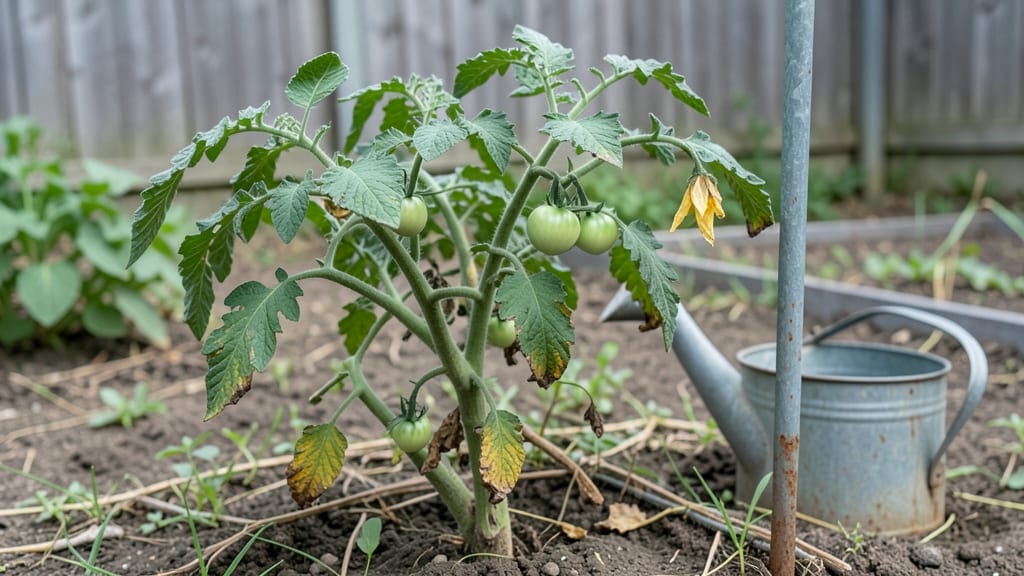
Spotting an under watered tomato plant pictures can be heartbreaking—but here’s how to revive your drooping vines before it’s too late. Underwatered tomato plants reveal themselves in crispy leaf edges and dry, cracking soil—signs I’ve seen too many times after skipping watering days.
The good news? You can revive them fast with the right approach, and I’ll show you exactly how to spot the damage and fix it before it’s too late.
Most gardeners assume wilting means immediate death, but tomato plants bounce back surprisingly well when you catch the problem early. The key is checking soil moisture with your finger—if the top 2 inches feel bone-dry, it’s time to water deeply until it drains from the bottom.
Overhead watering tricks the roots into shallow growth, so focus on slow, deep soaks at the base instead.
Within 48 hours of proper watering, you’ll see leaves perk up and new growth emerge—proof that your plants are thirsty, not dying. For severe cases, a 3-inch layer of mulch keeps moisture locked in while shading out weeds.
The secret weapon? A consistent schedule: 1-2 inches of water per week, split into 2-3 sessions, works for most climates.
This method works for container-grown tomatoes too—just ensure pots have drainage holes and you’re watering when the top inch feels dry. Once you master this, your vines will stay lush and productive all season. Let’s get those plants drinking again!
Root Causes Of Thirsty Tomatoes
Underwatered tomato plants don’t just happen by accident—they’re usually the result of a mix of environmental, human, and plant-specific factors. If your tomatoes are looking sad, here’s why they might be crying out for water.
Tomatoes thrive on consistency. Their roots grow deep (up to 3 feet!) to seek moisture, but they hate dry spells followed by sudden soaking. When soil dries out, roots struggle to absorb water efficiently, leading to wilting—even if you later water heavily.
- Why it happens: Tomatoes have a high transpiration rate (they lose water fast through leaves).
If you water sporadically, the topsoil dries quickly, while deeper roots remain dormant, unable to pull up enough moisture. - Actionable fix: Stick to a deep watering routine (1–2 inches per week, more in heatwaves) rather than light, frequent sprinkles.
If your tomato bed sits in clay-heavy or poorly amended soil, water pools on the surface instead of soaking in. Compacted soil (from foot traffic or machinery) creates air pockets that block root access to moisture.
- Why it happens: Roots need aerated, loamy soil to spread and absorb water. If the ground is like concrete, roots suffocate, and water runs off before penetrating. - Actionable fix: - Test drainage: Dig a 6-inch hole, fill it with water, and time how long it takes to drain.
If it’s slower than 4 hours, amend with compost or perlite. - Aerate compacted soil with a garden fork before planting.
Tomatoes are tropical plants—they wilt fast in scorching weather because their leaves lose water faster than roots can replace it. Even in humid climates, a heatwave can turn lush vines into crispy sticks overnight.
- Why it happens: High temperatures increase evaporation from leaves and soil.
If humidity drops below 40%, tomatoes struggle to regulate moisture. - Actionable fix: - Mulch heavily (2–3 inches of straw or wood chips) to retain soil moisture. - Water early morning or late evening to reduce evaporation. - Use shade cloth (30–50%) during peak sun (10 AM–4 PM).
Tomato plants with too little spacing (less than 18–24 inches apart) compete aggressively for water, nutrients, and sunlight. Roots tangle, stunting growth and making wilting worse during dry spells.
- Why it happens: Overcrowding forces roots to grow shallow and dense, limiting their ability to seek deep moisture.
Weak roots = less water uptake. - Actionable fix: - Prune lower leaves to improve airflow and reduce water loss. - Thin seedlings early to give each plant its own space. - Side-dress with compost to boost root strength.
Potted tomatoes dry out 3–5x faster than in-ground plants because containers have less soil volume and more surface area for evaporation. Small pots (under 5 gallons) are especially risky.
- Why it happens: Containers overheat in sun, and water drains out quickly.
Roots in small pots can’t explore enough soil to find moisture. - Actionable fix: - Use large containers (10+ gallons) with drainage holes. - Water daily in summer (check soil moisture with your finger—top 1–2 inches should stay damp). - Self-watering pots or drip irrigation help maintain steady moisture.
Paradoxically, overwatering can cause underwatering symptoms. Soggy soil leads to root rot, which kills the plant’s ability to absorb water. Pests like cutworms or nematodes also sever roots, leaving them unable to pull up moisture.
- Why it happens:
- Root rot (from Phytophthora fungi) clogs root cells, preventing water uptake.
- Chewing pests destroy root hairs, which are crucial for moisture absorption.
- Actionable fix:
- Let soil dry slightly between waterings (stick your finger in—if it’s damp 2 inches down, wait).
- Inspect roots if wilting persists—healthy roots should be white, not brown/mushy.
- Use neem oil or beneficial nematodes to deter pests.
Newly transplanted tomatoes often wilt because their roots are trauma-stressed and can’t absorb water efficiently. Even if the soil looks moist, the plant may be in hydraulic shock.
- Why it happens: Roots get sheared during transplanting, and it takes 7–10 days for new root hairs to form.
Meanwhile, the plant keeps losing water through leaves. - Actionable fix: - Water deeply before and after transplanting. - Shade the plant for 3–5 days post-transplant to reduce stress. - Avoid fertilizing for 2 weeks—focus on recovery, not growth.
Pro Tip: 💡 Wilting isn’t always about water—check for sunscald (white/yellow patches on leaves) or blossom end rot (black bottoms on tomatoes), which can mimic drought stress!
Reviving Your Tomato Plant Fast
If your tomato plant is showing signs of underwatering—droopy leaves, crispy edges, or a dull, wilted appearance—don’t panic! With the right steps, you can nurse it back to health and even prevent future stress.
Below, we’ll break down the most common causes of underwatering and provide practical, actionable fixes to get your plant thriving again. Plus, we’ll share pro tips to keep your tomatoes happy long-term.
Cause: Shallow watering or infrequent hydration leads to dry soil and stressed roots.
How to Fix It: 🔥 Step 1: Check the Soil Depth Use your finger to test moisture 2-3 inches below the surface. If it’s bone-dry, it’s time to water.
🍳 Step 2: Water Slowly and Deeply
- Water the plant at the base (not the leaves) for 10-15 minutes until the soil is evenly moist.
- Use a drip irrigation system or soaker hose for even distribution—this prevents runoff and ensures roots absorb water.
👨🍳 Step 3: Let It Soak Avoid light sprinkles; instead, let the water penetrate 6-8 inches deep to reach the root zone. This mimics natural rainfall and encourages deeper root growth.
🌡️ Pro Tip: Water in the early morning (before 10 AM) to reduce evaporation and fungal risks.
Cause: Inconsistent watering (e.g., forgetting for days) shocks the plant’s system.
How to Fix It: ⏰ Step 1: Establish a Routine Tomatoes need 1-2 inches of water per week, depending on climate. Use a rain gauge or tuna can to measure.
🎯 Step 2: Mulch to Retain Moisture Spread 2-3 inches of organic mulch (straw, wood chips, or grass clippings) around the base. This locks in moisture and regulates soil temperature.
✨ Pro Tip: Group plants together to create a microclimate that retains humidity, reducing how often you need to water.
Cause: Compacted or clay-heavy soil traps water at the surface, leading to root suffocation and drought stress.
How to Fix It: 🔪 Step 1: Loosen the Soil Gently Use a hand fork or garden trowel to aerate the top 6 inches of soil around the plant. This helps roots access moisture and oxygen.
🥘 Step 2: Amend the Soil Mix in compost or aged manure to improve water retention and nutrient availability. Avoid heavy fertilizers immediately—focus on hydration first.
💡 Pro Tip: If your soil drains too fast (sandy soil), add peat moss or coconut coir to slow water loss.
Cause: Ignoring early warning signs or overestimating a plant’s resilience.
How to Fix It: 📊 Step 1: Monitor Leaf Color & Texture
- Yellowing leaves = underwatering or overwatering.
- Curling or crispy edges = severe drought stress.
- Dull, gray-green leaves = thirsty plant.
💪 Step 2: Use the “Finger Test” Daily Check soil moisture before watering. If the top inch feels dry, it’s time.
🥗 Step 3: Upgrade Your Containers (If Potted)
- Ensure pots have drainage holes.
- Use self-watering containers or add a moisture meter for peace of mind.
🍎 Pro Tip: Train vines to grow upward (using stakes or cages) to reduce water loss from sprawling foliage.
If your tomato plant is extremely wilted (leaves drooping like a sad noodle), try this: 1. Submerge the pot in a bucket of water for 10-15 minutes (for potted plants).
- Trim severely damaged leaves to redirect energy to recovery.
- Apply a weak seaweed or fish emulsion fertilizer (diluted to half-strength) to boost root health.
With these fixes, your tomato plant should perk up within 24-48 hours. Remember: consistency is key! Once revived, keep an eye on soil moisture and adjust your care routine to match your plant’s needs. Happy growing—and soon, you’ll be feasting on juicy, homegrown tomatoes! 🍅🌱
Frequently asked questions about underwatered tomato plants
How can I tell if my tomato plant is just thirsty or dying?
Check the leaves and soil first: crispy, brown edges on leaves and bone-dry soil 2+ inches deep mean thirst, not death. If leaves are also yellowing or falling off, it may be too late—but act fast! Submerge potted plants in water for 10 minutes and trim severely damaged foliage to help recovery.
Why do my tomato leaves curl up when they're underwatered?
Curling is your plant’s way of conserving moisture—it reduces water loss through the leaves. The edges may also look brittle or scorched from dehydration. To fix it, water deeply at the base (not leaves) and apply 2-3 inches of mulch to lock in moisture. Most plants perk up within 24-48 hours if roots are still healthy.
Can I save a tomato plant that's been underwatered for a week?
It depends! If the plant is still green but just wilted, it’s often recoverable. Soak the soil thoroughly (or submerge pots) and trim dead leaves. If the stems are shriveled or blackened, the plant may be beyond saving. For severe cases, focus on preventing future stress by using drip irrigation or self-watering containers.
Is it better to underwater or overwater tomato plants?
Neither! Tomato plants need consistent moisture—about 1-2 inches per week. Underwatering causes wilting, while overwatering leads to root rot. The key is checking soil moisture with your finger: if the top 1-2 inches are dry, water deeply. Mulching helps maintain steady moisture without drowning the roots.
What’s the fastest way to revive a drooping tomato plant?
For an emergency fix, submerge the pot in water for 15 minutes (or water the soil until it drains from the bottom). Trim any crispy or blackened leaves to redirect energy to recovery. Then, apply a weak seaweed fertilizer (half-strength) to boost root health. Most plants show improvement within 24 hours if the roots are still alive.