Watering
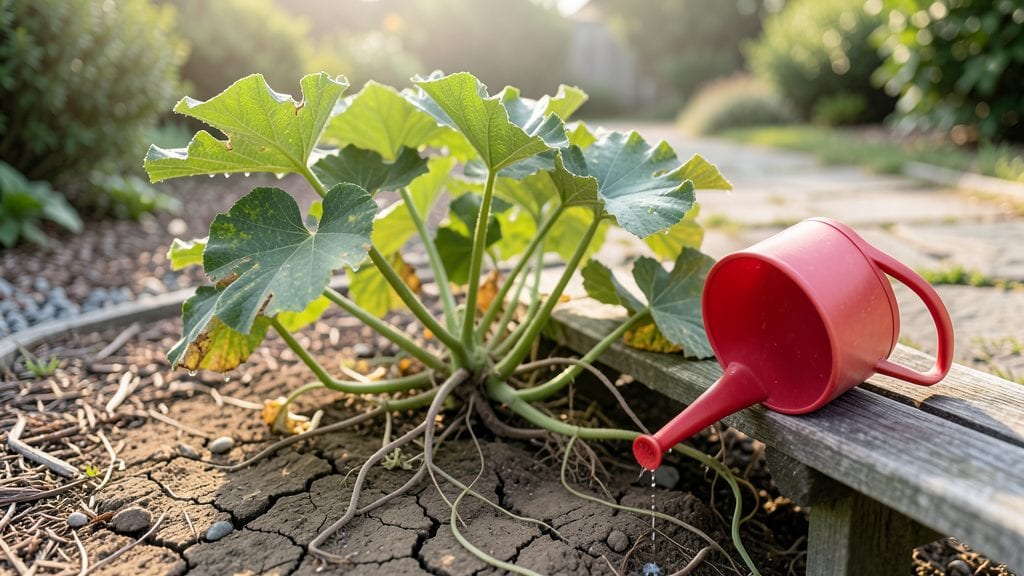
An underwatered pumpkin plant can still bounce back—here’s how to revive those thirsty vines before it’s too late. I’ve nursed back more than my fair share of thirsty pumpkins—those crispy-edged leaves and drooping vines don’t mean the end of your harvest.
The key is acting fast with the right watering technique, not just dumping more water and hoping for the best.
Pumpkins need deep, infrequent watering—about 1-2 inches per week, depending on your climate. The soil should stay moist but not soggy, and if you stick your finger in an inch deep, it should feel damp, not dry as dust.
Mulching with straw or grass clippings keeps moisture locked in, so you won’t be chasing after a hose every afternoon. I’ve cut my watering time in half since I started mulching, and the vines stay plump and productive.
Once you’ve given your plant a good drink—aim for the base of the plant, not the leaves—you’ll see new life within 24-48 hours. The wilting should ease, and those yellow leaves might even turn a vibrant green again.
For long-term health, improve your soil with compost before planting next season; pumpkins are heavy drinkers, and rich soil holds moisture better. You’ll end up with vines that stretch strong and pumpkins that weigh more than you expected.
This works for both backyard patches and container-grown pumpkins, though containers dry out faster, so check them daily in hot weather. The secret isn’t complicated—just consistent care and a little patience. Your pumpkins will thank you at harvest time.
Root Causes Of Wilting Pumpkins
When your pumpkin vines start looking more like a sad, drooping noodle than a thriving garden star, the culprit is often water stress. But why does this happen?
Let’s dig into the science behind why your pumpkin plants might be crying out for hydration—and how to fix it before it’s too late.
Pumpkins have shallow but sprawling root systems, meaning they rely on consistent moisture to stay happy. If you’re watering sometimes but not enough, the roots can’t absorb water fast enough to keep up with the plant’s needs. Here’s what’s really going on:
- Fluctuating soil moisture: Pumpkins prefer soil that stays evenly damp (not soggy, not bone-dry). When you skip watering or only give them a quick splash, the roots struggle to reach deep enough water, leading to wilting.
- Evaporative stress: On hot days, soil loses moisture rapidly. If your pumpkin isn’t getting a deep watering (1–2 inches per week), the top layer dries out, cutting off the plant’s water supply.
- Root zone neglect: Pumpkins spread wide, so watering only at the base isn’t enough. A soaker hose or drip irrigation ensures moisture reaches the entire root zone.
💡 Pro Tip: Stick your finger 2 inches into the soil—if it’s dry, it’s time to water. If it’s muddy, you’re overdoing it.
Even if you’re watering regularly, clay-heavy or compacted soil can strangle your pumpkin’s roots, preventing them from absorbing water efficiently. Here’s how it plays out:
- Waterlogging vs. drought: Heavy clay soil holds too much water, suffocating roots (leading to rot), while sandy soil drains too fast, leaving roots parched. Ideal soil should feel like a damp sponge—not a swamp, not a desert.
- Root suffocation: Compacted soil restricts oxygen flow to roots, weakening their ability to uptake water. Think of it like trying to breathe through a straw—eventually, you’ll gasp for air.
- Nutrient leaching: Poor drainage wasn’thesoilswash away essential nutrients (like potassium and magnesium), which pumpkins need to regulate water flow in their vines.
🔥 Fix It: Amend soil with compost or perlite to improve drainage. For compacted areas, loosen the top 6–8 inches with a broadfork.
Pumpkins are heat-loving plants, but when temperatures soar (or drought sets in), they can’t keep up with water demands. Here’s the breakdown:
- Transpiration overload: On days over 90°F (32°C), pumpkin leaves lose water 3x faster than on cooler days. If the soil can’t replenish it, the plant wilts to reduce water loss (a survival tactic, not a cry for help).
- Root system strain: Shallow roots can’t extract enough water during droughts, leading to physiological drought—even if the soil seems moist at the surface.
- Sunburned leaves: Wilting can also signal leaf scorch from intense sunlight, which increases water loss. Drooping leaves often mean the plant is both thirsty and sun-stressed.
🌡️ Beat the Heat:
- Water early morning or late evening to minimize evaporation.
- Use mulch (straw or grass clippings) to retain moisture and cool roots.
- Provide shade cloth (30–50%) if temperatures exceed 100°F (38°C).
Pumpkins need space to sprawl—and when they’re cramped, their roots can’t access enough water or nutrients. Here’s why:
- Competition for resources: If planted too close to other plants (or in a small container), roots compete for water and nutrients, leaving your pumpkin high and dry.
- Limited root expansion: Pumpkins thrive with 20–30 inches of diameter for their root system. In tight spaces, roots stay shallow and can’t reach deep water reserves.
- Weed pressure: Weeds steal water and nutrients, further stressing your pumpkin. A 3-foot radius of weed-free zone is ideal.
💡 Space Savvy: Give pumpkins 50+ square feet per plant or use hill gardening to encourage deeper root growth.
Now that you know the real reasons your pumpkin plant is wilting, the next step is reviving it fast. But first—are you watering correctly? Stay tuned to find out!
Revive Your Thirsty Pumpkins Now
If your pumpkin plants are drooping, yellowing, or struggling to thrive, it’s time to take action! The good news? Most underwatered pumpkins can bounce back with the right care. Below, we’ve mapped out practical fixes for the most common causes—plus prevention tips to keep your vines lush and productive.
Cause: Shallow watering leads to dry soil and stressed roots. Solution:
- 🌱 Step 1: Check Soil Moisture – Stick your finger 2–3 inches deep. If it’s dry, it’s time to water.
- 💦 Step 2: Water Slowly & Deeply – Use a soaker hose or drip irrigation to deliver 1–2 inches of water per week (more in extreme heat). Avoid overhead sprinklers, which waste water and encourage disease.
- ⏰ Step 3: Water Early Morning – This reduces evaporation and gives roots time to absorb moisture before the sun peaks.
💡 Prevention Tip: Mulch around plants with straw or shredded leaves to retain moisture and regulate soil temperature.
Cause: High temps or low humidity speed up moisture loss. Solution:
- 🌞 For Hot Days – Increase watering frequency (every 2–3 days) and water before 10 AM to prevent scorching.
- 🌬️ For Humid Climates – Ensure proper drainage to avoid root rot from overwatering. Test soil with your finger—if it’s soggy, hold off on watering.
- 🌿 Boost Airflow – Prune nearby weeds or plants blocking airflow to help leaves dry faster and reduce stress.
✨ Pro Tip: Group pumpkins with drought-tolerant companions like beans or marigolds—they’ll share moisture and improve soil health!
Cause: Underwatering weakens roots, making nutrient uptake harder. Solution:
- 🍽️ Step 1: Feed with Balanced Fertilizer – Use a 10-10-10 or 5-5-5 formula (or compost tea) to replenish nutrients.
- 🥄 Step 2: Apply Foliar Spray – Mix 1 tbsp liquid seaweed or fish emulsion in a gallon of water and spray leaves for a quick nutrient boost.
- 🌱 Step 3: Avoid Over-Fertilizing – Too much salt can burn roots. Stick to every 2–3 weeks during growing season.
🎯 Prevention Tip: Side-dress with compost mid-season to slowly release nutrients without shocking the plant.
Cause: Overwatering, uneven moisture, or poor timing worsen stress. Solution:
- ❌ Don’t: Water leaves (fosters fungal diseases).
- ✅ Do: Direct water at the base of the plant.
- ❌ Don’t: Let soil dry out completely between waterings.
- ✅ Do: Keep soil consistently moist (like a damp sponge).
💡 Quick Fix: If roots are severely damaged, transplant the plant into a larger pot with fresh, moist soil (best done in early growth stages).
Final Thought: Pumpkins are resilient! With consistent deep watering, smart fertilizing, and a little TLC, your vines should perk up in 3–7 days. Monitor progress and adjust as needed—your future jack-o’-lanterns will thank you! 🎃💚
Frequently asked questions
How do I know if my pumpkin plant is truly underwatered?
Check for crispy leaf edges, wilting vines, and soil that's dry 2 inches deep. If leaves feel papery or yellow between veins, that’s a classic thirst signal. Compare with healthy vines—yours should spring back when gently pressed if properly hydrated.
Can I fix my pumpkin plant if the leaves are already yellow?
Yes! Yellow leaves often mean nutrient stress from underwatering. Give the plant 1-2 inches of water at the base, then apply a balanced fertilizer (10-10-10) or compost tea. New growth should appear in 5-7 days—just avoid fertilizing if soil is waterlogged.
Why does my pumpkin plant wilt even after watering?
This usually means shallow roots or poor soil drainage. Try watering slower and deeper (30+ minutes with a soaker hose) to reach roots. If soil stays soggy, amend with perlite or compost—pumpkins hate "wet feet" but need consistent moisture.
How often should I water pumpkins in containers?
Containers dry out 2-3x faster than garden beds! Check soil daily in hot weather—water when the top 1 inch feels dry. Use self-watering pots or mulch with straw to lock in moisture. Never let container soil stay bone-dry for more than 24 hours.