
Pruning
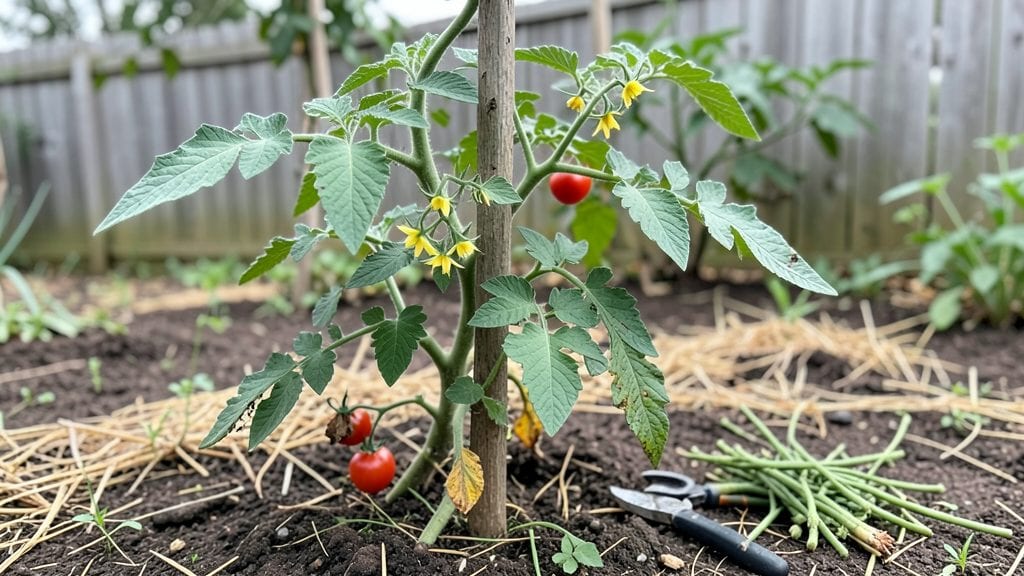
A well-pruned tomato plant produces three times the fruit of an unpruned one—no joke. 🌱 I spent years watching my tomatoes struggle until I learned the three simple cuts that transform a scraggly bush into a fruit-producing machine. The secret isn’t complicated: it’s about directing energy where it matters most.
Most gardeners overlook pruning because it feels like extra work, but it’s actually the difference between a handful of tomatoes and a bushel. You’ll need sharp pruners, a sunny spot, and 10 minutes every few weeks.
The key is removing suckers (those little shoots between stems) while keeping the main stem strong—it’s like giving your plant a haircut for better airflow and bigger yields.
By mid-season, your plant will look like a tight, leafy tower instead of a wild tangle. The fruit stays cleaner, diseases fade away, and you’ll be picking tomatoes until frost. The best part? You’ll save time later by avoiding crowded branches that slow down growth.
Works for indeterminate varieties (the ones that keep growing) and even small containers. Let’s get those pruners out and turn your tomatoes into a machine—not just a plant.
📚 In This Guide
- What you need
- Instructions
- Tips and common mistakes
- Wrapping up and next steps
What you need
- ● Pruning shears: Bypass pruners (sharp, clean, and sterilized with rubbing alcohol to prevent disease). Avoid anvil pruners—they can crush stems.
- ○ Gloves: Heavy-duty gardening gloves (to protect from thorns and dirt). Optional: Pruning-specific gloves with reinforced palms.
- ● Disinfectant: 70% isopropyl alcohol or a 10% bleach solution (1 part bleach to 9 parts water) to sterilize tools between cuts.
- ● Small bucket or bag: For collecting pruned debris (preferably sealed to contain pests).
- ○ Stake or cage: 5-6 ft tall (for indeterminate varieties) or 3-4 ft (for determinate). Optional: Tomato clips or soft ties for support.
- ● Garden twine: 10-15 ft of biodegradable twine (if not using cages).
- ● Timing: Prune on a dry, cloudy day (or early morning) to reduce stress on the plant. Avoid pruning after rain or in extreme heat.
- ● Plant health: Only prune healthy, established plants (after 4-6 weeks of growth). Skip pruning if the plant shows signs of disease (e.g., wilting, spots, or yellowing leaves).
- ● Variety awareness: Indeterminate tomatoes (e.g., Roma, Beefsteak) require heavy pruning, while determinate varieties (e.g., Cherry, Bush Early Girl) need minimal to no pruning.
- ● Safety first: Wear closed-toe shoes and sunglasses—tomato thorns are no joke!
- ● 🔪 Sharp is key: Dull shears tear stems, inviting disease. Test your shears by snipping a piece of paper—it should cut cleanly.
- ● ✨ Prune strategically: Always cut just above a leaf node (where leaves grow) at a 45-degree angle to encourage faster healing.
- ● 🌡️ Monitor weather: If hot, dry conditions are forecasted, delay pruning to prevent shock.
Step-by-Step guide to pruning tomato plants for maximum yield
Here's how to coax bigger, healthier tomatoes all season with just three strategic cuts.
✂️ Step 1: Remove Suckers for Stronger Growth
Start when your tomato plants reach 12-18 inches tall—this is when the first sucker (a small shoot growing between the main stem and a branch) appears. Use clean pruning shears to snip suckers at the base, not mid-stem. These little shoots steal energy from fruit production, so removing them early directs all resources to your main stems.
I like to do this on sunny mornings when the plants are dry. You'll see suckers as tiny offshoots in the leaf axils (where leaves meet stems). Be patient—some gardeners wait until suckers reach 2-3 inches before pruning, but I remove them immediately to prevent competition.
🌿 Step 2: Prune Lower Leaves for Airflow
Once your plants hit 3-4 feet tall, remove the bottom 6-12 inches of leaves—these are the oldest and lowest. Use your fingers to gently pinch them off rather than cutting to avoid damaging stems. This step prevents soil-borne diseases from splashing onto leaves and improves airflow around the plant.
I always work from the bottom up, removing leaves that touch the ground or hang too close. You'll notice the stems look cleaner and more exposed to sunlight after this. This isn't just about looks—it's about reducing humidity where fungal spores thrive.
☀️ Step 3: Trim Excess Branches for Fruit Focus
When your plants are 5-6 feet tall, focus on the main stem and scaffold branches (the thickest, strongest branches). Remove any branches growing downward or inward—these won't get enough light and won't produce fruit. Cut them back to the main stem with clean shears, making a 45-degree angle to prevent water from pooling.
Here's the thing—you're not just pruning for aesthetics. Each cut you make redirects the plant's energy to the remaining branches, where it can focus on growing larger, sweeter fruit. I leave 2-3 main branches per plant (depending on variety) to ensure they get enough nutrients.
⏰ Step 4: Maintain Pruning Through the Season
Continue pruning every 1-2 weeks throughout the growing season. Remove any new suckers, yellowing leaves, or branches that cross over others. This keeps your plants healthy, well-ventilated, and productive. I always prune in the late afternoon to give plants time to recover before evening.
Watch for flower clusters—these are your priority. Never prune above a flower cluster, as this removes potential fruit. If you see a sucker growing below a flower cluster, leave it. The goal is to balance growth and fruit production without stunting the plant.
Tips & tricks for perfectly pruned tomato plants
These simple strategies will help you get the most out of your tomato plants all season long.
The Right Time Factor: Prune suckers when they're tiny—no bigger than your pinky finger. I've learned this the hard way after letting them grow to 3 inches, which makes the plant work harder to compensate. The earlier you remove them, the more energy goes directly to fruit production. In Step 1, I always check for suckers every 5-7 days once plants hit 12 inches.
Tool Technique: Use clean, sharp pruning shears for all cuts above 2 inches, but pinch off smaller suckers and leaves with your fingers. This prevents damaging stems and spreading disease. I keep a small bottle of rubbing alcohol handy to wipe down my shears between cuts—it's a gardener's best friend for keeping tools sanitary.
Seasonal Strategy: The late afternoon timing in Step 4 is crucial. Pruning then gives plants time to recover before evening, reducing stress. I've noticed that plants pruned in the morning sometimes show signs of shock by afternoon, while those pruned later bounce back beautifully overnight.
Visual Cues: When trimming excess branches in Step 3, look for branches that grow at angles wider than 45 degrees from the main stem—these are the ones to remove. The ideal branches form a gentle V shape, allowing sunlight to reach all areas. I always visualize the plant as an open umbrella, not a tangled mess.
Pro Tips for Well Pruned Tomato Plant
- These simple strategies will help you get the most out of your tomato plants all season long.
- The Right Time Factor: Prune suckers when they're tiny—no bigger than your pinky finger.
- Tool Technique: Use clean, sharp pruning shears for all cuts above 2 inches, but pinch off smaller suckers and leaves with your fingers.
Frequently asked questions
Got questions about pruning your tomato plants for maximum yield? You’re not alone! Here are answers to the most common concerns—so you can grow like a pro.
When is the best time to prune a tomato plant?
Prune indeterminate tomato plants throughout the growing season, starting when they’re 12–18 inches tall. Focus on early pruning (removing suckers) to direct energy to fruit production, then continue light pruning as the plant grows. For determinate varieties, minimal pruning is needed—just remove damaged leaves. Timing tip: Avoid pruning during extreme heat or cold to prevent stress.
What’s the difference between suckers and leaves I should remove?
Suckers are the small shoots that grow in the v-fork between the main stem and a branch. Remove them to encourage stronger growth. Leaves to prune: Yellow, diseased, or overcrowded ones blocking airflow. Leave: Healthy lower leaves (for support) and upper leaves (for photosynthesis). Pro tip: Use clean, sharp shears to avoid tearing stems.
Can I prune tomatoes too much? How do I know if I’ve overdone it?
Yes! Over-pruning stresses the plant, reducing fruit production. Signs of over-pruning: Stunted growth, wilting, or no new leaves. Indeterminate tomatoes need some foliage to photosynthesize—never remove more than ⅓ of the plant at once. Rule of thumb: Aim for a balance: open airflow (to prevent disease) but keep enough leaves for energy.
What if I didn’t prune early? Can I still get a good harvest?
Late pruning is better than none. Focus on removing only diseased or obstructive leaves and leave suckers if the plant is already lush. Indeterminate tomatoes may produce smaller yields but still thrive. For determinate varieties, pruning later has minimal impact—just prioritize airflow. Bonus: Mulch heavily to compensate for missed pruning.
How do I prune tomatoes to prevent diseases like blight?
Prune for airflow! Remove all lower leaves touching the soil (they trap moisture and spores). Space branches at least 6–12 inches apart and avoid overhead watering. Disease prevention tips:
- Use sterilized tools (wipe with rubbing alcohol between plants).
- Prune in the morning so wounds dry quickly.
- Rotate crops yearly to break disease cycles.
Wrapping up and next steps
A well-pruned tomato plant isn’t just about aesthetics—it’s your secret weapon for a bountiful, healthier harvest all season long! 🌱 By mastering those three key cuts, you’ll boost airflow, channel energy to fruit production, and keep pests at bay.
The effort pays off in juicier, sweeter tomatoes that’ll make your neighbors green with envy.
Ready to put your new pruning skills to work? Grab those shears and start small—even one plant transformed will give you the confidence to prune your whole garden. Happy growing, and may your tomato plant reward you with a never-ending feast! 🍅✨