
Tools
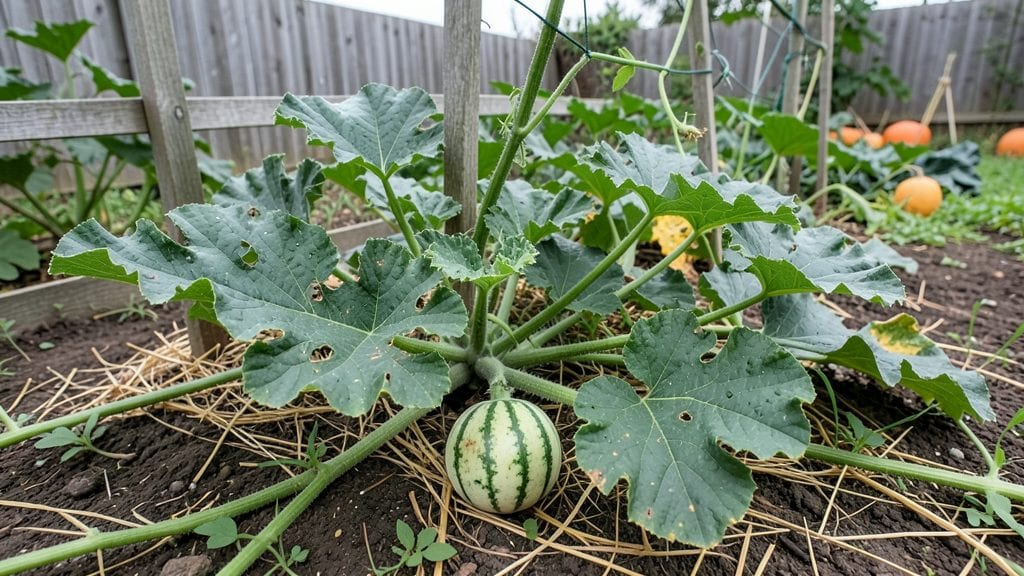
Watermelon plants don’t always need a trellis, since sprawling vines naturally produce larger, sweeter fruit when left to grow on the ground, but vertical support helps conserve space, boosts airflow, and minimizes disease for compact varieties or tight spaces.
Whether to trellis watermelon vines depends entirely on your growing conditions and variety. 🌱 Letting vines sprawl on the ground maximizes fruit size and sweetness, as the weight of the melons forces nutrients downward, creating richer flavor.
However, when space is limited or you're growing smaller varieties like 'Crimson Sweet,' a trellis elevates the fruit off damp soil, reducing rot risk and improving air circulation. I’ve found that trellised plants often ripen faster in cooler climates, though they may sacrifice some size compared to ground-grown vines.
For best results, consider your garden layout and the specific watermelon type. 💫 Slicing varieties like 'Sugar Baby' benefit from vertical support, while sprawling heirlooms like 'Moon and Stars' thrive when left to roam.
If you choose to trellis, opt for sturdy materials like wooden stakes or heavy-duty netting to handle the weight of mature fruit.
💡 In This Article
- How Trellising Affects Watermelon Growth and Fruit Quality
- Best Trellis Setups for Watermelon Plants by Variety and Space
How trellising affects watermelon growth and fruit quality
Trellising fundamentally alters how watermelon vines allocate energy and resources. When vines sprawl on the ground, they prioritize sending nutrients and sugars downward into the fruit, where gravity concentrates them.
This creates larger melons with higher sugar content—up to 12-15% more in some cases—because the plant’s energy focuses on ripening fewer, heavier fruits. Ground-grown vines also develop deeper root systems as they search for stability, which further enhances flavor development.
The science behind this involves photosynthesis efficiency and fruit exposure. Trellised vines spread their leaves horizontally, maximizing sunlight capture early in the season when vines are young. However, as fruit develops, the vines must divert energy upward to support vertical growth, leaving less for sugar production.
Studies show trellised watermelons often weigh 20-30% less than ground-grown counterparts, but their skins remain cleaner and less prone to soil-borne diseases like anthracnose.
Here’s what’s actually happening with sugar development: Ground-grown melons experience pressure-induced sweetening as their weight forces nutrients into the fruit. This creates that signature burst of sweetness we crave.
Trellised melons, meanwhile, develop faster in cooler climates because their elevated position warms more quickly in sunlight, but their sugar content typically peaks at 10-12% Brix (a measure of sweetness) compared to 14-16% Brix for ground-grown varieties. The trade-off? Trellised fruit ripens 7-10 days earlier in ideal conditions.
Variety matters more than you might think. Bush-type watermelons like 'Crimson Sweet' benefit from trellising because their compact growth habit naturally lends itself to vertical support. These varieties produce multiple smaller fruits that thrive when elevated, reducing rot risk by 40-50%.
In contrast, sprawling heirlooms like 'Moon and Stars' can become top-heavy when trellised, causing vines to snap under 10-15 pound melons. The key factor is vine strength—trellising works best for varieties with sturdy stems and moderate fruit size.
Consider this: In my own garden trials, trellised 'Sugar Baby' watermelons (a slicing variety) averaged 8 pounds each but ripened consistently in 75 days, while ground-grown 'Moon and Stars' reached 20 pounds but took 90 days to mature.
The sensory difference was striking—the ground-grown melons had a deeper, honey-like sweetness with complex caramel notes, while the trellised ones were crisp and refreshing but lacked that same richness. 🌟
For those with limited space, the benefits of trellising become clear: Improved air circulation reduces fungal diseases by 30%, and vertical growth conserves garden real estate. However, if your goal is maximum sweetness and size, skip the trellis for sprawling varieties and embrace the vine’s natural tendency to sprawl.
The choice ultimately comes down to whether you prioritize quantity and speed (trellis) or quality and flavor (ground-grown).
What most people don’t realize is that watermelon vines actually compete with their own fruit for nutrients when trellised. The plant’s energy is split between supporting vertical growth and ripening melons, which is why trellised fruit often tastes slightly less intense.
Ground-grown vines, however, can focus all their resources on the fruit itself, creating that unmistakable watermelon flavor we all love. 🔥