
Companion Plants
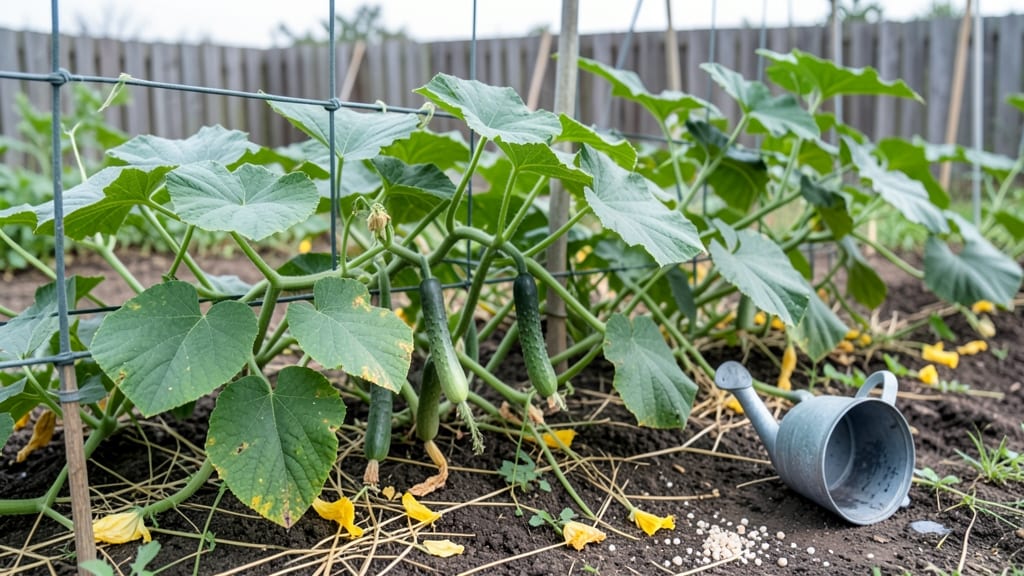
Feeding cucumber plants is the secret to those shockingly lush vines and bushels of fruit you've been dreaming about. 🌱 I learned the hard way—my first cucumbers were all leaves, no fruit, because I was feeding them the wrong way.
The right mix of nutrients at the right time transforms weak seedlings into powerhouses.
You don’t need fancy equipment—just a few key ingredients: compost for slow-release nutrients, a balanced fertilizer for growth, and a side dressing of nitrogen-rich materials like fish emulsion or coffee grounds. The trick is timing: feed at planting, then again when vines start running, and finally when flowers appear.
Too much too soon, and you’ll end up with leafy monsters instead of fruit.
What you’ll get is cucumbers that climb like crazy, produce heavy yields, and resist disease better than anything from the store. The vines stay thick and green, not leggy, and the fruit comes in fast—sometimes even before the first harvest is done.
This is how you turn "maybe next year" into "look at what we grew this summer."
Works for both in-ground gardens and containers, and the same principles apply whether you’re growing slicing cucumbers or pickles. Here’s exactly how to do it without overcomplicating things—no green thumb required.
📚 In This Guide
- What you need
- Instructions
- Tips and common mistakes
- Wrapping up and next steps
What you need
- ● Potting soil or garden soil: 50% of your mix (use high-quality, well-draining soil with a pH of 6.0–6.8).
- ● Compost or aged manure: 25–30% (rich in organic matter for microbial life).
- ● Balanced fertilizer (10-10-10 or 5-5-5): 1–2 tbsp per plant (for initial growth).
- ● Slow-release fertilizer (e.g., 14-14-14): 1 tbsp per plant (for sustained nutrition).
- ● Calcium source (crushed eggshells or lime): 1 tbsp per plant (prevents blossom-end rot).
- ○ Potassium-rich additive (wood ash or banana peel tea): Optional but great for flowering.
- ● Garden trowel or shovel: For mixing and planting.
- ● Gloves: To protect your hands from soil and sharp materials.
- ● Watering can or hose with a gentle nozzle: For even moisture distribution.
- ○ pH testing kit (optional): To monitor soil acidity (ideal: 6.0–6.8).
- ● Mulch (straw or grass clippings): To retain moisture and suppress weeds.
- ● Fish emulsion or seaweed extract: For extra micronutrients.
- ● Epsom salt (magnesium sulfate): 1 tbsp per gallon of water (monthly spray for greener leaves).
- ● Companion plants (e.g., radishes or nasturtiums): To deter pests naturally.
Step-by-Step instructions for feeding cucumber plants
Cucumbers thrive when fed right—here’s how to give them the nutrients they crave for bushy vines and heavy yields.
🌱 Step 1: Prep the Soil with a Balanced Mix
Start by mixing the 5 gallons of compost into the 3 cubic feet of garden soil until it’s dark and crumbly. This combo gives cucumbers the organic matter they love—compost adds nitrogen for leafy growth, while garden soil provides structure. Work it in to a depth of 6 inches, breaking up any clumps.
If your soil feels sandy or drains too fast, add 1 gallon of coconut coir to hold moisture. Cucumbers hate dry roots, and this keeps soil consistently damp without waterlogging. Test the mix by squeezing a handful—it should hold together but not drip water.
💧 Step 2: Apply a Slow-Release Fertilizer Boost
Sprinkle 1 cup of 10-10-10 slow-release fertilizer evenly over the prepared soil. This balanced formula delivers nitrogen, phosphorus, and potassium in equal parts—exactly what cucumbers need to start strong. Gently scratch it into the top 2 inches of soil with a rake or gloved hands.
For an extra boost, mix in ½ cup of bone meal (rich in phosphorus) to encourage root development and flowering. Avoid overdoing it—too much phosphorus can stunt growth. Water the area lightly after adding fertilizer to help it settle into the soil.
✂️ Step 3: Feed During Active Growth
Once cucumber plants hit 4-6 inches tall, switch to a liquid feed every 2 weeks. Use 1 tablespoon of fish emulsion diluted in 1 gallon of water—this delivers nitrogen for leaf production and micronutrients for vine strength. Pour it at the base, avoiding leaves to prevent burn.
When flowers appear, swap to 1 tablespoon of seaweed extract in 1 gallon of water. Seaweed’s potassium and growth hormones help fruit set and prevent blossom-end rot. Apply in the early morning so foliage dries quickly, reducing disease risk.
☀️ Step 4: Monitor and Adjust for Peak Performance
Watch for yellowing leaves—a sign of nitrogen deficiency. If you see this, add ½ cup of compost tea to the soil or a light application of blood meal. For weak vines or small fruit, increase potassium with ½ cup of greensand mixed into the soil at the base.
Cucumbers are heavy feeders, so mulch with 2 inches of straw to retain moisture and slowly release nutrients. Avoid over-fertilizing—too much salt can harm roots. If soil smells sharp or white crust forms, flush it with 2 inches of water to dilute excess salts.
Tips & tricks for perfect cucumber plant feeding
Here's how to maximize your cucumber plants' growth with these simple but powerful tricks—your vines will thank you.
The Soil Texture Secret: When mixing the 5 gallons of compost into 3 cubic feet of garden soil, aim for a texture that resembles crumbly cake batter—not too sandy, not too clay-like. I learned this the hard way after planting in soil that was too compacted, which restricted root growth. For extra moisture retention in sandy soil, the 1 gallon of coconut coir works wonders, but don't skip the squeeze test—it's your best indicator of proper moisture balance.
Fertilizer Layering Technique: In Step 2, when adding the 1 cup of 10-10-10 slow-release fertilizer, I recommend scattering it evenly first, then gently working it into the top 2 inches of soil. This creates a nutrient-rich zone right where roots will grow most actively. The ½ cup of bone meal should be sprinkled in a separate layer—mix it just enough to distribute, but don't overwork it or you'll disrupt the soil structure.
Liquid Feed Timing: The 2-week interval for liquid feeds in Step 3 is perfect, but here's the thing: timing matters more than the clock. Apply your 1 tablespoon of fish emulsion when the soil feels slightly dry to the touch—this ensures the nutrients get absorbed immediately rather than sitting in saturated soil. For seaweed extract, morning application is non-negotiable—it gives foliage time to dry completely, preventing fungal issues.
Diagnostic Mulching: That 2 inches of straw mulch isn't just for moisture—it's your early warning system. If you notice the mulch staying completely dry between waterings, your plants need more frequent hydration. Conversely, if it stays soggy, you're overwatering. This visual cue helps adjust your watering schedule before problems appear.
Pro Tips for Feeding Cucumber Plants
- Here's how to maximize your cucumber plants' growth with these simple but powerful tricks—your vines will thank you.
- The Soil Texture Secret: When mixing the 5 gallons of compost into 3 cubic feet of garden soil, aim for a texture that resembles crumbly cake batter—not too sandy, not too clay-like.
- Fertilizer Layering Technique: In Step 2, when adding the 1 cup of 10-10-10 slow-release fertilizer, I recommend scattering it evenly first, then gently working it into the top 2 inches of soil.
Frequently asked questions
Got questions about keeping your cucumber plants thriving?
Here are answers to the most common concerns—from timing to troubleshooting—so you can grow lush, productive vines with ease!
When should I start feeding cucumber plants?
Feed cucumbers once they’ve sprouted 3-4 true leaves (about 2-3 weeks after planting). Use a balanced fertilizer (like 10-10-10) at half-strength to avoid burning young roots. For organic gardeners, compost tea or worm castings work wonders at this stage. Pro tip: Wait until soil is warm (60°F+) for best nutrient uptake!
How often should I fertilize cucumber plants?
Feed every 2-3 weeks during the growing season (spring to summer) with a high-potassium, low-nitrogen fertilizer (e.g., 5-10-10) to boost fruit production. For container plants, dilute fertilizer to half-strength to prevent salt buildup. Stop feeding 2 weeks before harvest to avoid bitter-tasting cucumbers!
What’s the best natural fertilizer for cucumbers?
Cucumbers love compost, aged manure (chicken or cow), and fish emulsion for organic nutrients. Mix compost into the soil before planting, then top-dress with a thin layer mid-season. For a quick fix, use banana peels (potassium-rich) or crushed eggshells (calcium) around the base. Bonus: Coffee grounds repel pests while adding nitrogen!
Why are my cucumber leaves yellowing after feeding?
Yellow leaves often mean over-fertilizing (burn) or nutrient imbalance. Flush the soil with water to dilute excess salts, then switch to a low-nitrogen, high-potassium feed. Check for pests (like spider mites) too—they stress plants. If yellowing persists, test soil pH (ideal: 6.0–6.8) and amend with sulfur or lime as needed.
Can I use the same fertilizer for cucumbers and tomatoes?
Yes, but adjust ratios! Both need potassium for fruit, but cucumbers tolerate more nitrogen early on (for vines) while tomatoes prefer less nitrogen later (for blooms). Use a 5-10-10 or 3-4-6 blend for cucumbers, and a 1-2-2 for tomatoes. Never mix fertilizers—stick to one type per plant to avoid confusion!
Wrapping up and next steps
Feeding your cucumber plants the right nutrients is the secret to bursting vines and bountiful harvests! 🌱 By blending organic matter, balanced fertilizers, and companion plants, you’ll create a thriving garden ecosystem. Remember, consistency is key—monitor soil health, adjust feeding as needed, and watch your plants flourish.
Now that you’re armed with the know-how, roll up your sleeves and get growing! 🌿 Start with a small patch, experiment with your soil mix, and soon you’ll be enjoying homegrown cucumbers that rival the best from the store. Happy gardening!