Diseases
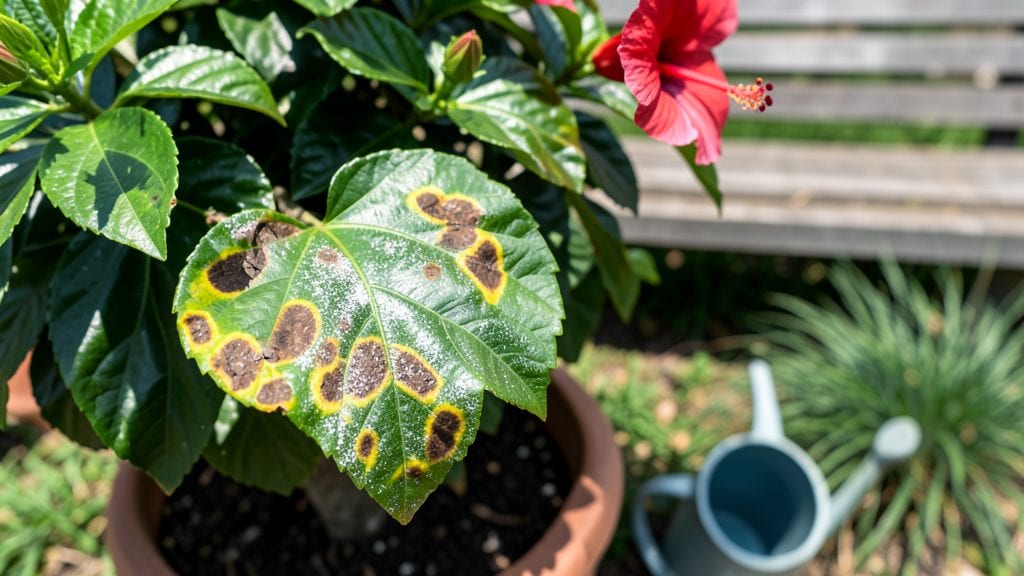
Hibiscus plant diseases can turn vibrant blooms into sad, spotted messes if you don’t catch them early. 🌿 I’ve seen powdery mildew turn lush leaves white, root rot collapse stems, and leaf spots ruin entire bushes—all because I ignored the first warning signs.
The good news? Most fungal issues respond to simple fixes if you act fast.
Powdery mildew, rust, and anthracnose are the top three culprits, thriving in humid conditions or when leaves stay wet too long. Overcrowded plants or poor airflow make things worse.
The key is prevention: space your hibiscus at least 3 feet apart, water at the base (not overhead), and prune for airflow. I’ve kept my bushes thriving for years with these basics.
When problems pop up, act fast: spray with neem oil for mildew, remove infected leaves for leaf spots, and repot affected roots for rot. The goal is to stop the spread before it’s too late.
With the right care, your hibiscus will bounce back—stronger and showing off those bold blooms again.
Works for tropical hibiscus, hardy varieties, and even container-grown plants. Let’s get your bushes back to their best before summer heat makes things worse.
Root Causes Behind Hibiscus Ailments
Hibiscus plants, with their vibrant blooms and lush foliage, are a garden favorite—but they’re not immune to trouble. Understanding why these diseases strike is the first step to prevention.
Below, we break down the science behind the most common fungal foes, so you can protect your hibiscus before they take hold.
Fungi like Fusarium and Phytophthora thrive in hot, damp environments. When hibiscus plants sit in soggy soil or bask under high humidity (especially above 80% for prolonged periods), fungal spores germinate rapidly. Here’s why:
- Stagnant moisture weakens plant cell walls, making them easier targets for fungal invasion.
- Botrytis cinerea (gray mold) spreads faster in still, humid air, smothering flowers and leaves in fuzzy gray spores.
- Root rot fungi (Pythium) multiply exponentially when soil stays wet for more than 48 hours.
Pro Tip: 💡 Hibiscus need well-draining soil—amend clay-heavy soil with perlite or sand to prevent waterlogging. Space plants 3–4 feet apart for airflow.
Fungal spores float in the air, but they need a landing pad—and dense foliage provides the perfect one. When hibiscus grow too close together or are pruned improperly, spores settle on leaves and stems, germinating into infections like:
- Alternaria leaf spot: Dark, concentric rings appear when spores land on damp leaves.
- Powdery mildew: A white, talcum-like coating forms when spores find a cozy, shaded spot.
Science Note: Fungi release enzymes that break down plant cuticles, creating entry points. Prune aggressively to open up the canopy—aim for a "breezy" structure where air moves freely.
Stressed hibiscus are fungal magnets. Nutrient deficiencies, over- or underwatering, and physical damage (like pest bites or harsh pruning) create wounds that fungi exploit. Common triggers include:
| Stress Factor | Resulting Disease Risk |
|---|---|
| Nitrogen deficiency (yellow leaves) | Anthracnose (sunken, water-soaked lesions) |
| Salt buildup (from tap water) | Root rot (wilting despite moist soil) |
| Sudden temperature drops | Gray mold (rapid flower rot) |
Action Step: 🌡️ Test soil pH (ideal: 6.0–6.5) and fertilize with balanced NPK (e.g., 10-10-10) to bolster defenses. Avoid overhead watering—use drip irrigation to keep foliage dry.
Splashing water from rain or hoses launches fungal spores like tiny missiles, infecting nearby plants. Diseases like Phyllosticta leaf spot spread this way, causing:
- Black or brown target-like spots on leaves.
- Premature leaf drop, weakening the plant’s photosynthesis.
Key Insight: Fungi need free water on surfaces to germinate. Water in the early morning (so leaves dry by noon) and use fungicide sprays (copper-based or neem oil) as a preventive shield.
Next up: Learn how to spot these diseases early before they spread.
Quick Fixes for Hibiscus Ailments
Now that you’ve identified the troublemakers, let’s tackle them head-on with practical, plant-friendly solutions—no fancy tools or chemistry degrees required! Below, we’ve mapped each disease to its cure, plus prevention tips to keep your hibiscus thriving long-term. Think of this as your hibiscus first-aid kit.
Causes: Overwatering, poor airflow, humidity, or contaminated soil.
1.
Powdery Mildew & Downy Mildew 🌫️💨 Fix It: - 🔥 Prune & Toss: Snip off infected leaves (don’t compost them!) and dispose of them in the trash. Why? Fungal spores spread like gossip—cut them off at the source. - 🍳 DIY Fungicide Spray: Mix 1 tsp baking soda + 1 quart water + a drop of dish soap (the soap helps it stick).
Spray both sides of leaves every 7–10 days until clear. - 🌡️ Boost Airflow: Space plants 2–3 feet apart and prune nearby foliage to improve circulation. Pro tip: A small fan on low can mimic wind and deter spores.
Prevent It: ✅ Water only at the base (avoid wetting leaves). ✅ Space plants properly—crowding = fungal party. ✅ Choose resistant varieties like ‘Dwarf Green’ hibiscus if mildew is recurrent.
2. Root & Stem Rot 💀🌱
Fix It: - 👨🍳 Emergency Drainage Check: If soil feels soggy, stop watering immediately.
Let the top 2 inches dry out before watering again. - 🔪 Root Rescue: Gently remove the plant, trim black/mushy roots with sterilized scissors, and repot in fresh, well-draining soil (add perlite or sand). - 🌡️ Fungicide Boost: Drench roots with a copper fungicide (like Cupric Hydroxide) or hydrogen peroxide (3%) to kill lingering spores.
Prevent It: ✅ Pot with holes—no excuses for waterlogged roots! ✅ Avoid overpotting—smaller pots = faster drying. ✅ Mulch lightly (1 inch) to regulate moisture without smothering roots.
3. Anthracnose 🍃😷
Fix It: - 🍳 Vinegar Rinse: Mix 1 part white vinegar + 3 parts water and spray leaves to raise pH and inhibit fungus.
Repeat weekly. - 🔪 Clean Up: Remove all infected leaves and sterilize pruners with rubbing alcohol between cuts. - 🌡️ Copper Spray: Use a fixed copper fungicide (like Bonide Copper Fungicide) every 10–14 days for 3 weeks.
Prevent It: ✅ Water in the morning so leaves dry quickly. ✅ Sanitize tools after each use—anthracnose hitchhikes on blades! ✅ Avoid overhead watering—think drip irrigation or a watering can with a narrow spout.
Causes: Sap-sucking insects (aphids, mites, whiteflies) weaken plants, making them susceptible to secondary infections.
4. Aphids & Whiteflies 🐜💦
Fix It: - 🔥 Blast Them Off: Spray plants with soapy water (1 tsp mild soap per quart of water) to dislodge pests.
Do this early morning so they don’t fly away. - 🌿 Neem Oil Rescue: Mix 2 tsp neem oil + 1 tsp mild soap + 1 quart water. Spray under leaves where pests hide.
Repeat every 5–7 days. - 🕷️ Ladybugs to the Rescue: Release beneficial insects like ladybugs or lacewings—they love munching on aphids.
Prevent It: ✅ Inspect new plants before bringing them home (quarantine for 2 weeks if possible). ✅ Sticky traps near plants catch early infestations. ✅ Reflective mulch (aluminum foil) confuses whiteflies—try it!
5. Spider Mites 🕷️🌪️ Fix It:
- 🍳 Oil Spray: Mix 1 tbsp horticultural oil + 1 tsp soap per quart of water. Spray all leaf surfaces—mites hate this stuff!
- 🌡️ Increase Humidity: Mites thrive in dry air.
Place a humidifier nearby or mist leaves daily (avoid evening misting to prevent fungal growth). - 🔪 Prune Severely: If webs are everywhere, trim back heavily to reduce hiding spots.
Prevent It: ✅ Regularly hose down leaves to wash away mites. ✅ Avoid broad-spectrum pesticides—they kill natural predators like mites’ enemies. ✅ Yellow sticky traps catch mites before they multiply.
Sometimes, the "disease" isn’t a disease at all—it’s your hibiscus screaming for better conditions.
6. Leaf Spot from Overwatering 🌧️🚫
Fix It: - ⏰ Watering Schedule: Wait until the top 1–2 inches of soil are dry before watering again.
Stick your finger in—if it’s damp, wait! - 🌱 Soil Swap: Amend heavy clay soil with compost or perlite to improve drainage. Pro tip: Add a handful of sand (coarse, not fine) for extra grit. - 🍃 Fungicide Prep: If spots persist, use potassium bicarbonate (1 tbsp per gallon of water) as a preventive spray.
Prevent It: ✅ Group pots together to create a microclimate with more stable moisture. ✅ Use a moisture meter—no more guesswork! ✅ Drainage tray trick: Elevate pots on feet to prevent saucer water from seeping back in.
No matter the issue, these preventive power moves keep hibiscus resilient: - 🌿 Feed Right: Use a balanced fertilizer (10-10-10) every 4–6 weeks in growing season, but cut back in winter. - 🌞 Sunlight Check: Hibiscus need 6+ hours of sunlight daily.
If leaves yellow, they’re either overwatered or undersunlit. - 🧼 Clean Tools: Sterilize pruners with rubbing alcohol or a 10% bleach solution between cuts to avoid spreading pathogens. - 🌱 Rotate Pots: Move pots occasionally so all sides get even sunlight and airflow.
Final Reminder: 🚨 Act fast! The sooner you treat a problem, the easier it is to fix. Most hibiscus diseases are preventable with good habits—so think of this as your "plant parent upgrade" kit. Now go save those stunning blooms! 🌸
Frequently asked questions
Why does my hibiscus suddenly develop white powdery spots?
That’s likely powdery mildew, a fungal disease thriving in humid conditions. The white coating blocks sunlight, weakening leaves. Prune infected areas immediately, then spray with a mix of 1 tsp baking soda + 1 quart water + a drop of dish soap every 7-10 days. Boost airflow by spacing plants 2-3 feet apart.
Can I save a hibiscus with black, mushy stems?
That’s stem rot, often caused by overwatering or poor drainage. Act fast: Remove the plant, trim all black/mushy stems and roots with sterilized scissors, then repot in fresh, well-draining soil mixed with perlite. Water only when the top 2 inches of soil are dry. Avoid soggy soil at all costs!
What causes those ugly brown rings on hibiscus leaves?
Those are leaf spot symptoms, usually from Alternaria or Phyllosticta fungi. Remove infected leaves immediately and sterilize your pruners with rubbing alcohol. Prevent future outbreaks by watering at the base (never overhead) and improving airflow between plants.
Is yellowing hibiscus foliage always a disease?
Not always! Yellow leaves can signal overwatering, nutrient deficiency, or even too much sunlight. Check soil moisture first—if it’s soggy, cut back on water. Test soil pH (ideal: 6.0-6.5) and fertilize with balanced NPK (10-10-10) if leaves show nitrogen deficiency patterns (older leaves yellowing first).
How do I prevent hibiscus diseases before they start?
Focus on prevention: Space plants 3-4 feet apart for airflow, water only at the base in the morning, and use drip irrigation. Sterilize pruners between cuts, rotate pots for even sunlight, and choose disease-resistant varieties like ‘Dwarf Green’ hibiscus. A weekly neem oil spray (2 tsp + 1 tsp soap per quart water) acts as a natural shield.