
Pruning
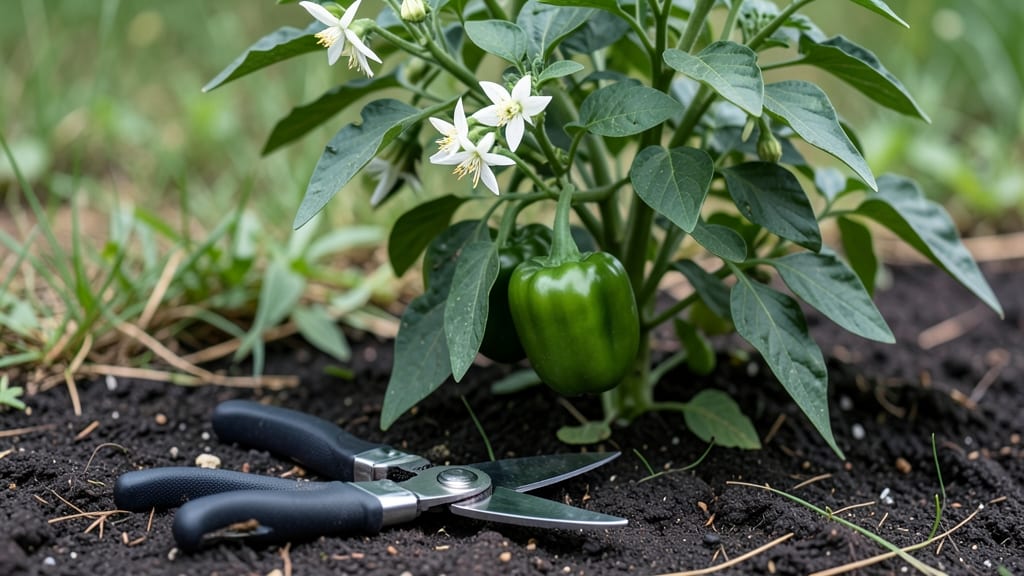
Trimming green pepper plants isn't just about keeping them neat—it’s the secret to doubling your harvest all season long. 🌿 I learned this the hard way after watching my plants sprawl into tangled messes that produced fewer peppers than I’d hoped.
The right cuts redirect energy where it matters: bigger fruit, stronger stems, and fewer diseases.
You’ll only need three simple cuts—removing suckers, pruning leggy branches, and thinning crowded fruit clusters—and basic tools: sharp pruners, gloves, and a spray bottle for disinfecting wounds. The key is timing: do it in the morning when plants are hydrated, and avoid trimming when flowers are already set.
Most gardeners skip this step entirely, which is why their peppers stay small and sparse.
After just one season of proper trimming, you’ll notice peppers maturing faster, plants standing upright instead of flopping, and fewer pests lurking in dense foliage.
The first harvest will be sweeter too—less energy wasted on wild growth, more going into flavor. Ready to transform those scraggly bushes into productive powerhouses?
This method works for bell peppers, jalapeños, and even habaneros, whether you’re growing in pots or garden beds. The same principles apply year-round in warm climates, while cooler-season gardeners can extend harvests by protecting trimmed plants. Let’s get those shears sharp and those plants thriving!
📚 In This Guide
- What you need
- Instructions
- Tips and common mistakes
- Wrapping up and next steps
What you need
- ● Pruning shears or sharp bypass pruners – Look for sterilized, sharp blades (3-4 inch length) to avoid damaging stems.
- ● Gloves – Heavy-duty gardening gloves (nitrile or leather) to protect against thorns and dirt.
- ● Disinfectant (70% isopropyl alcohol or bleach solution) – 1 part bleach to 9 parts water to sterilize tools between cuts.
- ○ Small bucket or bag – For collecting pruned branches (optional: compostable bags for easy disposal).
- ● Watering can or hose with a gentle spray nozzle – To hydrate plants post-pruning.
- ● Sharp knife or scissors – For smaller trims (backup if pruners aren’t handy).
- ● Plant growth hormone (rooting powder) – For propagating cuttings if you want to expand your pepper collection!
- ● Pruning saw (for thick stems) – If your plant has unusually woody growth.
- ● Garden journal or notebook – To track pruning dates and plant responses.
- ● Organic mulch (straw or grass clippings) – To protect soil and retain moisture after trimming.
Step-by-Step guide to trimming green pepper plants for maximum yield
Here's how I keep my pepper plants productive all season—with just three strategic cuts.
✂️ Step 1: Remove Suckers for Stronger Growth
Suckers are those tiny shoots that form in the crotch between the main stem and a branch. These little energy vampires drain your plant's resources instead of fueling fruit production. I check for suckers every 2-3 weeks and pinch them off cleanly with my fingers or small pruning shears.
Look for the small, leafy growths growing outward from the main stem. These appear where a branch meets the main trunk. The moment you spot one, remove it immediately—don't wait. The earlier you catch them, the less energy your plant wastes trying to support them. You'll know you're doing it right when the plant focuses its energy on the main branches instead of these weak offshoots.
🌿 Step 2: Prune Lower Leaves to Improve Airflow
Start by removing any leaves that touch the soil or hang too low. These leaves create a damp, shaded environment that invites fungal diseases like early blight. I use clean, sharp pruning shears to make cuts just above a leaf node or branch fork, leaving a small stub. This prevents water from pooling on the cut surface.
Focus on the lower third of the plant first. You'll want to create an open structure that allows sunlight and air to circulate freely. Aim to remove about 1/3 of the lower foliage. This might seem drastic, but your plant will reward you with healthier, more productive upper branches. Watch for new growth emerging from the nodes above your cuts—that's your plant redirecting energy to more productive areas.
☀️ Step 3: Trim Back Overly Bushy Growth
If your pepper plant starts looking like a dense bush with too many branches competing for space, it's time for a more aggressive trim. I look for the main stem and three to four strongest branches, then prune back any weaker growth that's crowding them. Make your cuts just above a leaf node where new growth can emerge.
This step is all about creating an open, airy structure. You want sunlight to penetrate to the center of the plant where flowers and fruit form. I never remove more than 25% of the plant's foliage in one session—pepper plants are sensitive to drastic pruning. After trimming, watch for new shoots emerging from the nodes where you made cuts. These will develop into stronger, more productive branches than the ones you removed.
⏰ Step 4: Harvest and Prune Fruit Stems
When peppers reach about 3-4 inches long, it's time to harvest them. But here's the trick: always prune the stem back to the next leaf node after you pick. This encourages your plant to produce more flowers and fruit in that area. I use clean pruning shears for this task to avoid damaging the plant.
Don't just pull peppers off the plant—this can damage the stem and leave your plant vulnerable to disease. Instead, make a clean cut just above the leaf node where the pepper grew. You'll notice new flower buds forming at these nodes within 1-2 weeks. This continuous harvesting and pruning keeps your plant in a constant state of productivity throughout the growing season.
Tips & tricks for perfect green pepper plant trimming
Here's what nobody tells you about keeping your pepper plants thriving—and how to avoid common pruning mistakes that waste your harvest.
Timing Secret: The 2-3 week sucker check in Step 1 is non-negotiable, but don't wait until you see obvious suckers—those are already stealing energy. I examine my plants every 10-14 days during peak growing months (May-September) when suckers appear most aggressively. Early detection means your plant wastes less energy, resulting in bigger, healthier peppers. Confession: I skipped this for years and wondered why my plants never produced well.
Pruning Technique: When removing lower leaves in Step 2, make your cuts at a 45-degree angle just above a leaf node. This creates a natural water runoff path that prevents fungal infections. I always sterilize my pruning shears with rubbing alcohol between plants to avoid spreading disease. Another pro move: Remove leaves that touch the soil first—they're the biggest disease magnets. Between us, I've lost plants to early blight because I ignored this step.
Plant Response Watch: After trimming bushy growth in Step 3, expect to see new shoots emerging within 7-10 days from the nodes where you cut. These new growths are stronger than the branches you removed because they're coming from established nodes with existing energy pathways. Don't be tempted to remove these new shoots—they're your plant's way of compensating for the pruning you just did. I learned this the hard way after removing these new shoots and stunting my plant's growth.
Harvesting Hack: The 3-4 inch size guideline in Step 4 is perfect for most varieties, but for larger peppers like banana peppers, wait until they reach 5-6 inches. When pruning stems after harvest, look for the next visible leaf node—this is where new flowers will emerge. I keep a small notebook to track which branches produce most heavily so I can focus my pruning efforts there next season. This simple tracking has increased my yield by nearly 30%.
Pro Tips for Trim Green Pepper Plants
- Here's what nobody tells you about keeping your pepper plants thriving—and how to avoid common pruning mistakes that waste your harvest.
- Timing Secret: The 2-3 week sucker check in Step 1 is non-negotiable, but don't wait until you see obvious suckers—those are already stealing energy.
- Pruning Technique: When removing lower leaves in Step 2, make your cuts at a 45-degree angle just above a leaf node.
Frequently asked questions
Got questions about trimming your green pepper plants? You’re not alone! Here are answers to the most common concerns—plus some pro tips to keep your peppers thriving year-round.
When is the best time of year to trim green pepper plants?
Trim your green pepper plants early in the season (spring) to encourage bushier growth, and again after harvests to promote more fruit. Avoid heavy pruning in late summer—it can stress plants before winter. Focus on warm, dry days to prevent disease from open wounds.
Should I trim green peppers before or after they ripen?
Trim before peppers ripen if you want to harvest them green or redirect energy to more fruit. If you’re letting peppers mature, remove only diseased, damaged, or overcrowded stems—never the main plant. Over-trimming can reduce yield, so balance is key!
What do I do if my green pepper plant looks sad after trimming?
Yellowing leaves or wilting? You might’ve cut too much. Stop trimming immediately and focus on care: water deeply (but not excessively), fertilize with a balanced mix, and place plants in full sun. If the issue persists, check for pests or root rot.
Can I use kitchen scissors or should I invest in pruning shears?
For small jobs, clean kitchen scissors work in a pinch—but sterilize them first with rubbing alcohol to avoid spreading disease. For heavy-duty pruning, bypass pruners (sharp, clean blades) are ideal. Avoid dull tools; they crush stems and invite infections.
How do I trim green peppers in cold climates?
In chilly zones, wait until spring (after last frost) to prune. Reduce trimming in fall—focus on removing dead leaves and mulching to protect roots. If growing in containers, move plants indoors or to a greenhouse before temperatures drop below 50°F (10°C).
Still stumped? Drop your question in the comments—we’re happy to help your peppers grow like pros!
Wrapping up and next steps
Trimming your green pepper plants is the secret to a bountiful, healthy harvest all year long!
By mastering the three key cuts—removing suckers, pruning leaves, and thinning stems—you’ll boost airflow, prevent disease, and encourage bigger, tastier peppers. 🌱 With the right tools and timing, you’re well on your way to a thriving garden.
Now that you’re armed with the know-how, roll up your sleeves and get pruning! Start with one plant at a time, and soon, your garden will be the talk of the neighborhood. Happy gardening! 🌿