
Companion Plants
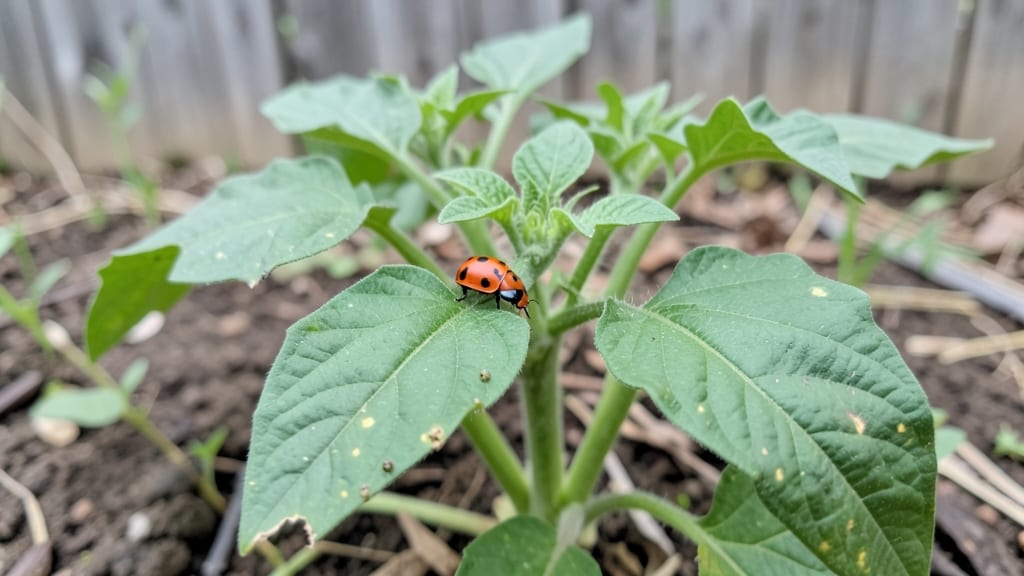
Using ladybugs for plants creates a natural pest-control system that targets aphids, mites, and other garden nuisances while secreting enzymes that discourage future infestations. Release them during early morning or evening hours when they’re least stressed, and steer clear of chemical pesticides that could kill them.
Ladybugs aren’t just cute—they’re powerhouses in your garden’s defense system.
Their larvae and adult forms hunt pests like aphids and mealybugs with precision, often consuming 50-100 pests per day each. 🔥 The real magic happens when they release enzymes that make plants less appealing to future pests, creating a long-term protective effect.
Unlike synthetic pesticides, ladybugs target only soft-bodied insects, leaving beneficial pollinators like bees untouched.
For best results, purchase ladybugs from reputable suppliers and store them in a cool, shaded spot until release. Avoid releasing them on windy days or when temperatures exceed 85°F, as these conditions stress them out.
A garden with established pest populations—like aphids on new growth—is the perfect environment for them to thrive.
💡 In This Article
- How Ladybugs Benefit Garden Ecosystems
- Best Practices for Introducing Ladybugs to Your Garden
How ladybugs benefit garden ecosystems
Ladybugs operate as nature's pest-control specialists, with both their larvae and adult forms playing distinct but complementary roles. The larvae—elongated, alligator-like creatures with voracious appetites—can consume 400-500 aphids during their 2-3 week development phase, while adults average 50-100 pests daily.
Their hunting strategy involves detecting prey through vibrations and pheromones, making them particularly effective against clustered pests like aphids and mealybugs. 🔥 This precision targeting contrasts sharply with broad-spectrum pesticides that kill beneficial insects indiscriminately.
Their impact extends beyond direct predation through a fascinating chemical defense system. When ladybugs feed, they secrete enzymes that alter plant chemistry, making foliage less attractive to future pests—a phenomenon known as "antixenosis." Studies show this effect can reduce subsequent pest populations by 30-50% in treated areas.
This dual approach of consumption and chemical deterrence creates what entomologists call a "cascade effect," where pest populations decline more rapidly than with mechanical controls alone.
What makes ladybugs uniquely valuable is their role in maintaining ecological balance. Unlike synthetic pesticides that create chemical-resistant super-pests, ladybugs maintain natural population controls. Their presence also supports biodiversity by providing food for birds, spiders, and other predators while leaving pollinators like bees completely unaffected.
In agricultural studies, fields using ladybug releases showed 20-40% fewer pest outbreaks in subsequent seasons compared to chemical-treated plots.
Their effectiveness varies by species—some, like the seven-spotted ladybug, specialize in aphids, while others target scale insects or whiteflies. This specialization means gardeners can choose species tailored to their specific pest problems.
For example, the twelve-spotted ladybug is particularly adept at controlling mealybugs, which are notoriously difficult for other predators to manage. This targeted approach eliminates the need for multiple pesticide applications.
Temperature plays a crucial role in their efficiency. Ladybugs are most active between 60-80°F, with their metabolic rate dropping significantly below 50°F. This explains why they're most effective in spring and fall gardens—ideal conditions where they can hunt continuously without the stress of extreme heat or cold.
Their natural dormancy during winter further prevents them from competing with native predators, maintaining the garden's ecological harmony. 🌱
Perhaps most impressive is their reproductive strategy. A single female can lay 400-500 eggs in her lifetime, with larvae emerging within days to begin their own pest-control work.
This rapid population growth means a small initial release can establish a self-sustaining colony within 4-6 weeks, creating long-term protection without ongoing purchases. The economic value becomes clear when you consider that ladybugs can save gardeners $50-150 per season in pesticide costs while improving plant health.