Watering
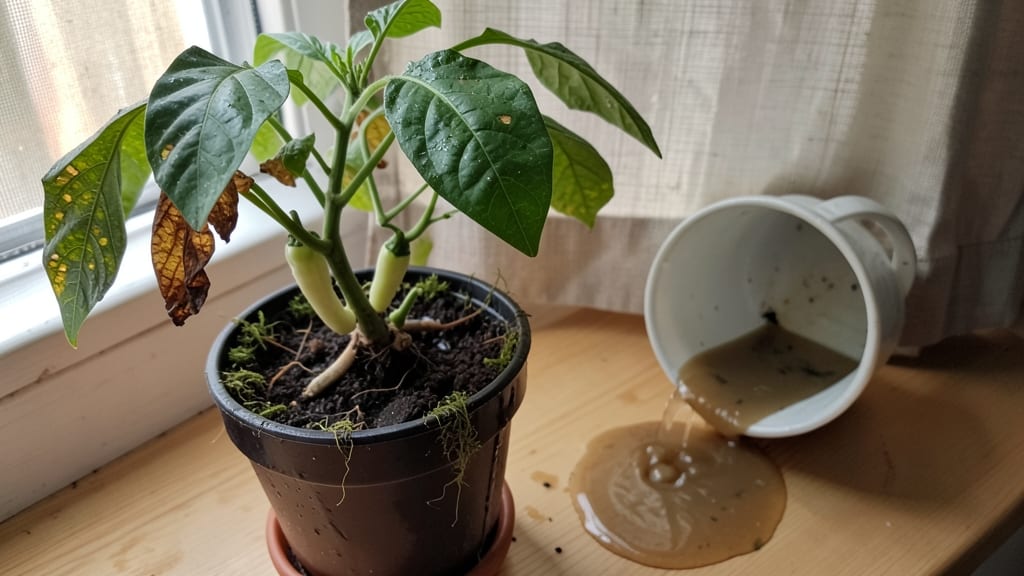
An overwatered chilli plant can look like a sad, soggy mess—yellowing leaves, wilting stems, and that dreaded moldy smell. 🌱 I’ve nursed back more than a few from this exact problem, and the key is acting fast with the right drainage fix.
The moment you spot dark, mushy roots or leaves turning yellow overnight, you’ve got a race against root rot.
First, stop watering entirely and let the soil dry out. Then, gently remove the plant from its pot, trim away any blackened roots with clean scissors, and repot it in fresh, well-draining soil.
A mix of potting soil with perlite or coconut coir works best—chillies hate sitting in wet feet. For containers, ensure drainage holes are clear, and consider elevating pots to prevent water pooling.
What you’ll end up with is a plant that’s no longer drowning in its own pot. Within two weeks, you’ll see new growth emerging from the base, and those once-wilted stems will perk up again.
The secret is consistency: water only when the top inch of soil feels dry, and always use pots with drainage. This method has saved my plants from the brink more times than I can count.
If the roots are completely mushy or the plant refuses to recover after a month, it might be time to start over. But in most cases, this drain-and-save approach works wonders—even for plants that looked hopeless.
The lesson? Chillies are tough, but they’re not water-loving plants. They’d rather be slightly dry than soggy.
Root Causes Of Overwatering
Overwatering your chilli plant might seem like a harmless mistake, but it can quickly turn into a root-killing disaster. Let’s break down the science behind why this happens—and how to spot the warning signs before it’s too late.
Chilli plants thrive in well-draining soil, but when pots lack proper drainage, excess water pools at the roots instead of escaping. Without holes in the container or a layer of gravel at the bottom, moisture gets trapped, suffocating roots and cutting off their oxygen supply.
Over time, this leads to anaerobic conditions—where roots drown in their own soggy environment—triggering rot and fungal infections like Phytophthora or Pythium. Even "breathable" pots (like terracotta) can fail if the soil mix is too dense or compacted.
💡 Pro Tip: Test your pot’s drainage by filling it with water—if it takes more than 10 minutes to drain completely, it’s time to upgrade or add drainage holes.
Chilli plants are drought-tolerant and prefer to dry out slightly between waterings. Yet, many gardeners fall into the trap of sticking to rigid schedules (e.g., "water every Tuesday") instead of checking soil moisture.
Overwatering occurs when: - You water without assessing soil dryness (stick your finger 1–2 inches deep; if it’s damp, wait). - You ignore seasonal changes (plants need less water in cooler months). - You water at the wrong time (early morning is best; evening water can linger on leaves, inviting disease).
⏰ Actionable Fix: Switch to a "finger test"—if the top 1–2 inches of soil feel dry, it’s time to water. Use a moisture meter for precision.
Not all soil is created equal. Chilli plants hate clay-heavy or poorly amended soil, which holds water like a sponge. Without organic matter (like perlite, coconut coir, or compost), water drains slowly, leaving roots waterlogged. Even "pre-mixed" potting soils can be guilty if they lack porosity.
🌡️ Science Check: Clay soil has tiny gaps between particles, trapping water and blocking air. Amend with 20–30% perlite or vermiculite to improve aeration.
Chilli plants love warmth (70–85°F) but struggle when humidity spikes without airflow. In high-humidity environments (like greenhouses or rainy climates), water evaporates slower, keeping soil damp longer. Combine this with low light, and roots suffocate faster. Even cold drafts (like near AC vents) slow evaporation, prolonging moisture stress.
🔥 Quick Fix: Improve airflow with a small fan (set to low) near your plant. In humid climates, water only when the top 3 inches are bone-dry.
When chilli plants outgrow their containers, roots become densely packed, restricting water flow and airflow. The soil stays wet longer, and roots struggle to absorb oxygen.
Signs of root-bound stress: - Roots circling the pot’s bottom or sides. - Water puddling on top of the soil instead of draining. - Stunted growth despite "regular" watering.
🌱 Solution: Repot into a container 20–30% larger with fresh, well-draining soil. Prune any circling roots before replanting.
Overwatering creates the perfect petri dish for pathogens. Fungi like Fusarium or bacteria like Erwinia thrive in waterlogged soil, clogging root cells and blocking nutrient uptake. Infected roots turn mushy, dark brown, or black, and the plant may wilt despite wet soil—a classic sign of root rot.
🔪 Emergency Action: If you suspect rot, trim affected roots with sterilized scissors and treat with a hydrogen peroxide rinse (1 part 3% H₂O₂ to 4 parts water) before repotting.
Revive Your Plant with These Fixes
Your chilli plant might be drowning, but it’s not too late to rescue it! The key is to act fast, diagnose the root cause (literally and figuratively), and apply the right fix.
Below, we’ve mapped out practical solutions for the most common signs of overwatering, along with prevention tips to keep your peppers thriving. Let’s turn that soggy soil into a happy home for your plant!
Cause: Too much water suffocates roots, cutting off oxygen and causing leaves to yellow (a classic sign of root rot).
Fix:
- Stop Watering Immediately 🚰
- No more H₂O until the soil is dry. Overwatering is the #1 killer—let the roots breathe!
- Repot in Fresh, Dry Soil 🏺
- Gently remove the plant from its pot and rinse the roots with water to wash away excess salts or fungus.
- Trim any black, mushy roots (use clean scissors) to prevent rot from spreading.
- Repot in a well-draining mix (cactus/succulent soil + perlite works great) and a pot with drainage holes.
- Let It Dry Out Completely ☀️
- Place the pot in a shady spot for 2–3 days to let the soil dry out.
- Resume watering only when the top 1–2 inches of soil are bone-dry.
Prevention Tips: ✔ Water deeply but infrequently—chilli plants prefer dry spells between waterings. ✔ Use a moisture meter to check soil dampness before watering. ✔ Avoid saucers without drainage—water should escape, not pool.
Cause: Overwatering weakens stems, causing them to flop (even if the soil is wet). This can also signal root rot or nutrient leaching.
Fix:
- Check the Roots for Rot 🔍
- If roots smell foul or are slimy, trim the bad sections and repot as above.
- If roots are firm but the plant is still droopy, it might be thirsty for air—not water!
- Give It a "Dry Bath" 🛁
- Move the plant to a bright, indirect light spot (no direct sun yet).
- Do not water—let the plant recover by balancing moisture levels naturally.
- Fertilize Lightly (If Needed) 🌿
- Once recovered, use a balanced, diluted fertilizer (half-strength) to replenish lost nutrients.
Prevention Tips: ✔ Water in the morning so excess moisture evaporates during the day. ✔ Use terracotta pots—they wick away moisture faster than plastic. ✔ Mulch lightly (with straw or coconut coir) to slow evaporation but not trap moisture.
Cause: Excess moisture creates the perfect breeding ground for fungus (like powdery mildew or root rot).
Fix:
- Remove Affected Leaves/Fruit 🗑️
- Snip off any moldy or discolored leaves with sterilized scissors.
- Do not compost these—fungus can spread!
- Spray with Fungicide (Optional) 💊
- Mix 1 tsp baking soda + 1 quart water + a drop of dish soap for a natural spray.
- OR use a copper-based fungicide for severe cases.
- Improve Air Circulation 🌬️
- Move the plant to a less humid spot (e.g., near an open window or fan).
- Space plants apart to reduce fungal transfer.
Prevention Tips: ✔ Water at the base (avoid wetting leaves) to prevent fungal spores. ✔ Sterilize tools with rubbing alcohol before pruning. ✔ Rotate pots occasionally to ensure even drying.
Cause: Overwatering + cold soil = root suffocation and poor nutrient uptake.
Fix:
- Warm the Soil ☀️
- Place the pot in a sunny spot (but avoid scorching).
- OR use a heat mat (for indoor plants) to encourage root activity.
- Fluff the Soil Gently 🏗️
- Use a chopstick or skewer to loosen compacted soil around roots.
- Add perlite or vermiculite to improve aeration.
- Adjust Watering Schedule ⏰
- Wait until the soil is completely dry before watering again.
- In cold climates, water less frequently—plants absorb moisture slower.
Prevention Tips: ✔ Use raised beds or containers in cold weather for better drainage. ✔ Avoid watering at night—cool temps slow evaporation, keeping soil soggy. ✔ Monitor humidity—chilli plants thrive in 40–60% humidity.
- The "Finger Test" 👆: Stick your finger 1–2 inches into the soil. If it’s damp, wait.
If dry, water lightly. - Drip Irrigation > Overhead Watering 💧: Keeps leaves dry and soil evenly moist. - Save the Soil 🌍: Mix in compost or worm castings to improve drainage over time. - Patience Pays Off ⏳: Reviving an overwatered chilli takes 1–2 weeks—don’t give up!
Remember: An overwatered chilli plant is like a soggy sponge—it just needs time to dry out and a little TLC. Follow these steps, and you’ll be back to harvesting spicy, healthy peppers in no time! 🌶️🔥
Frequently asked questions
Why do my chilli plant leaves turn yellow when I water it regularly?
Yellowing leaves are often the first sign of overwatering. When roots sit in soggy soil too long, they can't absorb oxygen, causing the plant to leach nutrients and turn leaves yellow. Check if the soil stays damp for more than 2 days—this is a red flag. Trim any blackened roots and repot in fresh, well-draining mix.
Can I save a chilli plant with mushy, black roots?
Yes, but act fast! Gently remove the plant, trim all black/mushy roots with sterilized scissors, and repot in fresh soil with perlite. Let it dry out completely for 3 days before watering again. If over 50% of roots are rotten, recovery may take longer or require propagation from healthy stems.
How often should I water my chilli plant to avoid overwatering?
Chillies prefer dry spells—water only when the top 1-2 inches of soil feel completely dry. In summer, this might be every 5-7 days; in winter, every 10-14 days. Always use pots with drainage holes and avoid saucers that trap excess water. Morning watering helps prevent fungal issues.
What's the best soil mix to prevent overwatering?
Use a blend of 60% potting soil, 30% perlite, and 10% compost. This creates air pockets that prevent waterlogging. Avoid garden soil or heavy clay mixes—chillies hate compacted roots. For containers, add a layer of gravel at the bottom to improve drainage.