
Planting
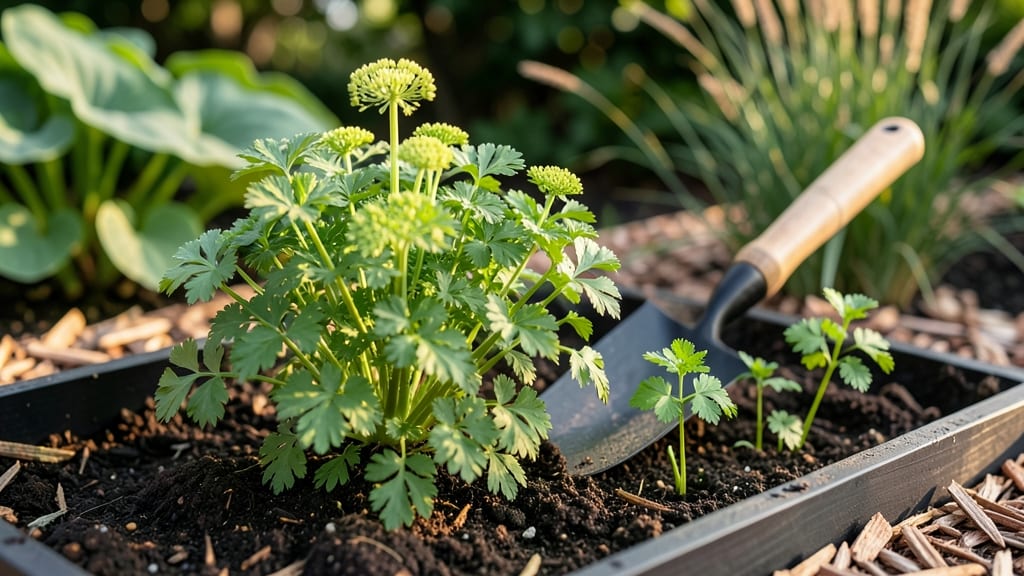
Planting parsley too close means stunted, leggy plants that never reach their full bushy potential. ✨ I’ve learned the hard way that parsley planting distance determines whether you get a fragrant, productive herb or a sad, crowded clump fighting for sunlight.
The right spacing—about 12 to 18 inches apart—lets roots spread freely and air circulate, which keeps the leaves lush and flavorful.
This works for both flat-ground gardens and containers, though you’ll need slightly smaller gaps—8 to 12 inches—if you’re planting multiple stems in a 12-inch pot.
Flat-leaf parsley needs a bit more room than curly parsley, so adjust accordingly. The key is giving each plant enough elbow room to grow upright, not sprawl.
📚 In This Guide
- What you need
- Instructions
- Tips and common mistakes
- Wrapping up and next steps
What you need
- ● Parsley seeds or seedlings: Choose between flat-leaf (curly parsley) or Italian (Hamburg) parsley.
- ● Quantity: ~10–20 seeds per plant (or 4–6 seedlings for direct planting).
- ● Soil: Well-draining, fertile loam (pH 6.0–7.0).
- ○ Optional: Mix in compost (1–2 cups per square foot) for nutrients.
- ● Planting area: Garden beds: 6–12 inches deep, with full sun (6+ hours/day).
- ● Containers: At least 6–8 inches deep (1 plant per 6-inch pot).
- ● Hand trowel (for seed planting or transplanting).
- ● Measuring tape or ruler (to ensure proper parsley planting distance).
- ● Watering can or hose with gentle spray nozzle (avoid disturbing seeds).
- ○ Mulch (optional): Straw or shredded leaves to retain moisture.
- ○ Garden gloves (optional): For comfort while handling soil.
- ● Climate: Plant after the last frost (spring or early fall in zones 3–10).
- ● Water source: Consistent moisture (keep soil damp but not soggy).
- ● Patience: Parsley grows slowly—germination takes 2–4 weeks!
Instructions for planting parsley with perfect spacing
Here's how to space parsley for lush, flavorful growth that yields all season.
🌱 Step 1: Understand Parsley's Growth Habits and Space Requirements
Parsley grows in a rounded bush shape that spreads 12-18 inches wide at maturity. Planting too close crowds stems, leading to leggy growth and poor air circulation that invites fungal diseases. I always space flat-leaf parsley 10-12 inches apart and curly parsley 12-14 inches apart—the extra room gives curly varieties room to fully unfurl their fronds.
Dig holes just deep enough to accommodate the root ball without burying the crown (where stems meet roots). Parsley roots are shallow but fibrous, so disturbing them during planting stresses the plant. You'll see the ideal depth when the top of the root ball sits ½ inch below soil level—this prevents stem rot while allowing roots to expand freely.
🪴 Step 2: Prepare the Planting Site for Optimal Growth
Choose a location with at least 6 hours of sunlight daily—parsley tolerates partial shade but produces stronger flavor in full sun. Amend the soil with 2-3 inches of compost mixed into the top 6 inches of soil to improve drainage and nutrient availability. Parsley prefers well-draining soil with a pH between 6.0 and 7.0—test your soil if you're unsure.
Water the planting area 24 hours before transplanting to reduce shock. You'll know the soil is ready when it feels uniformly moist but not soggy—press your finger 1 inch deep and feel slight resistance. This pre-watering helps roots establish faster and prevents transplant shock from dry soil.
☀️ Step 3: Plant Parsley at the Correct Depth and Orientation
Place each parsley plant in its hole, ensuring the crown sits at soil level—burying it too deep causes rot, while planting too shallow exposes roots to drying. Gently firm the soil around the base with your fingers to eliminate air pockets, then water deeply to settle everything. You'll see the soil settle ½ inch as it absorbs moisture—this is normal and ensures good root contact.
Space rows 18-24 inches apart for easy access and airflow. If growing in containers, use pots at least 12 inches deep and wide—parsley has a taproot that needs room to develop. Mulch with 2 inches of organic mulch (like straw or shredded leaves) to retain moisture and suppress weeds, keeping the crown 2 inches above the mulch layer to prevent rot.
🌿 Step 4: Monitor Growth and Adjust Spacing for Bushiness
Within 3-4 weeks, you'll notice new growth at the base of the plant—this is your cue that roots are establishing. Thin seedlings if they're growing too close, leaving the strongest 10-12 inches apart. Parsley self-seeds readily, so remove volunteers that pop up between plants to avoid overcrowding.
If parsley starts to look leggy or sparse, it's a sign of insufficient light or overcrowding. Trim back any stems that grow more than 12 inches tall to encourage bushier growth. You'll see a denser, fuller plant within 2-3 weeks of pruning—this is because parsley grows in a rosette pattern and responds well to light trimming.
✂️ Step 5: Maintain Spacing Through the Growing Season
Harvest outer stems regularly to encourage new growth and prevent the plant from becoming woody. Cut stems 2-3 inches above the base to stimulate branching. Avoid harvesting more than ⅓ of the plant at once, or you'll stunt its ability to regrow.
If parsley bolts (sends up a tall flowering stalk) before maturity, it's often a sign of overcrowding or heat stress. In this case, thin the plant further or provide afternoon shade in hot climates. You'll know it's time to intervene when you see the first flower buds—this is the plant's way of telling you it's ready to set seed and slow down growth.
Tips & tricks for perfect parsley planting distance
A few strategic spacing adjustments can transform your parsley from sparse to spectacular. Here's what I've learned after years of trial and error in the garden.
Root Ball Depth Matters: The ½-inch rule for root ball depth is critical—any deeper and you risk crown rot, any shallower and roots dry out. I've seen parsley plants struggle when buried too deeply, so always check that the crown sits just at soil level. For container growing, use pots with drainage holes and fill the bottom third with gravel to prevent waterlogging, which can drown those shallow roots.
Sunlight Strategy: Those 6 hours of sunlight are non-negotiable for flavor development. In hot climates, provide afternoon shade during peak summer months to prevent bolting. I've noticed parsley in full sun all day develops more robust leaves and stronger flavor, but in my zone 9 garden, I move containers to partial shade when temperatures exceed 90°F.
Thinning Timeline: The 3-4 week window for thinning seedlings is your best opportunity to prevent overcrowding. I recommend doing this in two stages: first when seedlings are 2 inches tall, then again at 4-5 inches. This gradual approach gives you time to assess growth patterns while preventing shock from aggressive thinning all at once.
Container Considerations: When growing parsley in containers, remember the 12-inch depth requirement—shallow pots restrict root growth and lead to stunted plants. I've had success with fabric grow bags that allow roots to breathe while maintaining proper spacing. For multiple plants, use containers with at least 18-inch diameter to accommodate the mature spread.
Pro Tips for Parsley Planting Distance
- A few strategic spacing adjustments can transform your parsley from sparse to spectacular.
- Root Ball Depth Matters: The ½-inch rule for root ball depth is critical—any deeper and you risk crown rot, any shallower and roots dry out.
- Sunlight Strategy: Those 6 hours of sunlight are non-negotiable for flavor development.
Frequently asked questions
Got questions about parsley planting distance? You’re not alone! Here are answers to the most common queries to help you grow lush, healthy parsley every time.
What’s the best parsley planting distance for containers vs. garden beds?
For garden beds, space flat-leaf parsley 12–18 inches apart and curly parsley 8–12 inches apart to allow airflow and prevent disease. In containers, plant 2–3 seeds per 6-inch pot or 1 seed per 4-inch pot—just ensure pots have drainage holes!
When is the ideal time to plant parsley for the best spacing results?
Parsley thrives in cool weather, so plant seeds 2–4 weeks before your last frost date in spring or 8–10 weeks before the first fall frost. Avoid summer heat—it causes bolting (flowering too soon). Direct-sow seeds ¼-inch deep for faster germination.
Can I replant parsley too close together after thinning?
Yes! If you thin seedlings and replant them, keep the same spacing rules (12–18 inches for flat-leaf, 8–12 for curly). Pro tip: Water gently after replanting to reduce transplant shock. Avoid overcrowding—parsley needs room to develop those vibrant leaves!
Why is my parsley growing leggy or sparse despite proper spacing?
Leggy parsley often means too much shade or poor soil. Ensure it gets 4–6 hours of sunlight daily and rich, well-draining soil. If soil is compacted, loosen it before planting. Bonus: A light mulch layer retains moisture and encourages bushier growth.
Are there parsley varieties that need different spacing?
Most varieties follow the same spacing guidelines, but giant Italian parsley may need 18–24 inches due to its larger size. Dwarf parsley (like ‘Baby Parsley’) can tolerate 6–8 inches apart. Always check seed packets for variety-specific tips!
Wrapping up and next steps
Mastering the parsley planting distance is your secret to lush, flavorful harvests! Whether you’re growing flat-leaf or curly parsley, proper spacing ensures strong roots, abundant foliage, and fewer pests.
Now that you’re armed with the right techniques, it’s time to roll up your sleeves and plant with confidence—your garden (and taste buds) will thank you!
Ready to take the next step? Start small with a few plants, experiment with spacing, and soon you’ll be enjoying homegrown parsley year-round. Happy gardening! 🌱