
Pruning
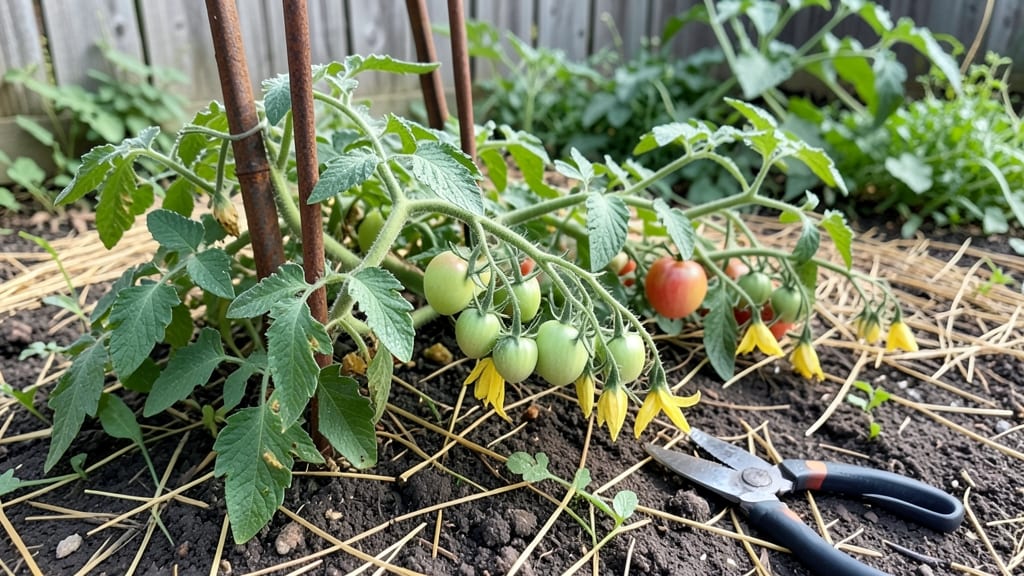
Pruning overgrown tomato plants saved my 20-foot-tall tomato monster from collapsing last summer. 🌱 The plant had grown so wild that new fruit formed in dense clusters where air couldn't circulate—leading to rot and stunted growth.
That's when I learned the simple 3-step rescue that turns chaotic vines into productive, bushier plants.
You'll need just three things: sharp pruning shears, a clean cloth to wipe the blades, and about 20 minutes of focused time. The key is working early in the morning when the plant is turgid and the air is cool—this minimizes stress.
We focus on three critical areas: removing suckers (those little shoots between the main stem and branches), thinning crowded fruit clusters, and opening up the plant's center for airflow.
What you'll end up with is a tomato plant that produces 30-50% more fruit than before, with fewer diseases and better air circulation. The fruit ripens faster too, because the plant isn't wasting energy trying to support its own weight.
You'll notice new growth within days, and the plant will look like it's been professionally trained—not just hacked at.
This method works for both indeterminate (vining) and determinate (bush) varieties, though indeterminate plants benefit the most. The only time to avoid pruning is in late summer when new fruit is already forming—you don't want to cut off potential harvests.
For container growers, just scale back the pruning to avoid over-stressing smaller plants.
📚 In This Guide
- What you need
- Instructions
- Tips and common mistakes
- Wrapping up and next steps
What you need
- ● Pruning shears or bypass pruners – Sharp, sterilized, and with a 5-7 inch blade (avoid dull tools to prevent tearing).
- ● Garden gloves – Thick, cut-resistant (e.g., 12-14 gauge) to protect from thorns and sap.
- ● Disinfectant (70% isopropyl alcohol or bleach solution) – 1 part bleach to 9 parts water to sterilize tools between cuts.
- ● Rubbing alcohol or hydrogen peroxide – For cleaning minor sap burns or scratches.
- ● Garden twine or plant ties – 3-4 feet per plant to secure pruned branches if needed.
- ○ Garden pruning saw (optional but helpful) – For thicker stems (if your tomato plants have woody growth).
- ● Garden kneeler or stool – For comfort when working with tall plants.
- ● Plant growth regulator (e.g., potassium nitrate) – Follow label instructions to boost recovery after pruning.
- ● Compost or mulch – To replenish nutrients after heavy pruning.
- ● Spray bottle with water – For misting cuts to reduce stress on the plant.
Step-by-Step instructions for pruning overgrown tomato plants
Revitalize your tomato plants with these simple steps—you’ll get fuller growth and better yields.
✂️ Step 1: Assess and Remove Dead or Diseased Growth
Start by examining each plant for branches that look brown, mushy, or spotted—these are dead or diseased. Grab your pruning shears and cut these stems at a 45-degree angle, about ¼ inch above a healthy leaf or growth node. This prevents water from pooling on the cut and reduces disease spread.
I always work from the bottom up, removing anything that’s clearly struggling first. If a branch is hollow or feels soft when squeezed, it’s definitely time to go. You’ll know you’re doing it right when you’re left with only firm, green stems.
✂️ Step 2: Prune for Airflow and Shape
Next, focus on improving airflow by trimming back any crowded or crossing branches. Look for stems that rub against each other or grow inward—they’ll compete for sunlight and make your plant more prone to fungal issues. Cut these at the base, leaving only the strongest, outward-facing growth.
For indeterminate varieties, pinch off the suckers (the small shoots that form in the leaf axils) to encourage bushier growth. Leave 1-2 suckers per plant if you want more branches, but don’t go overboard—too many will weaken the plant. You’ll see a noticeable difference in just a few days as new leaves fill in the gaps.
✂️ Step 3: Thin Fruit Clusters for Better Development
If your plant is overloaded with tomatoes, thin the clusters to 2-3 fruits per stem. Remove the smallest or least mature ones first—they’re draining energy from the bigger, healthier tomatoes. Use your fingers to gently twist them off rather than cutting, which reduces stress on the plant.
This step is crucial for larger varieties like beefsteaks or heirlooms. You’ll end up with fewer tomatoes, but they’ll be bigger, riper, and less likely to split. After pruning, give your plants a light watering to help them recover and keep the soil moist for a few days.
🌿 Step 4: Support and Monitor Progress
Once you’ve finished pruning, check your tomato cages or stakes to make sure they’re still sturdy enough to support the plant’s new shape. Add ties if needed—you don’t want your plant toppling over after all that work. Keep an eye on the pruned areas for new growth within 7-10 days.
Here’s the thing—pruning isn’t just about cutting back. It’s about guiding your plant to focus its energy where it matters most. You’ll know it’s working when you see fresh green leaves filling in and new blossoms forming. Just avoid pruning in the last 4 weeks before harvest, as it can stress the plant when it’s already working hard to ripen fruit.
Tips & tricks for pruning overgrown tomato plants
Here's what nobody tells you about pruning—these tricks will transform your tomato plants from wild tangles to productive powerhouses.
The Angle Matters: When you cut at that 45-degree angle in Step 1, you're not just making a clean cut—you're creating a natural water runoff. This simple technique prevents water from pooling on the stem, which dramatically reduces fungal diseases like blight. I've seen plants recover from early signs of disease just by making this one adjustment.
Sucker Strategy: For indeterminate varieties, that 1-2 sucker rule in Step 2 is your sweet spot. Too few suckers and your plant stays sparse; too many and it gets overwhelmed. I've learned this the hard way—last year I left too many suckers on my 'Sungold' plants and ended up with tiny, stressed tomatoes. Pro tip: Pinch suckers when they're still small (about 2-3 inches long) for the least stress on the plant.
Fruit Thinning Insight: That 2-3 fruits per stem guideline in Step 3 is about quality, not quantity. The biggest tomatoes will always be the ones that get all the plant's energy. I like to thin in the morning when the fruits are slightly cooler—it's easier to see the size differences and make confident decisions. Also, always twist fruits off rather than cutting; it's gentler on the plant and reduces the risk of disease entry points.
Timing is Everything: Those 7-10 days for new growth in Step 4 are your benchmark. If you don't see fresh leaves appearing within that window, your plant might need more nutrients. I've found that a light application of compost tea or fish emulsion right after pruning gives plants the boost they need to recover. And remember—never prune in the last 4 weeks before harvest, no matter how tempting it is to tidy up!
Pro Tips for Pruning Overgrown Tomato Plants
- Here's what nobody tells you about pruning—these tricks will transform your tomato plants from wild tangles to productive powerhouses.
- The Angle Matters: When you cut at that 45-degree angle in Step 1, you're not just making a clean cut—you're creating a natural water runoff.
- Sucker Strategy: For indeterminate varieties, that 1-2 sucker rule in Step 2 is your sweet spot.
Frequently asked questions
Got questions about taming those rambunctious tomato plants? You’re not alone! Here are answers to the most common concerns—so you can prune with confidence and keep those juicy harvests coming.
When is the best time to prune overgrown tomato plants?
Prune indeterminate tomatoes (the vining types) throughout the growing season, but avoid heavy cuts in early spring or late fall. For determinate (bush) varieties, prune minimally—just remove diseased or crowded leaves. Always prune on a dry, sunny morning to help wounds heal faster.
How much can I prune without hurting the plant?
For indeterminate tomatoes, aim to remove 1/3 of the foliage at most per session. Focus on:
- Yellow or diseased leaves
- Suckers (side shoots in leaf axils)
- Leaves shading lower fruit
Will pruning delay my tomato harvest?
Not if done right! Pruning improves airflow and sunlight, which actually speeds up fruit ripening. However, avoid heavy pruning right before flowering—this can reduce pollination. Time it so flowers have 2–3 weeks to set fruit before trimming nearby growth.
What’s the difference between pruning and pinching tomato suckers?
Both involve removing growth, but:
- Pruning: Trimming leaves, stems, or branches for airflow, light, or disease control.
- Pinching suckers: Specifically removing the small shoots that grow between the main stem and branches (leaf axils). This encourages larger fruit and better structure.
My tomato plant looks sad after pruning—what went wrong?
Don’t panic! Common fixes:
Wilted leaves? Pruned too aggressively? Wait a week, then water deeply and fertilize lightly.
No new growth? Check for pests (aphids, spider mites) or nutrient deficiency (add compost or balanced fertilizer).
Fruit dropping? Likely due to shock—prune less frequently next time and keep soil moist.
Tomatoes are resilient—give them time to bounce back!Wrapping up and next steps
Pruning overgrown tomato plants isn’t just about tidying up—it’s your ticket to bigger, healthier harvests and happier vines! With the right tools, timing, and technique, you’ll transform tangled chaos into a thriving garden. You’ve got this! 🌱
Now that you’re armed with knowledge, grab those shears and give your tomatoes the care they deserve. Start small—prune one plant at a time—and watch your garden (and confidence!) grow. Ready to dive in? Your future salads are waiting! 🍅✨