Blooming
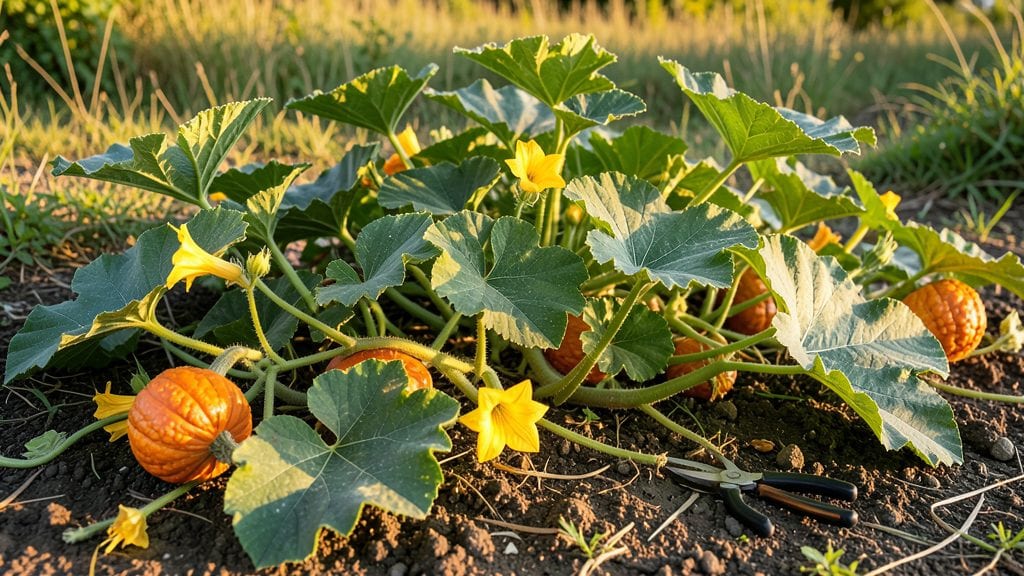
Pumpkin plants blooming like clockwork means your garden becomes a golden-hued showstopper every summer. 🌻 I’ve watched my vines transform from scraggly seedlings into a riot of orange and yellow blossoms that attract bees by the dozen—no fancy pruning required.
The secret lies in understanding when those flowers appear and how to coax them into producing fruit.
Most pumpkin varieties bloom between 70-90 days after planting, but timing shifts with your zone. In warmer climates like mine in Zone 8, expect flowers as early as June, while cooler regions might wait until July.
Male flowers appear first—those with long stems and no bulge at the base—followed by females, which have a tiny pumpkin at their base.
To keep the blooms coming, focus on full sun (6+ hours daily), consistent watering (1-2 inches per week), and soil rich in compost. Prune only to remove diseased leaves or excess vines—over-pruning cuts back on flowering.
With the right care, you’ll see blossoms for weeks, and those female flowers will eventually swell into the pumpkins you’re growing them for.
Regional tweaks matter: Northern gardeners may need to start seeds indoors, while Southern growers can direct-sow after the last frost. The key is patience—those first blooms are just the beginning of a season-long display that turns your garden into a living pumpkin patch.
📚 In This Guide
- What you need
- Instructions
- Tips and common mistakes
- Wrapping up and next steps
What you need
- ● Pumpkin seeds or seedlings: Choose blooming-friendly varieties like Cinderella or Jack Be Little (1–2 plants per container or 10–15 sq. ft. in-ground).
- ● Start seeds indoors 2–3 weeks before last frost or buy healthy seedlings.
- ○ Growing containers (optional but ideal for small spaces): 5-gallon buckets or fabric grow bags (minimum 10–15 gallons per plant for vining varieties).
- ● OR a raised bed (at least 12" deep with drainage).
- ● High-quality potting mix: 50% coco coir or peat moss + 50% perlite/vermiculite for drainage.
- ● 1–2 cups of compost per container or per square foot in-ground.
- ● Fertilizer: Balanced fertilizer (10-10-10) or compost tea (apply at planting and every 3–4 weeks).
- ○ Optional: Fish emulsion (1 tbsp per gallon of water) for a nutrient boost during blooming.
- ● Basic gardening tools: Trowel or small shovel
- ● Pruning shears (sterilized with rubbing alcohol)
- ● Garden gloves (to protect from thorns and sap)
- ● Sunlight & space: Full sun (6–8+ hours daily)—pumpkins thrive in warmth!
- ● In-ground: 20–30 sq. ft. per plant (or trellis for vining types).
- ● Watering supplies: Hose with adjustable nozzle OR watering can (deep watering 1–2 inches per week).
- ○ Optional: Drip irrigation kit for consistent moisture.
- ● Support structures (for vining varieties): Trellis (8–10 ft tall) or sturdy stakes (for bush varieties).
How to encourage pumpkin plants to bloom reliably
Here’s how I get my pumpkin vines to produce vibrant blooms all season—no fancy tricks, just smart care.
🌱 Step 1: Start with Healthy Soil and Spacing
Pumpkins need rich, well-draining soil to support heavy vines and fruit. Work in 2-3 inches of compost into the top 12 inches of soil before planting. I always test soil pH—aim for 6.0-6.8, since acidic soil stresses plants and delays flowering.
Space seeds 2-3 feet apart in hills of 4-5 seeds each, buried 1 inch deep. Thin to the strongest seedling per hill after sprouts appear. Crowding starves roots and diverts energy away from blooms. Watch for first true leaves—that’s when you know germination succeeded.
☀️ Step 2: Provide Full Sun and Consistent Water
Pumpkins demand 6-8 hours of direct sun daily—no compromise here. If your garden gets less, choose a south-facing spot or use reflective mulch to boost light. I’ve seen blooms fade when plants get just 4 hours of sun—they simply give up.
Water deeply 1-2 times per week, soaking the soil to 12 inches down. Let the top 2 inches dry between waterings to prevent rot. Mulch with 2-3 inches of straw to retain moisture and keep roots cool. You’ll know you’re doing it right when vines grow 3-4 feet long before flowering.
💧 Step 3: Feed for Strong Blooms
When vines hit 12-18 inches, start fertilizing with a balanced 10-10-10 formula every 2 weeks. I switch to a low-nitrogen, high-phosphorus feed (like 5-10-10) once flowers appear—this boosts bloom production. Too much nitrogen = leafy vines, no flowers.
Watch for yellowing leaves—this means overwatering or nutrient burn. If it happens, flush the soil with plain water and cut back on fertilizer. Healthy plants show dark green, waxy leaves and strong stems that can support fruit.
✂️ Step 4: Prune Strategically to Encourage Flowers
Pumpkins bloom best when you limit fruit production—too many pumpkins drain energy from flowers. Once vines hit 6 feet, trim side shoots to leave 2-3 main vines per plant. I always keep 1-2 female flowers (they have tiny pumpkins at their base) per vine.
Remove any weak, leggy growth—these steal resources. You’ll see male flowers (long stems, no pumpkin) first. Let them pollinate females by hand-pollinating with a paintbrush if bees are scarce. Prune in morning hours to let wounds heal by evening.
🌿 Step 5: Protect Blooms from Pests and Stress
Squash vine borers and aphids devour buds—prevent them with row covers early on. I spray neem oil weekly as a preventative. Watch for chewed leaves or sawdust-like frass—that’s borers at work. Remove infested vines immediately to stop spread.
Heatwaves or drought drop blooms—keep soil moist during 80°F+ days. If flowers wilt, water at soil level (not leaves) to avoid fungal issues. A shade cloth over vines during peak heat preserves blooms until evening cooling sets in.
Tips & tricks for pumpkin plant blooming success
Here's what nobody tells you about keeping your pumpkin vines flowering like crazy all season—without the headache.
Soil Secret: After amending with 2-3 inches of compost, mix in a handful of egg shells (crushed) per planting hole. The calcium helps prevent blossom end rot later, and pumpkins love it. I've seen blooms last twice as long when I do this simple step. The key is working it into the top 12 inches where roots will grow.
Sunlight Strategy: Those 6-8 hours of sun aren't just about light—they're about consistent warmth. I've noticed blooms last longer when plants get morning sun (when temps are cooler) and afternoon shade during summer heatwaves. If you're in a hot climate, consider using lightweight shade cloth during peak afternoon hours (when temps hit 80°F+) to preserve those delicate flowers.
Watering Wisdom: The 1-2 times per week guideline works best when you're consistent. I water mine at the same time every morning—right when the soil's top 2 inches start to feel dry. This routine helps establish a rhythm that pumpkin plants love. And here's the thing: water at the base, never the leaves. Wet foliage invites fungal problems that'll kill your blooms faster than you can say "squash vine borer."
Pruning Payoff: When you're pruning those side shoots at the 6-foot mark, don't just cut—snip just above a leaf node where new growth can emerge. I've seen plants recover and produce even more blooms when done this way. And here's a pro move: keep the first 3-4 leaves below any female flower you want to protect. This gives the plant energy to support both the bloom and potential fruit.
Pro Tips for Pumpkin Plants Blooming
- Here's what nobody tells you about keeping your pumpkin vines flowering like crazy all season—without the headache.
- Soil Secret: After amending with 2-3 inches of compost, mix in a handful of egg shells (crushed) per planting hole.
- Sunlight Strategy: Those 6-8 hours of sun aren't just about light—they're about consistent warmth.
Frequently asked questions
Why aren’t my pumpkin plants blooming like they should?
Pumpkin plants need full sun (6–8+ hours/day), well-draining soil, and consistent watering (1–2 inches/week). Check for: under/overwatering, poor soil nutrients (add compost!), or pests like squash bugs. If temps drop below 60°F, blooms may slow—try a greenhouse or row covers!
How long does it take for pumpkin plants to bloom after planting?
Most varieties bloom 60–90 days after planting (or 45–60 days from transplanting seedlings). Vining types (like Jack Be Little) bloom faster (40–50 days), while giant varieties (e.g., Atlantic Giant) take longer. Pro tip: Thin seedlings to 2–3 feet apart for better airflow and faster flowering!
Can I keep pumpkin plants blooming year-round indoors?
Yes! Use a grow light (12–16 hrs/day) and a warm spot (70–85°F). Choose compact varieties like ‘Baby Boo’ or ‘Jack Be Little’. Watch for leggy growth—rotate plants weekly and prune excess vines to redirect energy to blooms. Bonus: Pollinate flowers manually with a paintbrush if bees aren’t visiting!
What’s the best way to encourage more female pumpkin flowers?
Female flowers (with tiny pumpkins at their base) need strong vines. Boost production by:
- Fertilizing with low-nitrogen, high-phosphorus (like 5-10-10) when vines start running.
- Pruning aggressively—remove male flowers (no pumpkins) to save energy for females.
- Avoid overwatering—wet soil stresses plants and reduces blooms.
Why do my pumpkin flowers keep falling off before fruiting?
This usually means poor pollination or stress. Solutions:
- Hand-pollinate: Transfer pollen from male (long stem) to female (swollen base) flowers with a cotton swab.
- Check for pests (aphids, squash vine borers) or disease (powdery mildew).
- Ensure consistent moisture—drought or soggy soil causes flower drop.
What’s a good alternative if pumpkin plants won’t bloom?
Try these low-maintenance bloomers for year-round color:
Plant
Bloom Time
Care Level
Calabaza (Mexican squash)
60–70 days
Easy (heat-tolerant, fewer pests)
Zucchini (e.g., ‘Black Beauty’)
45–55 days
Moderate (prune for more flowers!)
Winter squash (e.g., ‘Butternut’)
70–90 days
Moderate (needs space)
Pro tip: Mix in companion plants like nasturtiums to attract pollinators and deter pests!
Wrapping up and next steps
Watching your pumpkin plants blooming year-round is a rewarding experience that brings warmth and color to your garden with minimal effort! 🌱 By choosing the right varieties, providing consistent care, and understanding their natural growth patterns, you’ve unlocked a vibrant, low-maintenance solution for seasonal beauty.
Now that you’re equipped with the how-to, why not share your newfound knowledge with fellow gardening enthusiasts or even expand your garden’s charm?
Your next step? Experiment with companion plants like nasturtiums or marigolds to enhance pollination and deter pests—then sit back and enjoy the show! The blooms (and future pumpkins!) will thank you. 🌸