
Diseases
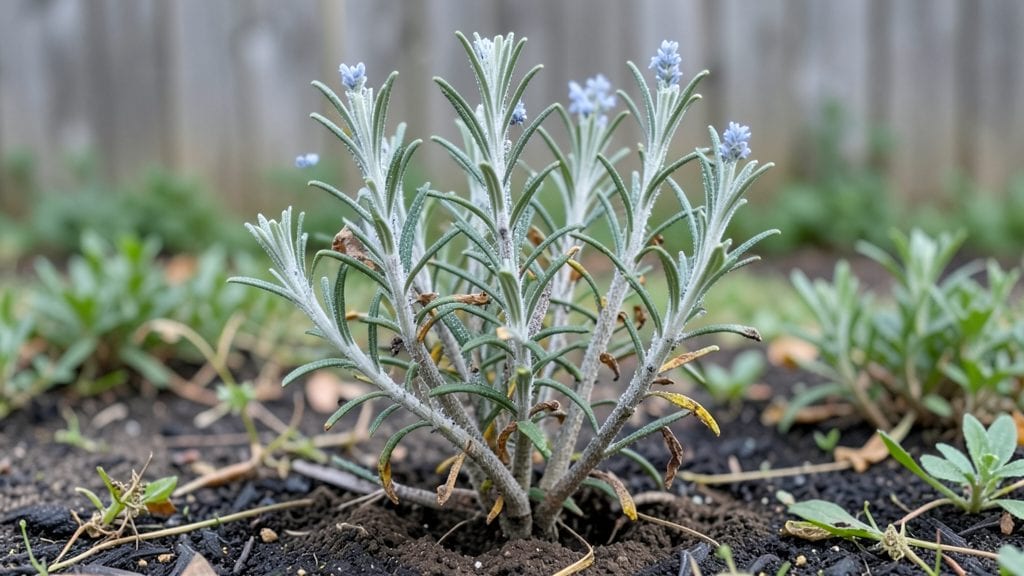
Rosemary plant diseases can turn your fragrant shrub from kitchen staple to sad, brown mess if you don’t catch them early. I’ve seen powdery white spots, blackened stems, and wilting branches—all signs your rosemary is fighting something nasty.
The good news? Most of these fungal foes respond to simple fixes once you know what to look for.
Fungal infections like powdery mildew and root rot thrive in damp, crowded conditions. Overwatering, poor airflow, or old mulch around the base create the perfect breeding ground. My rosemary nearly died last summer from root rot because I ignored the mushy stems until it was too late.
The key is prevention: prune for airflow, water at the base (not the leaves), and avoid soggy soil.
You’ll spot these diseases early with the right checks: yellowing leaves, dark spots, or a fuzzy white coating. A quick spray of neem oil or baking soda mix (1 teaspoon per quart of water) can stop them in their tracks.
For stubborn cases, cut out infected stems immediately—don’t wait, or the whole plant suffers.
Healthy rosemary stays bushy, fragrant, and productive for years. With these tricks—proper spacing, smart watering, and fast action—you’ll keep your plants thriving. Now let’s tackle those diseases before they tackle you.
Root Causes Behind Rosemary Woes
Rosemary’s hardy reputation can take a hit when fungal diseases strike, but understanding the why behind these issues is half the battle. Below, we break down the most common triggers—so you can nip problems in the bud (literally).
Rosemary thrives in well-drained, sandy soil and hates soggy roots. When water pools around the base or the soil stays damp for too long, fungal pathogens like Phytophthora and Fusarium get a feast.
Here’s why: - Oxygen deprivation: Waterlogged soil cuts off airflow to roots, weakening the plant’s defenses. - Pathogen proliferation: Fungi thrive in moisture, spreading rapidly in saturated conditions. - Root rot: Excess water blocks nutrients, making rosemary vulnerable to secondary infections.
Actionable fix: Use gravelly or raised beds and ensure pots have drainage holes. Water only when the top inch of soil is dry—never on a schedule.
Rosemary’s natural Mediterranean climate means it’s not built for high humidity. When spores from nearby infected plants (or even soil) latch onto rosemary’s leaves, diseases like powdery mildew or rust take hold.
Key triggers: - Stagnant air: Poor airflow (e.g., crowded pots or dense foliage) traps spores. - Wet foliage: Morning dew or overhead watering creates a perfect spore highway. - Stress from heat: Heatwaves weaken rosemary, making it easier for fungi to invade.
Actionable fix: Space plants 3–4 feet apart, prune for airflow, and water at the base (not overhead). A fan on low can reduce humidity in greenhouses.
A hungry rosemary is a sick rosemary. When deprived of nitrogen, phosphorus, or micronutrients, its immune system crashes—inviting fungal invaders.
Common deficiencies: - Nitrogen (N): Yellowing leaves signal weak growth, making plants prone to Botrytis (gray mold). - Potassium (K): Brown leaf edges indicate poor disease resistance. - Iron (Fe): Chlorosis (yellowing between veins) stresses the plant, opening doors for pathogens.
Actionable fix: Test soil pH (ideal: 6.0–7.0) and amend with compost or balanced fertilizer (10-10-10). Avoid over-fertilizing—rosemary prefers lean soil.
Some pests don’t just eat rosemary—they spread fungal spores like tiny disease couriers.
The worst offenders: - Aphids: Excrete honeydew, which fosters sooty mold. - Spider mites: Weakened plants from feeding become easy targets for Alternaria leaf spot. - Whiteflies: Their droppings create a sticky film where fungi grow.
Actionable fix: Spray with neem oil or introduce ladybugs to control pests. Remove heavily infested leaves immediately.
Rosemary needs breathing room. Crowded plants create:
- Shaded, damp microclimates (fungi love this).
- Competition for nutrients, weakening individual plants.
- Physical damage from brushing leaves (opens wounds for infection).
Actionable fix: Space rosemary 18–24 inches apart in gardens or use container gardening for better airflow.
Rosemary’s native to Mediterranean climates—it hates sudden temperature swings.
Cold snaps or hot spells stress the plant, lowering resistance: - Cold damage: Frost weakens cell walls, making rosemary susceptible to Septoria leaf spot. - Heat stress: Drought-like conditions (even in humid climates) force the plant to divert energy from defense.
Actionable fix: Mulch with gravel or straw to regulate soil temp. In winter, protect with burlap if temps drop below 20°F.
Too much synthetic fertilizer (especially high in salts) can burn rosemary’s roots, creating entry points for fungi. Symptoms:
- Brown leaf tips (salt buildup).
- Stunted growth (nutrient imbalance).
- Weakened roots (easy fungal access).
Actionable fix: Use organic matter (compost, worm castings) and flush soil with water monthly to reduce salt buildup.
Pro Tip: 💡 Rotate crops if growing rosemary in the same spot yearly—fungi can linger in soil! Plant in fresh ground every 2–3 years.
Quick Fixes for Rosemary’s Fungal Foes
Rosemary’s woody charm can turn woeful if fungal diseases creep in—but don’t despair! With the right moves, you can revive your rosemary and keep future outbreaks at bay. Below, we map the most common causes to practical, step-by-step fixes, plus prevention tricks to shield your plants long-term.
Cause: Overwatering, poor drainage, or soggy soil. Fix: 🔥 Step 1: Emergency Drainage
- Gently remove the plant from its pot or soil and trim away mushy, blackened roots with sterilized scissors (🔪). Healthy roots are firm and white.
- If repotting, choose a container with drainage holes and fill the bottom ¼ with gravel or perlite to prevent waterlogging.
👨🍳 Step 2: Revive the Roots
- Mix 1 part perlite or coarse sand into 3 parts fresh potting soil (use a well-draining rosemary mix).
- Replant the trimmed rosemary, ensuring the base sits just above the soil line (never buried).
- Water lightly—only when the top inch of soil feels dry.
⏰ Step 3: Monitor & Adjust - Place the pot in a bright, indirect spot (avoid direct sun until recovery). - Skip fertilizing for 2–3 weeks—roots need time to heal. - Prevention pro tip: 💡 Water only when soil is bone-dry (stick your finger in to check!).
Use a self-watering pot with a moisture meter if you’re prone to overwatering.
Cause: Humid conditions, crowded plants, or weak airflow. Fix: 🍳 Step 1: Cleanse the Leaves
- Wipe down leaves with a neem oil solution (1 tbsp neem oil + 1 tsp mild soap + 1 quart water) using a soft cloth or sponge (🌿). Avoid harsh sprays that can damage foliage.
- For severe cases, prune infected stems (🔪) and dispose of them in the trash (not compost).
🔥 Step 2: Boost Airflow
- Space plants 12–18 inches apart to improve circulation.
- Trim back nearby plants blocking airflow around rosemary.
- Prevention tip: 🌡️ Water in the morning so leaves dry quickly. Avoid overhead sprinkling.
🎯 Step 3: Fungal Foes Hate Copper
- Spray with a copper fungicide (like Bordeaux mixture) every 7–10 days until mildew disappears.
- DIY alternative: Mix 1 tsp baking soda + 1 quart water + a few drops of soap and spray lightly (test on a small leaf first).
Cause: Soilborne fungi in infected pots/soil. Fix: 🔪 Step 1: Radical Pruning
- Cut back the plant by ⅓ to reduce fungal load. Dispose of pruned stems immediately (🚯).
- Sterilize tools with rubbing alcohol between cuts.
🌱 Step 2: Repot in Fresh Soil
- Replace the entire pot (or sterilize it with bleach solution if reusing).
- Use new, sterile potting mix (or bake old soil in the oven at 200°F for 30 mins to kill fungi).
- Add 20% perlite or vermiculite to improve drainage.
✨ Step 3: Prevent Reinfection
- Rotate crops: Don’t replant rosemary in the same spot for at least 3 years.
- Prevention tip: 💡 Test soil for fungi before repotting—look for dark streaks in stems (a sign of wilt).
Cause: High humidity, wet foliage, or old debris. Fix: 🍳 Step 1: Strip the Rust
- Remove all infected leaves (🔪)—rust spores are contagious!
- Dip pruners in rubbing alcohol between cuts.
🌿 Step 2: Fungicide Spray
- Apply a sulfur-based fungicide (like Liqui-Cop) every 10–14 days until new growth is rust-free.
- DIY option: Mix 1 tbsp milk + 1 quart water (lactic acid fights fungi) and spray early in the morning.
🎯 Step 3: Dry It Out
- Space plants wider to reduce humidity.
- Avoid watering leaves—use a drip irrigation system or water at the base.
| Problem | Prevent It With… |
|---|---|
| Overwatering | Self-watering pots, moisture meters |
| Poor Airflow | Prune regularly, elevate pots, use fans |
| Dirty Tools | Sterilize with alcohol or bleach |
| Old Debris | Clean up fallen leaves weekly |
| Compacted Soil | Add perlite/sand, repot every 2–3 years |
Final Tip: 🌱 Strong rosemary = disease-resistant rosemary! Keep plants well-fed (light fertilizer in spring), pruned, and stress-free (full sun, proper water). A healthy plant is your best defense!
Frequently asked questions about rosemary plant diseases
What are the first signs my rosemary has a fungal infection?
Watch for white powdery spots (powdery mildew), yellowing leaves, or dark, circular spots with fuzzy edges (leaf spot). Check the undersides of leaves first—fungi often start there. If stems feel soft or blackened, it’s likely root rot.
Can I save a rosemary plant with root rot?
Yes, but act fast! Trim away all mushy, blackened roots and repot in fresh, well-draining soil with perlite. Water lightly only when the top inch of soil is dry. Place it in bright, indirect light and avoid fertilizing for 2–3 weeks to help recovery.
Why does my rosemary keep getting powdery mildew even after I treat it?
Powdery mildew thrives in humid, low-airflow conditions. Space plants 3–4 feet apart, prune for airflow, and water at the base (not overhead). Use a fan on low in greenhouses or water in the morning so leaves dry quickly.
Is neem oil safe to use on rosemary for fungal diseases?
Mix 1 tablespoon neem oil + 1 teaspoon mild soap + 1 quart water and spray leaves (avoid direct sun after application). Repeat every 7–10 days until symptoms fade. Neem oil disrupts fungal spores while being gentle on plants.
How do I prevent fungal diseases in potted rosemary?
Use pots with drainage holes, water only when soil is dry, and avoid overcrowding. Sterilize tools between cuts, and add 20% perlite to potting mix. Rotate pots yearly to fresh soil and keep plants in full sun for strong growth.