
Picking
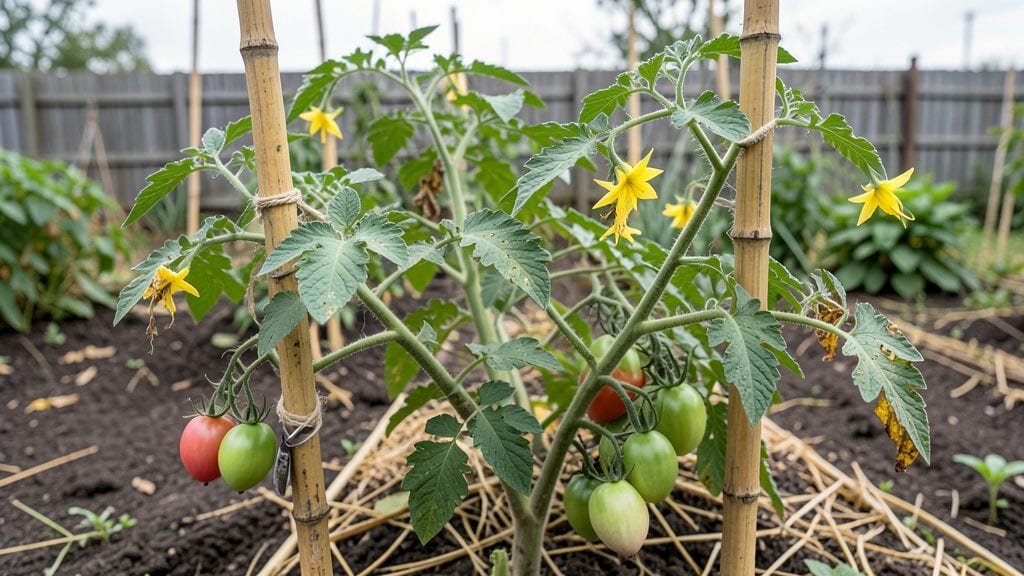
To know when to pick a tomato off the plant, check its ripeness: harvest green tomatoes when they're fully firm and glossy for indoor ripening, or wait for deep red color and slight finger pressure for vine-ripe flavor. Remove overripe or cracked fruit immediately to prevent pests and disease.
Timing matters because tomato flavor develops fully only after reaching peak ripeness on the vine. 🌱 Green tomatoes picked too early lack sweetness and develop a starchy texture, while vine-ripe ones burst with complex flavors.
Different varieties ripen at different rates—cherry tomatoes may be ready in 60-70 days, while heirlooms can take 90 days or more. I always check for the telltale scent (like ripe fruit) and color shift from green to red as my final cues before harvesting.
For gardeners in cooler climates, harvesting green tomatoes and ripening them indoors is a smart strategy. Place them in a paper bag with a banana or apple to speed up ethylene gas production, which triggers ripening.
This method works best with firm, unblemished fruit—never use soft or damaged tomatoes for indoor ripening, as they'll spoil instead.
💡 In This Article
- Tomato Ripening Stages Explained
- Best Practices for Harvesting Tomatoes
Tomato ripening stages explained
Tomatoes undergo a fascinating transformation from green to ripe, driven by ethylene gas production and chlorophyll breakdown.
The process begins with the mature green stage, where tomatoes are firm, glossy, and contain high levels of starch—ideal for indoor ripening when placed in a 65-70°F environment with ethylene sources like apples. At this stage, the skin feels taut, and the fruit has zero give when gently squeezed.
The next phase is the breaker stage, marked by the first blush of color—pink or yellow—appearing on one side. Here, chlorophyll begins degrading, revealing underlying pigments like lycopene (red) and beta-carotene (orange). Texture remains firm but slightly less dense than the mature green stage.
This is when flavor compounds like sugars and acids start developing, though they're not yet fully mature. 🌿 In cooler climates, tomatoes often stall here without proper warmth, which is why gardeners in zones 3-5 must harvest at this point for indoor ripening.
As tomatoes progress to the turning stage, color deepens dramatically, and you'll notice a subtle sweet aroma near the stem. The skin softens slightly, and the fruit begins yielding under gentle thumb pressure (about 1/4-inch indentation).
This is the sweet spot for many gardeners—flavor compounds peak here, but the tomatoes aren't yet at their maximum sweetness. What most people don't realize is that lycopene content (the antioxidant responsible for red color) actually increases during storage, so tomatoes can become even healthier after picking at this stage.
The final stages—vine-ripe and overripe—require careful attention. Vine-ripe tomatoes are fully colored, slightly soft to the touch, and emit a strong, sweet fragrance. Their flavor is at its peak, with sugar content reaching 3-5% (compared to 1-2% in unripe tomatoes).
Overripe tomatoes, however, develop a mushy texture, wrinkled skin, and fermented smell. These should be harvested immediately to prevent attracting pests like fruit flies or spreading disease to other plants.
Climate plays a crucial role in ripening timing. In hot, dry regions, tomatoes may ripen in 50-60 days, while cooler, wetter areas can extend this to 70-80 days. Variety matters too—cherry tomatoes like 'Sweet 100' ripen faster than heirlooms like 'Brandywine,' which can take 90+ days.
The key is monitoring daily and adjusting your harvest schedule based on these factors.
Here's what's actually happening chemically: As tomatoes ripen, chlorophyll breaks down (losing its green color), while lycopene and carotenoids become dominant. Ethylene gas triggers these changes, but temperature regulates the speed.
Below 50°F, ripening nearly stops, while ideal conditions are 70-85°F with consistent sunlight. This is why greenhouse-grown tomatoes often have more intense flavor—the controlled environment optimizes ripening.