
Pests and Diseases
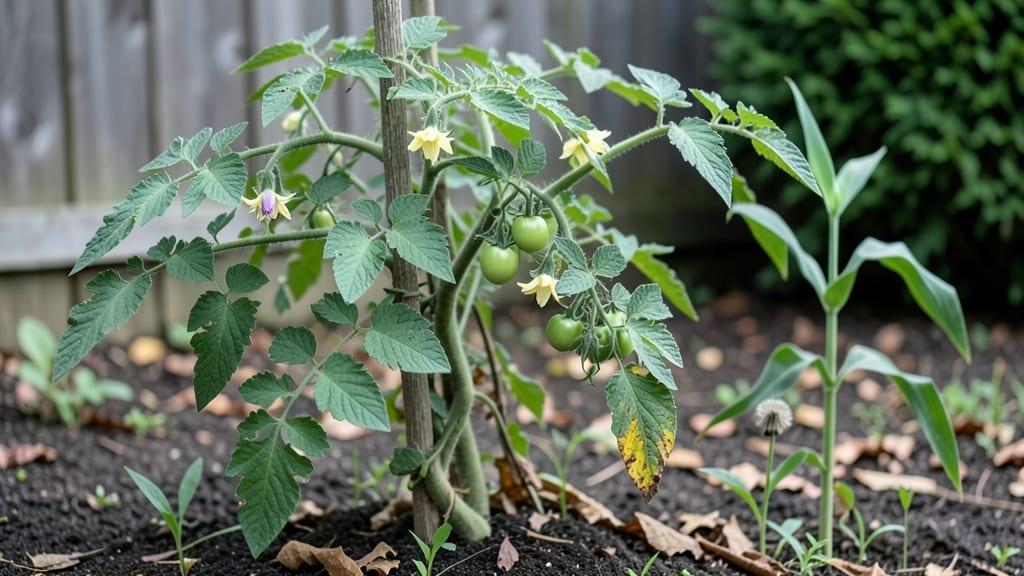
You can plant corn and tomatoes together—they support each other’s growth by sharing space efficiently. Corn acts as a living shade structure, protecting tomatoes from excessive heat, while tomatoes naturally repel pests like raccoons and squirrels that target corn. Just maintain proper spacing to prevent overcrowding and ensure both plants get enough sunlight and airflow.
This pairing works because corn’s tall stalks create a natural canopy, shielding tomatoes from scorching midday sun while keeping soil moisture levels steady. 🌱 The deep roots of corn also help break up compacted soil, improving drainage and aeration for tomato plants.
Plus, tomatoes release compounds that deter common corn pests, creating a self-sustaining ecosystem in your garden. Just watch out for fungal risks if airflow is restricted—keeping rows at least 2–3 feet apart prevents moisture buildup.
For best results, I recommend planting corn in rows with tomatoes interspersed between them, rather than clustering them together.
This layout maximizes sunlight exposure for both crops while minimizing competition for nutrients. 🌿 If your garden space is limited, consider border planting—placing tomato plants along the outer edges of the cornfield to utilize vertical space efficiently.
💡 In This Article
- How Companion Planting Boosts Corn and Tomato Growth
- Spacing and Layout Tips for Corn-Tomato Pairings
How companion planting boosts corn and tomato growth
Here's what's actually happening when you pair corn and tomatoes: the corn stalks act as a natural sunshade, reducing the tomato plants' exposure to intense sunlight by up to 30%.
This shade lowers the risk of sunscald on tomato fruit and conserves soil moisture—critical during hot afternoons when evaporation rates can exceed 0.25 inches per hour.
The corn's broad leaves also create a microclimate that maintains more stable temperatures around the tomato plants, preventing the kind of heat stress that causes blossom drop. 🌿
The ecological benefits go deeper than just shade. Corn roots grow up to 6–8 feet deep, breaking up compacted soil and creating channels that improve drainage. This is especially valuable for tomatoes, which prefer well-drained soil to prevent root rot.
Additionally, corn's extensive root system helps prevent soil erosion while creating a more aerated growing medium. What most people don't realize is that this improved soil structure also enhances the availability of nutrients like phosphorus and potassium—both essential for tomato fruit development and corn kernel production.
Tomatoes contribute to this partnership through their natural pest-repelling properties. The strong scent of tomato foliage contains compounds like α-terthienyl, which deters raccoons and squirrels that would otherwise raid cornfields. Studies show these pests are 40% less likely to approach areas where tomatoes are growing nearby.
The tomato plants also act as a trap crop for certain insects that might otherwise target corn, creating a natural pest management system that reduces the need for chemical interventions. 🐿️
This symbiotic relationship extends to soil health through nitrogen dynamics. While corn is a heavy nitrogen feeder, tomatoes don't compete as aggressively for this nutrient. Instead, the corn's deep roots help access nitrogen from lower soil layers, while tomato roots concentrate in the upper 6–12 inches.
This vertical partitioning means both plants have access to nitrogen without direct competition. The tomato plants also benefit from corn's ability to fix atmospheric nitrogen through their root-associated bacteria, though corn itself isn't a nitrogen-fixing crop—it's the improved soil structure that creates better conditions for existing soil microbes.
What makes this pairing particularly effective is how it mimics natural ecosystems. In wild prairie settings, similar plant combinations create diverse microhabitats that support beneficial insects and microbes. The corn provides vertical structure that attracts pollinators like bees, while tomatoes offer ground cover that retains moisture.
This diversity reduces the likelihood of pest outbreaks by creating a more balanced ecosystem where beneficial predators can thrive alongside the crops. The result is a garden that requires less intervention while producing healthier, more robust plants. 🌱
The key to making this work lies in understanding each plant's growth patterns. Corn reaches its full height of 6–10 feet relatively quickly, so tomatoes should be planted on the north side of corn rows to prevent shading during critical early growth stages.
This strategic placement allows young tomato plants to receive adequate sunlight while still benefiting from the corn's eventual shade.
The timing of planting is also crucial—corn should be established first, with tomatoes transplanted after the corn reaches about 3 feet tall to ensure sufficient light for both crops during their early development phases.