
Pests and Diseases
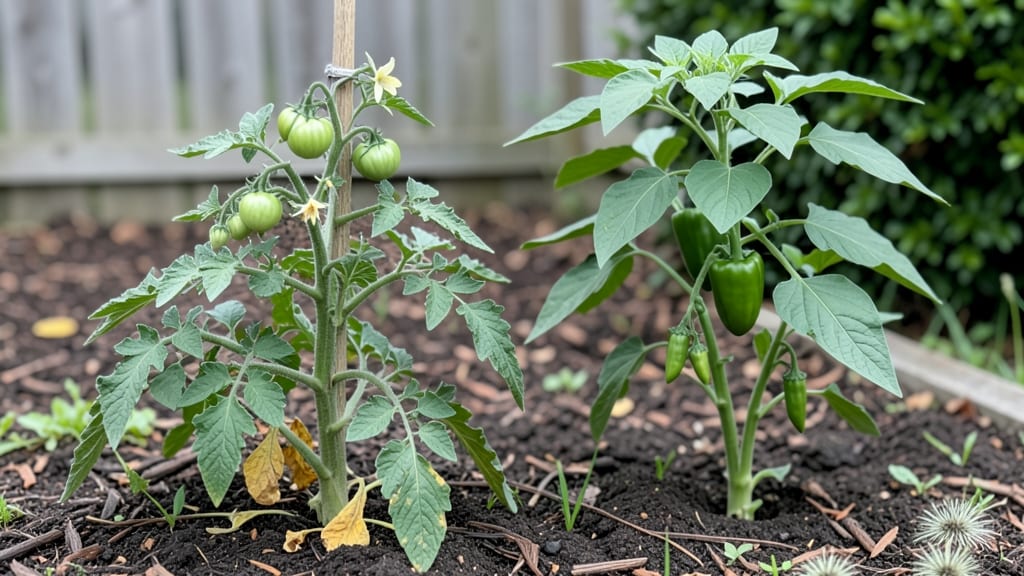
You can plant bell peppers and tomatoes together but must space them 18-24 inches apart and rotate crops annually to prevent disease spread and pest buildup. Their shared vulnerabilities to early blight and aphids make careful planning essential.
These two vegetables thrive in similar growing conditions, making them efficient neighbors in small gardens. 🌱 The key is managing their shared risks—both plants are susceptible to fungal diseases like early blight, which spreads through soil and splashing water.
I've found that staggering planting times by 2-3 weeks helps break disease cycles while maintaining the garden's productivity. Additionally, their shallow root systems mean they won't compete aggressively for nutrients if spaced properly, though tomatoes will eventually outgrow peppers.
For best results, position taller tomato varieties on the north side of beds to avoid shading the shorter peppers. This simple layout adjustment maximizes sunlight exposure for both crops throughout the day. 💫
💡 In This Article
- Companion Planting Benefits and Risks for Peppers and Tomatoes
- Optimal Spacing and Layout for Peppers and Tomatoes in Garden Beds
Companion planting benefits and risks for peppers and tomatoes
Bell peppers and tomatoes share nearly identical growing conditions—both thrive in full sun (6-8 hours daily), well-draining soil with a pH of 6.0-6.8, and consistent moisture. This compatibility makes them ideal neighbors in small gardens, where space is often limited.
Their shallow root systems (12-18 inches deep) mean they won't compete aggressively for nutrients, provided they're spaced properly.
The real advantage lies in their complementary growth cycles: peppers mature faster (60-90 days) while tomatoes (70-85 days) take slightly longer, allowing for staggered harvests that extend your garden's productivity. 🌱
Their root systems actually work synergistically. Both plants develop extensive lateral roots that spread horizontally rather than diving deep, creating a dense but shallow network. This allows them to efficiently absorb water and nutrients from the topsoil layer.
What's fascinating is how their root exudates—natural chemical signals released into the soil—can suppress certain weeds. Studies show that peppers release compounds that inhibit the growth of common garden weeds like purslane, while tomatoes produce root exudates that deter nematodes, creating a natural defense system when planted together.
The key is maintaining 18-24 inches between plants to prevent root tangling, which could lead to nutrient competition.
However, this companion planting strategy comes with significant risks, primarily centered around their shared vulnerabilities. Both plants are highly susceptible to early blight (Alternaria solani), a fungal disease that thrives in warm, humid conditions—exactly the environment these crops create when planted closely.
The fungus spreads through water splashing from soil to leaves, which is why mulching with 2-3 inches of straw or grass clippings becomes crucial. Another major concern is their mutual attraction to aphids and whiteflies, which feed on both plants' sap.
Aphids, in particular, excrete honeydew that fosters sooty mold, further stressing the plants. The solution lies in strategic spacing and crop rotation: planting peppers and tomatoes in different locations each year breaks disease cycles that build up in the soil. 💛
Let's talk about the science behind their disease susceptibility. Both peppers and tomatoes belong to the Solanaceae family, which means they share genetic similarities that make them attractive hosts for the same pathogens.
Early blight, for example, targets the same cellular structures in both plants' leaves, causing those distinctive concentric rings. The fungus Alternaria solani produces spores that can survive in soil for up to 3 years, which is why crop rotation is non-negotiable.
Interestingly, their shared susceptibility extends to verticillium and fusarium wilts, soil-borne diseases that can devastate both crops if conditions aren't carefully managed. This is why experienced gardeners often interplant with basil or marigolds, which can help repel pests and mask plant odors that attract diseases.
The spacing between plants directly impacts their growth competition. When planted too closely (less than 18 inches), tomatoes—especially indeterminate varieties—can shade out peppers, reducing their sunlight exposure by up to 40% during peak summer growth.
This shade stress manifests as smaller fruits and thinner cell walls in peppers, making them more susceptible to cracking. Conversely, overcrowded tomatoes develop weaker stems that struggle to support their fruit load, increasing the risk of blossom-end rot.
The ideal spacing of 24 inches between plants allows for proper airflow, which is critical for disease prevention.
In my own 4' x 8' raised beds, I've found that staggering tomato plants in a 3x3 grid with peppers filling the gaps creates optimal sunlight distribution while maintaining easy access for harvesting and pruning. ✨
Here's what most gardeners overlook: the role of plant hormones in their interactions. Both peppers and tomatoes release ethylene gas during their growth cycles, which can accelerate ripening in nearby plants. While this might seem beneficial, it can also lead to premature fruit drop if environmental conditions aren't ideal.
The solution is to monitor humidity levels (40-60% is optimal) and ensure consistent watering to prevent stress-induced ethylene production. Additionally, their shared attraction to pollinators means you'll see more bees and hummingbirds in these garden sections—nature's way of rewarding you for creating a balanced ecosystem. 🌿
For those working with limited space, consider vertical gardening techniques. Trellising tomatoes allows you to plant them closer to peppers (12-18 inches apart) while keeping the foliage elevated. This not only saves ground space but also improves airflow around the pepper plants' lower leaves, reducing disease risk.
Just be mindful that determinate (bush) tomato varieties need slightly more space (24 inches) than their indeterminate cousins. The bottom line? With proper spacing, pest management, and crop rotation, these two powerhouse vegetables can coexist beautifully, maximizing your garden's yield while minimizing risks. 💫